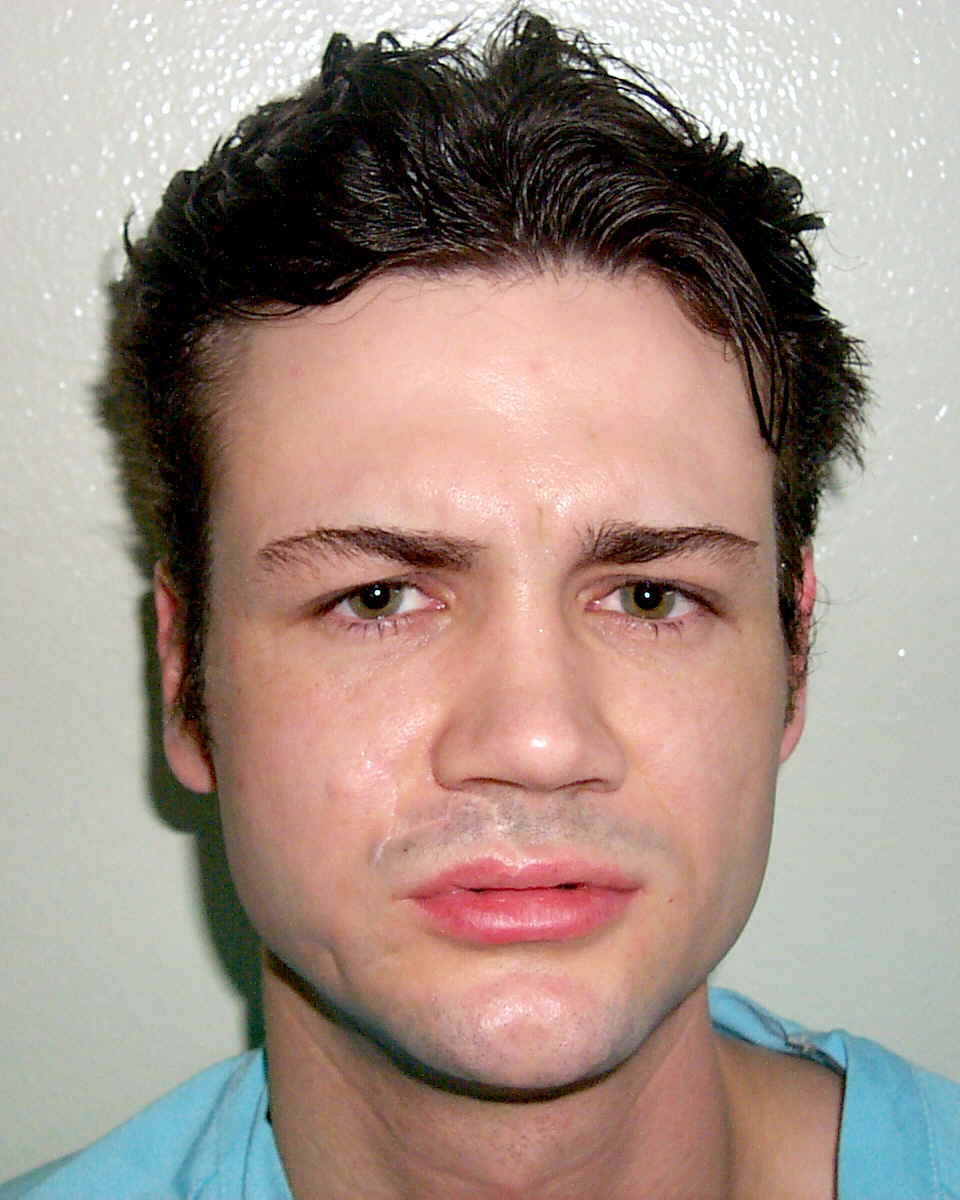
Christopher James Beck
Murderer Brian Kevin Rosenfeld
Murderer · USA · 1985
Brian Kevin Rosenfeld Brian Kevin Rosenfeld was sentenced to three concurrent l…
23 victims
Brian Kevin Rosenfeld
Murderer · USA · 1985
Brian Kevin Rosenfeld Brian Kevin Rosenfeld was sentenced to three concurrent l…
23 victims
 Russell Ellwood
Murderer · USA · 1991
Russell Ellwood was a former taxi driver. Authorities suspected him of killing…
20 victims
Russell Ellwood
Murderer · USA · 1991
Russell Ellwood was a former taxi driver. Authorities suspected him of killing…
20 victims
 Robert Martines Perez
Murderer · USA · 1994
Name: Robert Martines Perez · Other name used in proceedings: Robert Martinez P…
15 victims
Robert Martines Perez
Murderer · USA · 1994
Name: Robert Martines Perez · Other name used in proceedings: Robert Martinez P…
15 victims
 Billy Frank Vickers
Murderer · USA · 1993
Billy Frank Vickers Vickers was executed by lethal injection in Texas on Januar…
14 victims
Billy Frank Vickers
Murderer · USA · 1993
Billy Frank Vickers Vickers was executed by lethal injection in Texas on Januar…
14 victims
 Ynobe Matthews
Serial killer · USA · 1999
Ynobe Matthews was convicted of capital murder in June 2001 and was sentenced t…
6 victims
Ynobe Matthews
Serial killer · USA · 1999
Ynobe Matthews was convicted of capital murder in June 2001 and was sentenced t…
6 victims
 William Lester Suff
Serial killer · USA · 1974
William Lester Suff (born August 20, 1950, as Bill Lee Suff) was known as the R…
20 victims
William Lester Suff
Serial killer · USA · 1974
William Lester Suff (born August 20, 1950, as Bill Lee Suff) was known as the R…
20 victims
 Johann Otto Hoch
Serial killer · USA · 1890
Johann Otto Hoch (1855 - 1906) was the most famous and last-used alias of a Ger…
15 victims
Johann Otto Hoch
Serial killer · USA · 1890
Johann Otto Hoch (1855 - 1906) was the most famous and last-used alias of a Ger…
15 victims
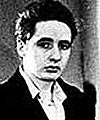 Joseph Christopher
Serial killer · USA · 1980
Joseph Christopher was a 25-year-old Army private when he was arrested at Fort…
12 victims
Joseph Christopher
Serial killer · USA · 1980
Joseph Christopher was a 25-year-old Army private when he was arrested at Fort…
12 victims
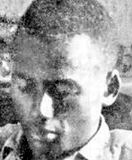 Julian Carlton
Mass murderer · USA · 1914
Julian Carlton was a 30-year-old estate worker and an estate worker originally…
7 victims
Julian Carlton
Mass murderer · USA · 1914
Julian Carlton was a 30-year-old estate worker and an estate worker originally…
7 victims
- Gender
- male
- Country
- USA
- Location
- Arlington County, Virginia, USA
- Date of birth
- February 2, 1975
- Age at first offence
- 20
- Characteristics
- revenge, rape, robbery
- Victim profile
- Florence Marks, 54; William Miller, 52, and David Kaplan, 34
- Method of murder
- Shooting
- Date(s) of murder
- June 6, 1995
- Years active
- 1995
- Date of arrest
- June 1995
- Status
-
Executed
Executed by lethal injection in Virginia on October 18, 2001
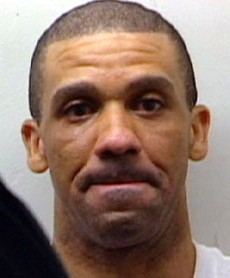
Case record: Christopher James Beck
Status and disposition
Christopher James Beck was executed by lethal injection in Virginia on October 18, 2001.
Mental health evaluation and competency findings
Beck presented as an attentive and alert individual who did not experience symptoms of a serious mental disturbance. He did not present noteworthy indications of psychotic thought processes, delusional ideas, or hallucinations. During an evaluation lasting seven hours of interviewing, Beck seemed to enjoy talking and had no apparent difficulty communicating and engaging throughout the interview. He asked if the interviewer would come back to talk with him some more. Beck was somewhat restless and moved quickly from topic to topic, but did not appear to be manic. Others reported that he enjoyed talking about himself and telling stories, and this was considered a typical presentation. Although Beck reported some distress and depression over his current legal situation, he denied active suicidal ideation and laughed and joked during the interview. Beck claimed that he did 300 push-ups a day to keep himself in shape and protect himself from inmates. He described a recent fight in great detail and expressed no fear during the confrontation.
Dr. Evan Nelson reported labile mood during Beck’s first interviews on 9/21/95 and 10/25/95, but found that Beck was much more stable after he started mood stabilizing medication. The medication was viewed as holding Beck in the higher range of normal mood. Based on Beck’s lifelong history of short-tempered and impulsive behavior, it was considered characteristic of Beck to be somewhat moody and emotionally unstable, and medication was considered potentially helpful. Neither Beck’s mental health experts nor the Commonwealth’s mental health expert indicated that Beck was incompetent at the time of his guilty pleas and/or at the sentencing phase.
After a careful review of the evidence pertaining to Beck’s competency at the time of his guilty pleas and at the sentencing phase, the record reflected that Beck was competent at both stages. Because reasonable jurists could not agree that the competency question was debatable, Beck’s request for a certificate of appealability on his substantive competency claims was denied.
Ineffective assistance claims: competency not raised
Beck argued that his trial counsel were constitutionally ineffective for failing to raise the issue of competency before the state trial court. The claim was found to have no merit.
The Sixth Amendment right to the assistance of counsel was discussed, and the standards for ineffective assistance of counsel were described, including the two-part Strickland test. The court concluded that Beck’s claim failed under both prongs. It found counsel’s performance was more than reasonable. It noted counsel’s awareness of the medications Beck was taking and that, based on close contact maintained with Beck, they were able to assess his capacity to understand the proceedings and assist in his defense. The court also noted that counsel explored a potential competency defense through two mental health experts and that each report negated a claim of incompetence. The court stated that it was aware of Dr. Nelson’s position, that Dr. Nelson was aware of Beck’s medications and suggested no cause for concern or further inquiry. The court further stated that counsel’s observations and interactions gave no signal that Beck’s ability to understand and assist in his defense was compromised. It described that counsel obtained the assistance of Dr. Nelson and additional evaluations from Dr. James Sydnor-Greenberg and his staff, working primarily with Dr. Nelson, consulting with him before his final report, and stating that they had no evidence of brain injury or other mental health disorders that would have provided a defense at a trial.
On prejudice, the court concluded that Beck was not prejudiced by counsel’s decision not to raise the competency issue because the record indisputably demonstrated that Beck was competent at the time of his guilty pleas and at the sentencing phase.
Accordingly, the court denied Beck’s request for a certificate of appealability on his claim that his trial counsel were constitutionally ineffective for failing to raise competency before the state trial court.
Trial counsel affidavit (verbatim)
Soon after being appointed to represent Christopher James Beck, Richard McCue met with Beck at the Arlington Jail.
At that time Beck was anxious and upset, as he began to realize the seriousness of the charges against him.
We knew that Beck was prescribed medications at the jail for his anxiety.
We spoke several times with staff at the jail about Beck's adjustment to his circumstances.
Throughout our contact with Beck, we had no reason to question Beck's competence to stand trial or plead.
He understood the circumstances of the charges, the nature of the various proceedings, what role we played in defending him, and the role of the prosecutor and the court.
He was able to assist us in the investigation of his case and he participated fully in discussions about the charges, strategies for trial, and the decision to plead guilty.
We did not request a hearing on competency because Beck clearly was competent.
Beck did not have family or friends visiting often at the jail.
We saw Beck at least once a week, and, as the guilty plea and sentencing approached, every day, to give him some contact with the outside.
Throughout our contact with Beck, he remained alert and aware of all matters we discussed.
He exhibited no signs of confusion or disorientation.
Rather, he complained only of an upset stomach and some sleepiness after taking his medications.
On at least one occasion, he refused to take one medication because of his upset stomach.
Second, Beck's counsel explored a potential competency defense through two mental health experts. However, each report negated a claim of incompetence. As Beck's counsels' affidavit notes, Dr. Nelson, a clinical psychologist who was appointed to assist the defense, was aware of Beck's medications and suggested no cause for concern or further inquiry as a result of the medications. Our own observations of and interactions with our client gave no signal that Beck's ability to understand and assist in his defense was compromised in any way.
Prior to trial, we obtained the assistance of Dr. Nelson, and additional evaluations from Dr. James Sydnor-Greenberg and his staff. We worked primarily with Dr. Nelson to assist us with the defense. We spoke with him often as matters developed and consulted with him before he prepared his final report. As the report and investigations note, we had no evidence of brain injury or other mental health disorders that would have provided a defense at a trial.
In short, the record leaves no doubt that counsels' performance concerning Beck's competency was more than reasonable.
Ineffective assistance claim: elements of crimes not explained
Beck argued that his trial counsel were constitutionally ineffective because they failed to “explain the elements of any crime” to him. Beck asserted that if counsel had explained the elements, he would not have pled guilty and would have insisted on going to trial.
The court discussed the Strickland framework as applied to guilty pleas, including the requirement to show a reasonable probability that, but for counsel’s errors, the defendant would not have pleaded guilty and would have insisted on going to trial. It also discussed that a guilty plea must represent a voluntary and intelligent choice among alternative courses of action and must reflect that the defendant was informed of direct consequences.
Counsel performance and understanding of charges
The court concluded Beck was adequately informed of the nature and consequences of his guilty pleas and understood the charges. It described that counsel discussed the guilty plea repeatedly, at length, and in great detail. It stated that counsel had experience with Arlington juries and serious crimes and felt it highly likely that an Arlington jury would convict Beck and sentence him to death. It stated that they discussed jury versus judge sentencing with other attorneys, and they concurred that a jury was likely to sentence Beck to death. The court stated that they knew Judge Newman would try the case and that Judge Newman had no prior capital case experience and was fair in sentencing in other serious felony cases. It stated that they believed the evidence in mitigation they intended to present would be more favorably received by a judge than a jury. It stated that counsel recommended Beck plead guilty and have judge sentencing as presenting a better likelihood of avoiding a death sentence. It stated that the decision to plead guilty and have Judge Newman sentence was ultimately Beck’s decision after their recommendation and numerous discussions of the pros and cons of the different options.
The court stated that counsel discussed the elements of all offenses charged in detail and what the Commonwealth would have to prove. It stated that counsel discussed the possibility of avoiding a rape conviction based on Beck’s denials of that offense, and the possible effort to defeat robbery charges on the theory that the taking of property was independent of the killings. It stated that counsel discussed Beck’s statements indicating he intended to take property from the Miller house. It stated that evidence of the taking of Florence Marks’ purse and David Kaplan’s wallet could be seen as robbery and not as an effort to make it “look like robbery.” It stated that Beck tearing the wallet from Kaplan’s trousers and collecting items to steal as Kaplan arrived, along with other circumstances, made it likely that Beck’s conduct would meet the Virginia Supreme Court’s definition of robbery in capital murder cases.
The court also stated that counsel discussed that even if Beck somehow could defeat the robbery and rape components, he would still face a capital murder/multiple murders where the jury would have heard all the same evidence and still likely would sentence him to death. The court stated that Beck participated in discussions about the offenses, asking relevant and intelligent questions about elements and possible defenses, and clearly understood the issues involved in pleading guilty. It stated that Beck refused to acknowledge guilt in the rape of Florence Marks or the related firearms charge for rape. It stated that Beck pleaded guilty to the capital murder of Florence Marks, understanding that the underlying felony charged was rape or robbery.
Plea memorandum and plea hearing colloquy (verbatim excerpts)
Prior to the plea hearing, Beck executed a plea memorandum. The plea memorandum detailed Beck’s understanding of his trial rights and the advice he received regarding his pleas, including advice about the charges:
My attorneys have explained to me what the Commonwealth (the prosecutor) must prove in order to convict me of the crime that I am pleading guilty to. I have told my attorneys everything I know about the charges against me. I have discussed with my attorneys any possible defenses I might have to the charges against me.
According to Beck’s trial counsel, the plea memorandum that was executed in connection with the guilty pleas accurately set out the offenses and the discussions counsel had with their client. Counsel stated:
The plea memorandum that was executed in connection with the guilty pleas accurately sets out the offenses and the discussions we had with our client.
Counsel further stated that they had the memorandum several days before the date the pleas were entered and thoroughly discussed it with Beck, and because of Beck’s difficulty in reading they read the agreement memorandum to him and discussed its provisions repeatedly to ensure he understood everything. Counsel stated that at the time Beck pleaded guilty, Beck knew the significance of his pleas of guilty, understood the rights he waived, and made the decision to plead.
At the plea hearing, the state trial court conducted an extensive colloquy concerning the voluntariness and intelligence of Beck’s guilty pleas. Beck’s replies were clear and responsive and Beck repeatedly demonstrated his understanding of the charges and trial proceedings. The court stated that, in the colloquy, Beck acknowledged that he had discussed the entire plea memorandum with his attorneys and understood everything in it. Beck acknowledged that he understood the nature of the charges, that he had discussed the elements of each offense with his attorneys, and that his counsel had explained the elements of each offense to him. The court stated that Beck acknowledged he was pleading guilty to all of the charges except two because he was in fact guilty, that he was entering an Alford plea with respect to two of the charges because it was in his best interest to plead guilty to those two charges, that he was waiving certain constitutional rights, and that he understood possible sentences he could receive.
Beck’s affidavit and what he claimed (verbatim)
In the face of evidence that his plea was knowingly, voluntarily, and intelligently made, Beck relied on an affidavit he submitted on state habeas. In the affidavit, Beck stated that his counsel did not explain the elements of any crime to him. The court described Beck’s affidavit as stating:
My lawyers did not explain to me that capital murder was different than murder. I did not understand that. If I had understood there was a difference, I would not have pled guilty to the capital murder of Florence Marks, because I did not rape her, and I told my lawyers that I didn't rape her. I would not have pled guilty to any of the capital murder charges if I had understood that taking property by itself was not robbery.
The court also summarized Beck’s affidavit as asserting that he would not have pled guilty to any of the capital murder charges if he had understood that taking property by itself was not robbery.
The court concluded that Beck’s reliance on the affidavit was misplaced and that Beck was bound by representations made during the plea colloquy absent clear and convincing evidence to the contrary. It concluded Beck presented no evidence of sufficient evidentiary force to demonstrate his representations were untruthful or involuntary and that there was no reasonable probability that but for counsel’s alleged errors Beck would not have pleaded guilty and would have insisted on going to trial. It stated that counsel’s view was that Beck’s chances of receiving a life sentence were better if a judge, rather than a jury, sat as the trier of fact, and that given evidence of guilt, circumstances of the crime, and lack of available defenses Beck would not have insisted on going to trial.
Accordingly, the court denied Beck’s request for a certificate of appealability as to this issue.
Court disposition of appeal and certificate applications
The court denied Beck’s application for a certificate of appealability and dismissed the appeal.
Notes captured in the record (non-procedural details)
The record included notes indicating:
- One count of capital murder was subsequently nolle prossed, and Beck was permitted to withdraw his plea of guilty on that count.
- Beck named Ronald Angelone, Director of the Virginia Department of Corrections, as respondent; for ease of reference the respondent was referred to as “the Commonwealth.”
- Beck’s petition for writ of habeas corpus was filed after the April 24, 1996 enactment of the Antiterrorism and Effective Death Penalty Act of 1996 (AEDPA), and the amendments to 28 U.S.C. § 2254 effected by section 104 of the AEDPA governed resolution of the case.
- Because Beck maintained that he did not rape Marks, Beck entered a plea of guilty pursuant to North Carolina v. Alford to the count charging him with the rape of Marks and the count charging him with the use of a firearm during the commission of a rape.
- Subsequently, the count charging Beck with the capital murder of Marks, Miller, and Kaplan as part of a single act or transaction was nolle prossed, and Beck was permitted to withdraw his plea of guilty on that count.
- On direct appeal, Beck raised the following claims: (I) The trial court erred in denying defendant’s motion to prohibit the imposition of the death penalty; (II) The trial court erred in receiving victim impact evidence from individuals who were not related to the victims; (III) The trial court erred in receiving recommendations concerning the imposition of the death penalty from the victims’ friends and family members; (IV) There was insufficient evidence to support the trial court’s finding of vileness; (V) There was insufficient evidence to support the trial court’s finding of future dangerousness; (VI) The sentences of death were imposed under the influence of passion, prejudice or other arbitrary factors and are excessive and disproportionate to the penalty imposed in similar cases.
- The Virginia Supreme Court had exclusive original jurisdiction over habeas corpus petitions filed by prisoners “held under the sentence of death.”
- Beck’s state habeas petition alleged: the plea was not knowingly, intelligently, and voluntarily entered; the trial court erred by accepting Beck’s Alford pleas; counsel rendered ineffective assistance regarding the guilty plea; counsel rendered ineffective assistance regarding the sentencing phase; counsel rendered ineffective assistance on appeal; Beck’s court-appointed experts were not qualified and/or performed incompetently; the death penalty is unconstitutional; and Beck was actually innocent of rape, robbery, and capital murder.
- On state habeas, no evidentiary hearing was provided, and the Virginia Code permitted an evidentiary hearing in circuit court only by order of the Virginia Supreme Court, and only on issues enumerated in the order of the Virginia Supreme Court.
- In his federal habeas petition, Beck set forth multiple claims: due process violations by failure to prove every element beyond a reasonable doubt; the plea was not knowingly, intelligently and voluntarily entered; sentencing abrogated constitutional rights due to failure to receive evidence of psychiatric and emotional deficits and related issues; trial counsel ineffective for failing to request necessary expert assistance under Ake v. Oklahoma; incompetence to appear in court and participate in proceedings on May 15, 1996 and at the sentencing proceedings, with associated counsel ineffectiveness and failure to request a competency hearing; and in the alternative the district court held these claims lacked merit.
- Beck relied on affidavits of Drs. Pelligrino and Mansheim; the record concluded these affidavits offered no help because they did not suggest incompetence at the time of guilty pleas and/or at sentencing.
- Beck argued incompetence at the time of guilty pleas and sentencing due to brain damage, medications, and bipolar disorder; the record concluded the argument had no merit, including findings about EEG, CT scan results, medications’ side effects, Dr. Nelson’s view of mood stabilizing medication, and the asserted meaning of a note containing “Bipolar D/O.”
- The record included references to procedural bar for certain claims and concluded that Beck was not entitled to an evidentiary hearing on any of his claims.
- The record included repetition of “We also conclude that Beck is not entitled to an evidentiary hearing on any of his claims.”
Spotted an error, or have more information about this case?