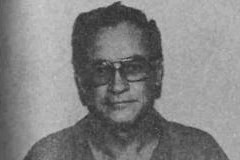
Warren James Bland
Murderer Brian Kevin Rosenfeld
Murderer · USA · 1985
Brian Kevin Rosenfeld Brian Kevin Rosenfeld was sentenced to three concurrent l…
23 victims
Brian Kevin Rosenfeld
Murderer · USA · 1985
Brian Kevin Rosenfeld Brian Kevin Rosenfeld was sentenced to three concurrent l…
23 victims
 Yahweh ben Yahweh
Murderer · USA · 1980
Yahweh ben Yahweh was born and legally named Hulon Mitchell Jr. (October 27, 19…
23 victims
Yahweh ben Yahweh
Murderer · USA · 1980
Yahweh ben Yahweh was born and legally named Hulon Mitchell Jr. (October 27, 19…
23 victims
 Russell Ellwood
Murderer · USA · 1991
Russell Ellwood was a former taxi driver. Authorities suspected him of killing…
20 victims
Russell Ellwood
Murderer · USA · 1991
Russell Ellwood was a former taxi driver. Authorities suspected him of killing…
20 victims
 Arline Lawless
Murderer · USA · 2012
Arline Lawless, also known as Arline Seavey, was a 26-year-old Waldoboro woman…
1 victim
Arline Lawless
Murderer · USA · 2012
Arline Lawless, also known as Arline Seavey, was a 26-year-old Waldoboro woman…
1 victim
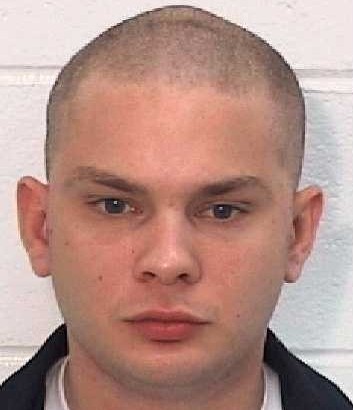 John Anthony Esposito
Murderer · USA · 1996
John Anthony Esposito was convicted in Georgia of murdering Lola Davis and rela…
3 victims
John Anthony Esposito
Murderer · USA · 1996
John Anthony Esposito was convicted in Georgia of murdering Lola Davis and rela…
3 victims
 Zhang Yunliang
Mass murderer · China · 2009
Zhang Yunliang Zhang Yunliang died in the fire on 5 June 2009. The Chengdu bus…
26 victims
Zhang Yunliang
Mass murderer · China · 2009
Zhang Yunliang Zhang Yunliang died in the fire on 5 June 2009. The Chengdu bus…
26 victims
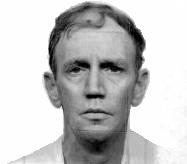 Gerald Casey
Murderer · USA · 1989
Gerald Casey — capital defendant and convicted person · Carla Smith — accomplic…
1 victim
Gerald Casey
Murderer · USA · 1989
Gerald Casey — capital defendant and convicted person · Carla Smith — accomplic…
1 victim
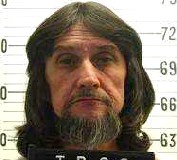 Olen Hutchison
Murderer · USA · 1988
Olen Edward Hutchison, also known as Olen “Eddie” Hutchison, was the defendant.…
1 victim
Olen Hutchison
Murderer · USA · 1988
Olen Edward Hutchison, also known as Olen “Eddie” Hutchison, was the defendant.…
1 victim
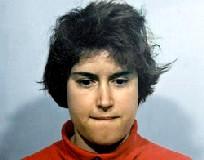 Laurie Dann
Murderer · USA · 1988
Laurie Dann (also referred to as Laurie Wasserman; née Wasserman; born c. 1958;…
1 victim
Laurie Dann
Murderer · USA · 1988
Laurie Dann (also referred to as Laurie Wasserman; née Wasserman; born c. 1958;…
1 victim
- Gender
- male
- Country
- USA
- Location
- Los Angeles County, California, USA
- Date of birth
- January 21, 1937
- Age at first offence
- 49
- Characteristics
- rape, child molester, torture
- Victim profile
- Phoebe Ho, 7
- Method of murder
- Strangulation
- Date(s) of murder
- December 11, 1986
- Years active
- 1986
- Date of arrest
- February 9, 1987
- Status
-
Died in custody
Sentenced to death in 1993; died in prison on August 30, 2001.
Case details
Warren James Bland was sentenced to death in 1993 and died in prison on August 30, 2001.
Background
The disappearance of seven-year-old Phoebe Ho in December of 1986 while she was on her way to school in South Pasadena, California, led to a media frenzy and a massive search. Phoebe Ho’s battered and torn body was discovered in a ditch in Riverside County after a week.
Warren James Bland began his career of violent crime in 1958 by gut-slashing a man at a gas station. By the time he kidnapped, sexually assaulted and killed Phoebe Ho in 1986, he had already been convicted of rape, child molestation, kidnapping, and torture, and had spent most of his adult life in prison. He had been convicted of thirteen violent felonies, including assault, rape, kidnapping, burglary, assault with intent to commit rape, forcible lewd act on a child, and forcible oral copulation.
The offence
Bland was linked to the torture, molestation, and murder of a seven-year-old girl.
Investigation
A police task force searching for Bland was informed that Bland was driving a stolen car and was probably armed. In early 1987, the San Diego Police had a warrant for the arrest of Bland for the torture, molestation, and murder of a seven-year-old girl. When Bland was later arrested, the police relied on scientific techniques and computer records of sex offender profiles to try to identify the killer.
Arrest
On February 9, 1987, Officer Birse spotted Bland at a parking lot standing by a car that fit the description of a stolen car and ordered Bland not to move. Bland attempted to flee and Birse shot him; the bullet struck Bland’s leg. Bland was hospitalized.
After the arrest, the police searched the car in which Bland had been living and found a .22-caliber handgun sticking out of the pocket of a man’s coat.
Confession and Miranda issue
Nine days after the shooting, Bland was visited at the hospital’s jail ward by his parole officer, John Blum. Blum attempted to advise Bland of his rights under Miranda v. Arizona, 384 U.S. 436. Bland interrupted him, saying he had heard the Miranda warning “a million times before.” Blum administered the warning.
The government conceded that the warning failed to include a statement that Bland had a right to have an attorney present during questioning. Bland confessed to having stolen both the car and the gun.
Trial
Bland was tried in March 1989 and convicted of being a felon in knowing and willful possession of a firearm in violation of 18 U.S.C. § 922(g)(1). The conviction was reversed and the case was remanded for a new trial after it was concluded that the district court’s instruction to the jury venire revealing Bland’s three outstanding arrest warrants for murder was more prejudicial than probative (United States v. Bland, 908 F.2d 471, 473 (9th Cir. 1990) (“Bland I”)).
A superseding indictment was returned on September 27, 1988 charging Bland with violating 18 U.S.C. § 922(g)(1). Bland was tried before a jury in November 1990 and convicted.
The district court also told the jury venire that Detective Birse would testify about why he shot Bland at the scene of the arrest and that Birse believed Bland was a suspect in three separate homicides. The court’s introductory comments included:
“All right. Now, it is anticipated that detective Birse will testify in this case that the reason he shot the defendant at the scene of the arrest was because he believed the defendant was attempting to escape from his arrest[.] And further, that the detective had in his mind knowledge of certain factors, which, to him, indicated a reason to prevent this defendant from escaping. And included in those reasons, I believe he will tell you, that he, detective Birse, believed that Mr. Bland was a suspect in three separate homicides; that he, detective Birse, had knowledge of a warrant for the arrest of Mr. Bland for first-degree murder, and that murder, Mr. Birse will tell you, it was his belief that the warrant that was issued had to do with the charge against this defendant for the molestation and torture and murder of a seven-year-old girl.”
The district court instructed the jury venire that evidence of Birse’s state of mind did not establish Bland’s guilt in the crime described by the warrant, and that the jury could not consider the evidence for that purpose. Similar limiting instructions were given throughout the trial.
Bland’s defense theory at trial was that Officer Birse planted the gun in the car, and Bland said Birse planted the gun to justify the shooting. At a hearing on a motion to suppress the confession, the district court held that the Miranda warning, though incomplete, was adequate and denied the motion, concluding that Bland had waived his Miranda rights.
Prior to trial, Bland informed the court that his defense theory at trial would be that officer Birse planted the gun in the car. The government stated that if the shooting was made an issue at trial, it would seek to introduce evidence of Birse’s state of mind at the shooting, including a description of the details that Birse knew supported the outstanding warrant. Bland objected to the admissibility of the facts underlying the outstanding warrant and offered to stipulate to the jury that officer Birse was entitled to shoot Bland as a fleeing felon if the facts underlying the warrant were kept from the jury. The government rejected the stipulation.
Bland was subsequently found guilty as charged. The appeals court reversed and remanded for a new trial.
Appeals
Appeal resulting in reversal and remand for new trial
Bland appealed evidentiary rulings and the legality of his sentence. The appeals court did not reach the legality-of-sentence arguments because it concluded that the conviction should be reversed and that Bland should be granted a new trial.
The appeals court held that the district court’s comments to the jury venire constituted an abuse of discretion under Fed. R. Evid. 403, because the specific facts mentioned about the warrant had no significant additional probative value and unfairly prejudiced Bland. It held the error was not harmless and that curative instructions were not sufficient to remove the prejudice. The court also ordered that, on retrial, the district court should exclude from the evidence Bland’s confession to parole officer Blum.
The appeals court concluded that Blum’s Miranda warning was inadequate because it failed to mention that Bland was entitled to have an attorney during questioning. The court cited the “critical importance of the right to know that counsel may be present during questioning” and declined to reach waiver due to the inadequacy of the warning.
The appeals court’s disposition was: “REVERSED AND REMANDED FOR A NEW TRIAL.”
Subsequent appeal affirming conviction and sentence
On a later appeal, the case was before the United States Court of Appeals for the Ninth Circuit with Warren James Bland appealing his conviction for being a felon in possession of a firearm in violation of 18 U.S.C. § 922(g)(1) and also appealing the life sentence imposed under 18 U.S.C. § 924(e)(1) for being an armed career criminal. The court decided that it would affirm the conviction and sentence.
The court described Bland as making a second appeal.
Limitation on cross-examination (Brock McCue)
Bland argued that the district court impermissibly restricted his cross-examination of Brock McCue. McCue was described as the manager of the Winchell’s donut shop behind which Bland had been living in a blue Toyota automobile. McCue testified that Bland showed him the handgun subject of the prosecution almost two weeks before Bland’s arrest. McCue identified the handgun because he had noticed, while handling the gun on January 27, 1987, that there was a “slop in the cylinder” (the cylinder did not line up properly with the barrel of the gun).
Bland did not object to any express evidentiary ruling that limited cross-examination. The appeals court found Bland’s arguments without merit. It stated that the district court took necessary prophylactic steps short of a final evidentiary ruling to prevent prejudice. The court instructed the government to request a further side-bar conference before attempting to introduce evidence that might reveal the murder investigations. It also offered a preview of its view on admissibility, stating:
“I would hope, even assuming that [rebuttal witnesses were called], it wouldn't be necessary to go into the specific charge, I don't see what relevance that would have. It could presumably be that they were investigating him for something else and just leave it at that.”
The court concluded that the district court did not abuse its discretion.
Admission of ATF Form 4473 (Exhibit 13)
The appeals court addressed the admission of Exhibit 13, an ATF Form 4473 from Dooley’s Hardware store. Exhibit 13 identified Ann Rippetoe as the original purchaser of the handgun found in Bland’s possession when he was arrested. Rippetoe had died prior to trial. The parties stipulated that Rippetoe was the registered owner of the car in which Bland was living when he was arrested.
The government offered Exhibit 13 to create an inference that Bland had the handgun in his possession on January 27, the day McCue said Bland showed him the handgun. The appeals court held that Exhibit 13 was admissible as a business record under Fed. R. Evid. 803(6). It stated that the foundation was laid by Curtis Fredrickson, the manager of the sporting goods department at Dooley’s Hardware and custodian of the Form 4473 records. The court stated that it was sufficient that Fredrickson testified that the person completing Exhibit 13 had knowledge of the transaction at the time it occurred and that Exhibit 13 was maintained as a regularly conducted business activity. It also addressed Bland’s arguments that erasures or incompleteness prevented it from being a business record.
The appeals court rejected Bland’s argument that Exhibit 13 included “double hearsay” and should not have been admitted. It explained that federal regulations required sellers to verify purchasers’ names before completing Form 4473 and that Fredrickson testified that Dooley’s employees were required to verify gun purchasers’ names with picture identification. It also stated that Rippetoe was under a legal duty to provide truthful information for Form 4473. The appeals court concluded there was no double hearsay problem and that the district court did not abuse its discretion by admitting Exhibit 13.
Sentencing arguments upheld
Bland challenged the district court’s life sentence without possibility of parole under 18 U.S.C. § 924(e)(1). The appeals court held that a life sentence was authorized by § 924(e) and rejected Bland’s reliance on the rule of lenity.
The appeals court rejected Bland’s Eighth Amendment argument that a life sentence without possibility of parole for being a felon in possession of a firearm was unconstitutionally disproportionate. It applied the proportionality approach and concluded that Bland’s history of criminal conduct refuted any possibility of disproportionality. It stated that, in light of his grave crimes, the sentence did not give rise to an inference of gross disproportionality and there was no need to compare his sentence with others.
The appeals court affirmed the judgment of the district court.
Sentencing
Bland received a life sentence without possibility of parole pursuant to 18 U.S.C. § 924(e)(1) in connection with being a felon in possession of a firearm.
In the later affirmed appeal, the appeals court described that Bland argued for sentencing relief under the rule of lenity and on Eighth Amendment grounds. The appeals court rejected those arguments and affirmed the sentence.
Outcome
The later appeal concluded: “The judgment of the district court is AFFIRMED.”
In the earlier appeal described in the provided summary material, Bland’s conviction was reversed and the case was remanded for a new trial.
Other details
A juror venire was informed about the existence and details of a warrant during voir dire and the district court gave similar limiting instructions throughout trial.
The appeals court also addressed additional arguments relating to witness identification and procedural issues. It stated that it rejected Bland’s argument that McCue’s out-of-court identification of the gun was impermissible because the ATF agent brought McCue only the one gun to identify, and rejected Bland’s argument that the application of 18 U.S.C. § 924(e) violated the ex post facto prohibition.
The appeals materials included notes about evidentiary issues beyond the main holdings, including discussion about hearsay exceptions and confrontation clause issues related to Exhibit 13. It stated that Bland attempted to generate a confrontation clause issue from the admission of Exhibit 13, citing United States v. Oates, but that Oates was no longer valid authority on that point if Exhibit 13 was admitted under a “firmly rooted” exception to the hearsay rule, like business records or official records exceptions.
The case record also included statements from the district court at side-bar conferences. The appeals materials quoted the district court’s explanation for why no ruling could be made at that point:
“I haven't heard [defense counsel's] questions yet, I haven't heard the witness' answers. Mr. Burns has raised a potential problem, we're all aware of it. And I guess the best I can do is that you proceed at your peril. I mean, if you get into this and the government wants to come back with some of these detectives and indicate that he wasn't being investigated for this gun charge and that's why they didn't go into it in any detail, they may be able to offer that.... Let's see what the cross reveals and then we'll go from there.”
The conviction was described as “Condemned on one count, 1993.”
Spotted an error, or have more information about this case?