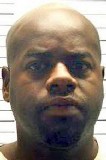
Andre Bland
Murderer Brian Kevin Rosenfeld
Murderer · USA · 1985
Brian Kevin Rosenfeld Brian Kevin Rosenfeld was sentenced to three concurrent l…
23 victims
Brian Kevin Rosenfeld
Murderer · USA · 1985
Brian Kevin Rosenfeld Brian Kevin Rosenfeld was sentenced to three concurrent l…
23 victims
 Russell Ellwood
Murderer · USA · 1991
Russell Ellwood was a former taxi driver. Authorities suspected him of killing…
20 victims
Russell Ellwood
Murderer · USA · 1991
Russell Ellwood was a former taxi driver. Authorities suspected him of killing…
20 victims
 Robert Martines Perez
Murderer · USA · 1994
Name: Robert Martines Perez · Other name used in proceedings: Robert Martinez P…
15 victims
Robert Martines Perez
Murderer · USA · 1994
Name: Robert Martines Perez · Other name used in proceedings: Robert Martinez P…
15 victims
 Billy Frank Vickers
Murderer · USA · 1993
Billy Frank Vickers Vickers was executed by lethal injection in Texas on Januar…
14 victims
Billy Frank Vickers
Murderer · USA · 1993
Billy Frank Vickers Vickers was executed by lethal injection in Texas on Januar…
14 victims
 Luigi Chiatti
Murderer · Italy · 1992
Luigi Chiatti was an Italian serial killer. He was born Antonio Rossi to a 24-y…
2 victims
Luigi Chiatti
Murderer · Italy · 1992
Luigi Chiatti was an Italian serial killer. He was born Antonio Rossi to a 24-y…
2 victims
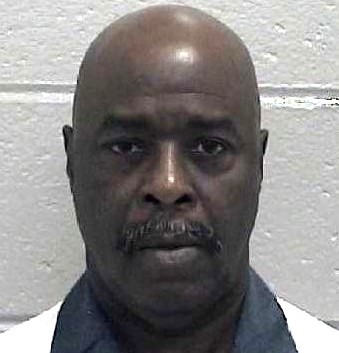 John Washington Hightower
Murderer · USA · 1987
John Washington Hightower was executed by lethal injection in Georgia on June 2…
3 victims
John Washington Hightower
Murderer · USA · 1987
John Washington Hightower was executed by lethal injection in Georgia on June 2…
3 victims
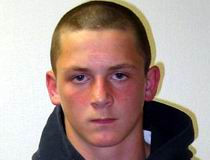 Brandon McInerney
Homicide · USA · 2008
Lawrence “Larry” Fobes King was born on January 13, 1993 at the Ventura County…
1 victim
Brandon McInerney
Homicide · USA · 2008
Lawrence “Larry” Fobes King was born on January 13, 1993 at the Ventura County…
1 victim
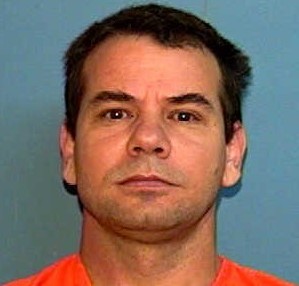 John Calvin Taylor
Murderer · USA · 1997
John Calvin Taylor · Date of sentence: 10/07/99 · Registry date of offense: 12/…
1 victim
John Calvin Taylor
Murderer · USA · 1997
John Calvin Taylor · Date of sentence: 10/07/99 · Registry date of offense: 12/…
1 victim
- Gender
- male
- Country
- USA
- Location
- Shelby County, Tennessee, USA
- Date of birth
- September 15, 1973
- Age at first offence
- 19
- Characteristics
- robbery, mentally ill
- Victim profile
- Ontrain (Terry) Sanders, 20
- Method of murder
- Shooting
- Date(s) of murder
- October 11, 1992
- Years active
- 1992
- Date of arrest
- Next day (surrenders)
- Status
-
Sentenced to death
Sentenced to death on March 31, 1994
Case details
Andre S. Bland was convicted in the shooting death of Ontrain Sanders in the parking lots of an apartment complex in Memphis in October 1992. The Tennessee Supreme Court affirmed the sentence of death by electrocution.
Timeline
- October 9, 1992 — Andre S. Bland, then nineteen years old, attended a crap game at the apartment of Charles Sanders in the Southbrook Apartment Complex in Memphis and later decided to rob two strangers, Earnest Norman and Marcel Nugent.
- Between 10:30 and 11:30 p.m. — Bland’s group approached Norman and Nugent in the parking lot, asked questions about who they were and whether they had money, and attacked Norman; Nugent locked himself inside Norman’s car.
- Shortly before midnight (hearing gunfire just after midnight) — Bland fired a gun at Ontrain (Terry) Sanders, hitting him in the right leg; Sanders fled about 273 feet and was shot again, then shot multiple additional times while he was underneath a pickup truck. Henry Adams called 911 after hearing Sanders plead, “Oh God, please help me.”
- October 12, 1992 (afternoon; approximately two days after the killing) — Bland turned himself into the Memphis Police Department; he gave a statement confessing to shooting Nugent and Sanders with a chrome 9-millimeter pistol.
- December 9, 1996 — The Tennessee Supreme Court entered an Order limiting review to four issues and setting the cause for oral argument at the April 1997 term in Jackson.
- April 1997 term (oral argument set for) — The case was set for oral argument at the April 1997 term of Court in Jackson.
- March 31, 1994 — Andre S. Bland was sentenced to death.
- 6th day of April 1998 — The sentence of death by electrocution was to be carried out as provided by law unless otherwise ordered by this Court or other proper authorities.
The offence
Bland and others attended a crap game at the apartment of Charles Sanders in the Southbrook Apartment Complex in Memphis. After the crap game ended around 10:00 p.m., the young men wandered outside and decided to rob two strangers, Earnest Norman and Marcel Nugent, whom they had seen arriving earlier.
When Norman and Nugent ignored the group of men while nearing Norman’s car to leave, one member of Bland’s party struck Norman in the back of the head as he was about to get into his car; Norman fled and called 911 after escaping to a nearby service station. Nugent locked himself inside Norman’s car and was surrounded by the group of men as they tried to force him out.
After that, Ontrain (Terry) Sanders drove into the parking lot, got out of his car, approached the men surrounding Nugent, and turned back toward his car. Bland then fired a gun, hitting Sanders in his right leg. Sanders fled about 273 feet through the apartment complex. During the chase, Bland shot Sanders in the leg again; Sanders attempted to hide under a pickup truck but was discovered. Bland shot him at least two or three more times while he lay underneath the truck. Bland and Darryl Bailey left Sanders under the truck pleading for help and then ran back around the apartment complex to the car where Nugent was trapped.
While Sanders was dying under the pickup truck, the group returned to the scene and continued with the attack on Nugent. The group broke through the passenger window and pulled Nugent from the automobile; Nugent scuffled with them before breaking free. Bland shot Nugent in the leg after someone shouted, “he has a gun,” and then the men took Nugent’s watch and his money, kicked him, beat him, and Bland again shot Nugent in the leg. The group disbanded, leaving Nugent lying in the parking lot. Nugent made it upstairs to the apartment of Norman’s friend and waited until an ambulance arrived.
The first ambulance on the scene transported Sanders to the hospital; one paramedic testified the unit arrived nine minutes after receiving the call, and Sanders died in the ambulance on the way to the hospital.
Investigation and evidence
Police found an unemployment check, a bloody dollar bill and assorted change, keys, and a black cap near the pickup truck where Sanders was killed. Sanders’ wallet was missing and never found.
Dr. Sandra Elkins, a forensic pathologist who performed the autopsy on Sanders, testified that the cause of death was multiple gunshot wounds, including one lacerating Sanders’ femoral artery causing bleeding to death. Dr. Elkins found nine separate gunshot wounds to Sanders’ right leg, extending from the groin area of the upper thigh to just above the knee, and deduced from entrance and exit wounds that Sanders was shot four or five times. Dr. Elkins testified that a person with injuries like Sanders’ could live from two to fifteen minutes and be conscious four to five minutes after suffering such a wound.
Henry Adams testified that he saw a man with a large shiny gun kneeling down as if shooting under the truck; Adams heard three shots and later saw someone trying to crawl out from underneath the pickup truck and pleading for help.
Floyd P. Johnson owned the green pickup truck under which Sanders had taken refuge and testified that after hearing three gunshots, he saw a man lying partially under his truck with his upper body exposed and covered in blood. Johnson testified that Sanders called out, “Oh God, help me!” Johnson stayed on his balcony out of fear for his safety but talked to Sanders, encouraging him to remain still, until an ambulance arrived. Johnson said he talked with Sanders for ten to fifteen minutes.
Arrest and confession
Bland turned himself into the Memphis Police Department on the afternoon of October 12, 1992, approximately two days after the killing. He gave a statement confessing to shooting Nugent and Sanders with a chrome 9-millimeter pistol.
Bland’s account of the crime was:
“Me, Little Darryl, Carlos' daddy, Carlos, and a guy named Pat were shooting dice. We were inside Carlos Sanders' house inside the Southbrook Apartments. Little Steve knocked on the door and he came out and got the 9-millimeter pistol that I had. By that time I got up and came outdoors and got the gun from Little Steve. And Yogi approached me saying he was fixing to rob dude that was up in the house. Carlos, Martell, Yogi, Darryl, Steve and me were standing out there, and Yogi was telling us he was going to rob the dude. I gave him the gun, the 9-millimeter. By that time the dudes had come out the apartment. Yogi approached him saying something to him, and then they got into physical contact. Then he hit the dude and the dude broke loose and ran. The other dude got in the car and locked himself in. Steve and Darryl grabbed objects from the ground and started hitting the car window. Darryl pulled the dude up out of the car. Steve, Yogi, Darryl, Carlos, Martell, they was hitting the dude with objects they picked up. I got the gun back from Yogi, and the dude in the Cadillac [the victim] drove up and jumped out and started towards us. And then I shot him in his leg. Then he went around the building and I went around the building and shot him in his leg again. And then he had tried crawl up under a truck and I shot him again. Then he continued up under the truck. I went back around the corner, and they was continuing to beat the dude that got out of the car. Then I walked up and shot in both his legs. I wasn't shooting to kill, that's why I shot them in their leg. I turned around, threw the gun and ran to the Kings Gate Apartments over to my girlfriend house, Teresa Wiggs ․ and then we went to sleep. ”
When asked by police why he shot Sanders the first time, Bland replied:
“Because when they was beating on the dude, he jumped out and approached us and said, ‘What's up?’ And I turned around, and I shot him in his leg.”
Bland also said he shot Nugent “so he couldn't get away.” He denied getting any money or valuables from either Sanders or Nugent or being involved in the robbery. He said he knew the other men “went in the dude pockets” but did not know if they got anything.
Trial
Bland was convicted of premeditated first degree murder, especially aggravated robbery, attempted first degree murder, and attempted aggravated robbery.
Sentencing
At the sentencing hearing on the first degree murder conviction, the jury found one aggravating circumstance: the murder was “especially heinous, atrocious or cruel in that it involved torture or serious physical abuse beyond that necessary to produce death.” Tenn. Code Ann. § 39-13-204(i)(5) (1991 Repl. & 1996 Supp.).
The jury found that the aggravating circumstance outweighed mitigating circumstances beyond a reasonable doubt and sentenced Bland to death by electrocution.
Mitigation and aggravation details
State’s witnesses in sentencing
Dr. Elkins testified again that a person with the victim’s injury could live from two to fifteen minutes and be conscious up to four to five minutes. She testified that Sanders’ femoral nerve had only been bruised and not severed, and that his right thigh muscles and nerves were completely destroyed; she testified that Sanders would have experienced pain from the wounds while conscious.
The State also presented the victim’s mother, Vivian Lewis, a deaf mute, who testified through an interpreter. She testified that her son was sweet and good and had never been in any trouble. She said her son’s two small daughters, ages two and four at the time of trial, were “very, very worried” and wanted to see their father. Lewis also testified that the victim’s murder left his family “very, very hurt.”
Defense witnesses and mitigation
The defense presented Bland’s mother, Marilyn Boyd, his maternal grandmother, Virginia Bland, and Bland himself. Bland had never known his father and was raised by his mother and grandmother, who testified that he turned himself into the police at their urging.
Bland dropped out of high school in the eleventh grade after being suspended for being “disrespectful to a teacher.” He had a juvenile record beginning at the age of eleven, consisting of multiple assaults and batteries, car thefts, and at least one drug conviction.
Bland testified that he shot the victim because the victim ran back to his car as if he was “fixing to get his gun or something.” Bland testified he did not know why he and Darryl had followed the victim, that he had been drinking and that the crime was a spur of the moment decision, and that the victim was shot several times because the automatic gun “kept on repeating shots.” He expressed remorse and repeated he was not trying to kill the victim:
“[t]hat's why I shot him in the leg.”
Bland also admitted he carried a gun because he sold drugs and that he had been selling drugs on the night of the killing.
During closing argument, counsel for Bland stressed his youth, lack of education, and single parent upbringing.
Appeals and rulings
The trial court entered a judgment in accordance with the jury’s verdict, and the Court of Criminal Appeals affirmed.
On direct appeal to the Court of Criminal Appeals, Bland challenged both his conviction and sentence. After considering his claims, the Court of Criminal Appeals affirmed the trial court’s judgment. The Tennessee Supreme Court docketed the case after affirmance by the Court of Criminal Appeals pursuant to Tenn. Code Ann. § 39-13-206(a)(1) (1996 Supp.).
The Tennessee Supreme Court limited review to four issues by order entered December 9, 1996, and considered the issues. The Supreme Court determined that none of the alleged errors had merit, affirmed the conviction for first degree murder and the sentence of death, and held that the sentence was not disproportionate or arbitrary.
The Supreme Court’s analysis addressed sufficiency of the evidence for premeditation and deliberation and sufficiency supporting the aggravating circumstance and weighing of aggravation over mitigation beyond a reasonable doubt. It also conducted comparative proportionality review and concluded that the death sentence was neither excessive nor disproportionate to penalties imposed in similar cases.
Outcome
The sentence of death was to be carried out as provided by law on the 6th day of April 1998 unless otherwise ordered by the Court or other proper authorities.
Other details
Other charges not challenged
The trial judge imposed an effective fifty year sentence for the convictions of attempted aggravated robbery, especially aggravated robbery, and attempted first degree murder. In this appeal, Bland did not challenge those convictions or sentences.
Relatedness and knowledge
Sanders was not related to either Charles or Carlos Sanders, the hosts of the crap game, and there was no indication that he knew any of the men involved in the attack on Norman and Nugent.
Victim identification and age
Ontrain Sanders was twenty years old.
Jury aggravation phrasing note
The specific finding of the jury in this case was that the murder was “1. cruel 2. torture.” The State did not rely upon the “serious physical abuse” prong of the statute. The failure of the verdict to repeat the language of the statute defining the aggravating circumstance did not invalidate the jury’s findings.
Additional proportionality review content
The Supreme Court addressed comparative proportionality review methodology and discussed the precedent-seeking approach, including factors relevant to identifying similar cases and defendants, and it compared Bland’s case with multiple other cases including those in which death was imposed and those in which life sentences were imposed. The decision concluded that Bland’s death sentence was not disproportionate.
Separate opinions discussed proportionality: Justice Reid agreed that evidence supported premeditation and torture and that the aggravating circumstance outweighed mitigating circumstances but would have found the sentence of death disproportionate and would have remanded for imposition of life imprisonment or life imprisonment without parole. Another separate opinion discussed proportionality pool concerns and also would have found the death sentence disproportionate in this case.
Spotted an error, or have more information about this case?