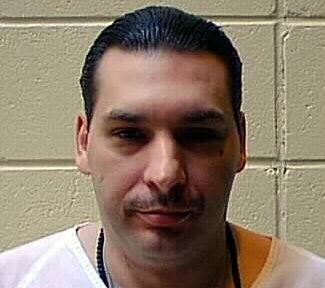
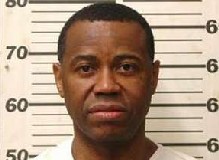
Jack Harold Jones
Murderer Brian Kevin Rosenfeld
Murderer · USA · 1985
Brian Kevin Rosenfeld Brian Kevin Rosenfeld was sentenced to three concurrent l…
23 victims
Brian Kevin Rosenfeld
Murderer · USA · 1985
Brian Kevin Rosenfeld Brian Kevin Rosenfeld was sentenced to three concurrent l…
23 victims
 Russell Ellwood
Murderer · USA · 1991
Russell Ellwood was a former taxi driver. Authorities suspected him of killing…
20 victims
Russell Ellwood
Murderer · USA · 1991
Russell Ellwood was a former taxi driver. Authorities suspected him of killing…
20 victims
 Robert Martines Perez
Murderer · USA · 1994
Name: Robert Martines Perez · Other name used in proceedings: Robert Martinez P…
15 victims
Robert Martines Perez
Murderer · USA · 1994
Name: Robert Martines Perez · Other name used in proceedings: Robert Martinez P…
15 victims
 Billy Frank Vickers
Murderer · USA · 1993
Billy Frank Vickers Vickers was executed by lethal injection in Texas on Januar…
14 victims
Billy Frank Vickers
Murderer · USA · 1993
Billy Frank Vickers Vickers was executed by lethal injection in Texas on Januar…
14 victims
 Vincent Tabak
Murderer · United Kingdom · 2010
Vincent Tabak was a Dutch engineer who lived and worked in the United Kingdom s…
1 victim
Vincent Tabak
Murderer · United Kingdom · 2010
Vincent Tabak was a Dutch engineer who lived and worked in the United Kingdom s…
1 victim
 Clinton Bankston
Homicide · USA · 1987
15 August 1987 — Ann Morris (63), her sister Sally Nicholson (59), and Sally’s…
5 victims
Clinton Bankston
Homicide · USA · 1987
15 August 1987 — Ann Morris (63), her sister Sally Nicholson (59), and Sally’s…
5 victims
 Shonda Johnson
Murderer · USA · 1997
Shonda Johnson was also known as Shonda Nicole Richards. She was White. She was…
1 victim
Shonda Johnson
Murderer · USA · 1997
Shonda Johnson was also known as Shonda Nicole Richards. She was White. She was…
1 victim
 Earl Frederick
Murderer · USA · 1989
Earl Frederick was executed by lethal injection in Oklahoma on July 30, 2002. ·…
2 victims
Earl Frederick
Murderer · USA · 1989
Earl Frederick was executed by lethal injection in Oklahoma on July 30, 2002. ·…
2 victims
 James Tenner
Murderer · USA · 1987
James Tenner was convicted of the hanging and murders of Alvin Smith and Donna…
2 victims
James Tenner
Murderer · USA · 1987
James Tenner was convicted of the hanging and murders of Alvin Smith and Donna…
2 victims
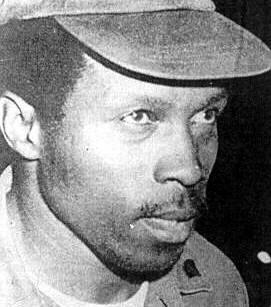 William Henry Hance
Serial killer · USA · 1977
William Henry Hance was executed by electrocution in Georgia on March 31, 1994.…
3 victims
William Henry Hance
Serial killer · USA · 1977
William Henry Hance was executed by electrocution in Georgia on March 31, 1994.…
3 victims
- Gender
- male
- Country
- USA
- Location
- Florida/Arkansas, USA
- Date of birth
- August 10, 1964
- Age at first offence
- 27
- Characteristics
- rape
- Victim profile
- Lorraine Anne Barrett, 32 / Mary Phillips, 34
- Method of murder
- Asphyxiation / Strangulation
- Date(s) of murder
- June 1, 1991 / June 6, 1995
- Years active
- 1991–1995
- Date of arrest
- —
- Status
-
Sentenced to death
Sentenced to death on April 17, 1996
Case details
Jack Harold Jones, Jr. was convicted in the White County Circuit Court of the capital murder and rape of Mary Phillips and the attempted capital murder of Lacy Phillips. He was sentenced to death by lethal injection, life imprisonment, and thirty years’ imprisonment, respectively, for the crimes.
Lorraine Anne Barrett, age 32, was found murdered in room 824 at the Days Inn Lauderdale Surf Motel, 440 Seabreeze Blvd., in Fort Lauderdale, Florida at approximately 12:17 p.m. on June 1, 1991. Barrett had just checked into the motel the night before and was in town for several days on vacation from Western Pennsylvania. Forensic detectives processed the room and collected evidence from the room as well as from the victim. Homicide detectives began their investigation and found that Barrett had been seen at the Elbow Room Bar the same night that she had checked into the Days Inn. Witnesses’ recall-seeing Barrett with a white male at the bar and later recall seeing the victim Barrett with this same white male entering an elevator at the Days Inn. The Broward County Medical Examiners Office ruled the death a homicide by asphyxiation.
A composite sketch of the suspect along with descriptions of the suspect’s tattoos was compiled and distributed; no arrests were made.
In 2002, Detective John Curcio reopened the “cold case” and began reviewing the investigation. Knowing advancements that DNA technology had made over the past 11 years, evidence recovered at the scene in 1991 was submitted by Detective Curcio to the Broward Sheriff's Office and FDLE labs to be typed and profiled. This information was then sent to NDIS (National DNA indexing System) to be posted with a request for individual states to search their databases for a possible match.
During the week of March 14, 2003 Detective Curcio learned the suspect DNA recovered in 1991 matched that of an inmate on Death Row in the State of Arkansas. The DNA match was tested and reconfirmed by investigators of the State Crime Lab in Arkansas. The inmate matched to the DNA was a white male named Jack Harold Jones, 08-10-64, currently on Death Row in connection with the 1995 Murder of a female along with the attempted murder of her 11 year-old daughter in White County Arkansas. Jones at the time of his arrest had multiple tattoos described by witnesses in the 1991 murder of Barrett and matched the over physical description of the suspect. In the Arkansas case, on the afternoon of June 6, 1995, seventeen-year-old Darla Phillips dropped her eleven-year-old sister Lacy off at Automated Tax and Accounting Service in Bald Knob, where their mother, thirty-four-year old Mary Phillips, worked as a bookkeeper. Mary was planning to take her daughter to a 3:00 p.m. dentist appointment. Darla and her fifteen-year-old brother Jessie were expecting their mother and little sister to return to their home in Bradford around 4:30 p.m. or 5:00 p.m. They never arrived.
A black-haired male entered the business before Lacy and her mother could leave for the dentist's office. According to Lacy's testimony at trial, the man had a teardrop tattoo on his face and more tattoos on his arm. The man had come into the business earlier that day to borrow some books. When he returned, he complained that he had been given the wrong book. He then told Lacy and her mother that he was "sorry," but that he was "going to have to rob (them)." He ordered Mary to lay down on her stomach, and then made Lacy lay down on top of her mother. After retrieving the cash out of the register, he took them into a small break room. The man took Lacy into a bathroom off of the break room, tied her to a chair, then left. When he returned, Lacy, now crying, asked the man not to hurt her mother, to which he replied, "I'm not. I'm going to hurt you." He began to choke Lacy until she passed out. After Lacy lost consciousness, Jones struck her at least eight times in the head with the barrel of a BB gun, causing severe lacerations and multiple skull fractures with bone fragments penetrating into Lacy's brain. When Lacy woke up, she saw blood and began to vomit. She went back to sleep and awakened later when police, seeing her bloodied body and thinking she was dead, were taking photographs of her.
Police found Mary's body nude from the waist down. A cord from a nearby Mr. Coffee pot was wrapped around her neck and wire was tied around her hands, which were positioned behind her back. Bruises on her arms and back indicated that she had struggled with her attacker prior to her death. According to autopsy results, Mary died from strangulation and blunt-force head injuries. Rectal swabs indicated that she had been anally raped before she was killed.
Based on Lacy's description of the assailant, an officer from the Arkansas State Police went to Jones's residence and asked him if he would accompany him to the White County Sheriff's Office. Once there, Jones was read his Miranda rights and signed a waiver-of-rights form. He admitted that he had committed the crimes because he wanted to get revenge against the police. He reasoned that his wife had been raped, and that the police had done nothing about it.
Timeline
- June 1, 1991 — Lorraine Anne Barrett, age 32, was found murdered in room 824 at the Days Inn Lauderdale Surf Motel, 440 Seabreeze Blvd., in Fort Lauderdale, Florida at approximately 12:17 p.m.
- 1991 — Forensic detectives processed the room and collected evidence from the room as well as from the victim; no arrests were made after the composite sketch and tattoos descriptions were compiled and distributed.
- 2002 — Detective John Curcio reopened the “cold case” and began reviewing the investigation.
- March 14, 2003 — Detective Curcio learned the suspect DNA recovered in 1991 matched that of an inmate on Death Row in the State of Arkansas.
- June 6, 1995 — Mary Phillips and her eleven-year-old daughter Lacy were in an accounting office in Bald Knob; Jones entered the business and robbed them at gunpoint; Jones anally raped and murdered Mary and severely beat and strangled Lacy.
- April 17, 1996 — Jones was sentenced to death by lethal injection.
- January 6, 2000 — Arkansas Supreme Court delivered its opinion in Jack Harold Jones Jr. v. State, CR 98-1091.
- July 20, 2005 — U.S. District Court following denial of habeas corpus granted opening of the judgment and permission to amend the petition (Case No. 5:00-CV-401, before Howard, J.).
- Nov. 8, 2004 — U.S. District Court denied habeas corpus in an unpublished order.
- Apr 13, 2006 — U.S. District Court for the Eastern District of Arkansas denied an amended petition of habeas corpus (Case No. 5:00-CV-401, Howard, J.).
- June 14, 2006 — U.S. Supreme Court proceedings were preceded by the Eighth Circuit’s denial of the petitioner’s application for certificate of appealability.
- July 26, 2006 — Rehearing was denied (Case No. 06-2101).
- Sep 8, 2006 — Petition for certiorari was filed in the U.S. Supreme Court (Case No. 06-6392).
- 2007 — Gov. Mike Beebe set an Oct. 16 execution date for Jones.
- Sept. 7, 2007 — Jones spoke at his clemency hearing in Varner, Ark.
The offences
On June 6, 1995, Jones entered Automated Tax and Accounting Service in Bald Knob before Lacy and Mary could leave for Mary’s 3:00 p.m. dentist appointment. The man borrowed books earlier in the day, returned, and complained that he had been given the wrong book. He told Lacy and Mary he was "sorry," but that he was "going to have to rob (them)." He ordered Mary to lay down on her stomach, and made Lacy lay down on top of her mother. He retrieved cash from the register and took them into a small break room. He took Lacy into a bathroom off the break room, tied her to a chair, and left. After returning, Lacy asked him not to hurt her mother; he replied, "I'm not. When Lacy woke up, she saw blood and began to vomit, then slept again until police, seeing her bloodied body and thinking she was dead, were taking photographs of her.
A cord from a nearby Mr. Coffee pot was wrapped around her neck and wire was tied around her hands behind her back. Bruises on her arms and back indicated she had struggled with her attacker. Rectal swabs indicated she had been anally raped before she was killed.
Lacy testified that Jones had a teardrop tattoo on his face and more tattoos on his arm, and that he had black hair. Based on her description, an officer from the Arkansas State Police went to Jones’s residence and asked him to accompany him to the White County Sheriff's Office. There, Jones was read his Miranda rights and signed a waiver-of-rights form. He admitted that he committed the crimes because he wanted revenge against the police, reasoning that his wife had been raped and that the police had done nothing about it.
Investigation
In 1991, homicide detectives investigated the death of Lorraine Anne Barrett, collecting evidence from the Days Inn Lauderdale Surf Motel room and from the victim. Barrett had been seen at the Elbow Room Bar the same night that she had checked into the Days Inn, and witnesses recalled seeing Barrett with a white male at the bar and later entering an elevator at the Days Inn. The Broward County Medical Examiners Office ruled her death a homicide by asphyxiation.
A composite sketch of the suspect and descriptions of the suspect’s tattoos were compiled and distributed, but no arrests were made.
In 2002, Detective John Curcio reopened the “cold case” and reviewed the investigation. Evidence recovered at the 1991 scene was submitted by Detective Curcio to the Broward Sheriff's Office and FDLE labs to be typed and profiled. The profile was sent to NDIS with a request for individual states to search their databases for a possible match.
During the week of March 14, 2003 Detective Curcio learned the suspect DNA matched that of an inmate on Death Row in Arkansas, and investigators of the State Crime Lab in Arkansas tested and reconfirmed the match. The DNA matched a white male named Jack Harold Jones, 08-10-64, who was on Death Row in connection with the 1995 Arkansas crimes. His tattoos at the time of arrest matched the witness descriptions from the 1991 Barrett murder and matched the suspect’s physical description.
Arrest and interrogation
After Lacy Phillips described the assailant, an Arkansas State Police officer went to Jones’s residence and asked if he would accompany them to the White County Sheriff's Office. Jones was read his Miranda rights and signed a waiver-of-rights form. He admitted he had committed the crimes to get revenge against police, reasoning that his wife had been raped and the police had done nothing about it.
Trial
Jones was convicted in the White County Circuit Court of the capital murder and rape of Mary Phillips and the attempted capital murder of Lacy Phillips. The jury returned verdicts resulting in sentences of death by lethal injection, life imprisonment, and thirty years’ imprisonment, respectively.
During trial, Chantell Beckett, a criminalist with the Arkansas State Crime Laboratory, testified that she examined one head hair, one head-hair fragment, and one pubic hair taken from Mary Phillips’s body and compared them to known samples from Jones. Beckett testified that the hairs were "microscopically similar."
The Arkansas Supreme Court addressed postconviction issues in Jones v. State, 340 Ark. 1, 10, ___ S.W.3d ___, ___ (2000) in a supplemental opinion clarifying the prejudice standard.
Sentencing
Jones was sentenced to death by lethal injection.
The Arkansas Supreme Court discussed sentencing-phase aggravating circumstance submissions, including an aggravating circumstance involving "especially cruel or depraved manner" and an aggravating circumstance involving "avoiding or preventing arrest." The court also addressed the submission of aggravating circumstances of pecuniary gain and the purpose of avoiding arrest and discussed the prosecution’s theory of premeditation and deliberation during the guilt phase.
Appeals and post-conviction
Jones’s convictions and sentences were affirmed on direct appeal by Jones v. State, 947 S.W.2d 339 (Ark.), cert. denied, 522 U.S. 1002 (1997).
Jones filed a petition for postconviction relief pursuant to Ark. R. Crim. P. 37. The trial court denied the petition. On appeal, Jones v. State (Ark. 2000) affirmed the denial of postconviction relief. The opinion included that ineffective assistance claims required showing deficient performance and prejudice, and applied the standard for submission of aggravating or mitigating circumstances to the jury.
The Arkansas Supreme Court affirmed denial of postconviction relief in the case reported as 8 S.W.3d 482 (Ark. 2000). In its reasoning, the court found:
- The record did not show conclusively that trial counsel performed deficiently for failing to object to submission of the aggravating circumstance that the capital murder was committed in an especially cruel or depraved manner.
- Rule 37 relief was not warranted regarding the aggravating circumstance that the capital murder was committed for the purpose of avoiding or preventing arrest.
- The trial and sentencing-phase aggravating circumstances did not lead to a due-process violation in connection with the prosecution’s theory of premeditation and deliberation.
- Jones failed to demonstrate prejudice from counsel’s failure to object to expert testimony on hair analysis.
On rehearing denial, the supplemental opinion clarified that the standard for showing prejudice on an ineffective-assistance-of-counsel claim was "a reasonable probability that, but for counsel's unprofessional errors, the result of the proceeding would have been different."
Federal habeas and certificate of appealability
- The U.S. District Court for the Eastern District of Arkansas denied habeas corpus in an unpublished order dated Nov. 8, 2004.
- The court opened the judgment and permitted amendment following denial of habeas corpus on July 20, 2005 (Case No. 5:00-CV-401, before Howard, J.).
- The court denied an amended petition of habeas corpus on Apr 13, 2006 (Case No. 5:00-CV-401, Howard, J.).
- The Eighth Circuit denied Jones’s application for a certificate of appealability on June 14, 2006, and rehearing was denied 7/26/06 (Case No. 06-2101).
Petition for certiorari
A petition for certiorari was pending in the U.S. Supreme Court (Case No. 06-6392), filed Sep 8, 2006.
Clemency and execution setting
After a clemency hearing before the Arkansas Parole Board, Lacy Phillips told reporters: "He's an evil person. He does not need to be anywhere but where he should be on Oct. 16."
Gov. Mike Beebe set an Oct. 16 execution date for Jack Harold Jones Jr. in a proclamation stating that all of Jones' state and federal appeals had been exhausted. The condemned killer was to die by injection. Jones was described as 43 at the time of the Oct. 16 setting.
The later reporting also stated that Jones set for 10/16 execution in Arkansas and that a death row inmate from White County would have a hearing Friday on his application for executive clemency. The hearing was scheduled to take place in the Varner Supermax Unit, beginning at 9 a.m., with Jones appearing before a panel of the Arkansas Post Prison Transfer Board. A protesters hearing was described as being held at 1:30 p.m. at the office of the Arkansas Parole Board in Little Rock. Prosecuting Attorney Chris Raff said the Post Prison Transfer Board would make a non-binding recommendation to the governor and that he planned to ask that the death sentence be carried out.
The reporting also stated that in 2005 Jones pleaded guilty to the 1991 murder of Lorraine Anne Barrett, 32, in Florida.
Other details
People and ages
- Jack Harold Jones, Jr. — DOB August 10, 1964; described as 43 at the time Gov. Beebe set the execution date.
- Lorraine Anne Barrett — age 32.
- Mary Phillips — thirty-four-year old bookkeeper.
- Lacy Phillips — eleven-year-old daughter.
- Darla Phillips — seventeen-year-old.
- Jessie Phillips — fifteen-year-old brother.
- Jones’s counsel at sentencing in April 17, 1996 was Richard Hutto.
- Current counsel listed later included Jeff Rosenzweig and Dale Adams.
- Prosecuting Attorney Chris Raff was named as prosecuting attorney for the 17th Judicial District.
Legal issues and procedural details
Significant legal issues included inconsistent sentencing-phase verdict forms: on one form, the jury stated that certain mitigating circumstances were believed to exist by some but not all jurors, and on another form, the jury indicated that no evidence was presented in support of such mitigating circumstances. The potential mitigators were:
- whether Mr. Jones suffered from the mental disease or defect of attention-deficit hyperactivity disorder,
- whether, despite his efforts, Mr. Jones was repeatedly misdiagnosed and treated with inappropriate medications,
- whether Mr. Jones' parents were often inconsistent in disciplining their children.
A possible due process claim was described as stemming from Hicks v. Oklahoma, related to state supreme court's harmless error review of the inconsistent verdict form, in light of statute prescribing harmless error review when jury erroneously finds aggravating circumstances.
Defense presentation at Jones’s trial was described as minimal, including failure to fully investigate Jones’s social history. A mitigation investigator for Capital Resource Counsel, David Freedman, filed an affidavit in 2005 describing findings. The affidavit described Jones’s alleged attempted suicide on two occasions and described Jones as having an anti-social personality and bi-polar disorder. It also described that Jones spent six days in a mental hospital, was involuntarily admitted to a psychiatric facility in 1991, and on his 1st birthday suffered a high fever and convulsions and was diagnosed with Attention Deficit Disorder. It stated he was given Ritalin at about age 5 and began to hallucinate, probably caused by the Ritalin. It also described Jones beginning to use illicit drugs at an early age, including marijuana, and described his mother as having a serious gambling problem and his father as an alcoholic.
A quoted remark from the mitigation-related reporting included Lacy Phillips’s clemency-hearing statement: "He's an evil person. 16."
Spotted an error, or have more information about this case?