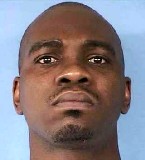
Kelvin Jordan
Murderer Brian Kevin Rosenfeld
Murderer · USA · 1985
Brian Kevin Rosenfeld Brian Kevin Rosenfeld was sentenced to three concurrent l…
23 victims
Brian Kevin Rosenfeld
Murderer · USA · 1985
Brian Kevin Rosenfeld Brian Kevin Rosenfeld was sentenced to three concurrent l…
23 victims
 Russell Ellwood
Murderer · USA · 1991
Russell Ellwood was a former taxi driver. Authorities suspected him of killing…
20 victims
Russell Ellwood
Murderer · USA · 1991
Russell Ellwood was a former taxi driver. Authorities suspected him of killing…
20 victims
 Robert Martines Perez
Murderer · USA · 1994
Name: Robert Martines Perez · Other name used in proceedings: Robert Martinez P…
15 victims
Robert Martines Perez
Murderer · USA · 1994
Name: Robert Martines Perez · Other name used in proceedings: Robert Martinez P…
15 victims
 Billy Frank Vickers
Murderer · USA · 1993
Billy Frank Vickers Vickers was executed by lethal injection in Texas on Januar…
14 victims
Billy Frank Vickers
Murderer · USA · 1993
Billy Frank Vickers Vickers was executed by lethal injection in Texas on Januar…
14 victims
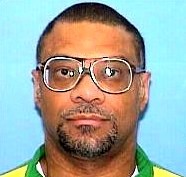 Henry Brisbon
Homicide - Murderer · USA · 1973
Henry Brisbon was a juvenile (17) when he was convicted for double murder. The…
3 victims
Henry Brisbon
Homicide - Murderer · USA · 1973
Henry Brisbon was a juvenile (17) when he was convicted for double murder. The…
3 victims
 Cesar Barone
Serial killer · USA · 1991
Cesar Barone was pronounced “Roh-dee.” During his childhood in Fort Lauderdale,…
4 victims
Cesar Barone
Serial killer · USA · 1991
Cesar Barone was pronounced “Roh-dee.” During his childhood in Fort Lauderdale,…
4 victims
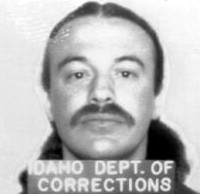 Gerald Pizzuto
Murderer · USA · 1985
Gerald Pizzuto Jr. was sentenced to death in Idaho in May 1986. On February 22,…
4 victims
Gerald Pizzuto
Murderer · USA · 1985
Gerald Pizzuto Jr. was sentenced to death in Idaho in May 1986. On February 22,…
4 victims
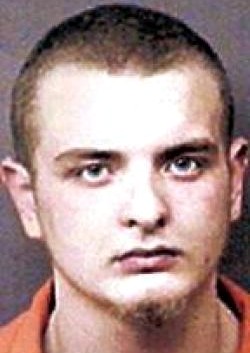 Cory Gregory
Homicide · USA · 2005
January 21, 2005 — Cory Gregory and Sarah Kolb killed Adrianne Reynolds in Sara…
1 victim
Cory Gregory
Homicide · USA · 2005
January 21, 2005 — Cory Gregory and Sarah Kolb killed Adrianne Reynolds in Sara…
1 victim
 Pablo Melendez
Murderer · USA · 1994
Pablo Melendez was sentenced to death on May 21, 1996. At the guilt/innocence s…
1 victim
Pablo Melendez
Murderer · USA · 1994
Pablo Melendez was sentenced to death on May 21, 1996. At the guilt/innocence s…
1 victim
- Gender
- male
- Country
- USA
- Location
- Clarke County, Mississippi, USA
- Date of birth
- December 25, 1976
- Age at first offence
- 19
- Characteristics
- armed robbery, revenge
- Victim profile
- Tony Roberts and his two year old son, Codera Bradley
- Method of murder
- Shooting
- Date(s) of murder
- October 5, 1995
- Years active
- 1995
- Date of arrest
- 5 days later
- Status
-
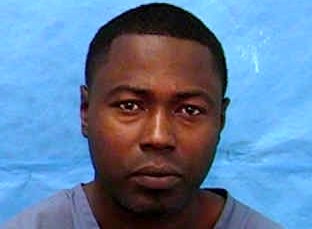
Executed
Executed by lethal injection on 5 December 1996
Case record: Kelvin Jordan
Parties and court
Kelvin Jordan (also known as Kelvin L. Jordan) was convicted of capital murder by a Clarke County jury in Mississippi and sentenced to death by lethal injection. The Mississippi Supreme Court case was styled Kelvin Jordan v. State of Mississippi (No. 96-DP-01316-SCT, EN BANC) and later post-conviction proceedings were styled Kelvin Jordan v. State of Mississippi (No. 1999-DR-01391-SCT, EN BANC).
Victims
- Tony Roberts
- Codera Bradley (two-year-old child)
Timeline
- February 1996 term — Kelvin Jordan was indicted during the February 1996 term of the Circuit Court of Clarke County in a three count indictment.
- 5 October 1995 — Two capital murders and an armed robbery occurred on this date, involving Tony Roberts and Codera Bradley.
- 30 October 1996 — A jury found Kelvin Jordan guilty on all three counts.
- 31 October 1996 — The jury returned verdicts of death for both capital murder counts.
- 10 October 1995 — Kelvin Jordan was arrested.
- 19 November 1998 — The Mississippi Supreme Court issued its opinion in Jordan v. State (No. 96-DP-01316-SCT).
- 19 December 1996 — Jordan’s execution date to be set within sixty days of final disposition was referenced in the decision; execution was later scheduled for December 5, 1996 in the status field.
- May 19, 2005 — The Mississippi Supreme Court denied Jordan post-conviction relief in Kelvin Jordan v. State of Mississippi (No. 1999-DR-01391-SCT).
The offence
Kelvin Jordan and Frontrell Edwards shot and killed Tony Roberts and Codera Bradley while engaged in armed robbery.
Indictment and counts
Kelvin Jordan was indicted in a three count indictment:
- Count I (capital murder): On October 5, 1995, Kelvin Jordan and Frontrell Edwards shot and killed Codera Bradley while engaged in the commission of an armed robbery (Miss. Code Ann. § 97-3-19(2)(e)).
- Count II (capital murder): On October 5, 1995, Kelvin Jordan and Frontrell Edwards shot and killed Tony Roberts while engaged in the commission of an armed robbery (Miss. Code Ann. § 97-3-19(2)(e)).
- Count III (armed robbery): Kelvin Jordan and Frontrell Edwards wrongfully took possession of a 1992 Nissan belonging to Tony Roberts (Miss. Code Ann. § 97-3-79).
Plan to rob for money to attend a ball game
During their journey to a truck stop, Jordan and Edwards discussed “jacking” or robbing someone that night to get money to go to a ball game, and Jordan was concerned about being identified by the victim; Edwards responded that he would simply kill the victim following the incident.
Investigation
Crime scene events and movement of victims
- Tony Roberts and his two-year-old son Codera Bradley were in Pachuta, Mississippi.
- Roberts visited his child’s mother and then the child spent the night with his father.
- At about 9:15 p.m., Roberts and Codera left the house and drove towards Roberts’ home.
- At about 8:00 p.m. the same evening, Jordan and Edwards walked to a truck stop in Pachuta. Jordan was armed with a .25 caliber pistol and Edwards carried a .22 caliber pistol.
- Edwards approached Roberts’ car and asked if Jordan and Edwards could have a ride. Roberts agreed and pulled his son into his lap. Jordan sat in the front passenger seat and Edwards climbed into the back seat behind Roberts.
- They traveled down Highway 11 until they reached Barnett Crossing, when Roberts told the passengers he could not take them farther. Roberts pulled the car onto the side of the road to let them out.
- Edwards then reached from the back seat and shot Roberts in the side of the face with a .22 caliber pistol. Roberts remained conscious, crawled out of the car, and told Jordan and Edwards they could have the car.
- While Roberts was standing on the side of the road clutching his head, Jordan fired additional shots toward Roberts with the .25 caliber pistol. Roberts then fell to the ground.
- Edwards dragged Roberts across the highway to allow an oncoming car to pass. After searching Roberts’ pockets and complaining that Roberts had no money, Edwards dragged Roberts back to the car and placed him in the trunk.
- Jordan drove the car about one mile down the highway and exited onto a logging road, where they stopped the car and took Roberts from the trunk.
- When Roberts began to kick and flinch, Jordan fired another shot at Roberts with a .380 caliber pistol he had found between the seats in Roberts’ car.
- After removing Roberts’ shoes, Edwards dragged the body down a path into the woods. Jordan remained at the vehicle with Codera Bradley.
- When Edwards returned from the woods, he grasped Codera’s head and pulled the child into the front seat. Edwards asked the child if he wanted to go where his daddy was; the child began to cry and scream.
- Covering the child’s mouth with his hand, Edwards led Codera into the woods where Roberts’s body was located and fired one lethal shot into the back of Codera’s head.
- Edwards then fired one last shot at Roberts before reemerging from the woods.
- Edwards and Jordan drove Roberts’ Nissan to a dirt pit away from the road. They removed the car’s stereo equipment and some car care products, ignited the automobile, and left the scene.
- Jordan tossed Roberts’ .380 pistol into a nearby pond; Edwards threw in the clip.
- Edwards later gave his mother the .22 pistol. The .25 pistol was left in the bucket of car care products taken out of Roberts’ car.
Missing persons
The following day, Tony Roberts and Codera Bradley were reported missing. Two days after the murders, two acquaintances of Edwards, Mark Holloway and Tracy Nicholson, went to Edwards’ trailer seeking Holloway’s pager. They noticed guns and pieces of electronic equipment (a car stereo, speakers, etc.) in the back bedroom.
Holloway later called the wife of a deputy sheriff and told her what they observed in the trailer.
Warrants and items discovered
Sunday afternoon, the Jasper County Sheriff’s Department received a call concerning a burned vehicle in a dirt pit in the Rose Hill area. The serial number from the car indicated it belonged to Roberts, and a radio had been removed from the car.
Based on the phone call to the deputy’s wife, a warrant was obtained to search Edwards’ trailer.
During the search, one officer noticed an orange object in the woods behind the trailer, followed a path into the woods, and discovered it was a chainsaw. A plastic bucket containing car care products, a .25 caliber pistol, and loose .380 rounds of ammunition was also discovered. The bucket and accompanying products were later identified as products similar to those Roberts had kept in his vehicle.
Arrest and statements
Kelvin Jordan was arrested on October 10, 1995.
Jordan subsequently confessed his involvement in the murders to Deputy Sheriff Riley and to the investigator for the Highway Patrol, Raymond Delk. Jordan then provided additional statements to Sheriff Cross and to Deputy J.G. Kufel.
After his confession, Jordan took Deputy Sheriff Riley and Officer Delk to the Clarke County site where the bodies of Tony Roberts and Codera Bradley were located. The bodies were found lying next to each other.
Wounds described at the bodies
- Tony Roberts suffered two gunshot wounds:
- One wound entered below the right eye and exited through the left eye.
- The other entered the left temple above the left ear and exited from the right ear; the latter wound was lethal.
- The child had been shot once in the back of the head with the bullet exiting above the upper lip. The child was still clutching a small package of toys.
Jordan enabled officers to recover:
- The .380 pistol from the pond
- The .22 pistol from Edwards’ mother
A projectile fired from the .380 pistol was found in a pool of blood where Jordan stated Roberts was pulled from the trunk on the logging road. A cartridge casing found at the scene bore class characteristics of the .380 pistol. Another cartridge casing near the foot of Codera Bradley also bore characteristics of the .380 pistol found in the pond.
Trial
Guilt phase verdict
Jordan was tried by jury and found guilty of all three counts on October 30, 1996.
Sentencing phase verdict
Thereafter, the jury heard evidence and arguments in aggravation and mitigation. On October 31, 1996, the jury returned a sentence of death for both capital murder counts.
Jury verdict text
As to Count I
We, the Jury, unanimously find from the evidence, beyond a reasonable doubt, that the following facts existed at the time of the commission of the capital murder under Count I:
- The defendant intended that the killing of Codera Bradley take place, and
- The defendant contemplated that lethal force would be employed.
Next, we, the Jury, unanimously find that the aggravating circumstances of:
- The capital offense was committed while the Defendant was engaged in the crime of robbery. And
- The capital offense was committed with the purpose of avoiding arrest. And
- The capital offense was especially heinous, atrocious or cruel.
are sufficient to impose the death penalty and that there are insufficient mitigating circumstances to outweigh the aggravating circumstances and we unanimously find that the Defendant should suffer death under Count I. /s/ Kathy Hunter Foreman of the Jury
As to Count II
We, the Jury, unanimously find from the evidence, beyond a reasonable doubt, that the following facts existed at the time of the commission of the capital murder under Count II:
That the defendant attempted to kill Tony Roberts
The defendant intended that the killing of Tony Roberts, take place, and
The capital offense was committed while the Defendant was engaged in the crime of robbery and 2. The capital offense was committed with the purpose of avoiding arrest, and 3.
are sufficient to impose the death penalty and that there are insufficient mitigating circumstances to outweigh the aggravating circumstances and we unanimously find that the Defendant should suffer death under Count II. /s/ Kathy Hunter Foreman of the Jury
Sentence
Jordan was sentenced to death by lethal injection. His execution had been stayed pending appeal.
Appeals (direct appeal and post-conviction)
Direct appeal issues (assignments of error)
Jordan raised eight assignments of error for appellate review:
- Admission of photographs of the victims’ bodies at the crime scene and autopsy photographs of Codera Bradley.
- Lack of standing to contest the search of the area surrounding the co-defendant’s trailer.
- Sheriff Cross’s testimony during sentencing phase concerning confession of Frontrell Edwards; Jordan argued denial of confrontation.
- Cross-examination of Jordan’s mother regarding her son’s youth court record during sentencing phase.
- Jury instruction regarding mitigation; Jordan argued it shifted the burden to the defendant.
- Denial of request for a mercy instruction.
- Admission of a photograph of the victims taken before their death.
- Claim that the death penalty was disproportionate and excessive considering mitigating evidence.
Photograph admissibility
The trial court held a hearing on admissibility outside the presence of the jury. Defense counsel objected to admission of photographs marked as Exhibits 22 through 28.
The court first addressed Exhibit 26, depicting the bodies of Tony Roberts and Codera Bradley lying in the woods as found. It then addressed Exhibits 22 and 23 as facial shots illustrating precise locations of entry and exodus of bullets, and it found the three photographs admissible.
BY THE COURT: All right. The Supreme Court has ruled in many cases dealing with the admissibility of photographs. With respect to Exhibit Number 26, 22, and 23 that have been marked for identification purposes only-specifically with Exhibit 26 for Identification only, it shows the condition of the victims immediately after the incident. There's testimony that the bodies had not been moved by anyone prior to this witness making these photos. Second, they corroborate the testimony of the witness as to the placement of the bullet holes found in the victims. That's 22 and 23. It shows the extent of the head injuries suffered by the victims. They are corroborative of the witnesses' testimony in this regard. The Court finds that although they are prejudicial, that they are more probative of the legal issues in this case than being unfairly prejudicial.
The judge ruled that Exhibit 24 (projectile on the ground with a ruler) and Exhibit 25 (blood stains on the highway where Tony Roberts was initially shot) were admissible.
For autopsy photographs Exhibits 27 and 28, the trial judge ruled them admissible and made the following statement:
BY THE COURT: Well, upon examining these photos, it's the Court's opinion that they are not unduly greusome [sic]. Autopsy reports have been ruled inadmissible when they have showed mutilation of body parts. This is not what I am looking at. These are-will be just corroborative of, again, how this act occurred. It is prejudicial, but it is not more prejudicial than probative. Of course, the case is if it's more probative than unfairly prejudicial to the defendant. I don't think it is. It is relevant.
The appellate court concluded there was no Rule 403 violation on this point and affirmed admission.
Search and standing
The appellate court addressed Jordan’s pretrial motion to suppress and relied on a curtilage test. The trial court had held that the wooded area behind the trailer was not part of the curtilage and Jordan had no standing to contest the search.
Sentencing-phase confrontation issue
Frontrell Edwards invoked the Fifth Amendment and refused to answer counsel’s questions. Charlie McCree testified that Edwards told him that Edwards, rather than Jordan, had shot Tony Roberts and Codera Bradley on the night in question and that McCree believed Jordan was against the killings.
The State then called Sheriff Kenneth Cross to testify about contents of two confession statements made by Edwards soon after arrest, in which Edwards asserted that:
- “it was initially Kelvin Jordan's idea to 'jack someone' on the night in question;”
- Kelvin Jordan shot Tony Roberts; and
- Kelvin Jordan shot Codera Bradley.
Jordan argued the testimony was inadmissible hearsay and violated confrontation rights. The appellate court ruled the testimony was properly admitted to impeach credibility under Miss. R. Evid. 806, and it held there was no constitutional violation under the presented circumstances.
Youth court record cross-examination
Jordan’s mother, Nannie Craft, testified as mitigation about Jordan’s peaceable character and model childhood. During cross-examination, the prosecution asked whether Jordan had been charged with at least four crimes in Jasper County Youth Court. Defense counsel objected; the trial court overruled the objection and responded:
BY THE COURT: Well, it's in response to her answers to questions that were asked. I understand they are not adjudications, but she is on cross-examination.
Jordan argued the questioning was prejudicial and violated evidentiary rules. The appellate court held that inquiry into prior juvenile records on cross-examination was permissible to rebut opinion testimony and found the questioning proper.
Mitigation instruction; burden of proof
Jordan challenged instruction C-2-S as shifting the burden of proof. The appellate court determined the instruction did not shift the burden and found no error.
Mercy instruction
The appellate court held capital defendants were not entitled to a mercy instruction and found no reversible error in refusal.
Photograph taken before death; identification purpose
The trial court admitted photographs taken before death for identification. The photographs were shown to Frankie Roberts, identified as Tony Roberts’ father and Codera Bradley’s grandfather, who testified they were accurate representations of the victims before death. The appellate court affirmed admission for limited identification purpose.
Proportionality review and affirmance
The appellate court applied Miss. Code Ann. § 99-19-105(3)(c)(1994) and compared Jordan’s sentence with similar cases. It relied on Davis v. State, 684 So.2d 643 (Miss.1996) and compared circumstances, including robbery-related killings and Jordan’s and Edwards’s conduct in relation to money to go to a ball game.
The appellate court affirmed:
- Counts I and II: conviction of capital murder and sentence of death by lethal injection affirmed.
- Count III: conviction of armed robbery reversed and vacated, to avoid multiple punishments for the same offense.
Direct appeal outcome (double jeopardy)
In light of convictions of capital murder with armed robbery as an underlying offense, conviction on the armed robbery charge constituted double jeopardy under the circumstances of the case; the appellate court reversed and vacated the armed robbery conviction.
Post-conviction relief (2005 decision)
Procedural posture
Jordan sought post-conviction relief pursuant to Miss. Code Ann. §§ 99-39-1 et seq. (Rev. 2000). The Mississippi Supreme Court reviewed the claims raised in the petition and denied relief.
Factual and procedural background in post-conviction decision
The post-conviction opinion recounted that on October 5, 1995, Jordan and Frontrell Edwards formulated a plan to rob someone to get money to attend a football game after smoking marijuana and drinking beer outside a Pachuta truck stop. The plan included killing to avoid later identification. The opinion described the robbery of Tony Roberts and the subsequent shootings of Tony Roberts and Codera Bradley, with bodies dumped on a wooded dirt road off the highway, followed by investigation and Jordan’s confession.
It also stated that Jordan was convicted by a Clarke County jury of two counts of capital murder, and after a separate hearing, the jury sentenced Jordan to death. Jordan’s direct appeal was affirmed unanimously by the Mississippi Supreme Court in Jordan v. State, 728 So.2d 1088 (Miss. 1998). Rehearing was denied, and the United States Supreme Court denied certiorari.
Post-conviction issues addressed
Jordan raised numerous issues, including:
- Testimony by Deputy Sheriff Todd Kemp during a psychological examination context; the court found procedural bars applied and found no constitutional deprivation requiring relief.
- Alleged Brady violations regarding Spencer Tracy Nicholson and Mark Holloway; the court found no merit.
- Ineffective assistance of counsel, including:
- failure to discover/impeach Nicholson and Holloway (affidavits based largely on hearsay; no Strickland prejudice found),
- failure to retain a ballistics expert (State ballistics experts unable to determine definitively; court found no ineffective assistance),
- discovery issues,
- voir dire adequacy,
- parole eligibility instruction arguments,
- mitigation evidence preparation, including testimony by Nannie Craft and Dr. Reginald White,
- closing argument objection in relation to Caldwell v. Mississippi, with the court finding the comments were not comparable and finding no merit,
- decision-making about calling Charles McCree during guilt phase versus sentencing phase,
- preservation of issues for appeal regarding youth court matters and penalty-phase jury responsibility arguments,
- defenses based on international treaties,
- evidentiary issues during sentencing phase regarding childhood illnesses and Edwards’s alleged intimidation/domination (procedurally barred and without merit).
- Conflicting State theories between Jordan’s trial and Edwards’s trial; court found procedural bar and found no merit.
- Disproportionate sentence arguments comparing Jordan’s death sentence to Edwards’s later death sentence outcomes; the court found issues decided on direct appeal and found no merit.
- Atkins v. Virginia and Ring v. Arizona claims; court found Atkins claim unsupported and found Ring inapplicable to Atkins determinations under precedent and found Apprendi/Ring had no applicability to Mississippi’s scheme.
- Cruel and unusual punishment (method of execution) claims; court found procedural bar and found no merit.
- Capital sentencing scheme claims; court found procedural bar and found no constitutional deficiencies.
- Jury instruction refusal claims; court found procedural bar in part and found no merit.
- Voir dire and jury qualifications; court found procedural bar and found no merit.
- Claims of cumulative error in guilt and penalty phases; court found no reversible error.
Outcome of post-conviction proceeding
Jordan’s post-conviction relief motion was denied, and leave to seek post-conviction relief was denied.
Spotted an error, or have more information about this case?