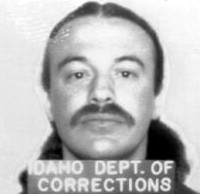
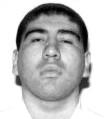
Gerald Pizzuto
Murderer Brian Kevin Rosenfeld
Murderer · USA · 1985
Brian Kevin Rosenfeld Brian Kevin Rosenfeld was sentenced to three concurrent l…
23 victims
Brian Kevin Rosenfeld
Murderer · USA · 1985
Brian Kevin Rosenfeld Brian Kevin Rosenfeld was sentenced to three concurrent l…
23 victims
 Marvin Gray
Murderer · USA · 1975
Marvin Gray was convicted killer who claimed responsibility for 23 slayings and…
23 victims
Marvin Gray
Murderer · USA · 1975
Marvin Gray was convicted killer who claimed responsibility for 23 slayings and…
23 victims
 Yahweh ben Yahweh
Murderer · USA · 1980
Yahweh ben Yahweh was born and legally named Hulon Mitchell Jr. (October 27, 19…
23 victims
Yahweh ben Yahweh
Murderer · USA · 1980
Yahweh ben Yahweh was born and legally named Hulon Mitchell Jr. (October 27, 19…
23 victims
 Russell Ellwood
Murderer · USA · 1991
Russell Ellwood was a former taxi driver. Authorities suspected him of killing…
20 victims
Russell Ellwood
Murderer · USA · 1991
Russell Ellwood was a former taxi driver. Authorities suspected him of killing…
20 victims
 Walter Leroy Moody
Murderer · USA · 1989
Walter Leroy Moody was sentenced to death in Alabama in 1997. Walter Leroy Mood…
2 victims
Walter Leroy Moody
Murderer · USA · 1989
Walter Leroy Moody was sentenced to death in Alabama in 1997. Walter Leroy Mood…
2 victims
 Akshay Chand
Homicide · New Zealand · 2011
Akshay Anand Chand murdered Christie Alexis Lesley Marceau on 7 November 2011,…
1 victim
Akshay Chand
Homicide · New Zealand · 2011
Akshay Anand Chand murdered Christie Alexis Lesley Marceau on 7 November 2011,…
1 victim
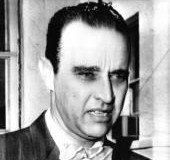 Joseph Peel
Murderer · USA · 1955
Joseph Alexander Peel was sentenced to two life terms in prison on March 30, 19…
2 victims
Joseph Peel
Murderer · USA · 1955
Joseph Alexander Peel was sentenced to two life terms in prison on March 30, 19…
2 victims
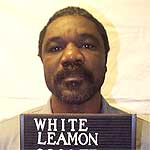 Leamon White
Murderer · USA · 1987
Leamon White was convicted of first-degree murder and sentenced to death by a M…
1 victim
Leamon White
Murderer · USA · 1987
Leamon White was convicted of first-degree murder and sentenced to death by a M…
1 victim
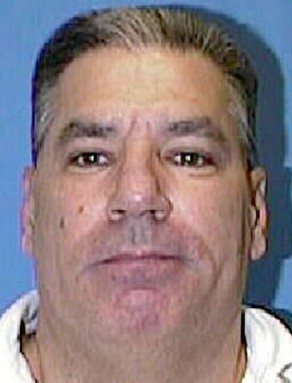 Michael Griffith
Murderer · USA · 1994
Name: Michael Griffith · Status: Executed by lethal injection in Texas on June…
1 victim
Michael Griffith
Murderer · USA · 1994
Name: Michael Griffith · Status: Executed by lethal injection in Texas on June…
1 victim
- Gender
- male
- Country
- USA
- Location
- Washington/Idaho, USA
- Date of birth
- January 11, 1956
- Age at first offence
- 29
- Characteristics
- robbery
- Victim profile
- Rita Drury, 51 / John Jones, 31 / Berta Herndon, 58, and her nephew Del Dean Herndon, 37
- Method of murder
- Shooting ( .22 caliber rifle) / Hitting with a hammer
- Date(s) of murder
- March-July 1985
- Years active
- 1985
- Date of arrest
- J uly 29, 1985
- Status
-
Sentenced to death
Sentenced to death in Idaho in May 1986; Idaho Supreme Court rejected an appeal on February 22, 2008
Case record: Gerald Pizzuto
Status and procedural history
Gerald Pizzuto Jr. was sentenced to death in Idaho in May 1986. On February 22, 2008, the Idaho Supreme Court rejected an appeal by Pizzuto seeking to void his death sentence. The decision referenced Idaho Supreme Court opinion 24802 and opinion 32679, and also referenced a United States Court of Appeals for the Ninth Circuit opinion 97-99017.
Timeline
- May 1986 — Gerald Pizzuto Jr. was sentenced to death in Idaho.
- July 26, 1985 — Idaho authorities launched a sweeping manhunt for the killers of Alberta Herndon and her nephew Delbert.
- March 16, 1985 — Rita Drury, age 51, was shot to death while babysitting her grandchild.
- Two weeks later (after March 16, 1985) — 31-year-old John Jones was gunned to death in his bed.
- 2002 — The U.S. Supreme Court ruled it was unconstitutional to execute anyone who fits the medical definition of mentally retarded.
- 2003 — A lower court dismissed Pizzuto’s claim, ruling his appeal was untimely and failed to prove his mental retardation claims.
- February 22, 2008 — Idaho Supreme Court rejected Pizzuto’s appeal.
Background
Gerald Pizzuto Jr., 52, was convicted and sentenced to die in 1986 for beating to death a Marsing woman and her nephew who were prospecting north of McCall.
Pizzuto’s attorney filed a motion appealing a lower court ruling dismissing his claim that the death sentence should be reversed because he was clinically mentally retarded at the time of the slayings. Federal Public Defender Joan Fisher argued that during a pre-sentence investigation, a physician testified that Pizzuto scored 72 on an IQ test, was unintelligent, impulsive and could not anticipate the consequences of his actions.
Pizzuto sought to apply the relevant standard retroactively to his case. Idaho code defined mental retardation using an IQ threshold of 70 or below, and Idaho law required him to prove that he was mentally retarded at the time of the crimes, when he was 29, and that the retardation occurred before his 18th birthday.
Pizzuto also argued that IQ scores are accurate within five points, meaning his score could have been as low as 67. The state responded that the same margin of error standard could be applied to raise Pizzuto’s IQ to 77.
The offence
Pizzuto was convicted of killing Berta Herndon, 58, of Marsing, and her 37-year-old nephew Del Dean Herndon, of Moresfield Neb., as they were prospecting in an area known as Ruby Meadows, about 26 miles north of McCall.
He was also convicted of one count of grand theft.
At trial, prosecutors argued that Pizzuto approached the victims with a .22 caliber rifle as they arrived at their mountain cabin. Inside the cabin, he tied their wrists behind their backs and bound their legs to steal money. Later, he bludgeoned Berta Herndon to death with hammer blows to the head, then hit her nephew over the head with a hammer before shooting him between the eyes, according to court records.
Investigation and manhunt
On July 26, 1985, Idaho authorities launched a sweeping manhunt for the killers of Alberta Herndon and her nephew Delbert, beaten to death near their gold claim, 100 miles northwest of Boise.
Three suspects were arrested, but one—initially identified as “Jerry Gilbertson”—escaped from custody after stealing a tourist’s pickup truck. “Gilbertson” was later identified as Gerald Pizzuto, a native of Orland, California.
The narrative also referenced that Pizzuto was sought in connection with two Seattle homicides. Warrant(s) had been issued naming Pizzuto as the gunman.
Robbery was suspected as a motive in both slayings.
Other alleged or referenced incidents
Rita Drury, age 51, had been shot to death while babysitting her grandchild on March 16, 1985. A 31-year-old John Jones was gunned to death in his bed, two weeks later. The disposition of Pizzuto’s case in connection with these Seattle homicides was not available at press time.
Arrest and identity developments
During the July 26, 1985 manhunt, a suspect initially identified as “Jerry Gilbertson” escaped after stealing a tourist’s pickup truck. The escaped suspect was later identified as Gerald Pizzuto.
Trial arguments and convictions
Prosecutors argued that Pizzuto arrived at the victims’ mountain cabin with a .22 caliber rifle, restrained them inside the cabin, and stole money. The prosecution’s account included bludgeoning Berta Herndon to death with hammer blows to the head, then hitting her nephew over the head with a hammer before shooting him between the eyes.
Pizzuto was convicted of killing Berta Herndon and her nephew Del Dean Herndon and was convicted of one count of grand theft. The record also indicated he was convicted on two counts resulting in the death sentence in 1986, and that he was also convicted of grand theft and robbery.
Appeals
Pizzuto sought reversal of his death sentence based on constitutional grounds concerning executing inmates deemed mentally retarded.
A lower court dismissed Pizzuto’s claim in 2003, ruling his appeal was untimely and failed to prove his mental retardation claims.
On February 22, 2008, the Idaho Supreme Court issued a unanimous opinion rejecting Pizzuto’s appeal.
The justices wrote:
"One requirement of proving mental retardation is that Pizzuto had an IQ of 70 at the time of the murders and prior to his 18th birthday," the justices wrote. "He did not offer any expert opinion showing that he did."
Outcome
The Idaho Supreme Court rejected the appeal on February 22, 2008. The death sentence in Idaho remained in place following the rejection of the mental retardation claim on appeal.
Aftermath
The narrative included that “Regrettably, no information on the disposition of Pizzuto's case was available at press time.” It also included an assertion that “It appears that the nomadic slayer may be one of those who got away.”
Spotted an error, or have more information about this case?