
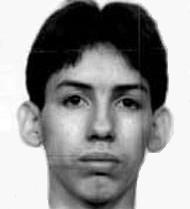
Cesar Barone
Serial killer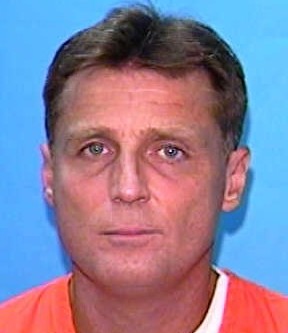 Glen Edward Rogers
Serial killer · USA · 1993
Glen Edward Rogers was a spree killer whose cross-country rampage in 1994-95 le…
70 victims
Glen Edward Rogers
Serial killer · USA · 1993
Glen Edward Rogers was a spree killer whose cross-country rampage in 1994-95 le…
70 victims
 Michael Swango
Serial killer · USA · 1981
Michael Swango (Joseph Michael Swango) was a physician and American serial kill…
60 victims
Michael Swango
Serial killer · USA · 1981
Michael Swango (Joseph Michael Swango) was a physician and American serial kill…
60 victims
 Efren Saldivar
Serial killer · USA · 1989
Efren Saldivar (born 30 September 1969) was an American serial killer who murde…
50 victims
Efren Saldivar
Serial killer · USA · 1989
Efren Saldivar (born 30 September 1969) was an American serial killer who murde…
50 victims
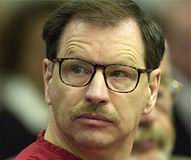 Gary Ridgway
Serial killer · USA · 1982
Gary Leon Ridgway Ridgway was born 18-February-1949 in Salt Lake City, UT. He w…
49 victims
Gary Ridgway
Serial killer · USA · 1982
Gary Leon Ridgway Ridgway was born 18-February-1949 in Salt Lake City, UT. He w…
49 victims
 Charles Cullen
Serial killer · USA · 1984
Charles Cullen (born February 22, 1960) was a former nurse and the most prolifi…
45 victims
Charles Cullen
Serial killer · USA · 1984
Charles Cullen (born February 22, 1960) was a former nurse and the most prolifi…
45 victims
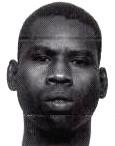 John Albert Burks
Murderer · USA · 1982
Defendant: John Albert Burks John Albert Burks was executed by lethal injection…
2 victims
John Albert Burks
Murderer · USA · 1982
Defendant: John Albert Burks John Albert Burks was executed by lethal injection…
2 victims
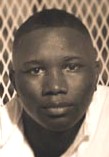 Dominique Green
Murderer · USA · 1992
Dominique Green was sentenced to death in Texas for the capital murder of Andre…
1 victim
Dominique Green
Murderer · USA · 1992
Dominique Green was sentenced to death in Texas for the capital murder of Andre…
1 victim
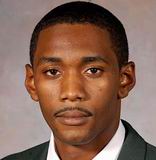 Carlton Dotson
Murderer · USA · 2003
Summer of 2003 — Carlton Dotson and Patrick Dennehy indicated they were concern…
1 victim
Carlton Dotson
Murderer · USA · 2003
Summer of 2003 — Carlton Dotson and Patrick Dennehy indicated they were concern…
1 victim
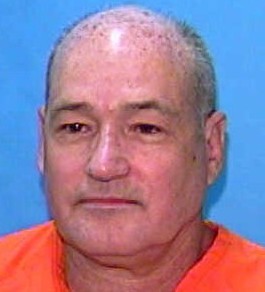 Roy Clifton Swafford
Murderer · USA · 1982
Roy Swafford was convicted and sentenced to death for the 02/14/82 murder of Br…
1 victim
Roy Clifton Swafford
Murderer · USA · 1982
Roy Swafford was convicted and sentenced to death for the 02/14/82 murder of Br…
1 victim
 Gabriel Garza Hoth
Serial killer · Mexico · 1991
1991 — Soledad Valdez, Gabriel Arturo Garza Hoth’s first wife, died; doctors be…
3 victims
Gabriel Garza Hoth
Serial killer · Mexico · 1991
1991 — Soledad Valdez, Gabriel Arturo Garza Hoth’s first wife, died; doctors be…
3 victims
- Gender
- male
- Country
- USA
- Location
- Florida/Oregon, USA
- Date of birth
- December 4, 1960
- Age at first offence
- 31
- Characteristics
- rape
- Victim profile
- Margaret H. Schmidt, 61 / Martha B. Bryant, 41 / Chantee E. Woodman, 23 / Betty Lou Williams, 51
- Method of murder
- Strangulation / Shooting
- Date(s) of murder
- 1991 - 1993
- Years active
- 1991–1993
- Date of arrest
- February 1993
- Status
-
Sentenced to death
Sentenced to death in Oregon on January 30, 1995
Case record: Cesar Barone
Background
Cesar Barone was pronounced “Roh-dee.” During his childhood in Fort Lauderdale, friends and family called him Jimmy. He was raised by his father, Adolph, and his stepmother, Stella Hall, in a modest home in southwest Fort Lauderdale. Hall married Adolph Rode when Jimmy was 6 or 7, after Rode’s wife left him for another man.
Mike O’Connell, a homicide detective with the Washington County (Ore.) Sheriff’s Department and a member of a task force that investigated the Oregon killings, said there was “no evidence Jimmy was ever physically or emotionally abused by his parents.” O’Connell said, “I guess some people would just call him a bad seed.”
A friend who lived down the street said Barone frequently skipped school, took drugs, terrorized other kids, and burglarized homes to steal beer, cigarettes, and money for drugs. When he was 15, Barone broke into a neighbor’s home and tried to rape her at knifepoint. Police said the neighbor was Alice Stock, who later became what police called his first murder victim.
Barone spent two months in a juvenile facility for the attack on Stock. When he was 17, Barone was convicted of burglary and spent about two years in prison.
Barone later moved to the West Coast, changed his name to Cesar Francesco Barone, and began a new life. He worked as a cabinetmaker, joined the elite Army Rangers, and later became a nursing assistant.
Authorities said Barone had a secret life as a serial killer, and that he murdered his first victim in Fort Lauderdale at age 19 and continued killing in the Pacific Northwest until he got caught.
Barone was now 34 when convicted of murder and sentenced to death on Jan. 30. The case involved murders of Chantee Woodman, Betty Lou Williams, and Margaret Schmidt.
The offence
Chantee Woodman
Woodman accepted a ride from defendant and Leonard Darcell in downtown Portland during the early morning hours of December 30, 1992. Defendant and Darcell beat and sexually assaulted Woodman, dumped her along Highway 26, and began to drive away. When they looked back, they noticed that she appeared to be alive and moving. Defendant returned, beat her with the butt of a pistol, shot her in the head, and threw her body over a guard rail. A highway worker discovered Woodman’s body later that day.
Betty Lou Williams
Defendant was drinking with 63-year-old Betty Lou Williams at her apartment during the early morning hours of January 6, 1993. Williams went into her bathroom. Defendant followed her, produced a weapon, and began to sexually assault her. Williams suffered a heart attack and died. Defendant left Williams’ partially-clothed body in her bathtub, where her son discovered it the next day.
Margaret Schmidt
Margaret Schmidt was an elderly woman who lived by herself in Hillsboro. On the night of April 18, 1991, defendant entered her home, sexually assaulted her, and smothered her with a pillow. A caregiver discovered her body the next day.
Martha Bryant
Before the trial on the charges in this case, defendant had been convicted of Bryant’s murder and sentenced to death. The Oregon Supreme Court noted that the Bryant counts had been severed from the consolidated trial. The murders of Chantee Woodman, Betty Lou Williams, and Margaret Schmidt were tried as separate cases within the same trial process.
Defendant had been convicted of Martha Bryant’s murder and sentenced to death, and this court affirmed that conviction and sentence in State v. Barone, 328 Or 68, 969 P2d 1013 (1998) (Barone I). Defendant’s trial in this case proceeded after that.
Authorities stated that Bryant was a nurse-midwife and that Bryant was killed in October 1992 and her body was dumped on a rural Oregon road.
Investigation and case development
Investigations into the Woodman, Williams, and Schmidt murders led police to conclude that defendant was responsible for all three. Defendant ultimately was charged with four counts of aggravated felony murder in the Woodman case, ORS 163.095(2)(d), two counts of aggravated felony murder in the Schmidt case, ORS 163.095(2)(d), and two counts of felony murder in the Williams case, ORS 163.115(1)(b).
Those charges originally were consolidated for trial with four additional counts of aggravated murder arising from the fatal shooting of a fourth woman, Martha Bryant. The state moved to sever the charges relating to the Bryant murder, and the trial court granted the motion.
After jury selection, defendant’s trial on those charges began on November 6, 1995, with twelve jurors and four alternates empaneled.
Before his trial on the charges in this case, defendant was convicted of Bryant’s murder and sentenced to death. That conviction and sentence were affirmed: State v.
Jailhouse informants told police, who began putting the cases together, after defendant bragged to inmates about murdering women. After defendant was arrested in the Oregon slayings, Detective Mike Walley read about it in a newspaper. Walley had been the first officer to arrive at the scene of Stock’s slaying and remembered defendant.
Walley and police Detective Bob Williams reopened the case and were able to get an indictment against defendant in January 1994.
Arrest and detention history (context)
Barone had previously been arrested in Florida in connection with other crimes. Authorities said that Barone raped, then strangled Alice Stock on Nov. 29, 1979, fifteen days after his release. Fort Lauderdale Homicide Detective Mike Walley reopened the Stock case after Barone’s arrest in Oregon.
Police had arrested Barone about six months after Stock was killed in an alleged attempt to kill his grandmother, Mattie Marino, 70. Marino was choked, beaten with a rolling pin, and robbed of $10. Marino identified Barone as her attacker, but had trouble with her testimony. A jury acquitted Barone in that attack.
Despite being acquitted in the attack, Barone was convicted in an unrelated burglary case and went to prison in 1981. In 1986, Barone was transferred to a state prison in Starke after a brief escape and assault on a guard. He met serial killer Ted Bundy there.
Barone was housed next to Bundy on two occasions, once for about two months and again for 12 days. O’Connell said, “He thought it was really neat and bragged to other inmates about his associations with Bundy.” Walley believed Barone asked Bundy how he got caught and may have learned ways to avoid detection. Walley also said Bundy gave Barone a singles newspaper from Washington.
Barone answered an ad from a woman he eventually married. After his release, Barone moved to the Northwest, where he legally changed his name and joined the Army. He served with a Rangers unit in Panama during the 1989 invasion to overthrow dictator Manuel Noriega. Barone was accused of exposing himself to a female officer. Army officials checked his background, learned his real name and criminal past, and he was discharged in 1990.
Trial
Charges and joinder
The charges in this case arose from the deaths of Chantee Woodman, Betty Lou Williams, and Margaret Schmidt. Defendant sought reversal of convictions on five counts of aggravated felony murder, two counts of felony murder, and one count of murder. In the alternative, defendant asked the court to vacate the sentences of death and remand for resentencing.
Defendant moved three times to sever the charges related to the three homicides. The trial court denied all three motions. In denying the third motion, the court stated that the prosecution would be required to build a “fire wall” between the three cases and to “present the cases totally separately.”
In preliminary jury instructions, the court stated: “This trial involves the presentation of three separate cases. Each case will be presented by the state separately. Each must be decided separately. The fact that three cases are being presented in one trial cannot affect the absolute requirement that you must deliberate each case separately. Evidence from one case cannot and must not be used in deciding a separate case. ”
The court also stated: “Similarly, the verdict in one case cannot affect the verdict in another. In other words, when you deliberate one case to verdict, that verdict, whether not guilty or guilty, cannot enter into deliberations on either of the other two cases.”
The state made three separate opening arguments, one for each case. Then the cases were tried separately: First the Woodman murder, then the Schmidt murder, then the Williams murder. The state made separate closing arguments in the three cases. Throughout the guilt phase, reminders were given to the jury that the three charges were separate and that the state was required to prove each charge independently of the other charges.
Jury oath and verdicts
The court gave detailed preliminary instructions outlining jurors’ responsibilities, but neglected to administer the oath to the jury. Defense counsel and defendant noticed the failure almost immediately. Defense counsel requested a copy of the transcript of the first day of trial from the court reporter, learned a certified transcript would have to be provided to the prosecutor and the court, and instead requested a rough draft copy, which the reporter provided.
The rough draft confirmed counsel’s belief that the court had not administered the oath to the jury. After a twelve-day trial, the jury retired to deliberate and returned verdicts of guilty on seven counts of the indictment. As to one charge of aggravated felony murder, the jury returned a verdict of guilty of the lesser-included offense of murder.
In the meantime, the court became aware of rumors that the jury had not been sworn. The court consulted the transcript and discovered its error. Before announcing the verdicts as received and dismissing the jury, the trial court described its mistake to the parties and requested motions from counsel. Defendant filed a “Motion To Quash Verdicts, To Declare Trial a Nullity, And To Dismiss Jury.”
The court denied defendant’s motion. The court noted that defendant had made “an intentional choice to forego that remedy.” The court also stated there was no evidence and no claim that the jury acted improperly.
The court asked defense counsel what remedy he would prefer, short of quashing the verdict and dismissing the jury. Counsel replied that he had no preference because no other remedy would cure the error. The court called members of the jury individually and asked:
“Under penalty of perjury, do you solemnly swear that the two answers you are about to give will be the truth? “
“Did you well and truly try each of the three cases at issue between the parties and true verdicts reach in accordance with the law and the evidence? ”
“To the best of your knowledge and belief, did each and every member of the jury well and truly try each of the three cases in accordance with the law and the evidence?”
The jurors all answered “Yes” to those questions. The court then informed jurors it had forgotten to administer the oath, apologized, and administered the oath. After administering the oath, the court instructed the jurors to “set aside any thoughts of the earlier verdicts” and “begin anew” to “redeliberate and arrive at verdicts in each of the three cases.”
The court gave new verdict forms and instructed the jurors they were not bound by earlier verdicts. The jury retired again and returned the same verdicts on all charges. After a separate penalty-phase proceeding, the jury imposed the death penalty.
Venue and judge disqualification
Defendant challenged the trial court’s denial of his pretrial motion for change of venue. He argued publicity surrounding his trial and conviction for the murder of Martha Bryant was pervasive and that he could not receive a fair trial in Washington County. The trial court concluded the jury questionnaires did not establish that juror exposure to pretrial publicity was of such a nature that defendant could not receive a fair and impartial trial.
Defendant also challenged the trial court’s denial of his pretrial motion to disqualify the trial judge under ORS 14.250 and 14.270. Defendant filed the motion to disqualify on July 27, 1995. The trial court denied the motion at a hearing on September 19, 1995, concluding it was untimely.
Peremptory challenges
Defendant sought six additional peremptory challenges. The trial court allowed twelve peremptory challenges each for defendant and the state. Defendant exercised his twelve challenges. The trial court refused to dismiss six jurors for cause, and defendant did not assign error to that ruling. The trial court denied the request for six additional peremptory challenges, stating it believed the six jurors were not biased against defendant.
Darcell testimony and contempt
The state intended to call Leonard Darcell to testify regarding defendant’s role in the murder of Chantee Woodman. Darcell’s lawyer asserted Darcell would invoke his federal constitutional privilege against self-incrimination and refuse to testify, based on belief he might receive a new trial through post-conviction or habeas corpus proceedings.
The trial court ruled that Darcell retained no Fifth Amendment privilege because he had been convicted and sentenced and exhausted his direct appeals. The trial court also stated it was reasonable to conclude Darcell had another motivation for refusing to testify, namely a desire to protect defendant.
The state asked Darcell four questions: where he lived; whether he had seen defendant attempt to rape Woodman; whether he had seen defendant shoot Woodman; and whether after shooting Woodman, defendant threatened him with a gun. Darcell invoked the Fifth Amendment privilege and refused to answer. The state asked the trial court to order Darcell to answer; the court did so. The state again asked if Darcell had seen defendant shoot Woodman, and Darcell again refused to answer. The state asked the trial court to hold Darcell in contempt. The trial court excused the jury and held Darcell in contempt. Defendant moved for a mistrial, which the trial court denied.
On appeal, the Oregon Supreme Court concluded the trial court did not err in allowing the state to call Darcell as a witness and did not abuse its discretion by denying defendant’s motion for mistrial on that ground.
Alyssa Lake testimony
Over defendant’s objection, Alyssa Lake testified that shortly before midnight on December 29, 1992, she accepted a ride from defendant and Leonard Darcell in downtown Portland. After driving a short distance, defendant drove into a parking lot so that he and Darcell could urinate. After urinating, defendant returned to the car, produced a handgun, placed the muzzle of the gun against Lake’s neck, and threatened to kill her unless she performed a sexual act on him. Darcell pleaded with defendant not to harm Lake. The men argued for fifteen to twenty minutes, during which time defendant continued to threaten Lake with the gun. Defendant relented and drove Lake to her home.
Lake testified that the handgun resembled the handgun with which, according to the state’s theory, defendant had killed Woodman.
After admitting Lake’s testimony, the trial court cautioned the jury and instructed it the testimony was not allowed to prove character or any criminal activity against Lake by defendant. The court stated: “This testimony was not offered and was not allowed on the issue of [defendant's] character or to prove any criminal activity against this witness by [defendant], and you may not use it for those purposes. It was allowed on the issues of the whereabouts of [defendant] at the stated time, his possible possession of a particular firearm, and the relationship between [defendant] and the person known as [Darcell].”
The Oregon Supreme Court concluded the trial court did not err in admitting Lake’s testimony under OEC 404(3), including its analysis of OEC 403 unfair prejudice.
Letter intercepted from defendant
During the trial, the state called a jail employee who testified that she had intercepted a letter from defendant to a fellow inmate. Over defendant’s objection, the employee read passages from the letter dated November 9, 1995:
“Anyways, rats testified today, as did the state crime lab. “
“Ask Pope if he remembers asking me if I needed a hand. That I said no -- (and it was something you and I spoke briefly about.) But now you can tell him yes -- that his friend, James Lord, who is at [Eastern Oregon Correctional Institution], doesn't want to be coming back here to testify, but doesn't know how to stop doing so. Maybe Pope knows somebody that can teach him how to research the problem, and come to an agreeable solution. That this would be most helpful, and it's ASAP . “
“P.S. When you write back, just tell me if Pope says yes or no. I need to know ASAP so I know where to go in dealing with it. It is important.”
The trial court overruled defendant’s relevance and unfair prejudice objections, concluding the letter reasonably could be construed as an attempt to engage a fellow inmate to take action against James Lord to stop him from testifying, which the court characterized as an inference of consciousness of guilt.
The Oregon Supreme Court concluded the trial court did not err in admitting the testimony about the letter under OEC 401 and did not abuse its discretion under OEC 403.
Felony murder “and/or” instruction and mistrial
The trial court instructed on felony murder and aggravated felony murder. Defendant later moved for a mistrial based on jury instructions and prosecutor comments during rebuttal closing.
Defendant challenged the original instructions on the elements of felony murder and aggravated felony murder, arguing the court used “and/or” instead of the statutory “in the course of and in furtherance of.” The Oregon Supreme Court agreed the original “and/or” instructions were erroneous.
The prosecutor’s comments during rebuttal closing included statements relevant to the “in the course of and in furtherance of” requirements. The decision quoted the prosecutor’s rebuttal statements (including an “ludicrous” line and the “In the course of” line). The Oregon Supreme Court concluded defendant’s second argument for mistrial based on those comments was unpreserved due to untimeliness.
After the initial instructions and jury deliberations, the prosecutor informed the court that his argument had been erroneous and that he believed the court instructed the jury incorrectly on the elements of felony murder and aggravated felony murder. The court asked whether defendant wanted reinstruction. Defendant instead moved for a mistrial. The court denied it. The court then reinstructed the jury on the elements of felony murder, clarifying that the state was required to prove the murder was committed in the course of and in furtherance of the underlying felony. The jury retired with new verdict forms and returned guilty verdicts on two counts of felony murder and five counts of aggravated felony murder, and returned a verdict of guilty of the lesser-included offense of murder on one remaining aggravated felony murder charge. The jury noted on its verdict form that it changed its verdict on that final charge from guilty of the charged offense of aggravated felony murder.
The Oregon Supreme Court concluded the trial court did not abuse its discretion in denying defendant’s motion for mistrial based on the erroneous instructions, because reinstruction sufficiently remedied the original error.
Sentencing and penalty phase
During the penalty phase, the state presented testimony reflecting defendant’s attitude toward the “Green River Killer.” The state called Timothy Woodruff, an inmate incarcerated with defendant. Woodruff testified that defendant had stated that he “thought [the Green River Killer] was just a punk. You know, compared to [defendant], he was a punk.”
Defendant argued the testimony should have been excluded under OEC 403. The Oregon Supreme Court concluded the trial court did not abuse its discretion admitting the testimony because it was probative of defendant’s future dangerousness.
Defendant also objected to photographs taken during the autopsy of Bryant. The Oregon Supreme Court concluded the photographs were admissible under the second question from ORS 163.150(1)(b)(B), and that they were not unfairly prejudicial under OEC 403, consistent with its prior holding in Barone I.
After the penalty-phase proceeding, the jury imposed the death penalty.
Appeals
The appeal was an automatic and direct review of the judgments of conviction and sentences of death. The case caption was: State of Oregon, Respondent, v. Cesar Francesco Barone, Appellant. The Supreme Court docket information included (CC C93066CR, C940570CR, C930806CR; SC S42900 (Control), S42901).
The Oregon Supreme Court decision stated: “The judgments of conviction and sentences of death are affirmed.” The justices listed were Carson, Chief Justice, and Gillette, Van Hoomissen, Durham, Leeson, and Riggs. Kulongoski, J., did not participate.
Defendant sought reversal of convictions on five counts of aggravated felony murder, two counts of felony murder, and one count of murder, and alternatively asked the court to vacate death sentences and remand for resentencing. The Oregon Supreme Court affirmed the judgments of conviction and sentences of death.
The Supreme Court organized its discussion by pretrial motions, the guilt phase, and the penalty phase, and it rejected defendant’s remaining assignments of error “without further discussion.”
Outcome
Defendant’s death sentence in Oregon was imposed on January 30, 1995.
Barone continued to face other charges, and Broward County, Fla., prosecutors planned to bring him back to Fort Lauderdale to face charges in the killing of Alice Stock, 73, in 1979. The prosecutors planned to bring him back for the Stock murder, and the text stated that if Barone were convicted and sentenced to death in Florida for Stock’s murder, it appeared more likely he could be executed there.
The text stated that no one had been put to death in Oregon since 1962, that the death penalty in Oregon was revoked in 1964 and reinstated in 1984, and that including Barone, there were now 18 people on death row in Oregon. It also stated that Florida reinstated the death penalty in 1976 and had executed 33 inmates since then, and that currently there were 356 inmates on death row.
Other details
Mike O’Connell said, “He has never indicated any remorse whatsoever.” O’Connell also said, “He has never admitted any responsibility.”
Broward Sheriff’s Office Lt. Tony Fantigrassi remembered the attempted attack on Mattie Marino and stated: “I’ll never forget that crime scene.” Fantigrassi also said: “I remember the rolling pin, the blood. I think he left her for dead.”
Walley and other officers described circumstances around reopening Stock’s slaying and tying defendant to the murders.
At sentencing and appeal, the Oregon Supreme Court treated the trial proceedings in this case as an automatic and direct review under ORS 163.150(1)(g) and ORAP 12.10(1).
Sex: M Race: W Type: N Motive: Sex./Sad. MO: Rape-slayer of women
Spotted an error, or have more information about this case?