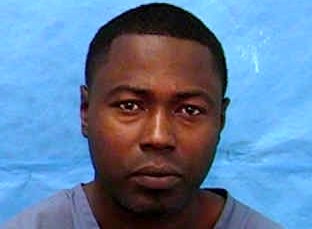
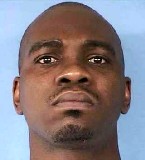
Keydrick Jordan
Murderer Brian Kevin Rosenfeld
Murderer · USA · 1985
Brian Kevin Rosenfeld Brian Kevin Rosenfeld was sentenced to three concurrent l…
23 victims
Brian Kevin Rosenfeld
Murderer · USA · 1985
Brian Kevin Rosenfeld Brian Kevin Rosenfeld was sentenced to three concurrent l…
23 victims
 Russell Ellwood
Murderer · USA · 1991
Russell Ellwood was a former taxi driver. Authorities suspected him of killing…
20 victims
Russell Ellwood
Murderer · USA · 1991
Russell Ellwood was a former taxi driver. Authorities suspected him of killing…
20 victims
 Robert Martines Perez
Murderer · USA · 1994
Name: Robert Martines Perez · Other name used in proceedings: Robert Martinez P…
15 victims
Robert Martines Perez
Murderer · USA · 1994
Name: Robert Martines Perez · Other name used in proceedings: Robert Martinez P…
15 victims
 Billy Frank Vickers
Murderer · USA · 1993
Billy Frank Vickers Vickers was executed by lethal injection in Texas on Januar…
14 victims
Billy Frank Vickers
Murderer · USA · 1993
Billy Frank Vickers Vickers was executed by lethal injection in Texas on Januar…
14 victims
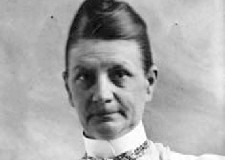 Martha Place
Murderer · USA · 1899
Martha Place was born in New Jersey. Her brother said she was struck in the hea…
1 victim
Martha Place
Murderer · USA · 1899
Martha Place was born in New Jersey. Her brother said she was struck in the hea…
1 victim
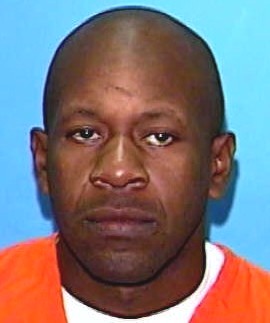 Thomas James Moore
Murderer · USA · 1993
Thomas James Moore was born on 04/20/73. The case was in the Fourth Judicial Ci…
1 victim
Thomas James Moore
Murderer · USA · 1993
Thomas James Moore was born on 04/20/73. The case was in the Fourth Judicial Ci…
1 victim
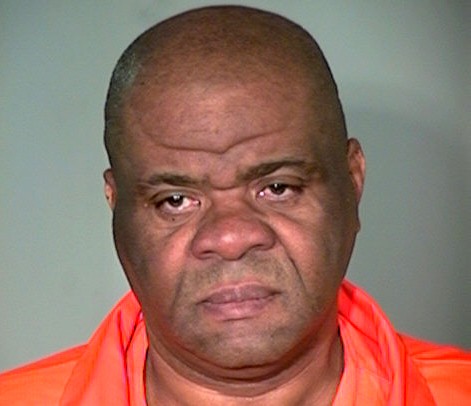 Fred Robinson
Murderer · USA · 1987
Fred Robinson and Susan Hill lived together for a number of years. Beginning in…
1 victim
Fred Robinson
Murderer · USA · 1987
Fred Robinson and Susan Hill lived together for a number of years. Beginning in…
1 victim
 James Vlassakis
Serial killer · Australia · 1997
James Spyridon Vlassakis (born 24 December 1979) was an Australian serial kille…
4 victims
James Vlassakis
Serial killer · Australia · 1997
James Spyridon Vlassakis (born 24 December 1979) was an Australian serial kille…
4 victims
- Gender
- male
- Country
- USA
- Location
- Orange County, Florida, USA
- Date of birth
- March 14, 1972
- Age at first offence
- 19
- Characteristics
- rape, robbery, attempted rape
- Victim profile
- Thelma Reed / Ann Mintner
- Method of murder
- Shooting
- Date(s) of murder
- November 15, 1991 / August 8 , 1992
- Years active
- 1991–1992
- Date of arrest
- August 10, 1992
- Status
-
Sentence vacated death; remanded for a new penalty-phase proceeding after the convictions were affirmed (first-degree murder and attempted robbery)
Case record: Keydrick Jordan
STATUS
Sentence vacated death; remanded for a new penalty-phase proceeding after the convictions were affirmed (first-degree murder and attempted robbery)
Background
Keydrick Jordan was convicted of first-degree murder and attempted armed robbery and was sentenced to death.
The appellate court later affirmed Jordan’s convictions for first-degree murder and attempted robbery, vacated the death sentence, and remanded for a new sentencing proceeding in light of penalty-phase testimony that the court found to be clearly improper and unfairly prejudicial.
The offence
Ann Mintner was killed on August 8, 1992, after being shot six times. The death was officially caused by massive hemorrhages in both the chest and abdominal cavities.
The shooting occurred near Lake Davis in Orlando.
Mintner was walking around the lake with her friend, Mary Rosensweig, on that August morning. When Mintner realized she was carrying her change purse, she returned to her car to put the purse away. Rosensweig kept walking. When Rosensweig looked back, she saw a black male near Mintner. Rosensweig heard the black male instruct Mintner to turn over her key. As Mintner ran toward Rosensweig, shots were fired. Mintner fell. She was on the ground as the last shot was fired.
There was testimony that four of the six shots entered through Mintner’s back.
Jordan was also tried for attempted armed robbery. The jury found Jordan guilty of both counts in the indictment.
Investigation
A bicycle found at the crime scene contained thirty-five fingerprints. The prints belonged to Jordan and Sam Tory, and evidence was presented that the bicycle was owned by Jordan and Tory.
The night before the murder, Jordan and Tory worked on the bicycle at the home of Vicki Meyers. Tory was Meyers’ uncle.
Jordan spent the night of August 7, 1992, at Meyers’ home and left early the next morning. Jordan told Meyers that he was going to “rob someone.”
When Tory met with Jordan on August 9, 1992, Jordan revealed that he had “popped someone.”
Later, when Tory saw his bicycle on television, he called Crime Line and reported Jordan. He received a $1000 reward.
Arrest
On August 11, 1992, Jordan was accompanied to the Orlando Police Department.
Jordan initially denied knowledge of the Mintner murder. Later, however, Jordan admitted involvement in the crime. He claimed that Tory was also involved.
Jordan acknowledged that he held the gun to Mintner’s head. When Mintner moved away, Jordan said, the gun went off accidentally.
There was testimony from a firearms expert indicating that the trigger on Jordan’s gun would have to be pulled each time the gun was fired.
Trial
Jordan was indicted and tried for first-degree murder and attempted armed robbery.
The jury found Jordan guilty of both counts in the indictment and then recommended the death sentence by a margin of eight to four.
The trial judge imposed the death penalty after finding that four statutory aggravating factors were proven:
- Jordan’s crime was committed while he was placed on community control.
- Jordan had previously been convicted of a felony involving the use or threat of violence to the person.
- The capital felony was committed while Jordan was committing a robbery.
- The capital felony was committed for pecuniary gain.
The trial judge expressly noted that he weighed factors (3) and (4) as a single aggravator.
Mitigation
In evaluating the mitigation, the trial judge considered three statutory mitigators:
- The crime was committed while Jordan was under extreme mental or emotional distress.
- Jordan’s ability to understand the criminality of his conduct or to conform his conduct to the requirements of the law was substantially impaired.
- The chronological and mental age of Jordan.
The trial judge found that the second and third mitigators existed, refused to find the existence of the first mitigator, and evaluated nonstatutory mitigation.
Jordan asked the judge to consider forty-eight separate mitigating circumstances. The trial judge addressed these circumstances by grouping like factors together and concluded that the aggravation outweighed the mitigation and imposed the sentence of death.
Appeals
Jordan raised ten issues on direct appeal. Six were preliminary or guilt-phase claims.
Guilt phase: prosecutorial discrimination claim
Jordan argued that he was improperly prevented from demonstrating that the prosecutor had racist motives in seeking the death penalty in the case.
The claim arose from the fact that Jordan was charged with the first-degree murders of two women, both elderly. One victim (Thelma Reed) was black and the other victim (Mintner) was white.
Jordan argued that the prosecutor chose to pursue the death penalty in the Mintner case based, at least in part, on racist motives.
The trial court ordered limited discovery. The State opposed such discovery and sought certiorari review of the discovery order from the Fifth District Court of Appeal.
The petition for writ of certiorari was granted and the district court quashed the discovery order, State v. Jordan, 630 So. 2d 1171 (Fla. 5th DCA 1993).
Jordan did not seek review of that decision.
The appellate court addressed the merits and reaffirmed the standard discussed in Foster v. State, 614 So. 2d 455 (Fla. 1992).
The trial judge proceeded to an evidentiary hearing on Jordan’s motion to disallow the death penalty. The motion was denied.
The trial judge expressly found:
“Because of the unique circumstances of this case I proceeded to an evidentiary hearing, even though I find that the showing required by the majority in Foster has not been met. But because of the unique circumstances of having two first-degree murder cases pending simultaneously[,] one with a black victim and one with a white victim, I felt it was prudent to create a record and proceed to an evidentiary hearing. But I do affirmatively find that the threshold required by the majority has not been met. In considering the position stated by Justice Barkett, I find that the threshold she suggested has not been met either. There is no competent evidence here of a pattern of racism supported by statistics which meet evidentiary standards. . . . . So I find that neither standard set forth by, neither prong set forth by Justice Barkett has been met here even if I were to decide to consider the formula put forth in the dissent in this case. . . . . It's my finding that the State Attorney's Office was not racially motivated but the decision making here was proper, proper tactics and is well supported by the record. In offering the opportunity to the State Attorney's Office, I see it as offering an opportunity to make that record. And the State Attorney's Office has repeatedly refused to do that. I think that tactic is short-sighted. It is clear that the trial judge was simply developing a record for this Court to examine if we were inclined to revisit our decision in Foster . We reaffirm Foster and find no merit in Jordan's claim.”
The appellate court found no merit in Jordan’s claim.
Guilt phase: disqualification of prosecutor Jeffrey Ashton
Jordan argued that the trial court should have granted his motion to disqualify the prosecutor, Jeffrey Ashton.
The basis for the motion was that Ashton participated in interrogating Jordan prior to his arrest, and Ashton allegedly “denigrated defenses and mitigating circumstances and elicited information that helped establish aggravating circumstances.”
The appellate court found no merit in the claim, stating that Ashton did not engage in unethical behavior and that the court had previously acknowledged that a prosecutor’s presence at the giving of a statement is not necessarily improper (Suarez v. State, 481 So. 2d 1201, 1206 (Fla. 1985)).
The appellate court also described prosecutor assignment practices in capital or homicide divisions and stated it had no authority to intervene with executive-branch personnel assignment decisions, concluding that Ashton’s vigorous prosecution reflected diligence.
Guilt phase: limitations on cross-examination
Jordan argued that the trial court erred in limiting his cross-examinations of Sam Tory and Officer John Parks.
The State elicited testimony from Tory on direct examination that Jordan admitted to Tory that he had “popped” someone.
This admission occurred on the Sunday morning following the murder. On Monday evening, Jordan reaffirmed to Tory that he had “popped someone” but added that he had no intent to kill the victim.
The trial court limited the defense’s cross-examination of Tory to the details of the first conversation, preventing Jordan from introducing evidence that Jordan indicated in the second conversation the accidental nature of the shooting.
Tory told Officer Parks about his conversations with Jordan. The trial court did not allow Parks to testify on cross-examination as to the content of Jordan’s second conversation with Tory.
Jordan argued that section 90.108, Florida Statutes (1991), required admission under the “rule of completeness.”
The appellate court concluded that the disputed conversation was hearsay, that the amount of time between Jordan’s first statement and second statement increased unreliability, and that the trial judge did not abuse discretion by refusing to expand the scope of cross-examinations.
Guilt phase: premeditated and felony murder theories; Mills v. Maryland claim
Jordan argued that the trial court erred in denying his motion in limine seeking to prevent the State from arguing both premeditated murder and felony murder.
Jordan argued that the evidence supported felony murder but not premeditated murder.
The jury used a general verdict form and returned a verdict finding Jordan guilty of first-degree murder without indicating the theory.
Jordan invoked Mills v. Maryland, 486 U.S. 367, 376 (1988), including the quoted principle:
“With respect to findings of guilt on criminal charges, the Court consistently has followed the rule that the jury's verdict must be set aside if it could be supported on one ground but not on another, and the reviewing court was uncertain which of the two grounds was relied upon by the jury in reaching a verdict.”
The appellate court described Justice Scalia’s clarification in Griffin v. United States, 502 U.S. 46 (1991), contrasting legal error and factual insufficiency, and quoted the rationale:
“Jurors are not generally equipped to determine whether a particular theory of conviction submitted to them is contrary to law--whether, for example, the action in question is protected by the Constitution, is time barred, or fails to come within the statutory definition of the crime. When, therefore, jurors have been left the option of relying upon a legally inadequate theory, there is no reason to think that their own intelligence and expertise will save them from that error. Quite the opposite is true, however, when they have been left the option of relying upon a factually inadequate theory, since jurors are well-equipped to analyze the evidence, see Duncan v. Louisiana , 391 U.S. 145, 157 (1968). As the Seventh Circuit has put it: "It is one thing to negate a verdict that, while supported by the evidence, may have been based upon an erroneous view of the law; it is another to do so merely on the chance--remote, it seems to us, that the jury convicted on a ground that was not supported by adequate evidence when there existed alternative grounds for which the evidence was sufficient." United States v. Townsend , 924 F. 2d 1385, 1414 (1991).”
The appellate court concluded the claim had no merit and that the record supported both theories of first-degree murder.
Guilt phase: double jeopardy challenge to attempted robbery
Jordan challenged his conviction for attempted robbery on double jeopardy grounds, claiming he could not be convicted of both felony murder and the underlying felony.
The appellate court referenced Boler v. State, 678 So. 2d 319 (Fla. 1996), concluding there was no constitutional infirmity in convicting a defendant of both felony murder and the qualifying felony, and affirmed Jordan’s attempted robbery conviction.
Guilt phase: jury selection claims
Jordan challenged jury selection on two grounds.
He claimed the trial court improperly limited voir dire; the appellate court disagreed and stated the trial judge acted within discretion.
He also claimed the trial court improperly denied a request to conduct individual and sequestered voir dire; the appellate court again stated the decision rested within the trial judge’s discretion.
The appellate court discussed pretrial publicity and cited an exchange during voir dire between prosecutor Ashton and potential juror Henderson. It quoted:
“Mr.Ashton: Mr. Henderson, juror number two, since you're first on the list, Mr. Henderson, you indicated you haven't read or heard anything about this case?
Juror Henderson: I heard quite a bit about it. I misunderstood that.
Mr. Ashton: That's fine. Do you recall any great details [that] you may have heard or read about the case?
Juror Henderson: I heard that the young man did the killing --
Mr. Ashton: Before you say anything that might influence another juror with something they hadn't read, let me cut to the end. At this point do you feel you've formed an opinion about the guilt or innocence about the defendant that's on trial here today for the crime that he's charged with?
Juror Henderson: Yes, I did form an opinion.
Mr. Ashton: Do you feel that opinion is one that you cannot -- would not be able to disregard in sitting and giving the defendant a fair trial in this case, or do you feel like at this point you just couldn't set it aside and act as if you never heard it?
Juror Henderson: I couldn't act as if I had never heard it, because I had gotten animosity in my heart about it.
Mr. Ashton: Thank you, sir.”
The appellate court concluded the trial court did not abuse discretion in denying individual and sequestered voir dire based on publicity and found no merit in the claim regarding other allegedly tainting responses.
Convictions affirmed
Having found no merit in the preliminary or guilt-phase issues, the appellate court affirmed Jordan’s convictions for first-degree murder and attempted robbery.
Penalty phase
Jordan contended that the trial court improperly allowed the prosecution to present, through the testimony of two witnesses, irrelevant, prejudicial, and incompetent evidence at the penalty-phase proceeding.
The appellate court found merit in this contention, concluded that resentencing was needed, and vacated the death sentence.
Witness Carol Brown
Two witnesses were allowed to testify after a proffer and over strenuous and repeated objections of the defense. Their testimony was presumably offered to support an instruction for the “heinous, atrocious, or cruel” statutory aggravating circumstance, but no such instruction was eventually given.
Carol Brown was described as a therapist with a bachelor’s degree in psychology and a master’s degree in counseling. The appellate court cited testimony showing the general tone of Brown’s testimony.
It quoted the following exchange during the hearing:
“Q [Ashton]: Is there literature, studies to document whether at some point persons who have grown up in that environment actually begin to take some pleasure from acts of violence?
A [Brown]: Yes, there is.
Q: Explain that to the jury, how is that possible, how does that work?
A: There are various theories, but it would be akin to a parachutist who likes to sky dive, who turns the fear into a pleasurable event so that the excitement and the adrenaline they receive from committing the violent act is turned over into a drug like substance in the brain, like opium, so they become addicted to the adrenaline flow, raises the endorphins in the mind to produce a calmness following the act.
Mr. West: I would object to this testimony on the basis that notwithstanding Miss Brown's expertise as determined by the court, there's been no showing that she is an expert in brain chemistry, as a neurologist, is in any way competent to talk about the chemical activity of the brain.
Mr. Ashton: I agree, and -- Mr. West: How it affects motions.
[Brown]: I was quoting from --
Mr. Ashton: I agree. I don't think she's giving that opinion, and I'll have her specify she's relating literature.
Mr. West: I would like it to be relevant to this case rather than just quoting from literature.
The Court: Objection overruled.
By Mr. Ashton: Regardless of the reason for that relationship, is that a documented relationship between the environment and [actually] getting pleasure from violence?
A [Brown]: Yes.
Q [Ashton]: In looking at Mr. Jordan's -- all the information you've been given, does he appear to fit that profile of offender who has come to gain pleasure from violence?
The appellate court found Brown’s testimony did little to accomplish the claimed purpose of proving Jordan’s “perception” when he chased a 76-year-old woman.
In recross during the proffer, Brown stated she was unable to say Jordan enjoyed committing the crime.
The appellate court described Brown’s trial testimony as relaying profiles described by scientific literature and opining in front of the jury that Jordan was a “sociopath without conscience” and “experiences a euphoria from his aggressive behaviors.”
The appellate court also stated that the prosecutor reiterated these characterizations during closing argument, including:
“giving pain and giving horror is what [Jordan] likes.”
and:
“to [Jordan], making someone suffer is the most important thing.”
The appellate court also stated the trial judge refused to give an instruction on the “heinous, atrocious, or cruel” aggravating circumstance.
Expert qualification dispute and court rulings
The appellate court discussed limits on testimony outside expertise and described the defense objection and the trial court’s rulings.
It quoted the defense objection:
“MR WEST: We object. Initially, on the grounds that it's not -- this court has not been asked to identify any area within the broad spectrum of mental health issues for which this witness may be called to render an opinion. THE COURT: Would the attorneys approach the bench. (The following proceedings were had at the bench.) THE COURT: I understand your initial objection. Would you state all of your objections. MR WEST: I won't know what they are until the court rules on that, because on these issues I would assume there would be a very specific area for which this person would be called upon to render an opinion, an area within the broad spectrum of the mental health issues, all the way from marital and family counseling to insanity for the purposes of defenses or competence to stand trial, simply too broad at this point. THE COURT: Mr. Ashton? MR. ASHTON: I've proffered the opinion I'm going to ask her. I don't know what label to put on that opinion. I don't think I have to put a label on it. But she is sufficiently qualified to give an opinion in the area she did in the proffer. In essence, that's what I'm asking for. I think she is qualified to mental health evaluations, if you will. It's difficult to put labels on this type of thing. THE COURT: I left my book in the other room. I find that Carol Brown meets the standard set forth in the Evidence Code for evidence qualification to testify as [an] expert witness. MR. WEST: In what area? THE COURT: I find that she is able to -- better able than a lay person to testify in the area of mental health, and that her -- she is qualified to render the opinions that we heard in the proffer. MR. WEST: I asked her [a] specific question, whether she was in a position to state an opinion that -- to a degree of reasonable psychological or therapeutic certainty, or what have you, that Keydrick Jordan enjoyed the act of killing Ann Mintner, and she said, no, she was not in a position to do that. That's the ultimate issue for which she would be required to give an opinion, and the only conceivably relevant issue, and she's already answered that she can't do that. THE COURT: I understand your objection. I overrule and qualify her as [an] expert.”
It further quoted Brown’s qualifications testimony:
“BY MR. ASHTON: Q State your name.
A Carol Brown.
Q How are you presently employed?
A I'm in private practice as a therapist.
Q What is your educational background?
A I have a bachelor's in psychology and the master is in counseling.
Q And during the years you've worked since getting your degrees, or while getting your degrees, what type of occupation do you have related to what you do today?
A During the years I got my degree?
Q Yes.
A I worked in domestic violence, spouse abuse, I worked in alcohol and drug rehabilitation and I worked for a couple of years with spousal abuse prevention in developing programs for abused children who had been sexually abused, those kinds of things. I work in the prison system.
Q What do you do today?
A Primarily focus on sex offender treatment, domestic violence, treating the survivor of sexual abuse and adolescent juvenile sex offenders and small children who have been abused.”
The appellate court concluded it was error to qualify Brown as an expert because her area of expertise was not clearly defined, her education was not definitively focused on the areas to which she testified, and her opinions were based heavily on literature she had read without a sufficient demonstration of study of the scientific literature.
It also concluded the error could not be considered harmless, given the death recommendation by an eight-to-four margin and the jury’s labeling of Jordan as a “sociopath without conscience.”
Witness Samuel Strang
The appellate court concluded Brown’s error was compounded by Strang’s testimony.
Samuel Strang was described as a clinical gerontologist.
It quoted the relevant portion of his testimony:
“A [Strang]: The most recent research indicates that elderly people are probably not any more prone to the concern of crime than the other segments of the population.
Q [Ashton]: Are there exceptions to that general rule?
A [Strang]: Yes, the three exceptions generally are elderly women, elderly women that are approached in the street and elderly women that have a predisposition, presensitization by having been victimized previously. . . . .
Q [Ashton]: What is your opinion as to the level of anxiety that Miss Mintner would have experienced from the beginning of the crime until she fell unconscious, can you describe it for us? . . . .
A [Strang]: I would assume she was in abject terror, that this was probably her worst nightmare come true.”
The appellate court concluded expert testimony was not needed for the jury to form conclusions about the victim’s fear, and stated that Strang’s testimony built sympathy for the victim.
Remedy and further claims
Because of the highly prejudicial testimony offered by Brown and the improper testimony offered by Strang, the appellate court concluded Jordan was denied a fair and constitutional sentencing proceeding.
The appellate court stated it did not need to address Jordan’s three other penalty-phase claims because resentencing was warranted.
The appellate court remanded for a new penalty-phase proceeding before a new jury and directed that the proceeding be held within 120 days of the opinion becoming final.
It also stated: “It is so ordered.”
The appellate court listed concurring judges: KOGAN, C.J., and OVERTON, SHAW, GRIMES, HARDING and WELLS, JJ.
Outcome
Jordan’s convictions for first-degree murder and attempted robbery were affirmed.
Jordan’s death sentence was vacated, and the case was remanded for a new penalty-phase proceeding before a new jury.
Spotted an error, or have more information about this case?