
Jesse Jacobs
Murderer Brian Kevin Rosenfeld
Murderer · USA · 1985
Brian Kevin Rosenfeld Brian Kevin Rosenfeld was sentenced to three concurrent l…
23 victims
Brian Kevin Rosenfeld
Murderer · USA · 1985
Brian Kevin Rosenfeld Brian Kevin Rosenfeld was sentenced to three concurrent l…
23 victims
 Yahweh ben Yahweh
Murderer · USA · 1980
Yahweh ben Yahweh was born and legally named Hulon Mitchell Jr. (October 27, 19…
23 victims
Yahweh ben Yahweh
Murderer · USA · 1980
Yahweh ben Yahweh was born and legally named Hulon Mitchell Jr. (October 27, 19…
23 victims
 Russell Ellwood
Murderer · USA · 1991
Russell Ellwood was a former taxi driver. Authorities suspected him of killing…
20 victims
Russell Ellwood
Murderer · USA · 1991
Russell Ellwood was a former taxi driver. Authorities suspected him of killing…
20 victims
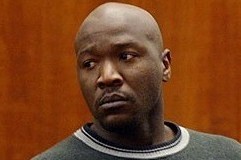 Christopher McCowen
Murderer · USA · 2002
Christopher McCowen was an African American who was convicted in the 2002 rape…
1 victim
Christopher McCowen
Murderer · USA · 2002
Christopher McCowen was an African American who was convicted in the 2002 rape…
1 victim
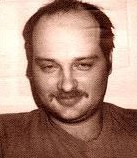 Robert Leroy Anderson
Murderer · USA · 1994
Robert Leroy Anderson was sentenced to death by lethal injection on April 9, 19…
2 victims
Robert Leroy Anderson
Murderer · USA · 1994
Robert Leroy Anderson was sentenced to death by lethal injection on April 9, 19…
2 victims
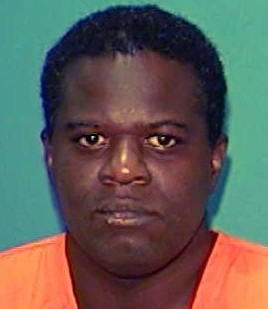 Gregory Capehart
Murderer · USA · 1988
Defendant: Gregory Capehart (born 08/09/67) Sixth Judicial Circuit: Pasco Count…
1 victim
Gregory Capehart
Murderer · USA · 1988
Defendant: Gregory Capehart (born 08/09/67) Sixth Judicial Circuit: Pasco Count…
1 victim
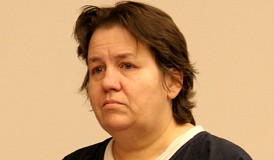 Shirley Winters
Murderer · USA · 1980
Shirley Winters was born February 27, 1958. She was an upstate New York residen…
2 victims
Shirley Winters
Murderer · USA · 1980
Shirley Winters was born February 27, 1958. She was an upstate New York residen…
2 victims
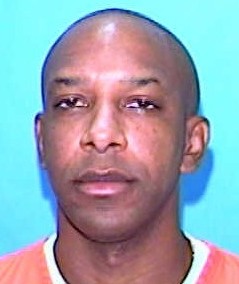 Anthony Mungin
Murderer · USA · 1990
Name: Anthony Mungin · Date of birth: 07/22/66 · Case citation: Florida Supreme…
1 victim
Anthony Mungin
Murderer · USA · 1990
Name: Anthony Mungin · Date of birth: 07/22/66 · Case citation: Florida Supreme…
1 victim
- Gender
- male
- Country
- USA
- Location
- Walker County, Texas, USA
- Date of birth
- February 12, 1950
- Age at first offence
- 36
- Characteristics
- kidnapping, murder for hire
- Victim profile
- Etta Ann Urdiales (female, 25)
- Method of murder
- Shooting (.38-caliber pistol)
- Date(s) of murder
- February 21, 1986
- Years active
- 1986
- Date of arrest
- September 9, 1986
- Status
-
Executed
Executed by lethal injection in Texas on January 4, 1995
Offender
Jesse Jacobs (#872) was the offender. He was executed in Texas on January 4, 1995. At the time of the execution described in the case materials, he was 44.
Victim
Etta Ann Urdiales was the victim. She was the murder victim for which Jacobs was sentenced to death.
Legal outcome
Jesse DeWayne Jacobs was executed in Texas on 4 January 1995. He had been sentenced to death in 1986 for the murder of Etta Ann Urdiales.
Timeline
- January 4, 1995 — Jesse DeWayne Jacobs was executed by lethal injection in Texas.
- 1986 — Jacobs was sentenced to death for the murder of Etta Ann Urdiales after a trial.
- September 9, 1986 — Jacobs was arrested for car theft in Hudspeth, Texas.
- September 29, 1986 — Jacobs escaped from jail but was apprehended twenty hours later.
- February 21, 1986 — Soon after Jacobs was released, Etta Urdiales was discovered missing from her apartment in Conroe, Texas.
- December 1983 through February 1986 — A Texas parole officer supervised Jacobs.
- 1973 — Jacobs was convicted in Illinois for murder and received a 25-50-year sentence.
- 1983 — Jacobs moved from Illinois to Texas while on parole.
Background
Jesse Jacobs moved from Illinois to Texas in 1983 while on parole for the murder of a retarded man in Illinois in 1973. A Texas parole officer supervised Jacobs from December 1983 through February 1986.
Jacobs became romantically involved with a fourteen-year-old girl named Lisa Chisholm, who gave birth to his child.
Bobbie Hogan, Jacobs’s sister, also moved to Texas and began seeing a man named Michael Urdiales, who was married to Etta Urdiales, the murder victim. By 1986, Michael Urdiales and Etta Urdiales were in the process of getting a divorce, and they each bitterly disputed the custody of their two children. Hogan had upset Michael Urdiales because Hogan’s former boyfriend’s custody dispute and badgering over child-support money.
Chisholm’s parents eventually signed a complaint against Jacobs, and Jacobs was arrested for inducement of a minor. Hogan posted bond for Jacobs’s release pending trial.
Jacobs had a prior criminal history that included the following:
- In 1973, Jacobs had been convicted in Illinois for murder and received a 25-50-year sentence.
- In 1977, Jacobs had been convicted of attempted escape from the Illinois penitentiary and received an 18-year sentence.
- In 1967, while convicted of burglary, Jacobs received probation.
- In 1964, while a juvenile, Jacobs was placed on probation for theft of five cars, two motorcycles, and three bicycles; he later escaped from the juvenile detention facility, stole another vehicle, and was placed in a youth correction center.
- Evidence was presented of various crimes Jacobs committed between the victim’s murder and his apprehension.
The offence
The case involved the murder of Etta Urdiales during the course of committing or attempting to commit a kidnapping.
Events leading to the kidnapping and murder
On February 21, 1986, soon after Jacobs was released, Etta Urdiales was discovered missing from her apartment in Conroe, Texas. Police officers searched Etta Urdiales’s apartment, finding blood splattered all over the bedroom and bathroom. Subsequent chemical analysis of these stains matched them with the victim’s blood type.
Police found that the victim’s car was missing and that a stolen pickup had been left near her apartment. The victim’s body was not discovered until September 1986.
After the victim’s disappearance, Jacobs and an accomplice went on an extended crime spree. During the intervening months between the killing and Jacobs’s apprehension in September, Jacobs and an accomplice (1) abducted a woman in a grocery parking lot and attempted to use her ATM card to get money; (2) robbed three fast food restaurants at gunpoint; and (3) abducted a man outside a drugstore. After Jacobs robbed another fast food outlet in Oklahoma, he participated in a shootout with local police. His accomplice was wounded and captured, but he escaped.
Jacobs’s confession and later versions at trial
Jacobs told the police after September 9, 1986 that he would tell them what they wanted to know if he would be allowed to see Chisholm and if the district attorney would seek the death penalty, and his requests were met.
In one version Jacobs gave to police, soon after his release from jail he went to Etta Urdiales’s apartment, struck her on the head, abducted her, and drove her to a clearing in the woods. He took a sleeping bag from her car and put it on the ground for her to sit on, then grabbed her left hand and shot her in the left side of the head with a .38 caliber revolver. Jacobs took the police to the victim’s gravesite, a small clearing in a wooded area in southern Montgomery County, and pointed out an area covered with pine needles and limbs. After excavating the area, the police found a blue sleeping bag containing the remains of the victim, in the position described: face down with her head pointed southeast. An autopsy showed that her death was caused by a gunshot wound to her left temple and that there was a tear in another part of her scalp.
At trial Jacobs changed his story. He testified that after having been released from jail, he called Hogan to tell her that he was fleeing the state. He met with her in a parking lot and agreed to help his sister “deal with” the victim. Jacobs testified that he thought Hogan merely wanted to scare the victim into giving custody of her children to Michael Urdiales.
Jacobs testified that his motorcycle had been stolen, and so he stole a pickup truck the next day. He testified that he waited outside Etta Urdiales’s apartment, abducted her, drove her to the woods, tied her up, blindfolded her, placed her in a sleeping bag in a tent he had erected, and then left to return her car to her apartment. Seeing police outside the apartment, he parked her car in a parking lot one-half mile away. He telephoned Hogan. Jacobs and Hogan went back to the woods. Jacobs testified that he told Hogan to go to a nearby abandoned house. Jacobs untied Etta Urdiales, took her to the house, and made her sit on a bed. He went outside and sat on the porch. Jacobs testified that he heard a shot and then saw Hogan with a gun. Hogan told him that she did not mean to kill Etta Urdiales. Jacobs took the gun, told Hogan to go home, and said he would take care of things. In this version, Jacobs buried the victim’s body but did not actually kill her.
Statements and letters
Chisholm visited Jacobs while he was being held in the county jail pending trial. During Chisholm’s first visit, Jacobs admitted that he killed the victim. Jacobs later wrote Chisholm a letter admitting that he killed the victim “for the love of a sister.”
Investigation and arrest
- After the victim’s disappearance and during the crime spree, September 9, 1986, Jacobs was finally arrested for car theft in Hudspeth, Texas.
- Police asked Jacobs about the disappearance of Etta Urdiales.
- Jacobs told police he would tell them what they wanted to know if he would be allowed to see Chisholm and if the district attorney would seek the death penalty.
- Jacobs’s requests were met, and Jacobs then provided a detailed account including a .38 caliber revolver shot and guidance to the gravesite.
Escape
On September 29, 1986, Jacobs escaped from jail but was apprehended twenty hours later.
Trial
Indictment and plea
Jacobs was indicted in Texas state court for the capital murder of Etta Urdiales during the course of committing or attempting to commit a kidnapping. He pleaded not guilty.
Guilt phase
During the trial, Jacobs testified that Hogan, not he, had killed the victim.
The prosecution showed the jury a videotape of Jacobs’s confession. The jury was instructed that it could return a guilty verdict if it found beyond a reasonable doubt that Jacobs had intentionally killed the victim or that Jacobs was guilty under the Texas “law of parties,” which provides that a defendant is responsible for certain actions of his co-conspirator. TEX.PENAL CODE ANN. Sec. 7.02(b) (Vernon 1994).
The jury found Jacobs guilty of capital murder.
Punishment phase and special issues
At the punishment phase of the trial, the court gave the jury two questions (“special issues”) required by Texas law to be asked before the death penalty could be imposed. The special issues were:
- Whether the conduct of the defendant that caused the death of the deceased was committed deliberately and with the reasonable expectation that the death of the deceased or another would result.
- Whether there is a probability that the defendant would commit criminal acts of violence that would constitute a continuing threat to society.
During the punishment hearing, evidence was elicited regarding Jacobs’s other criminal conduct, including the Illinois murder.
The jury answered “yes” to both special issues, and Jacobs was given a death sentence.
Sister’s trial and the prosecution’s changing position
Several months after Jacobs was convicted, Jacobs’s sister, Bobbie Hogan, was tried and convicted of involuntary manslaughter in connection with the killing of Etta Urdiales. Hogan was prosecuted by the same attorney who prosecuted Jacobs.
During Hogan’s trial, the prosecutor said that the state had been wrong in taking the position in Jacobs’s trial that Jacobs had done the actual killing. The prosecutor stated that, after further investigation, he had determined that Hogan, not Jacobs, had killed the victim.
The prosecution maintained that Jacobs did not know that Hogan had a gun. The prosecution also called Jacobs as a witness to testify that Hogan shot the victim.
In the account summarized in the case materials, the district attorney who prosecuted Jacobs’s case also told the jury in Hogan’s trial:
- “Through the course of it all I have changed my mind about what actually happened. And I'm convinced that Bobbie Hogan is the one who pulled the trigger.”
- “And I'm convinced that Jesse Jacobs is telling the truth when he says that Bobbie Hogan is the one that pulled the trigger.” At Jacobs’s trial, the prosecution had argued:
- “The simple fact is that Jesse Jacobs, and Jesse Jacobs alone, killed Etta Ann Urdiales.”
A jury convicted Bobbie Jean Hogan of shooting Urdiales and sentenced her to ten years’ imprisonment for involuntary manslaughter.
Appeals and post-conviction proceedings
Texas Court of Criminal Appeals and certiorari
Jacobs’s case was automatically appealed to the Texas Court of Criminal Appeals, which affirmed his conviction and sentence. Jacobs v. State, 787 S.W.2d 397 (Tex.Crim.App. 1990). Jacobs did not seek rehearing and informed the trial court he wished to forego further appeals. The court scheduled Jacobs to be executed on June 22, 1990. Later Jacobs told the court he had changed his mind and did wish to seek further appeals. The execution date was rescheduled, and certiorari was denied. Jacobs v. Texas, 498 U.S. 882, 111 S.Ct. 231, 112 L.Ed.2d 185 (1990).
Jacobs filed a habeas petition in the state trial court. That court recommended that relief be denied and forwarded the writ to the Court of Criminal Appeals, which denied the writ and denied rehearing. Ex parte Jacobs, 843 S.W.2d 517 (Tex.Crim.App. 1992). Jacobs’s petition for certiorari was denied. Jacobs v. Texas, --- U.S. ----, 113 S.Ct. 3046, 125 L.Ed.2d 731 (1993).
Federal habeas corpus and certificate of probable cause
Jacobs filed a habeas petition and an application for stay of execution in federal district court, which denied the petition and denied CPC. Jacobs v. Collins, No. H-93-2454 (S.D.Tex.1993).
The appeal of the district court’s decision proceeded to the federal court of appeals. In 31 F.3d 1319, the matter was styled:
- Jesse Dewayne Jacobs, Petitioner-Appellant, v. Wayne Scott, Director, Texas Department of Criminal Justice, Institutional Division, Respondent-Appellee.
- No. 93-2792.
- Federal Circuits, 5th Cir.
- September 1, 1994.
In that appeal, the federal district court had denied Jacobs’s petition for writ of habeas corpus and denied a certificate of probable cause (“CPC”) to appeal. The court of appeals denied CPC, stating Jacobs had not made a substantial showing of the denial of a federal right, and rejected his arguments.
The record also included a dissent statement attributed to Supreme Court Justice Stevens in narrative materials:
- “I find this course of events deeply troubling. If the prosecutor's arguments at the trial of Jacob's sister are to be believed, then Jacobs is innocent of capital murder. In my opinion, it would be fundamentally unfair to execute a person on the basis of a factual determination that the state had formally disavowed.”
The US Supreme Court denied Jacobs’s motion for a stay of execution on the grounds that it could not overturn the jury’s determination of fact.
Sentencing
Jacobs was sentenced to death in 1986 for the murder of Etta Urdiales. At his trial, the jury answered “yes” to both special issues at the punishment phase, and Jacobs was given a death sentence.
Outcome
Jesse DeWayne Jacobs was executed in Texas on 4 January 1995 by lethal injection.
Last statement
In the execution chamber, Jesse DeWayne Jacobs protested:
“I have committed lots of sin in my life, but I am not guilty of this crime. I would like to tell my son, daughter and wife that I love them – Eden, if they want proof of them, give it to them. Thanks for being my friend. The case of Jessie DeWayne Jacobs” and stated: “This is not going to be an execution. This is premeditated murder... I am not guilty of this crime.”
He also said:
“There is not going to be an execution,” “This is premeditated murder by the appointed district attorney and the State of Texas. I am not guilty of this crime.”
Moments before his death by lethal injection, he said:
“I hope in my death that I'm a little bitty snowball in an avalanche that will stop all executions.”
Other details
Jury instruction quoted in appellate discussion
At the guilt phase, the state trial court instructed the jury:
“[i]f ten (10) jurors or more vote "No" as to any Special Issue, then the answer of the Jury shall be "No" to that issue....”
Jacobs’s instruction to counsel
During the sentencing phase of his trial, Jacobs told his counsel not to present any defense witnesses and not to make a closing argument. His counsel complied with these requests.
Self-representation
Jacobs argued that the trial court erred by allowing him to represent himself without warning him of the dangers of proceeding without counsel. The appellate decision referenced Faretta v. California and stated that the district court had informed Jacobs of the pitfalls of self-representation, and it rejected his argument.
Victim description in appellate materials
The federal court of appeals described Etta Urdiales as “the young mother of two children.” The case materials also described her as a former wife of Hogan’s boyfriend.
Spotted an error, or have more information about this case?