Henry McCabe
Mass murderer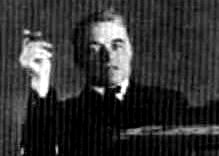 Andrew Kehoe
Mass murderer · USA · 1927
Andrew P. Kehoe committed suicide the same day by killing himself in the explos…
44 victims
Andrew Kehoe
Mass murderer · USA · 1927
Andrew P. Kehoe committed suicide the same day by killing himself in the explos…
44 victims
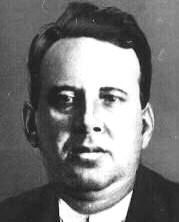 Sylvestre Matuschka
Mass murderer · Hungary · 1931
Sylvestre Matuschka (born 1892, date of death unknown) (in Hungarian publicatio…
22 victims
Sylvestre Matuschka
Mass murderer · Hungary · 1931
Sylvestre Matuschka (born 1892, date of death unknown) (in Hungarian publicatio…
22 victims
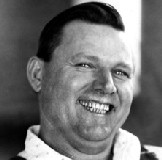 George Hassell
Mass murderer · USA · 1916
George Jefferson Hassell (July 1888 – February 2, 1928) was born in Smithville,…
13 victims
George Hassell
Mass murderer · USA · 1916
George Jefferson Hassell (July 1888 – February 2, 1928) was born in Smithville,…
13 victims
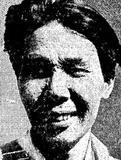 Leung Ying
Mass murderer · USA · 1928
Leung Ying (also known as Loy Yeung, Wong Gay, and Lim Onn) pleaded guilty to k…
11 victims
Leung Ying
Mass murderer · USA · 1928
Leung Ying (also known as Loy Yeung, Wong Gay, and Lim Onn) pleaded guilty to k…
11 victims
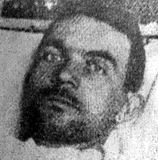 Fritz Angerstein
Mass murderer · Germany · 1924
Fritz Heinrich Angerstein was executed by decapitation with an axe in the court…
8 victims
Fritz Angerstein
Mass murderer · Germany · 1924
Fritz Heinrich Angerstein was executed by decapitation with an axe in the court…
8 victims
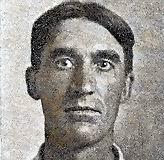 Henry Layer
Mass murderer · USA · 1920
Henry Layer Henry Layer was born Heinrich C. Layer on November 12, 1884 in Eige…
8 victims
Henry Layer
Mass murderer · USA · 1920
Henry Layer Henry Layer was born Heinrich C. Layer on November 12, 1884 in Eige…
8 victims
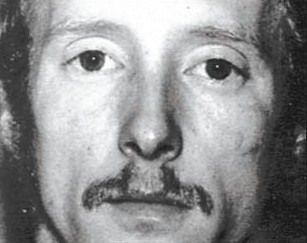 Richard Boggs
Murderer · USA · 1984
Richard T. Boggs was convicted and sentenced to death for the capital murder of…
2 victims
Richard Boggs
Murderer · USA · 1984
Richard T. Boggs was convicted and sentenced to death for the capital murder of…
2 victims
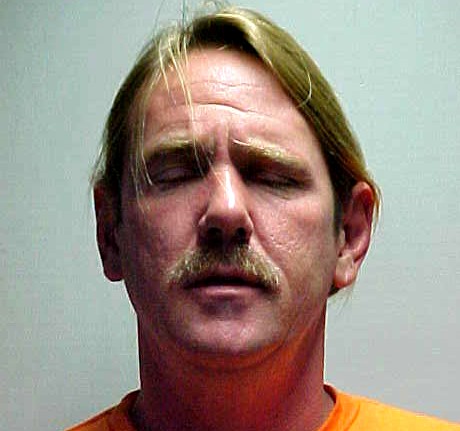 Frank Dale McCray
Murderer · USA · 1987
Frank Dale McCray was convicted in Maricopa County Superior Court and sentenced…
1 victim
Frank Dale McCray
Murderer · USA · 1987
Frank Dale McCray was convicted in Maricopa County Superior Court and sentenced…
1 victim
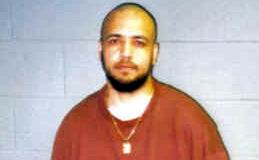 Jose DeJesus
Murderer · USA · 1997
Jose DeJesus was convicted of first-degree murder in July 1998 for the 1997 sho…
1 victim
Jose DeJesus
Murderer · USA · 1997
Jose DeJesus was convicted of first-degree murder in July 1998 for the 1997 sho…
1 victim
 Donna Marie Freeman
Murderer · USA · 2011
Donna Marie Freeman was of the Helena community at sentencing. She was 36 at th…
1 victim
Donna Marie Freeman
Murderer · USA · 2011
Donna Marie Freeman was of the Helena community at sentencing. She was 36 at th…
1 victim
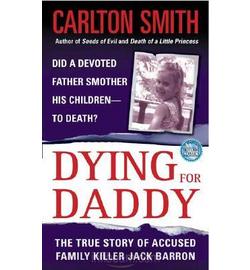 Jack Barron
Serial killer · USA · 1992
Jack Barron was the defendant. He was tried in a non-jury trial and later convi…
4 victims
Jack Barron
Serial killer · USA · 1992
Jack Barron was the defendant. He was tried in a non-jury trial and later convi…
4 victims
- Gender
- male
- Country
- Ireland
- Location
- Malahide, Dublin, Ireland
- Date of birth
- 1877
- Age at first offence
- 49
- Characteristics
- arson
- Victim profile
- Brothers Peter, 51, and Joseph McDonnell, 55; their sisters, Annie, 56, and Alice, 47, and two servants, James Clarke, 41, and Mary McGowan, 50
- Method of murder
- Beating to death with a blunt instrument
- Date(s) of murder
- March 31, 1926
- Years active
- 1926
- Date of arrest
- —
- Status
-
Executed
Executed by hanging on December 9, 1926 1926
Case details
Henry McCabe was a gardener.
Background
Dublin 'La Mancha' was a large, picturesque house situated within a sea-side resort in the north east of Dublin. Its occupants were the McDonnell family: brothers Peter and Joseph, and their sisters, Annie and Alice. All were unmarried and they had retired to live at the house in 1918 after running a successful business.
The offence
On 31 March 1926, Henry McCabe, their gardener, alerted the police that the house was on fire.
A neighbour helping to look for the occupants of the house spotted a can of parrafin in one of the rooms which was not ablaze.
Further evidence that the fire was not accidental was noticed when the first body was found in the house. It was clear that the victim had been beaten to death, not burned.
A few hours later, there were six bodies lying dead on the front lawn, all removed from the house which by now had been destroyed by the blaze. They included all four members of the McDonnell family and two servants.
The six dead were the brothers Joseph McDonnell (55) and Peter McDonnell (51), and their sisters Annie (56) and Alice (47), as well as two workers Mary McGowan (50) from Lusk and James Clarke (41). The only member of the household to survive was Henry McCabe.
It was noticed that Henry McCabe was wearing a pair of trousers that had belonged to one of the dead brothers.
It was clear that the fire had been started to cover up the slaughter that had taken place inside the house, for all the victims had been beaten to death with a blunt instrument.
The victims had also been poisoned with a dose of arsenic sufficient to weaken them and render themselves defenceless against a personal attack.
In addition to the foregoing, after the bodies were subsequently exhumed during the investigation, varying quantities of arsenic were found in the deceased.
Investigation
Henry McCabe was the prime suspect from the first moment and as evidence was built up against him he was charged with the murders.
As part of the investigation, there was a legal dispute over whether a signed statement was free and voluntary. Very Rev Dr Kielty PP, Ballygar spoke of the McDonnells as kindly and religious people.
Sheila O’Reilly, a former housekeeper at La Mancha, confirmed that a considerable quantity of jewellery was in the house, mainly locked in the linen presses.
Items of clothing were removed from McCabe's home and found to have bloodstains.
Chief Supt Leahy gave evidence of bringing McCabe into the station two days after the fire and interrogating him for three and a half hours. A statement was signed afterwards.
After some legal argument, the judge said he was not satisfied that the statement was free and voluntary and disallowed it.
Arrest and detention
Henry McCabe was not formally arrested and charged with homicide until several weeks after the investigation had begun, although he had been detained without a warrant since Friday, 2 April, two days after the discovery of the bodies.
His defense called his detention ‘illegal custody’; the Civic Guard alternately stated that he was being held on suspicion of committing a felony or as a principal witness.
Trial
In November, Henry McCabe stood trial before Mr Justice O'Brien / Justice O’Byrne.
The case opened in early November 1926 before Justice O’Byrne with McCabe pleading not guilty in relation to the charges.
The case against him was described as strong, but there was a definite lack of motive.
The best offered was that Henry McCabe was afraid that the impending sale of the house would cost him his job.
McCabe made a poor show in court and numerous witnesses testified against him, including a guard who had looked after him while on remand.
It was claimed in court that the guard told that McCabe had asked him to pass a message to his wife asking her to lie about the trousers he was wearing by saying that he had been given them a few weeks earlier.
The truth was that McCabe had changed into a pair of Peter McDonnell's trousers after spoiling his own during the arson.
The defence opened with McCabe who stated that he was a married man with nine children, the youngest just 10 months old.
During summing up, Mr A Lynn BL said McCabe was in the dock through the extraordinary accident that he was working in the house in which all the people had met their end. If somebody from the household had lived, they would, according to the methods of the police, have been charged with the murder.
Mr Garrigan, replying, said there was no plea of insanity from McCabe and he was not illiterate. He was described as “an arch-criminal.” He was described as “a subtle, skilled man” and it was said he “began a campaign of murder that started on the Saturday and finished on the Wednesday.”
It was claimed that “La Mancha was rifled, from top to bottom, before being torched.” It was claimed that everything valuable disappeared.
The jury retired and returned with a verdict that Henry McCabe was guilty.
After the jury’s return, when asked if he had anything to say, he replied:
‘All I have to say is God forgive them. I am the victim of bribery and perjury.’
Sentencing
On Thursday morning, December 9th at 8am, Henry McCabe was executed by hanging in Mountjoy Jail.
The hangman was Thomas Pierrepoint, assisted by Robinson.
Appeals
The conviction was appealed, and the appeal was denied on 3 December.
The appeals included a legal argument that the prosecution was allowed to present evidence relating to the other five homicides, though the defendant was being tried for one homicide alone.
The trial judge decided that the deaths were closely linked and could not logically be suppressed.
The judge instructed the jury that although they were only to consider the single case of the murder of Peter McDonnell, they could consider it intelligently “ . . . in the setting in which you find it, and that setting is the setting of a burned house containing six bodies’ ( IR , 132).”
One ground for appeal concerned the admissibility of statements made by Henry McCabe before he had been formally charged and arrested, and whether those statements were voluntary.
The Court of Criminal Appeal examined precedents and the legal definition of “voluntary.”
It concluded:
‘It can be posited, however, that it is not the law that a statement must be excluded from evidence on the sole ground that either the statement was made in answer to questions put by a police officer or that it was made without a caution having been first administered. But in such cases it is a matter for the Judge at the trial to decide whether, in his judicial discretion, he will admit the statement or not, having regard to all the circumstances, and observing the legal requirements that the statement shall be voluntary, though not necessarily volunteered.’ ( IR , 134).
It noted that “the nature of the custody is also one of the factors in the exercise of judicial discretion as to admitting or rejecting the evidence” ( IR , 135-6).
The Court of Criminal Appeal therefore did not have to rule on whether McCabe had actually been detained illegally for several weeks, and it treated illegal detention itself as not grounds for appeal.
Outcome
Henry McCabe was convicted and executed.
He was later buried in an unmarked grave within the walls of Mountjoy Jail.
Aftermath
In 1933, the discovery of silver watches at Church Road led to further public questioning.
A youth called Denning was at work in the garden of a house at Church Road, and noticed an object at his feet while doing a cleanup after a purchase. He found a silver watch that had an inscription reading “James Clarke” and a second silver watch with “J MacD” on it. The items were beside a heavy gold Albert chain.
Denning went to his father, then went immediately to the local garda station, and a full scale search was ordered.
It was described as impossible to link the items to the La Mancha murders, but the coincidence was described as notable.
James Clarke was one of the victims who died in the murders, and the rumour spread around Malahide that Henry McCabe had worked in that same garden in the past.
Following the murders, searches were also carried out by the gardai to recover items they believed were taken from the home. Searches centred on lands just over the wall from La Mancha in the Malahide Demesne. Nothing was ever found there.
The question was raised whether the discovery reconfirmed Henry McCabe's guilt or implied that somebody else committed the murders and later buried the evidence after McCabe had been executed.
Timeline
- 1918 — The McDonnell family retired to live at ‘La Mancha’ after running a successful business.
- 31 March 1926 — Henry McCabe alerted police that ‘La Mancha’ was on fire; bodies were later found and it became clear the victims had been killed before being covered by the blaze.
- Friday, 2 April (1926) — Henry McCabe was detained without a warrant.
- Early November 1926 — Henry McCabe stood trial before Justice O’Byrne and pleaded not guilty.
- 15 November 1926 — The trial judge stated they were coming to the end of the longest trial in living memory in that court.
- 3 December (1926) — Henry McCabe’s appeal was denied.
- December 9, 1926 (8am) — Henry McCabe was executed by hanging in Mountjoy Jail.
- 9 December 1926 — Henry McCabe died.
Other details
Household staff and occupants
Mary McGowan (50) from Lusk was a maid.
James Clarke (41) was a man-servant.
Henry McCabe was described as the only member of the household to survive.
Execution supervision and attendance
It was stated that a crowd of 300 waited outside Mountjoy Jail watched the execution.
The execution was watched by the governor.
Mrs McCabe waited at the gates, head bowed and rosary beads in her hand, aided by two friends. After notice of the execution was placed on the gate, Mrs McCabe collapsed and was helped up by friends as they made their way to a motorcar.
At the inquest, Arthur A Faulkner identified the remains of Henry McCabe (48) from Malahide.
Additional courtroom statements and quoted material
Mr A Lynn BL said McCabe was in the dock “through the extraordinary accident that he was working in the house in which all the people had met their end.”
The judge instructed the jury:
‘If you are satisfied that McCabe was the only person who could have committed this crime you must find him guilty,’
‘If you have any reasonable doubt, you must give him the benefit of it.’
The judge and jury’s exchange included:
Named officials and legal figures
The trial judge was Mr Justice O'Brien / Justice O’Byrne / Mr Justice O’Byrne.
Chief Supt Leahy gave evidence.
The defence included McCabe’s attorneys, and Mr A Lynn BL and Mr Garrigan appeared in summing up and replying.
Judge’s instruction about context
The judge’s instruction included:
Court of Criminal Appeal statements
The Court of Criminal Appeal included:
‘It has been admitted in argument, however [by whom the transcript does not make clear], that these statements, which on the face of them are not confessions or admissions, do not contain anything incriminating the accused. On the contrary, they contain the outlines of his defence…..’ ( IR , 133)
‘the nature of the custody is also one of the factors in the exercise of judicial discretion as to admitting or rejecting the evidence’ ( IR , 135-6).
Questions raised in later discussion
Did the discovery of silver watches at Church Road prove the guilt of McCabe? Why not piety and pity both, even down below? Why not mercy and Godliness together? A little mercy in the stress of sacrifice, a little mercy to rejoice against judgment.
Henry McCabe, described as executed in 1926, was compared in the narrative with later fictional references.
Spotted an error, or have more information about this case?