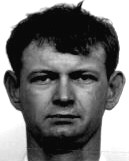
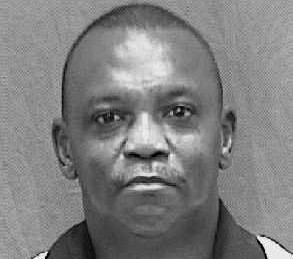
Allen Wayne Janecka
Murderer Ervil LeBaron
Murderer · USA · 1972
Ervil Morrell LeBaron (1925 to August 16, 1981) was the leader of a polygamous…
35 victims
Ervil LeBaron
Murderer · USA · 1972
Ervil Morrell LeBaron (1925 to August 16, 1981) was the leader of a polygamous…
35 victims
 Brian Kevin Rosenfeld
Murderer · USA · 1985
Brian Kevin Rosenfeld Brian Kevin Rosenfeld was sentenced to three concurrent l…
23 victims
Brian Kevin Rosenfeld
Murderer · USA · 1985
Brian Kevin Rosenfeld Brian Kevin Rosenfeld was sentenced to three concurrent l…
23 victims
 Marvin Gray
Murderer · USA · 1975
Marvin Gray was convicted killer who claimed responsibility for 23 slayings and…
23 victims
Marvin Gray
Murderer · USA · 1975
Marvin Gray was convicted killer who claimed responsibility for 23 slayings and…
23 victims
 Yahweh ben Yahweh
Murderer · USA · 1980
Yahweh ben Yahweh was born and legally named Hulon Mitchell Jr. (October 27, 19…
23 victims
Yahweh ben Yahweh
Murderer · USA · 1980
Yahweh ben Yahweh was born and legally named Hulon Mitchell Jr. (October 27, 19…
23 victims
 Ronald Straight
Murderer · USA · 1976
Ronald Straight was executed by electrocution in Florida on May 20, 1986. · Jul…
1 victim
Ronald Straight
Murderer · USA · 1976
Ronald Straight was executed by electrocution in Florida on May 20, 1986. · Jul…
1 victim
 Samuel Green
Serial killer · USA · 1817
Samuel Green was executed by hanging in Massachusetts on April 25, 1822. He was…
Samuel Green
Serial killer · USA · 1817
Samuel Green was executed by hanging in Massachusetts on April 25, 1822. He was…
 George Bernard Davis
Murderer · USA · 1984
George Bernard Davis Jr. was convicted by a jury in Elbert County for the armed…
1 victim
George Bernard Davis
Murderer · USA · 1984
George Bernard Davis Jr. was convicted by a jury in Elbert County for the armed…
1 victim
 Sanna Sillanpää
Homicide · Finland · 1999
Sanna Riitta Liisa Sillanpää (born April 15, 1968) was a Finnish woman who shot…
3 victims
Sanna Sillanpää
Homicide · Finland · 1999
Sanna Riitta Liisa Sillanpää (born April 15, 1968) was a Finnish woman who shot…
3 victims
- Gender
- male
- Country
- USA
- Location
- Harris County, Texas, USA
- Date of birth
- November 3, 1949
- Age at first offence
- 26
- Characteristics
- murder for hire, alcohol, domestic dispute
- Victim profile
- Gertrude Zabolio / John, 35, and Diana Wanstrath, 36, and their 14-month-old son Kevin
- Method of murder
- Strangulation with a pair of nylon stockings / Shooting (.22 caliber pistol)
- Date(s) of murder
- 1975 / 1979
- Years active
- 1975–1979
- Date of arrest
- November 23, 1980
- Status
-
Executed
Executed by lethal injection in Texas on July 24, 2003
Case identifiers
- Name: Allen Wayne Janecka
Timeline
- July 6, 1979 — A neighbor discovered the corpses of John and Diana Wanstrath in their home, along with their 14-month-old son Kevin; each had been shot in the head.
- July 5, 1979 — The capital murder of Kevin Wanstrath occurred “on or about July 5, 1979” and involved the murder for remuneration and the promise of remuneration.
- 1975 — Markham Duff-Smith hired Janecka to murder Duff-Smith’s mother, Gertrude Zabolio, by breaking into her River Oaks home and strangling her with a pair of nylon stockings.
- 1975 — Gertrude Zabolio’s death was initially classified as a suicide with a stocking tied around her neck.
- 1979 — The Wanstraths’ estate was described as being worth about $800,000, and Diana inherited much of this wealth when her mother, Gertrude Duff-Smith Zabolio, died.
- July 6, 1979 — The coroner initially ruled that Diana killed her husband and son and then committed suicide; no gun was found at the premises.
- Late November 1980 — Houston detective Dan McAnulty traveled to Georgia to investigate Janecka’s involvement in the Wanstrath murders.
- In Georgia (late 1980) — Janecka’s girlfriend gave McAnulty a “.22-caliber Colt revolver” and a can of mace that Janecka had used in the Wanstrath killings.
- Nov. 23, 1980 — Janecka was arrested in Houston on warrants for another homicide and for arson.
- Nov. 28, 1980 — Janecka overheard Detective McAnulty mention to another officer that he had been in Georgia; Janecka asked how everyone in Georgia was doing.
- Nov. 29, 1980 — Janecka signed a written statement confessing to the murders; he gave a largely-exculpatory statement after his arrest and later proceeded to confess.
- Dec. 11, 1980 — Janecka was indicted for the capital murder of Kevin Wanstrath for remuneration.
- April 8, 1981 — Janecka was convicted of capital murder and sentenced to death.
- Oct. 7, 1987 — The conviction was affirmed by the Texas Court of Criminal Appeals.
- Jan. 31, 1990 — The conviction was reversed based on error in the indictment.
- Sept. 3, 1992 — Janecka was reindicted for capital murder.
- Oct. 28, 1993 — Janecka was found guilty of capital murder again.
- Nov. 4, 1993 — Janecka was sentenced to death again.
- Nov. 27, 1996 — The Texas Court of Criminal Appeals affirmed the conviction and sentence on direct appeal.
- Oct. 6, 1997 — The United States Supreme Court denied certiorari review.
- Oct. 20, 1999 — The Texas Court of Criminal Appeals denied Janecka’s application for state habeas relief.
- June 12, 2000 — The United States Supreme Court denied certiorari review.
- Aug. 31, 2001 — The U.S. District Court for the Southern District of Texas denied Janecka’s habeas writ.
- Aug. 1, 2002 — The Fifth Circuit Court of Appeals denied certificate of appealability.
- Feb. 24, 2003 — The United States Supreme Court denied certiorari review.
- April 3, 2003 — Janecka’s execution was scheduled for July 24, 2003, by order of the state trial court, the Honorable Joan Campbell, Presiding Judge 248th District Court.
- July 24, 2003 — Allen Wayne Janecka was executed by lethal injection in Texas at 6:21 p.m. after it began at 6:14 p.m.
People involved
Defendant
- Allen Wayne Janecka — capital murder defendant for the murder for remuneration of Kevin Wanstrath; he later confessed and was executed.
Victims
- John Wanstrath — found dead in his home; shot in the head.
- Diana Wanstrath — found dead in her home; shot in the head.
- Kevin Wanstrath — 14-month-old; found dead in his crib; shot in the head.
Key related individuals and others named
- Markham Duff-Smith — Diana’s brother; pursued as a focus of the investigation; stood to gain substantial inheritance; later executed on June 29, 1993 (executions mentioned as June 29, 1993 and also referenced as executed in 1993 on June 9, 1993 in separate passages).
- Walt Waldhauser (also shown as Walter Waldhauser Jr., Walter Alfred Waldhauser Jr.) — hired by Duff-Smith to murder the family; hired Janecka in turn; pleaded guilty to three counts of murder in the Wanstrath case and received a 30-year prison sentence; he was released and later changed his name.
- Officer Johnny Bonds — Houston Police Department officer who continued to investigate the Wanstrath deaths.
- Detective Dan McAnulty — Houston detective who traveled to Georgia and investigated Janecka’s involvement.
- Karen Holder — Janecka’s girlfriend in Georgia; she provided the revolver and mace to Detective McAnulty.
- Karen Holder’s mother — named as part of where Janecka moved to live in Georgia.
- Woody Densen — the trial judge in the 1993 retrial proceedings.
- Jimmy James, J. — trial judge in the April 1981 conviction proceeding.
- Honorable Joan Campbell — Presiding Judge 248th District Court; ordered that execution be scheduled.
- Judge Ted Poe — testified during sentencing phase (in a prior capacity as an Assistant Harris County District Attorney and later as a judge).
- Michael Chavis — testified at sentencing about how the killing of Kevin Wanstrath “affected” him.
- Valerie — identified as Janecka’s sister who, with Janecka’s brother and friends and spiritual advisers, witnessed the execution.
- Larry Fitzgerald — prison spokesman who spoke with Janecka earlier.
- David Carson — named in reference to “Texas Execution Information Center by David Carson”.
- Richard Ellis — defense lawyer who argued for postponement pending ballistics tests.
- Bob Burdette — state District Judge who refused to postpone Duff-Smith’s execution.
- Janie Cockrell — Director, Texas Department of Criminal Justice, Institutional Division (as respondent in federal habeas appeal caption).
- J. J. / other counsel and witnesses — not consistently named beyond those above.
The offence
Capital murder for remuneration
Janecka was convicted of capital murder of 14-month-old Kevin Wanstrath and the murder was described as occurring “on or about July 5, 1979” by shooting Kevin with a gun, with Janecka committing the murder for remuneration and the promise of remuneration, “namely, money.”
How the killings were carried out (as described in the case materials)
- A neighbor discovered the bodies of John and Diana Wanstrath and their 14-month-old son Kevin in their home on July 6, 1979.
- Each victim had been shot in the head.
- The boy was shot while surrounded by stuffed animals in his crib.
- Police did not find a weapon on the premises, but the medical examiner initially ruled that Diana had killed her husband and son, then committed suicide.
- Officer Johnny Bonds pursued an investigation rejecting the suicide theory.
- Evidence uncovered during the investigation indicated that:
- Markham Duff-Smith had accepted or had a scheme for significant inheritance,
- Duff-Smith hired Walt Waldhauser to murder the family,
- Waldhauser hired Janecka to commit the murders.
- Janecka’s confession described the following:
- Waldhauser contacted him about killing a family, with Janecka stating they would be paid $30,000.
- On the day of the murders, Janecka and Waldhauser went to the Wanstrath home in a rental car with stolen license plates.
- The Wanstraths allowed them to enter the house supposing they were architects.
- At an arranged signal, Waldhauser sprayed Diana with mace.
- Janecka used a .22-caliber revolver to shoot both John and Diana.
- Janecka then entered the nursery and “took care of the little one,” shooting Kevin in the head.
- After leaving the house, Waldhauser told Janecka to destroy the revolver, but Janecka kept it.
- Over the next several months, Waldhauser gave Janecka several thousand dollars.
Investigation
Initial ruling and continued investigation
- The medical examiner initially ruled that Diana killed her husband and son and then committed suicide despite the absence of a murder weapon at the scene.
- Officer Johnny Bonds rejected the suicide ruling and pursued his own investigation for the next year-and-a-half.
- Bonds focused on Diana’s brother, Markham Duff-Smith, who stood to gain substantial inheritance from the family death.
Georgia investigation and weapon recovery
- Detective Dan McAnulty traveled to Georgia in late November 1980 to investigate Janecka’s involvement.
- While in Georgia, Janecka’s girlfriend provided a .22-caliber Colt revolver and a can of mace that Janecka had used in the Wanstrath killings.
Arrest and confession
- On Nov. 23, 1980, Janecka was arrested in Houston on warrants for another homicide and for arson.
- After his arrest, Janecka gave a largely-exculpatory statement.
- On Nov. 28, 1980, Janecka overheard McAnulty mention being in Georgia and asked how everyone in Georgia was doing; after McAnulty responded, Janecka inquired about the investigation.
- When told the murder weapon came from Janecka’s girlfriend and that McAnulty had received the gun and mace, Janecka asked to speak about the murders and stated he did not want his attorney present.
- Janecka proceeded to confess; he signed a written statement on Nov. 29, 1980.
Confession contents (verbatim where quoted in the materials)
- Janecka’s confession included that Waldhauser contacted him in early 1979 about killing a family and that they had participated in the killing of Duff-Smith’s mother in 1975.
- Janecka stated that after learning they would be paid $30,000 for killing the family, he agreed.
- Janecka told investigators he participated in the Wanstrath murders because he was afraid that Waldhauser, who Janecka claimed had mafia connections, would have killed him if he did not do so.
- The materials described Janecka’s confessions as including:
- a series of oral and written statements,
- statements during questioning by police and in later television interviewers,
- a statement that he “took care of the little one,” as referenced in the appeal/federal habeas discussion.
Arrest
- Nov. 23, 1980 — Janecka was arrested in Harris County on warrants for another homicide and for arson.
Trial
First conviction and sentencing
- On April 8, 1981, Janecka was convicted of capital murder and sentenced to death.
Indictment issue and reversal
- The Court of Criminal Appeals affirmed initially on Oct. 7, 1987.
- On Jan. 31, 1990, the conviction was reversed based on an error in the indictment.
Retrial and second conviction
- Janecka was reindicted on Sept. 3, 1992.
- On Oct. 28, 1993, Janecka was found guilty of capital murder again.
- On Nov. 4, 1993, he was sentenced to death again.
Direct appeal outcomes
- Nov. 27, 1996 — The Court of Criminal Appeals affirmed the conviction and sentence on direct appeal.
Evidence and courtroom proceedings details preserved in the materials
- Janecka was convicted under V.T.C.A. Penal Code, Sec. 19.03(a)(3), with the jury returning affirmative findings on the first two special issues and punishment assessed at death.
- The indictment error in the first appeal concerned the failure to name the person providing the remuneration for the alleged crime.
- In the federal appellate discussion, the capital conviction described in 1993 was said to be for murder for remuneration of a fourteen-month-old infant.
- The materials described that:
- jurors had affirmative findings on special issues and a negative answer to the mitigation special issue submitted under 37.0711 § 3(e),
- he received a death sentence as mandated by Article 37.0711 § 3(g).
- The materials also stated that Janecka challenged admission of:
- the murder weapon,
- the can of mace,
- his confessions.
- In the federal habeas discussion, at trial Janecka’s counsel asked whether Detective McAnulty had a search warrant or consent to search Karen Holder’s residence, and after the answers were negative, counsel objected to admission of the gun and the can of mace.
Sentencing
Sentencing phase testimony
- During the sentencing phase, two challenged forms of testimony are described:
- Testimony of Judge Ted Poe, who spoke about the life-altering effect of Kevin Wanstrath’s death and testified to having a child the same age Kevin would have been and that he kept a photo of Kevin at work.
- Testimony of Michael Chavis, who testified about how Kevin’s killing “affected” him, including that the loss of his leg in an unrelated accident did not compare to pain caused by knowing he might have prevented the offense.
Mitigation special issue
- In the 1993 retrial proceedings described in the materials, the jury negatively answered the mitigation special issue under 37.0711 § 3(e).
Appeals
State direct appeal: first conviction
- Oct. 7, 1987 — conviction affirmed by the Texas Court of Criminal Appeals.
- Jan. 31, 1990 — conviction reversed due to error in the indictment.
- Janecka v. State , 739 S.W.3d 813 (Tex.Crim.App. 1987) — The appeal involved a capital murder conviction in the 248th Judicial District Court, Harris County, Jimmy James, J., with the court holding multiple points including that the failure of the indictment to name the person providing remuneration was error.
- On rehearing, remand was required to provide an opportunity to demonstrate harm as a result of the trial court’s error in overruling the motion to quash.
State appeal: after retrial
- Nov. 27, 1996 — The Texas Court of Criminal Appeals affirmed the conviction and sentence on direct appeal in Janecka v. State , 937 S.W.3d 456 (Tex.Crim.App. 1996).
- The 1996 direct appeal outcome stated: Affirmed.
United States Supreme Court denials of certiorari
- Oct. 6, 1997 — United States Supreme Court denied certiorari review.
- June 12, 2000 — United States Supreme Court denied certiorari review.
- Feb. 24, 2003 — United States Supreme Court denied certiorari review.
State habeas relief
- Oct. 20, 1999 — Texas Court of Criminal Appeals denied Janecka’s application for state habeas relief.
Federal habeas and certificate of appealability
- Aug. 31, 2001 — U.S.
- Aug. 1, 2002 — Fifth Circuit Court of Appeals denied certificate of appealability (COA) in Allen Wayne Janecka v. Janie Cockrell, Director, Texas Department of Criminal Justice, Institutional Division.
Outcome
- Janecka’s execution was scheduled for July 24, 2003 after a state trial court order by Honorable Joan Campbell, Presiding Judge 248th District Court.
- Janecka was executed by lethal injection in Texas on July 24, 2003.
- He was pronounced dead at 6:21 p.m. after execution began at 6:14 p.m.
Aftermath
Last meal
- Janecka requested a last meal that included chicken fried steak, gravy, French fries, ketchup, salad, blue cheese dressing, iced tea with lemon, two sodas, rolls, and butter.
Last statement / final words (verbatim)
“First of all, I want to say God bless everyone here today. For many years I have done things my way, which caused a lot of pain to me, my family and many others. Today I have come to realize that for peace and happiness, one has to do things God's way. I want to thank my family for their support. I love you. I am taking you with me. You all stay strong. I love you. I also want to say thanks to the Chaplains who I have met through the years and who have brought me a long way. And I cherish you as my family and at this time . . . oh, Ken, my little son, I am coming to see you. Oh Lord, into your hands I commit my spirit. Thy will be done.”
Additional execution attendance and statements in the materials
- The materials described that several members of Janecka’s family, including his sister and brother, and other witnesses were present at the execution.
- Officer Johnny Bonds witnessed the execution.
- Bonds said: “Twenty-four years waiting for this to happen. I'm glad it's over.”
- A quote attributed to Janecka at the execution included:
- “God bless everyone here today,”
- “Oh Lord, into your hands I commend my spirit,”
- and “Thy will be done.”
- Janecka thanked prison chaplains in his last remarks, as described in the materials.
Prior criminal history
1975 murder of Gertrude Zabolio
- In 1975, four years before the Wanstrath murders, Markham Duff-Smith hired Janecka to murder Duff-Smith’s mother, Gertrude Zabolio.
- Janecka broke into Zabolio’s River Oaks home and strangled her with nylon stockings.
- Her death was initially ruled a suicide; this was described as a stocking tied around her neck.
Burglary and parole violations
- The materials described habitual felony offender history:
- Janecka served 6 months of a 2-year sentence for burglary in 1972–73.
- In 1974, he served another 7 weeks for violating parole terms.
- In August 1976, he was sentenced to 5 years for another burglary conviction.
- He was released in just under 2 years.
- The case materials also described an arson-related arrest warrant in Nov. 1980 connected to unrelated offenses.
Other details
Estate and inheritance scheme details
- The materials stated that Markham Duff-Smith wanted to eliminate family members so he could collect the inheritance.
- The Wanstraths’ estate was described as worth about $800,000.
- The confessions described payment amounts including $30,000 to kill the family and “several thousand dollars” paid afterward.
- One portion described as designed for Duff-Smith, an investor, to inherit the bulk of the family’s $800,000 estate.
Documentary and additional interview references
- The materials described that while on death row Janecka allowed himself to be interviewed for a German documentary film.
- The materials stated this confession was shown to a jury at his 1993 sentencing hearing.
Duff-Smith and Waldhauser outcomes referenced
- Markham Duff-Smith was executed in 1993; the materials included June 29, 1993 and also referenced “executed in 1993” and another date reference of “9 June 1993.”
- Walter Alfred Waldhauser Jr. pleaded guilty to three counts of murder in the Wanstrath case and was sentenced to 30 years in prison.
- Waldhauser was released in February 1990, after serving 8 years, and was described as changing his name to Michael E. Davis and later serving a life sentence for an unrelated crime under the name Michael E. Davis / Michael E. Davis is referenced in the materials.

Spotted an error, or have more information about this case?