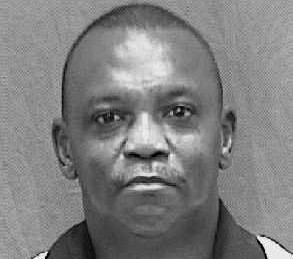
George Bernard Davis
Murderer Brian Kevin Rosenfeld
Murderer · USA · 1985
Brian Kevin Rosenfeld Brian Kevin Rosenfeld was sentenced to three concurrent l…
23 victims
Brian Kevin Rosenfeld
Murderer · USA · 1985
Brian Kevin Rosenfeld Brian Kevin Rosenfeld was sentenced to three concurrent l…
23 victims
 Marvin Gray
Murderer · USA · 1975
Marvin Gray was convicted killer who claimed responsibility for 23 slayings and…
23 victims
Marvin Gray
Murderer · USA · 1975
Marvin Gray was convicted killer who claimed responsibility for 23 slayings and…
23 victims
 Yahweh ben Yahweh
Murderer · USA · 1980
Yahweh ben Yahweh was born and legally named Hulon Mitchell Jr. (October 27, 19…
23 victims
Yahweh ben Yahweh
Murderer · USA · 1980
Yahweh ben Yahweh was born and legally named Hulon Mitchell Jr. (October 27, 19…
23 victims
 Russell Ellwood
Murderer · USA · 1991
Russell Ellwood was a former taxi driver. Authorities suspected him of killing…
20 victims
Russell Ellwood
Murderer · USA · 1991
Russell Ellwood was a former taxi driver. Authorities suspected him of killing…
20 victims
 Kelly Gissendaner
Murderer · USA · 1997
Kelly Gissendaner was convicted in 1998 of recruiting her lover to kill her hus…
1 victim
Kelly Gissendaner
Murderer · USA · 1997
Kelly Gissendaner was convicted in 1998 of recruiting her lover to kill her hus…
1 victim
 David Birnie
Serial killer · Australia · 1986
David John Birnie (16 February 1951 – 7 October 2005) was an Australian serial…
4 victims
David Birnie
Serial killer · Australia · 1986
David John Birnie (16 February 1951 – 7 October 2005) was an Australian serial…
4 victims
 James Mathis
Murderer · USA · 1980
Name: James Mathis · Age: 51 · Status: Sentenced to death in May 1991 · May 199…
2 victims
James Mathis
Murderer · USA · 1980
Name: James Mathis · Age: 51 · Status: Sentenced to death in May 1991 · May 199…
2 victims
 Shajia Ayobi
Murderer · USA · 2011
Shajia Ayobi was married to Ghulam Ayobi in an arranged marriage in 1993. She s…
1 victim
Shajia Ayobi
Murderer · USA · 2011
Shajia Ayobi was married to Ghulam Ayobi in an arranged marriage in 1993. She s…
1 victim
 Will Purvis
Murderer? · USA · 1883
Will Purvis was a member of the White Caps, a group described as having foundat…
1 victim
Will Purvis
Murderer? · USA · 1883
Will Purvis was a member of the White Caps, a group described as having foundat…
1 victim
 Thomas Paul West
Murderer · USA · 1987
Defendant: Thomas Paul West · Victim: Don Bortle (Donald Bortle / Donald Bortle…
1 victim
Thomas Paul West
Murderer · USA · 1987
Defendant: Thomas Paul West · Victim: Don Bortle (Donald Bortle / Donald Bortle…
1 victim
- Gender
- male
- Country
- USA
- Location
- Elbert County, Georgia, USA
- Date of birth
- 1958
- Age at first offence
- 26
- Characteristics
- robbery, armed robbery, torture
- Victim profile
- Richard L. Rice, 63
- Method of murder
- Shooting
- Date(s) of murder
- February 13, 1984
- Years active
- 1984
- Date of arrest
- —
- Status
-
Life imprisonment
Sentence to death commuted to life in prison
Case name and parties
George Bernard Davis Jr. was convicted by a jury in Elbert County for the armed robbery and murder of Richard Rice.
Timeline
- February 13, 1984 — Richard Rice was found dead in his wrecker on Woodlawn Church Road with bullet wounds consistent with close-range gunfire.
- February 6, 1985 — George Bernard Davis Jr. was sentenced to death.
- March 7, 1985 — Davis filed a motion for new trial raising the general grounds.
- May 29, 1985 — The motion for new trial was denied.
- July 24, 1985 — A notice of appeal was filed and the case was docketed in the court.
- October 16, 1985 — Oral arguments were heard.
- February 25, 1985 — Davis was sentenced to death in Elbert County in February 1985.
- March 11, 1986 — The case was decided.
- April 1990 — Davis was awaiting a trial court decision on the issue of mental retardation.
Background
Richard Rice owned Rice's Garage in Elbert County. Davis had argued with Rice over payments for car repairs. Davis had no major felony convictions before the killing. Davis had been awaiting a trial court decision on the issue of mental retardation since April 1990.
The offence
Shortly before noon on February 13, 1984, a person called Rice's grandson stating that a green Chevrolet was located at the trash dumpsters on Bobby Brown Road and needed to be picked up. The grandson relayed this message to Rice, who got into his wrecker and drove to the area.
At about one o'clock, Danny Burke stopped at the intersection of Bobby Brown Road and Woodlawn Church Road to talk to Reverend DeWitt Waters. Burke and Waters observed the victim's wrecker at the dumpsters. The wrecker was backed up to a green Chevrolet, which Rice appeared to be preparing to tow. The witnesses saw nothing unusual; the car was hooked up, and Rice was walking around the car, checking that it was hooked up properly. Neither witness saw anyone besides Mr. Rice in the area. After finishing, Rice got into the wrecker and drove off, down Woodlawn Church Road towards Elberton.
Shortly afterwards, William Irwin observed the victim's wrecker about 100 yards in front of him on Woodlawn Church Road traveling at 40–45 mph. Irwin testified that a black male leaned out of the driver's side window of the automobile in tow and fired two or three times. The wrecker continued up the road for another 200 yards and then pulled over to the side of the road. Irwin drove on. He testified: "Well, it sort of seemed funny to me at first, but when nothing happened -- I mean the wrecker didn't swerve or anything and just went right on up the road and then pulled over, and I thought maybe the guy worked for Mr. Rice." He also testified that he thought the gunshots had been a signal of some kind.
Early in the afternoon, Thomas Childs observed the victim's wrecker stopped by the side of the road in front of Childs' home. The wrecker's motor was running, its windshield wipers were on (it was raining), and the driver's-side door was open. Childs went out to the wrecker and found Richard Rice slumped over in the seat, with his hand grasping an automobile bumper jack. Childs found that Rice appeared to be dead. Childs shut the door and called the police. The back window of the wrecker had what appeared to be a bullet hole in its lower left corner.
During the autopsy examination, one bullet was found in Rice's clothing and another was removed from the inside of his skull. Rice had one graze wound on the top of his left shoulder where a bullet had come to rest without penetrating the skin. Another bullet entered the ear lobe, passed through the face, and exited on the right side of the face. A third bullet entered the neck and lodged in the "inner table" of the skull. The autopsist testified that both head wounds were potentially fatal and had been inflicted by a gun fired from a very close range—two or three inches.
Davis was convicted for the armed robbery and murder of Richard Rice. The evidence included Davis's confession and ballistics and physical evidence. Davis's written confession described a robbery in which he took Rice's wallet containing over $800 after shooting Rice. The evidence also showed that Davis led officers to the murder weapon and to the victim's wallet.
Investigation
Acting on information from a variety of sources, law enforcement officers located Davis in Lincoln County. Davis was transported to the sheriff's office in Elbert County, given his rights under Miranda v. Arizona, 384 U. S. 436 (86 SC 1602, 16 LE2d 694) (1966), and interrogated. After first denying any involvement in the death of Richard Rice, Davis confessed.
In his written confession, Davis stated that he drove his green Chevrolet to Richard Rice's garage, arriving ten minutes before nine. He stated that he wanted Rice to fix another car he owned. Davis stated that Rice had put an engine and transmission in a third car belonging to Davis the previous October and that Davis had not yet paid Rice for the work.
Davis stated that Rice told him Rice was going to remove the engine and transmission and junk the car. Davis left, then called Rice's garage and reported a car parked by some dumpsters. Davis stated that he drove to the area and waited for Rice. He claimed that when Rice arrived, he told Rice he wanted to talk to him but Rice grabbed a bumper jack out of his wrecker and threatened to kill him. Davis stated that he hid behind his car.
Davis stated that Rice hooked the car up to the wrecker. As Rice was getting into the wrecker, Davis entered the car. Davis stated that Rice drove away with Davis's car in tow. Davis stated that he blew his horn but Rice would not stop. Davis stated that he got out his gun and fired twice, the second shot breaking the rear window of the wrecker. Davis stated that Rice pulled over and stepped out of the wrecker with a bumper jack in his hand, and Davis shot him.
Davis stated that he took Rice's wallet containing over $800, let his car down, and drove away. Davis led the officers to the gun identified by ballistics examination as the murder weapon and to the victim's wallet.
The appellate court held: "The evidence is sufficient to support the conviction for murder and armed robbery. Jackson v. Virginia, 443 U. S. 307 (99 SC 2781, 61 LE2d 560) (1979)."
Arrest
Law enforcement officers located Davis in Lincoln County and transported him to the sheriff's office in Elbert County, where he was given Miranda rights and interrogated.
Trial
George Bernard Davis Jr. The case was on direct appeal under the Unified Appeal Procedure, 252 Ga. A-13 et seq., and for automatic sentence review required by OCGA 17-10-35.
Evidentiary issues and jury determinations
The trial court admitted photographs of the victim over the objection that they were cumulative and inflammatory. The appellate court stated that the trial court did not err by admitting the photographs.
Sentencing and statutory aggravating circumstances
The jury found statutory aggravating circumstances as follows:
- "The offense of murder was committed while the offender was engaged in the commission of another capital felony, to wit: armed robbery;"
- "The offense of murder was committed while the offender was engaged in the commission of aggravated battery."
The trial court's sentencing phase instructions included the following:
"Now, members of the jury, I charge you that the State contends that the offense of murder was committed under the following aggravating circumstances: First, the offense of murder was committed while the defendant was engaged in the commission of another capital felony, to wit, armed robbery; or, Number Two, the offense of murder was committed while the defendant was engaged in the commission of aggravated battery, which is a felony. "I charge you that a capital felony, as that term is used in my previous charge, is a crime punishable by death or life imprisonment and includes the crime armed robbery. I charge you that a person commits armed robbery within the meaning of the previous charge when with the intent to commit a theft he takes property of another by use of an offensive weapon or any replica, article, or device having the appearance of such weapon. "A person commits aggravated battery within the meaning of the previous charge when he maliciously causes bodily harm to another person by depriving him of a member of his body, by rendering a member of his body useless, or by seriously disfiguring his body or a member thereof."
The appellate court addressed Davis's sentencing-phase claims about the court's charge and sufficiency of the evidence to support the jury's findings.
The appellate court found no merit to Davis's contention that the jury might have believed it was authorized to sentence him to death for the armed robbery rather than for the murder count, noting that the charge clearly informed the jury that death penalty was being sought for "the offense of murder," and that the court had previously instructed the jury regarding sentencing responsibility. The appellate court quoted the earlier instruction:
"I will impose the penalty on the armed robbery. You will only be concerned with Count I [the murder count]."
The appellate court also discussed Davis's argument that he shot and killed the victim first and then decided to rob the victim, and held that the jury was authorized to find armed robbery in light of the intent-to-take requirement and that murder did not terminate at instant of death. It stated that the jury was not required to believe Davis's statement that the robbery was an afterthought and held the evidence was sufficient to support a finding to the contrary.
Regarding aggravated battery as a statutory aggravating circumstance, the appellate court agreed with Davis that the jury's finding that the offense of murder was committed while engaged in aggravated battery did not suffice to authorize the imposition of a death sentence under the limitations it described. However, the appellate court held that the jury's finding that the murder was committed while Davis was engaged in the commission of another capital felony, armed robbery, was sufficient for the case to pass into the area where the death penalty is authorized.
The appellate court concluded that the charge on the aggravated battery sub-part and the jury's finding thereof did not lead to a death sentence under the impermissible influence of passion, prejudice, or other arbitrary factor.
Finally, the appellate court held: "The sentence of death imposed in this case is neither excessive nor disproportionate to sentences imposed in similar cases, considering both the crime and the defendant." It referenced OCGA 17-10-35 (c) (3) and an appendix of comparable cases.
Appeals
The appellate decision addressed issues raised by Davis on appeal:
- Admission of statements during custodial interrogation Davis contended the trial court erred by admitting statements made during custodial interrogation. The appellate discussion included three arguments by Davis: (a) that he was arrested without probable cause and his post-arrest statements should have been excluded; (b) that he was arrested in Lincoln County without a warrant by the sheriff of Elbert County; and (c) that his initial denial of involvement was equivalent to invocation of the right to remain silent. The appellate court held Davis was too late to raise the Fourth Amendment claim for the first time on appeal and found no error in the voluntariness ruling.
The appellate court noted that Davis's attorney raised two references to legality of the arrest during a Jackson-Denno hearing outside the presence of the jury, and the court included the following verbatim exchanges:
"MR. TISE [for the State]: Your Honor, in the interest of time I didn't object, but I fail to see the relevance of whether or not he went voluntarily."
"THE COURT: What do you say about that, Mr. Keeble?"
"MR. KEEBLE [for the defendant]: Well, Your Honor, I think that whether or not anyone is being illegally detained would certainly affect the voluntariness of their statement."
"THE COURT: Are you suggesting that the defendant was illegally detained? The purpose of this is a Jackson-Denno hearing to determine the voluntariness of the statement here."
"MR. KEEBLE: I agree with the Court, but --"
"THE COURT: I don't want to cut you off. I want to give you every leeway, but I want you to stay within the guidelines."
"THE COURT: I assume you wouldn't have any objection to that statement, would you, Mr. Keeble?"
"MR. KEEBLE: Your Honor, I voice the same objection. It has not been established that this man was ever under arrest or that he was ever informed of what he was being charged with."
"THE COURT: All right. I will find that it was freely and voluntarily given, without any coercion or threats."
Admission of photographs Davis contended the trial court erred by admitting photographs of the victim that were cumulative and inflammatory. The appellate court held there was no error.
Jury findings on statutory aggravating circumstances and instructions Davis challenged the court's charge on statutory aggravating circumstances and the sufficiency of the evidence to support the jury's findings. The appellate court discussed the armed robbery aggravator and the aggravated battery aggravator and held that the aggravated battery finding did not suffice to authorize the death sentence, but the armed robbery finding did.
Outcome
Davis was sentenced to death for the murder of Richard Rice. The appellate court decided the case on March 11, 1986. Davis's sentence was commuted to life in prison.
Other details
- The appellate court cited: "Davis v. The State. 42547. (255 Ga. 588) (340 SE2d 862) (1986)."
- The case was described as "Murder, etc. Elbert Superior Court. Before Judge Grant."
- The appellate court identified the attorneys: Lindsey A. Tise, Jr., District Attorney, Michael J. Bowers, Attorney General, and Paula K. Smith, Assistant Attorney General, for appellee; Floyd W. Keeble, Jr., for appellant.
- The notes included the appellate procedural history, stating that Davis was sentenced to death on February 6, 1985, that he filed a motion for new trial on March 7, 1985, that the motion was denied on May 29, and that appeal events followed with docketing on July 24, and oral arguments on October 16.
Spotted an error, or have more information about this case?