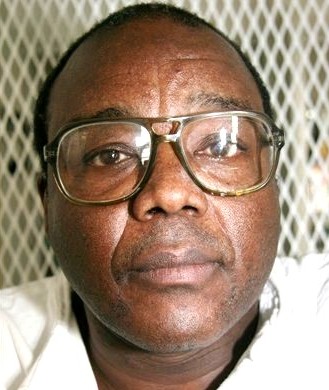
Johnny Ray Johnson
Murderer Brian Kevin Rosenfeld
Murderer · USA · 1985
Brian Kevin Rosenfeld Brian Kevin Rosenfeld was sentenced to three concurrent l…
23 victims
Brian Kevin Rosenfeld
Murderer · USA · 1985
Brian Kevin Rosenfeld Brian Kevin Rosenfeld was sentenced to three concurrent l…
23 victims
 Russell Ellwood
Murderer · USA · 1991
Russell Ellwood was a former taxi driver. Authorities suspected him of killing…
20 victims
Russell Ellwood
Murderer · USA · 1991
Russell Ellwood was a former taxi driver. Authorities suspected him of killing…
20 victims
 Robert Martines Perez
Murderer · USA · 1994
Name: Robert Martines Perez · Other name used in proceedings: Robert Martinez P…
15 victims
Robert Martines Perez
Murderer · USA · 1994
Name: Robert Martines Perez · Other name used in proceedings: Robert Martinez P…
15 victims
 Billy Frank Vickers
Murderer · USA · 1993
Billy Frank Vickers Vickers was executed by lethal injection in Texas on Januar…
14 victims
Billy Frank Vickers
Murderer · USA · 1993
Billy Frank Vickers Vickers was executed by lethal injection in Texas on Januar…
14 victims
 Stephen Stanko
Murderer · USA · 2005
Stephen Stanko was born in 1968. He had previously been incarcerated for Assaul…
2 victims
Stephen Stanko
Murderer · USA · 2005
Stephen Stanko was born in 1968. He had previously been incarcerated for Assaul…
2 victims
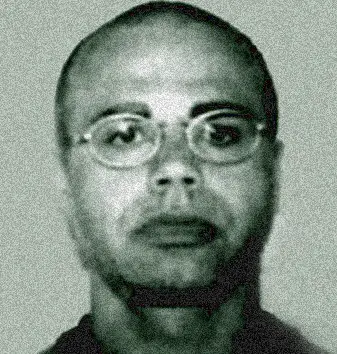 Antonio Mantovani
Serial killer · Italy · 1983
Antonio Mantovani was born in Trevenzuolo (Verona) in 1957 and was known as the…
4 victims
Antonio Mantovani
Serial killer · Italy · 1983
Antonio Mantovani was born in Trevenzuolo (Verona) in 1957 and was known as the…
4 victims
 Pierre Parent
Murderer · Canada · 2010
Pierre Parent pleaded guilty to manslaughter in the 2010 death of Catharine Oli…
1 victim
Pierre Parent
Murderer · Canada · 2010
Pierre Parent pleaded guilty to manslaughter in the 2010 death of Catharine Oli…
1 victim
 Maria Lee
Murderer · South Africa · 1947
Maria Helena Gertruida Lee (née van Niekerk), later known as Maria Lee, was bor…
1 victim
Maria Lee
Murderer · South Africa · 1947
Maria Helena Gertruida Lee (née van Niekerk), later known as Maria Lee, was bor…
1 victim
 Eladio Martinez-Chavez
Murderer · USA · 1984
Everette Amiotte drove Martinez Chavez and Reynaldo Rondon to a place near Alar…
1 victim
Eladio Martinez-Chavez
Murderer · USA · 1984
Everette Amiotte drove Martinez Chavez and Reynaldo Rondon to a place near Alar…
1 victim
 Tiffany Hall
Murderer · USA · 2006
Tiffany Hall was 24 when she was charged in September 2006. She later entered a…
5 victims
Tiffany Hall
Murderer · USA · 2006
Tiffany Hall was 24 when she was charged in September 2006. She later entered a…
5 victims
- Gender
- male
- Country
- USA
- Location
- Harris County, Texas, USA
- Date of birth
- August 2, 1957
- Age at first offence
- 37
- Characteristics
- serial rapist, drugs
- Victim profile
- Female / Female / Leah Joette Smith (female, 41)
- Method of murder
- Beating / Strangulation
- Date(s) of murder
- 1994 - 1995
- Years active
- 1994–1995
- Date of arrest
- —
- Status
-
Executed
Executed by lethal injection in Texas on February 12, 2009
Case record: Johnny Ray Johnson
Background
Johnny Ray Johnson was convicted and sentenced to death in Texas for capital murder connected to aggravated sexual assault.
During the post-conviction proceedings, his criminal history and multiple confessions were introduced during the punishment phase, including evidence that he raped and/or murdered numerous other women on several occasions in much the same manner.
Johnson was described as having been in and out of jail numerous times and as having been arrested a total of twenty times before his death sentence.
At trial and during later proceedings, evidence and testimony described Johnson as a former truck and taxi driver and as having worked as a cab driver in Houston. At the time of his arrest, he was working as a heavy equipment operator and would be hired out of daily labor pool sites in Houston.
In the final statement before his execution, Johnson repeatedly called death row “the Polunsky dungeon” and spoke out against the death penalty.
The offence
Leah Joette Smith (capital murder during aggravated sexual assault)
Johnson confessed that he offered to give Leah Joette Smith some of his crack cocaine in exchange for sex. After Smith smoked the crack, she refused to have sex with Johnson. Johnson became angry, grabbed her, ripped her clothes off, and threw her to the ground.
When Smith fought back with a wooden board, Johnson repeatedly struck her head against the cement curb until she stopped fighting. After she stopped fighting, Johnson raped her.
During the assault, Smith told Johnson that he better enjoy it because she was going to file rape charges against him.
Johnson confessed that he got very angry when Smith hit him with the board and that it was “like something in my head was just saying ‘Kill, Kill, Kill.’”
After sexually assaulting Smith, Johnson stomped on her face five or six times in response to something else she said that made him angry.
Johnson left the scene, but returned to retrieve his wallet. When he returned, Johnson raped Smith again. Johnson then picked up his wallet and her boots and left Smith there on the ground to die.
Smith sustained numerous severe injuries to her mouth, face, head, and neck, and the medical examiner testified that she died as a result of swallowing her own blood that had accumulated in the back part of her throat when her jawbones had been fractured. The medical examiner also testified that a subdural hematoma contributed to her death, but that she could have survived it had she received prompt medical attention, and that it takes a while for the blood to accumulate in the back of the throat.
Johnson was found guilty of capital murder connected with aggravated sexual assault of Smith.
Statements and confessions regarding other victims
During the punishment phase, the State introduced evidence including Johnson’s oral and written confessions, revealing that Johnson had brutally raped and killed Leah Joette Smith and that he raped and/or murdered numerous other women on several occasions in much the same manner.
Johnson confessed that he led police to the scenes of all the murders he had committed, and he gave written statements confessing to the sexual assault and murder of Leah Joette Smith, as well as to several brutal crimes committed while in Austin.
Johnson also gave three videotaped statements to police confessing to the rape and murder of two women found in Houston in 1995, in addition to another woman who was never found.
In a discussion of the facts presented at trial and punishment, the case included testimony about multiple other sexual assaults and murders described as being linked to Houston and Austin.
Investigation and arrest
After the victim in the companion case was able to identify Johnson’s photograph, a warrant was issued for Johnson’s arrest.
Shortly after his arrest, Johnson directed police to scenes of all the murders he had committed, and he then gave written statements confessing to the sexual assault and murder of Leah Joette Smith and to additional crimes.
Johnson also provided three videotaped statements confessing to the rape and murder of two women found in Houston in 1995, and a third woman who was never found.
Trial
Proceedings and findings
Guilt phase
A jury found Johnson guilty of capital murder.
Punishment phase
During the punishment phase, the State introduced evidence including Johnson’s oral and written confessions and evidence of Johnson’s criminal history.
The jury heard evidence including testimony from Johnson’s niece, Elizabeth Wright, that described an abuse and rape committed when Wright was eight or nine years old. Wright testified that Johnson asked her to walk to a store in Houston with him, that Johnson knocked her down, covered her mouth, pulled her pants to the side, and raped her, and that Johnson threatened to kill her if she ever told anyone.
The punishment phase included testimony describing additional assaults and confessions by Johnson, including testimony from Theresa Lewis about a cab pickup in 1986 and her subsequent rape by Johnson after she refused to have sex with him for $20.
Johnson also met and married a prostitute, Dora Ann Moseley, and they moved to Austin in 1991, where Johnson and Moseley had children together; in testimony, Johnson was described as having beaten Moseley so badly that he claimed he would have killed her if police had not been called, with Moseley filing a police report a couple of weeks later after he beat her again and Johnson spending six months in jail for that beating.
The punishment phase also included testimony and confessions about assaults in Austin in 1994, including Johnson beating a girl on 11th Street after she refused to have sex with him, and cutting his neck with a razor, as well as Johnson leaving a dead body behind a drug store on 11th Street.
Testimony and confessions also included Johnson’s alleged rape of a woman named Amy on top of a hill across from the Austin police station, and a girl named Eva, including that Eva tried to steal his crack cocaine, after which Johnson smashed her head into a rock and then raped her.
Shortly before Christmas in 1994, Johnson allegedly lured a girl into a graveyard in exchange for crack cocaine and raped her three or four times and “slapped her around,” in Johnson’s confession.
In February 1995, the punishment evidence included sexual assault testimony involving Debra Jenkins, Johnson’s brother’s common-law wife’s sister-in-law, including that Johnson grabbed her by the throat, threw her onto a bed, began choking her, cut the crotch of her pajamas with scissors, and raped her twice.
The punishment phase included discussion of a citizen finding the badly decomposed body of a female in her thirties, face-down in a water-filled gully near railroad tracks on March 27, 1995, and evidence of manual strangulation and injuries including lacerations on her face and severe injuries to her mouth.
Johnson confessed that he raped and killed this woman, whose identity had not been determined as of the time of Johnson’s trial.
The punishment phase also included discussion of another partially clothed body found on April 28, 1995, underneath a highway overpass in Houston, with massive head injuries including a fractured skull and cheekbone and a large chunk of concrete with blood near her head. An autopsy conclusion was that she died from crushed head due to blunt trauma and asphyxia due to strangulation, with markings on her throat consistent with someone placing a foot on her throat and stepping down.
Johnson confessed that he killed this woman after smoking crack cocaine together and becoming angry when she refused to have sex with him, that she hit him with a wine bottle, and that Johnson grabbed her neck and banged her head on a rock, then sexually assaulted her, hit her head with a rock again, and left.
On May 5, 1995, testimony included Angela Morris stating that Johnson grabbed her by the neck as she was walking down the street, took her down a driveway, struck her, threatened to kill her, and raped her while holding a knife, then tied her up with rags and left.
Confession quotations and other verbatim statements
Johnson confessed that it was “like something in my head was just saying ‘Kill, Kill, Kill.’”
Sentencing
After a punishment hearing, Johnson was sentenced to death by the jury.
During the punishment phase, the jury deliberated and returned a punishment verdict after deliberating for only one hour and fifteen minutes.
The jury answered the special issue on future dangerousness “yes” and answered the special issue on mitigation “no”.
The record indicated that Johnson was instructed that he would not be eligible for parole until he had served forty years in prison.
Appeals
State appeals and habeas
July 27, 1995 — Johnson was indicted by a Harris County grand jury for the 1995 capital murder of Leah Joette Smith. May 21, 1996 — A jury found Johnson guilty of capital murder. May 30, 1996 — Following a separate punishment hearing, Johnson was sentenced to death. February 25, 1998 — The Texas Court of Criminal Appeals affirmed Johnson’s conviction and sentence on direct appeal. July 17, 1998 — Johnson filed an application for writ of habeas corpus with the state trial court. August 30, 2000 — The state trial court entered findings of fact and conclusions of law recommending that relief be denied. February 18, 2004 — The Texas Court of Criminal Appeals ultimately denied Johnson’s state habeas application.
During the state habeas proceedings, Johnson alleged ineffective assistance of counsel, including claims that:
- At the guilt-innocence phase, counsel failed to have him psychologically evaluated for an insanity defense.
- At the punishment phase, counsel failed to have him psychologically evaluated for mitigation evidence, where records showed a history of major emotional disorder including auditory and visual hallucinations.
- At the punishment phase, counsel failed to investigate adequately his history for preparation of a biopsychosocial assessment by an expert in mitigation, thereby denying him the opportunity to present mitigating evidence.
Johnson was represented by attorneys Guerinot and Millin at trial. Guerinot handled the guilt-innocence phase, and Millin was responsible for the punishment phase. Millin had died before the state habeas proceedings and his files could not be located.
A prosecutor at trial, Bill Hawkins, also submitted an affidavit. The state habeas court found a psychological interview took place on December 23, 1983, and that in the interview Johnson stated he had visions of his mother and heard her telling him what to do. The state habeas court found that in the interview Johnson also stated that he twice tried to kill himself, once in the county jail and once by jumping off a cliff.
A month after that interview, psychologist Wilson Lilly stated in clinic notes: “Inmate Johnson was called in on recommendation of the mental health screening process. He has a history of major emotional disorder which included both auditory and visual hallucinations. Currently, he denies such symptoms. His mental status is clear and appropriate except for a mild depression of mood. He does not desire mental health services at this time, but was advised to seek [treatment] should any of his past symptoms return.”
The state habeas court found no mention of mental health problems during later incarcerations, and that health questionnaires completed in July and October 1992 stated there were no signs of a mental disorder. The state habeas court concluded that trial counsel were not ineffective and that Johnson was not prejudiced.
The Texas Court of Criminal Appeals adopted the state habeas court’s findings of fact and conclusions of law and denied the application for state habeas relief on February 18, 2004.
Federal appeals
January 3, 2005 — Johnson filed a federal petition for writ of habeas corpus in a Houston U.S. district court. March 9, 2006 — The federal district court denied Johnson habeas relief and denied Johnson a COA. July 24, 2006 — Johnson filed an application for COA with the Fifth U.S. Circuit Court of Appeals. March 28, 2007 — The Fifth Circuit affirmed the judgment of the district court and refused habeas relief. June 26, 2007 — Johnson petitioned the U.S. Supreme Court for a writ of certiorari. December 3, 2007 — The Supreme Court denied Johnson’s petition for certiorari.
In the federal proceedings, the district court held Johnson’s petition was not timely filed under the AEDPA limitations period and that he had not demonstrated rare and exceptional circumstances necessary for equitable tolling. The district court denied a certificate of appealability. The Fifth Circuit denied the COA request and concluded the procedural ruling was not debatable among jurists of reason. The Fifth Circuit stated it was unnecessary to address the ineffective assistance claim given the COA decision on timeliness.
Outcome
Execution and final statement
November 10, 2008 — The trial court issued an order setting Johnson’s execution date for February 12, 2009.
February 12, 2009 — Johnson was executed by lethal injection in Texas.
In one final statement, Johnson denounced the Texas death penalty and called the Polunsky Unit that housed the state’s condemned men a “dungeon”: “Death row is full of isolated hearts and suppressed minds.”
He also said: “I am a death row resident of the Polunsky dungeon. Why does my heart ache? … The wall of darkness crushed in on me. Life without meaning is life without purpose. It is no life at all. … Does anyone care who I am or the love I hold in my heart?”
At the conclusion of the final statement, Johnson turned to the witness room and said, “See you in heaven.” He then began singing a hymn, “Jesus, keep me near the cross. … There’s a bright and shining.”
The lethal injection was started, and Johnson was pronounced dead at 6:19 p.m.
Prison visit details and last meal
Earlier on execution day, Johnson talked with visitors, listened to the radio, and seemed upbeat, according to prison officials.
For his last meal, Johnson ordered: two chicken-fried steaks, 20 fried shrimp, four fried chicken breasts, four fried eggs without yolks, two biscuits with butter and honey, two large pieces of peanut brittle, and 2 gallons of black coffee with cream and sugar on the side.
A prison spokeswoman, Michelle Lyons, said the request would be honored if the requested items were available in the prison kitchen.
Denials and statements from death row
Johnson denied involvement in Smith’s death in statements made from death row, saying: “I wasn’t there.” He said: “I was at work that night. I don’t know what happened to her.”
He also insisted that his confession to police was coerced, saying: “They made me sign it.” He said: “I told them I didn’t do this.”
Johnson also answered in relation to his niece’s testimony that he raped her when she was eight, stating: “It was her chance to get even with me.”
Other details
Mental health expert and mitigation testimony
Prior to trial, Johnson’s counsel filed motions for fees to hire a mental health expert and to hire an investigator and mitigation expert. The trial court granted both motions.
The final decision of his attorney at the punishment phase was to call only one witness, Dr. Windel Dickerson, a psychologist.
Dr. Dickerson testified that prisoners get less violent as they grow older and that prisoners whose crimes involved drug use were less likely to commit acts of violence in the controlled setting of a prison.
During the federal and state habeas proceedings, Johnson’s ineffective assistance allegations included claims that trial counsel failed to have him psychologically evaluated for insanity and mitigation purposes, and failed to adequately investigate for mitigation. The state habeas court found no ineffective assistance and no prejudice, concluding that counsel reasonably limited investigation for mitigation and reasonably chose not to present psychological witnesses because such testimony would hurt more than help.
Defense counsel details
Johnson’s trial counsel attorneys were Guerinot and Millin, with Guerinot handling guilt-innocence and Millin handling the punishment phase.
The state habeas court ordered Guerinot to submit an affidavit in response to Johnson’s ineffective assistance claims.
In his affidavit, Guerinot stated that Johnson never exhibited signs of insanity and always appeared lucid, competent, and sane, that he believed Johnson was examined by a mental health expert, and that Millin decided not to use the information resulting from the examination because it was “severely detrimental” to Johnson’s case. Guerinot also stated that evidence of Johnson terrorizing and raping members of his own family made it unlikely evidence would have been favorable to the defense.
Additional procedural details in federal ruling on timeliness
The Fifth Circuit described AEDPA’s one-year statute of limitations and tolling during state post-conviction proceedings. The Fifth Circuit stated Johnson’s judgment of conviction became final on May 26, 1998, that the limitations period began running on May 27, 1998, and that it was tolled from July 17, 1998 until February 18, 2004. The Fifth Circuit stated Johnson had 313 days remaining after state writ denial and that the federal petition deadline was December 27, 2004.
The Fifth Circuit addressed Johnson’s equitable tolling argument involving a claimed computer failure and an asserted State agreement to extend the deadline, and it concluded equitable tolling was not warranted under the circumstances described, including that counsel could have filed a skeletal petition and supplemented later.
The Fifth Circuit also stated that Johnson did not raise a statutory tolling argument in the district court and thus could not obtain a COA on it in that posture.
Spotted an error, or have more information about this case?