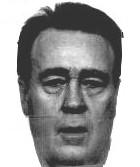
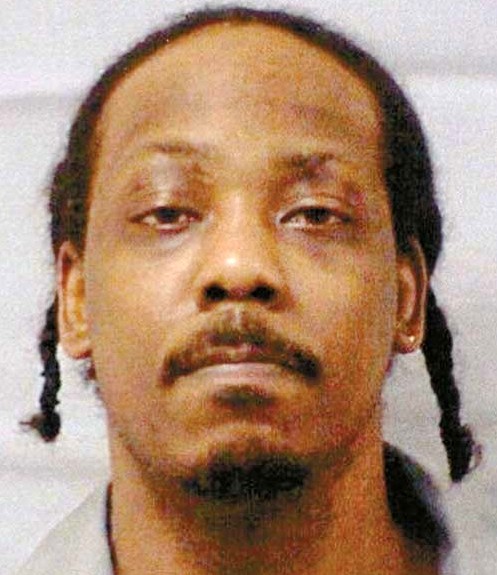
Claude Howard Jones
Murderer Ervil LeBaron
Murderer · USA · 1972
Ervil Morrell LeBaron (1925 to August 16, 1981) was the leader of a polygamous…
35 victims
Ervil LeBaron
Murderer · USA · 1972
Ervil Morrell LeBaron (1925 to August 16, 1981) was the leader of a polygamous…
35 victims
 Brian Kevin Rosenfeld
Murderer · USA · 1985
Brian Kevin Rosenfeld Brian Kevin Rosenfeld was sentenced to three concurrent l…
23 victims
Brian Kevin Rosenfeld
Murderer · USA · 1985
Brian Kevin Rosenfeld Brian Kevin Rosenfeld was sentenced to three concurrent l…
23 victims
 Marvin Gray
Murderer · USA · 1975
Marvin Gray was convicted killer who claimed responsibility for 23 slayings and…
23 victims
Marvin Gray
Murderer · USA · 1975
Marvin Gray was convicted killer who claimed responsibility for 23 slayings and…
23 victims
 Yahweh ben Yahweh
Murderer · USA · 1980
Yahweh ben Yahweh was born and legally named Hulon Mitchell Jr. (October 27, 19…
23 victims
Yahweh ben Yahweh
Murderer · USA · 1980
Yahweh ben Yahweh was born and legally named Hulon Mitchell Jr. (October 27, 19…
23 victims
 Joe Hill
Murderer · USA · 1914
Joe Hill was a Swedish-American labor activist, songwriter, and member of the I…
2 victims
Joe Hill
Murderer · USA · 1914
Joe Hill was a Swedish-American labor activist, songwriter, and member of the I…
2 victims
 Allan Baker
Murderer · Australia · 1973
Allan Baker was convicted with Kevin Crump for the murder of Ian James Lamb and…
2 victims
Allan Baker
Murderer · Australia · 1973
Allan Baker was convicted with Kevin Crump for the murder of Ian James Lamb and…
2 victims
 Asuncion Avila-Villa
Murderer · USA · 2009
Asuncion “Suzie” Avila-Villa was a Hamilton mother accused of killing her infan…
1 victim
Asuncion Avila-Villa
Murderer · USA · 2009
Asuncion “Suzie” Avila-Villa was a Hamilton mother accused of killing her infan…
1 victim
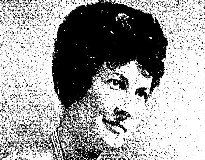 Kathryn Schoch
Mass murderer · USA · 1934
Kathryn Schoch was a trained nurse who killed members of the Dempsey family in…
6 victims
Kathryn Schoch
Mass murderer · USA · 1934
Kathryn Schoch was a trained nurse who killed members of the Dempsey family in…
6 victims
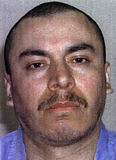 Arturo Juarez Suarez
Mass murderer · USA · 1998
Arturo Juarez Suarez was a ranch worker in Auburn, California. In July 1998, he…
4 victims
Arturo Juarez Suarez
Mass murderer · USA · 1998
Arturo Juarez Suarez was a ranch worker in Auburn, California. In July 1998, he…
4 victims
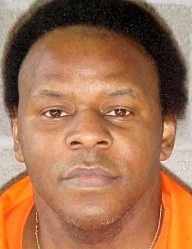 Clinton Lee Spencer
Murderer · USA · 1989
Clinton Lee Spencer was sentenced to death on December 27, 1990. About 9:00 p.m…
1 victim
Clinton Lee Spencer
Murderer · USA · 1989
Clinton Lee Spencer was sentenced to death on December 27, 1990. About 9:00 p.m…
1 victim
- Gender
- male
- Country
- USA
- Location
- San Jacinto County, Texas, USA
- Date of birth
- September 24, 1940
- Age at first offence
- 36
- Characteristics
- armed robbery, drug addict
- Victim profile
- Allen Hilzendager (owner of a liquor store ) / A fellow inmate
- Method of murder
- Shooting (.357 Magnum revolver) / G asoline - Fire
- Date(s) of murder
- 1976 - 1989
- Years active
- 1976–1989
- Date of arrest
- December 2, 1989
- Status
-
Executed
Executed by lethal injection in Texas on December 7, 2000
Case record: Claude Howard Jones
Background
Claude Howard Jones was a Harris County native who refused to speak with reporters in the weeks leading up to his execution. He spent much of his adult life in prison following numerous convictions in Texas and Kansas. He was convicted and sentenced to death for the November 1989 murder of Allen Hilzendager, the owner of a liquor store in Point Blank, Texas.
Jones also used the aliases Carl Roy Davis, Butch Jones, and Douglas Ray Starke. He had eleven prior convictions in Texas for crimes including murder, armed robbery, assault, and burglary. He was convicted of capital murder and received the death sentence.
While serving a life sentence in Kansas prison for murder, Jones killed another inmate. He served a total of 8 years on his life sentence. By 1984, he was out on parole despite a life term.
The offence
On November 14, 1989, Jones and two other men, Kerry Dixon and Mark Jordan, gathered at the home of Jordan’s father. Between 4 and 4:30 in the afternoon, Jones and Dixon left and drove to Zell’s liquor store where Allen Hilzaendager was.
Jordan gave the men his Taurus .357 magnum revolver before they left. The revolver had been purchased by Jordan’s girlfriend, Terry Hardin. Jordan stayed behind at the mobile home.
On that same day, Leon Goodson and his 14-year-old daughter Wendy were busy working on their family vehicle at a friend’s house located across the highway from Zell’s liquor store. While assisting her father, Wendy saw a pickup truck pull into the front of the liquor store. The passenger, who was wearing a light-colored shirt with long sleeves and had a “pot” belly, got out of the truck and greeted Hilzendager. Hilzendager placed his arm around the man and they went into the store.
The driver of the truck turned the truck around on a nearby road, turned his lights off, and pulled up beside the store. Through a window in the front of the store, Wendy could see Hilzendager walk around the side of the counter. Two minutes later, Wendy heard two gun shots in rapid succession, and after a short pause, she heard another.
Wendy asked her father, “Do you think they shot him?” Leon Goodson, who was on the ground fixing the car at the time, heard the three bangs but dismissed them thinking that Hilzendager might be banging on some metal doors. After hearing his daughter’s words, however, Mr. Goodson stopped working on the car, stood up, and looked across the street. He and his daughter observed the man walk from the front of the counter to behind the counter, then out from behind the counter again.
The door to the store was then pulled open and the man came out walking very briskly. According to Mr. Goodson, the man appeared to be a white male, in his forties, approximately 5 feet, 10 inches tall, 200 to 230 pounds in weight, wearing a tight fitting gray jogging shirt and had a “beer belly.” The man got into the passenger side of the vehicle, and the vehicle was driven off toward Oakhurst at a high rate of speed.
Several minutes later, after finishing the repairs, the Goodsons drove across the street to check on Hilzendager. After calling for Hilzendager, Goodson stepped up toward the counter and, through the storeroom door, saw the lower part of Hilzendager’s torso and legs lying in a pool of blood. Goodson immediately left the store, got into his car, and went back to his neighbor’s house to call the ambulance and police. Goodson then returned to the store and checked to see if Hilzendager was breathing. After determining that Hilzendager was not alive, he waited for the authorities to arrive at the scene.
Law enforcement officials found the body of Allen Hilzendager lying on the floor in the doorway of the storeroom. He had received three gunshot wounds. Hilzendager received wounds to his right shoulder area under the collar bone, to his right lower abdomen, and to his back.
A crime scene expert believed that the first shot was the one to his upper left back, which resulted in a severed aortic artery and a punctured lung. The second shot, which was fired between 18 to 24 inches from the victim, was made as the victim held up his hands. The third shot struck Hilzendager in the side as he lay on the floor.
Hilzendager’s sister, who occasionally worked at the liquor store, estimated that $900 was stolen from the cash register in the store. However, approximately $6,000 was left in the store in a bag pushed up under the counter near the floor. Another $1,000 was left in a bank bag under the cash register.
After the murder, Jones told friends of his that he had killed Hilzendager because he was gay.
Three days later, the trio robbed a bank in Humble, Texas, obtaining $14,000 in loot. Jones and his partners used the loot for a weekend trip to Las Vegas.
Investigation
Police officers arrived at the liquor store and collected crime scene evidence, including several hairs from the counter near the cash register and one from the cash drawer itself. A crime scene expert examined the pattern and believed the first shot caused a severed aortic artery and a punctured lung; the second shot was made as the victim held up his hands; and the third shot struck him in the side as he lay on the floor.
A strand of Jones’ hair was found at the murder scene. Stephen Robertson, a chemist at the Texas Department of Public Safety, testified that a hair fragment found on the counter of the liquor store could have belonged to Jones but not to Dixon, the victim, or any of the other 12 individuals whose samples were collected. Jordan’s sample was not collected.
Jordan testified against his partners in crime.
Another accomplice led authorities to the Trinity River where the murder weapon was recovered.
In the days following the liquor store robbery and murder, eyewitnesses placed Dixon’s beige Ford truck at the liquor store at the time of the murder.
Arrest
Jordan and Dixon were arrested for the murder after eyewitnesses placed Dixon’s beige Ford truck at the liquor store at the time of the murder. Jones was later arrested.
Trial
Jones and Dixon were charged in the crime.
Jones did not testify. Jordan testified that Jones confessed to the murder several times.
The prosecution alleged that Jones robbed the store and shot the victim with Jordan’s gun while Dixon waited in the car in the parking lot.
Jones was convicted of capital murder and sentenced to die. Dixon was convicted of capital murder and given a 60-year sentence. Jordan was convicted of capital murder and received a 10-year prison term; Jordan had also been charged with capital murder and with a separate robbery in another county, but both charges were plea bargained down to a 10-year sentence for a lesser offense.
Sentencing
Jones was sentenced to death for the November 1989 murder of Allen Hilzendager.
Dixon received a 60-year sentence and Jordan received a 10-year prison term.
Appeals
A divided Texas Court of Criminal Appeals, in a 3-2 decision, upheld Jones’s conviction and death sentence.
In a strongly worded dissent, two judges concluded that the evidence against Jones was not sufficient to justify his conviction for murder. The majority opinion cited the hair as critical physical evidence tying Jones to the crime.
Jones’s appeals were rejected in October by the U.S. Supreme Court.
Outcome
Claude Howard Jones was executed by lethal injection in Texas on December 7, 2000.
Jones’s execution was delayed by about a half an hour because prison staff were unable to find suitable veins in his hands and arms. Executions are usually performed with an IV in each arm; in Jones’s case, only one IV was used, and it was inserted in his left thigh.
Jones made no clemency request to Gov. George W. Bush, who had authority to grant him a one-time 30-day reprieve. Only once in Bush’s nearly six years in office had Bush used the power to stop an execution, and that inmate eventually was put to death.
Jones was pronounced dead at 6:42 p.m.
In his brief final statement, Jones apologized to the victim’s family and expressed love to his own family.
“I hope this can bring some closure to y'all. I'm sorry for your loss.”
Jones also said:
“Hey, I love y'all.”
Jones looked at the warden and said:
“Let's go.”
He gasped twice, sputtered, gasped 2 more times and then exhaled. He was pronounced dead at 6:42, 10 minutes after the lethal drugs began taking effect.
Aftermath
Post-execution DNA and legal motions
State officials contemplated mitochondrial DNA testing on a hair fragment found at the crime scene and alleged to be Jones, but testing was never performed. The possibility of DNA testing was omitted from material prepared for then-Governor George Bush to decide whether to grant Jones’s request for a temporary stay of execution. The request for a stay of execution was being handled by Bush’s office during the period of the Florida vote recount after the 2000 presidential election.
In a later affidavit dated May 2004, Timothy Jordan signed an affidavit recanting his testimony that Jones told him he committed the murder. In the affidavit, he stated that everything he reported at trial about the robbery and killing he learned from Dixon, not from Jones. He also stated that he testified against Jones in an attempt to receive a reduced sentence in this case and an unrelated robbery.
In August 2007, Mayer Brown LLP asked the San Jacinto County District Attorney’s office and local officials to consent to DNA testing and preserve the evidence while considering the request. In September 2007, the San Jacinto County DA denied the request.
In September 2007, Mayer Brown LLP filed a motion for DNA testing and asked the court to issue a temporary restraining order to prevent the destruction of evidence.
Attorneys asked to prevent officials from destroying the only piece of physical evidence in the case—a hair from the crime scene—and sought a court order to conduct DNA testing to determine whether the hair matched Claude Jones. Barry Scheck, Co-Director of the Innocence Project, said:
“The San Jacinto District Attorney, who was one of the prosecutors during Claude Jones’ trial, told us this week that he will not agree to DNA testing without a court order. We are asking for an emergency order from the court that will mandate testing and prevent officials from destroying this evidence in the meantime,”
He also said:
“The public has a right to know whether Claude Jones actually committed the crime for which he was executed, and whether a serious breakdown in the state’s legal and political process led to a wrongful execution. Public confidence in the criminal justice system is at stake.”
In August 31, 2007 open records requests, Innocence Project Staff Attorney Nina Morrison said:
“None of the reasons the District Attorney has given for denying our request are valid,”
She also said:
“Mitochondrial DNA testing on this hair is definitely possible, and similar testing has exonerated several people who were wrongfully convicted in other cases. We don’t know what the testing will show, but mitochondrial DNA testing can and should be conducted on this evidence. The record from both the trial and the appeals clearly show that the hair, which is the only physical evidence against Jones, was key to securing and upholding his conviction. Eyewitness testimony in this case was shaky at best and did not identify Jones, and Jones did not confess to this crime in the execution chamber. He told the victim’s family that he hoped they would find closure and that he was sorry for their loss.”
She further stated:
“The bottom line is that Claude Jones was convicted based on the hair evidence and testimony from Timothy Jordan. Jordan has already said, in a sworn affidavit, that his testimony was false, and DNA testing on the hair could definitely show whether or not Claude Jones was guilty,”
The DA had said DNA testing on the hair was not scientifically possible since the hair does not have a follicle, and that Jones confessed to the crime in his final statement in the execution chamber.
Victim statements and remarks
Scot Rosekrans, the district attorney in San Jacinto County, said:
“He did not need to kill,”
and:
“It was really kind of senseless.”
Bill Burnett, one of the prosecutors in the case who later taught criminal justice at Angelina College, said:
“It's my personal belief that if (Jones) ever was paroled, there's a likelihood he would kill again and try to fine tune his robberies so as not to leave any witnesses,”
Other details
Jones was condemned for the Nov. 14, 1989 fatal shooting of Allen Hilzendager, 37, at a rural liquor store about 70 miles north of Houston.
Jones was described as the 40th and last Texas inmate to be put to death in a record year for executions in the state.
Jones was described as the 3rd inmate to receive lethal injection in Texas in as many nights.
Jones was the 239th inmate executed since Texas resumed carrying out capital punishment in 1982 and the 152nd during George W. Bush’s tenure as governor.
Jones was described as a career criminal and convicted murderer.
In 1959, Jones was first convicted of robbery and imprisoned in 1959.
He served 6 years of a 9-year prison sentence from 1959 to 1963 and three years of a 5-year sentence from 1963 to 1965.
In 1976, he was convicted of murder, robbery, and assault in Kansas and received a life sentence.
While locked up in Kansas, he was convicted of killing a fellow inmate by throwing gasoline on him and setting him on fire.
He was paroled in 1984 despite the life term.
Kerry Dixon Jr. had a lengthy prior record that included murder and two prison terms.
Terry Hardin purchased a .357 revolver from WalMart for her boyfriend, Timothy Mark Jordan, who was on parole and could not purchase a gun.
Jordan’s father’s home was used as a gathering point before the liquor store trip.
Timeline
- November 1989 — Terry Hardin purchased a .357 revolver from WalMart for her boyfriend, Timothy Mark Jordan, who was on parole and could not purchase a gun.
- November 1989 — Jordan and Hardin hosted visitors Claude Howard Jones and Kerry Dixon at a deer camp owned by Hardin’s parents.
- November 1989 — Allen Hilzendager was shot to death while working at a liquor store in San Jacinto County, Texas.
- November 1989 — Police officers arrived at the liquor store and collected crime scene evidence, including several hairs from the counter near the cash register and one from the cash drawer itself.
- November 1989 — Jordan and Dixon were arrested for the murder after eyewitnesses placed Dixon’s beige Ford truck at the liquor store at the time of the murder.
- December 1989 — Jones was arrested.
- August 1990 — Jones was convicted of capital murder and sentenced to die; Dixon was convicted of capital murder and given a 60-year sentence; Jordan’s charges were plea bargained down to a 10-year sentence for a lesser offense.
- December 1994 — A divided Texas Court of Criminal Appeals, in a 3-2 decision, upheld Jones’s conviction and death sentence.
- May 2004 — Timothy Jordan signed an affidavit recanting his testimony that Jones told him he committed the murder.
- August 2007 — Mayer Brown LLP asked the San Jacinto County District Attorney’s office and local officials to consent to DNA testing and preserve the evidence while considering the request.
- September 2007 — The San Jacinto County DA denied the request.
- September 2007 — Mayer Brown LLP filed a motion for DNA testing and asked the court to issue a temporary restraining order to prevent the destruction of evidence.
- December 2000 — Claude Howard Jones was executed by the State of Texas.
- December 7, 2000 — Claude Howard Jones was executed by lethal injection in Texas.
Spotted an error, or have more information about this case?