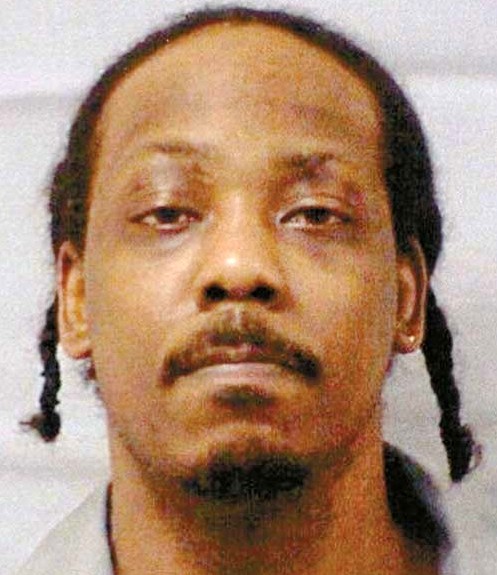
Donald Jones
Murderer Brian Kevin Rosenfeld
Murderer · USA · 1985
Brian Kevin Rosenfeld Brian Kevin Rosenfeld was sentenced to three concurrent l…
23 victims
Brian Kevin Rosenfeld
Murderer · USA · 1985
Brian Kevin Rosenfeld Brian Kevin Rosenfeld was sentenced to three concurrent l…
23 victims
 Russell Ellwood
Murderer · USA · 1991
Russell Ellwood was a former taxi driver. Authorities suspected him of killing…
20 victims
Russell Ellwood
Murderer · USA · 1991
Russell Ellwood was a former taxi driver. Authorities suspected him of killing…
20 victims
 Robert Martines Perez
Murderer · USA · 1994
Name: Robert Martines Perez · Other name used in proceedings: Robert Martinez P…
15 victims
Robert Martines Perez
Murderer · USA · 1994
Name: Robert Martines Perez · Other name used in proceedings: Robert Martinez P…
15 victims
 Billy Frank Vickers
Murderer · USA · 1993
Billy Frank Vickers Vickers was executed by lethal injection in Texas on Januar…
14 victims
Billy Frank Vickers
Murderer · USA · 1993
Billy Frank Vickers Vickers was executed by lethal injection in Texas on Januar…
14 victims
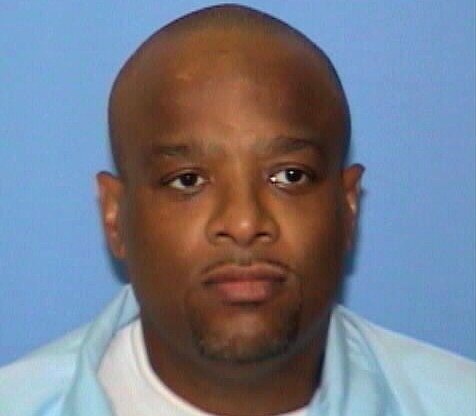 Ronald Macon
Serial killer · USA · 1999
Ronald Macon was convicted of three murders and one criminal sexual assault in…
3 victims
Ronald Macon
Serial killer · USA · 1999
Ronald Macon was convicted of three murders and one criminal sexual assault in…
3 victims
 Billy Wayne Hayes
Homicide · USA · 1967
Billy Wayne Hayes was convicted of second-degree murder and sentenced in 1968 t…
1 victim
Billy Wayne Hayes
Homicide · USA · 1967
Billy Wayne Hayes was convicted of second-degree murder and sentenced in 1968 t…
1 victim
 Stanley Dean Baker
Murderer · USA · 1970
Stanley Dean Baker was a hitchhiker arrested in California and later convicted…
2 victims
Stanley Dean Baker
Murderer · USA · 1970
Stanley Dean Baker was a hitchhiker arrested in California and later convicted…
2 victims
 Paul Durousseau
Serial killer · USA · 1997
Paul Durousseau was an American serial killer born on August 11, 1970, in Beaum…
7 victims
Paul Durousseau
Serial killer · USA · 1997
Paul Durousseau was an American serial killer born on August 11, 1970, in Beaum…
7 victims
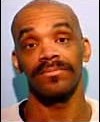 Jesse Lee Johnson
Murderer · USA · 1998
Jesse Lee Johnson was convicted of aggravated murder. He was later sentenced to…
1 victim
Jesse Lee Johnson
Murderer · USA · 1998
Jesse Lee Johnson was convicted of aggravated murder. He was later sentenced to…
1 victim
- Gender
- male
- Country
- USA
- Location
- St. Louis County, Missouri, USA
- Date of birth
- November 25, 1966
- Age at first offence
- 27
- Characteristics
- robbery, drug addict, drugs
- Victim profile
- Dorothy Knuckles ( his grandmother )
- Method of murder
- St abbing with knife
- Date(s) of murder
- March 6, 1993
- Years active
- 1993
- Date of arrest
- 3 days after
- Status
-
Executed
Executed by lethal injection in Missouri on April 27, 2005
Parties
- Defendant: Donald Jones
- Victim: Dorothy Knuckles
Timeline
- 1993 03/06 — Donald Jones went to his grandmother’s house around midnight to get some money to buy crack cocaine; Dorothy Knuckles let him in; Jones asked for money, was refused, retrieved a butcher block containing knives, hit Knuckles several times while she screamed, then picked up a knife from the butcher block and stabbed her until she stopped screaming and fell back onto her bed; Jones took Knuckles’s car keys, money, and VCR, drove off in her car, and later purchased some drugs, sold the VCR, and rented out the car to get money to buy drugs.
- 1993 03/08 — Dorothy Knuckles’s body was discovered by her son.
- 1993 03/09 — Police went to Jones’s place of work to question him; he agreed to follow police to the homicide office; after conversations, he became a suspect and was informed of his Miranda rights; Jones said, "It’s the monster inside of me."
- 1994 06/06 — Jones went on trial for First Degree Murder and Armed Criminal Action in the Circuit Court of St. Louis city; Jones was found guilty of both counts.
- 1994 06/16 — The jury recommended a sentence of death for the murder and life for the Armed Criminal Action.
- 1994 07/22 — The trial court sentenced Jones to death.
- 1995 03/01 — Jones filed a post-conviction relief motion in the circuit court.
- 1997 10/22 — The circuit court denied Jones’s post-conviction relief motion.
- 1998 11/03 — The Missouri Supreme Court affirmed Jones’s conviction and sentence (State. v. Jones, 979 S.W.2d 171 (Mo.banc 1998)).
- 1999 01/19 — The United States Supreme Court denied Jones’s petition for writ of certiorari (Jones v. Missouri, 525 U.S. 1112 (1999)).
- 2000 01/18 — Jones filed a petition for writ of habeas corpus in the United States District Court.
- 2001 10/01 — The United States District Court of Appeals affirmed the District Court’s denial of Jones’s petition for writ of habeas corpus.
- 2004 03/03 — The Eighth Circuit Court of Appeals affirmed the District Court’s denial of Jones’s petition for writ of habeas corpus (Jones v. Leubbers, 359 F.3d 1005 (8th Cir. 2004)).
- 2004 12/06 — The United States Supreme Court denied Jones’s petition for writ of certiorari (Jones v. Roper, 04-6756).
- 2005 01/21 — State filed a motion to set execution date with the Missouri Supreme Court.
- 2005 03/28 — The Missouri Supreme Court set Jones’s execution date for April 27, 2005.
- 2005 04/27 — Donald Jones was executed by lethal injection in Missouri; he was pronounced dead at 12:07 a.m.
Background
Donald Jones went to his grandmother, Dorothy Knuckles, around midnight seeking some money to buy crack cocaine. When Knuckles let him in and Jones asked for money, she refused and lectured him about his drinking and use of cocaine. Jones purchased some drugs, sold Knuckles’s VCR, and rented out Knuckles’s car to get money to buy drugs after the killing.
The offence
On March 6, 1993, Jones went to Dorothy Knuckles’s house around midnight. Knuckles let him in and they went to her bedroom on the second floor. Jones asked for money; Knuckles refused and started lecturing him about his drinking and use of cocaine. Jones then went downstairs to the kitchen, picked up a butcher block that contained knives, hid it behind him, and went upstairs. Knuckles started lecturing him again, and Jones hit her several times with the butcher block while she screamed. Jones then became afraid that the neighbors might hear her screaming, picked up a knife that had fallen out of the butcher block, and stabbed her until she stopped screaming and fell back onto her bed.
Jones took Knuckles’s car keys, money, and VCR, and drove off in her car. Jones later bought some drugs, sold the VCR, and rented out the car to get money to buy drugs.
Investigation
After police went to Jones’s place of work on March 9, 1993 to question him, Jones was not under arrest at that time. He agreed to follow police to the homicide office. After conversations at the office, Jones became a suspect and was informed of his Miranda rights. Jones then said: "It’s the monster inside of me." He explained that the monster inside him was the crack cocaine that had caused him to kill his grandmother. Jones gave an audiotape statement of the above facts on how he killed his grandmother.
Arrest
Jones was questioned after police went to his place of work on March 9, 1993. He agreed to follow police to the homicide office where he was later informed of his Miranda rights and became a suspect.
Trial
Jones was charged by indictment with murder in the first degree, robbery in the first degree, and two counts of armed criminal action. The case went to trial on two charges: murder in the first degree and one count of armed criminal action. The jury returned guilty verdicts on both counts and recommended death for murder and life in prison for armed criminal action; the court imposed those sentences.
Jones filed a motion to vacate, set aside, or correct the sentence or judgment of the trial court pursuant to Rule 29.15. The motion was overruled.
Penalty-phase argument issue (verbatim)
Defense counsel made the following statement:
His (Jones) family doesn’t want him to die. His family wants him to live. They care about him and love him. Do you think that’s what Dorothy Knuckles would want based on what you’ve heard about her. Do you think she would want you to take vengeance and kill her grandson.
The prosecutor in rebuttal made the following argument:
Now let me say something about the Knuckles’ family. If there were more families like the Knuckles’ family in this country we wouldn’t have the problems we have. But they are not objective. They cannot be objective and nobody expects them to be. If the killer of Dorothy Knuckles was a stranger they’d be sitting on this side of the courtroom.
Defense counsel:
DEFENSE COUNSEL: Objection, Your Honor. That’s total speculation. Improper.
The court:
THE COURT: The objection’s overruled.
The prosecutor continued:
PROSECUTOR: --supporting us in asking for the death penalty. Families supporting us maybe even when it’s -- or asking us to do it even when it’s not justified. Families cannot be objective. Nobody expects them to be. You know about the Knuckles’ family, and the question becomes of that family why is he sitting here. Coming from that kind of family and that kind of background why is he sitting here. He could have been anything he wanted. That family would have done anything for him. Why is he sitting here. He’s sitting here because one time he made a choice. He made a choice to turn his back on that family and abuse drugs....
The trial court overruled defense counsel’s objection.
Judicial disqualification issue (verbatim)
During voir dire-related proceedings outside the hearing of the voir dire panel, the following exchange occurred:
THE COURT: Let’s go up here. Let’s not make speeches in front of the jury. That isn’t an objection, it’s a speech. (Counsel approached the bench and the following proceedings were had outside the hearing of the voir dire panel:)
THE COURT: I don’t want any more objections made in the form of speeches, do you understand that. You are to come up here with a legal objection. You made a long speech in front of the jury with a deliberate attempt apparently to influence them. Make objections like that up here. Is that clear? Do you understand me?
DEFENSE CO-COUNSEL: Yes, Judge. I would also like to make a brief record at this point. It seems as if based on the Court’s tone and demeanor that it is angry with what I have just done.
THE COURT: I certainly am, because you have no business making a long, rambling speech and statement that was not in fact a legal objection in the presence of the jury. That kind of thing should be done at the bench.
DEFENSE CO-COUNSEL: I would also indicate for the record, first of all I was just trying to phrase the objection as well as I could under the circumstances; that I was not trying to influence the jury, that I was just trying to make an objection. And in addition to that I believe Mr. Ravetta made some speaking objections and was not treated in the same manner as I am right now for having made some speaking objections.
THE COURT: I don’t think any of them were that long, that concise, and that detailed. That was in fact a speech. Now what is the specific objection to what?
DEFENSE CO-COUNSEL: Mr. Ravetta has already had the opportunity to make his -- to do his voir dire. He’s now having this detailed -- giving a detailed speech or lecture as to what deliberation means and even implying that deliberation means that you will change your mind as I think one juror seems to infer from what Mr. Ravetta says. I don’t think it’s proper and I think that he’s already had his opportunity. If there are specific jurors that he feels the need to rehabilitate, but it’s gone way beyond that to the point where he is really getting to do a second entire voir dire.
Sentencing
After the jury recommended death for murder and life in prison for armed criminal action, the trial court sentenced Jones to death.
Appeals
Missouri Supreme Court
- Handdown date: 03/11/1998 — The Missouri Supreme Court reviewed Jones’s conviction of murder in the first degree and armed criminal action, and affirmed the judgment. Jones’s motion for post-conviction relief pursuant to Rule 29.15 was overruled.
In the appellate decision, Jones raised twenty-one points of error, including:
- Whether the trial court erred in overruling defense counsel’s penalty phase objection to the prosecutor’s argument about the family’s wishes.
- Whether the trial judge could fairly serve Jones; whether the judge should have disqualified himself and whether another judge should have heard the motion.
- Whether the trial court erred in imposing the death sentence contrary to the victim’s family wishes.
- Whether the motion court erred by denying most Rule 29.15 claims without a hearing.
- Multiple jury instruction and evidentiary rulings, including:
- Instruction No. 12 concerning mental disease or defect and the exclusion of alcoholism without psychosis or drug abuse without psychosis.
- Limiting cross-examination of Dr. Armour regarding drug abuse versus drug dependence.
- Limiting instruction on testimony of Lester and Linda Knuckles.
- Limiting inquiry of substance abuse during voir dire regarding life imprisonment without parole.
- Limiting questions about mitigation evidence and refusal to submit non-MAI mitigating instruction (Instruction G).
- Instructional issues regarding “reasonable doubt.”
- Refusal to submit a manslaughter instruction.
- Batson challenge to a prosecutor’s peremptory strike.
- Challenges to aggravating circumstance instructions (depravity of mind; murder during perpetration or attempt to perpetrate robbery).
- Independent statutory review under section 565.035.3, RSMo 1994.
- Conclusion: “For all of the foregoing reasons, the judgment is affirmed.”
United States Supreme Court and federal habeas
- Missouri, 525 U.S. 1112 (1999)).
- 2004 03/03 — The Eighth Circuit Court of Appeals affirmed the denial of Jones’s petition for writ of habeas corpus (Jones v. Leubbers, 359 F.3d 1005 (8th Cir. 2004)).
- Roper, 04-6756).
Outcome
Donald Jones was executed by lethal injection in Missouri on April 27, 2005. He was pronounced dead at 12:07 a.m. Relatives and protesters were outside the prison during the execution.
Final meal
Jones’s final meal consisted of chicken strips, coleslaw, two orders of fries, pizza and apple crisp with ice cream.
Final statement by Donald Jones (verbatim)
Jones’s final statement, written in his own hand, was:
Praise God! Every day is a day to give the Lord thanks for all He's done! To my Beautiful Family, Friends, and all those whose been in prayer, in thought and support, I want to say thank you from the bottom of my heart. To my Family, you will never truely know how your love, prayers, and forgiveness has sustained me all these years, to all my friends and supporters, especially my Beautiful Angels at St. Louis University, your courage and conviction is inspiring, keep the sturggle alive. To my mother who truly has been hurt the most, your love and strength I carry with me always. Take care of my son. I"m finally free and I'm going home to grandmother now. I love you all and God Bless. Donnie.
Aftermath
Protests and prayers occurred outside the prison. Jones’s case involved family objections to the death sentence and multiple appeals that were rejected.
Jones’s execution took place in the death chamber at the state prison in Bonne Terre, replacing the facility at the Potosi Correctional Center. The next scheduled execution mentioned was for Vernon Brown. The document also mentioned that condemned prisoners were to be moved from Potosi Correctional Center to Bonne Terre for execution.

Spotted an error, or have more information about this case?