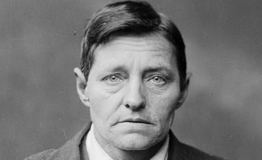
Eugenia Falleni
Murderer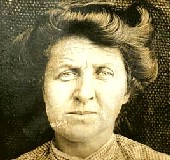 Martha Rendell
Murderer · Australia · 1907
Martha Rendell was executed by hanging at Fremantle Prison on October 6, 1909.…
3 victims
Martha Rendell
Murderer · Australia · 1907
Martha Rendell was executed by hanging at Fremantle Prison on October 6, 1909.…
3 victims
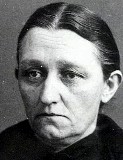 Sarah Makin
Murderer · Australia · 1892
Sarah Makin was also known as Sarah Jane Makin. John Makin (14 February 1845 –…
12 victims
Sarah Makin
Murderer · Australia · 1892
Sarah Makin was also known as Sarah Jane Makin. John Makin (14 February 1845 –…
12 victims
 Kathleen Folbigg
Murderer · Australia · 1989
Kathleen Megan Folbigg (née Donovan) was an Australian child killer. She was co…
4 victims
Kathleen Folbigg
Murderer · Australia · 1989
Kathleen Megan Folbigg (née Donovan) was an Australian child killer. She was co…
4 victims
 Frances Knorr
Murderer · Australia · 1891
Frances Lydia Alice Knorr (also known as Minnie Thwaites) was born in 1868 in L…
2 victims
Frances Knorr
Murderer · Australia · 1891
Frances Lydia Alice Knorr (also known as Minnie Thwaites) was born in 1868 in L…
2 victims
 Amanda Kelly
Murderer · Australia · 2012
Amanda Kelly was sentenced to life in prison with a 14-year minimum on December…
1 victim
Amanda Kelly
Murderer · Australia · 2012
Amanda Kelly was sentenced to life in prison with a 14-year minimum on December…
1 victim
 Emerson Rudd
Murderer · USA · 1988
Emerson Rudd was executed by lethal injection in Texas on November 15, 2001. Th…
1 victim
Emerson Rudd
Murderer · USA · 1988
Emerson Rudd was executed by lethal injection in Texas on November 15, 2001. Th…
1 victim
 George Whitaker
Murderer · USA · 1994
George Whitaker III was convicted of capital murder and sentenced to death for…
1 victim
George Whitaker
Murderer · USA · 1994
George Whitaker III was convicted of capital murder and sentenced to death for…
1 victim
 Jason Rose
Homicide · USA · 2005
Jason Allen Rose was 21 at the time of sentencing and was convicted of setting…
3 victims
Jason Rose
Homicide · USA · 2005
Jason Allen Rose was 21 at the time of sentencing and was convicted of setting…
3 victims
 Michael Pennington
Murderer · USA · 1991
Michael L. Pennington was an in-prison convert to Islam at the Oklahoma State P…
1 victim
Michael Pennington
Murderer · USA · 1991
Michael L. Pennington was an in-prison convert to Islam at the Oklahoma State P…
1 victim
 Mark Wiles
Murderer · USA · 1985
Mark Wiles was a White male convicted in Portage County of an aggravated murder…
1 victim
Mark Wiles
Murderer · USA · 1985
Mark Wiles was a White male convicted in Portage County of an aggravated murder…
1 victim
- Gender
- female
- Country
- Australia
- Location
- Chatswood, New South Wales, Australia
- Date of birth
- July 25, 1875
- Age at first offence
- 42
- Characteristics
- convicted rapist, rape, murder for hire
- Victim profile
- His wife, Annie Birkett, 35
- Method of murder
- Beating?
- Date(s) of murder
- September 28, 1917
- Years active
- 1917
- Date of arrest
- July 5, 1920
- Status
-
Died in custody
Sentenced to death on October 6, 1920; commuted to life in prison on December 6, 1920; released on February 18, 1931 on condition that she lived as a woman; died on June 10, 1938 accidentally killed by a car
Name
Eugenia Falleni
Legal status and outcome
Eugenia Falleni was convicted of murder and sentenced to death. The sentence was commuted to imprisonment for life. She was released on February 18, 1931 on condition that she lived as a woman. She died on June 10, 1938 after being accidentally killed by a car.
Background
Eugenia Falleni (c. 1875–1938) was born reputedly in Florence, Italy, and moved with her family to New Zealand about 1877. Later medical reports described that she had frequently run away as a child, seeking jobs in brickyards and other places where she dressed as a boy.
In her teens Falleni found employment aboard a ship that plied the south seas. At some point during voyages, her sex was discovered and she became pregnant. About 1898 Falleni disembarked at Newcastle, New South Wales, friendless, with a baby girl.
It was possible that she was the unmarried Lena Falleni, born at Livorno, Italy, who gave birth to a daughter Josephine in Sydney in 1898. The child was put into a Sydney woman’s care and Falleni proceeded to present herself to the world as “Harry Leo Crawford”.
Falleni worked in Sydney for employers who thought nothing of the gruff, taciturn man’s bearing. She held a series of manual jobs including a meat factory, hotels, laundries, a rubber company, and in private service. By 1912 she was a yardman and driver for Dr G. R. C. Clarke of Wahroonga, where she met Annie Birkett. Annie Birkett was a widow with a 9-year-old son; she worked as a general domestic with the Clarkes but had saved a nest egg.
Harry took mother and son on sulky rides and to visit the circus. The courting pair resolved to leave service and set up a confectionery shop in Balmain. Claiming to be a widower aged 38, son of a master mariner also named Harry Leo Crawford, Falleni went through a marriage ceremony with Annie on 19 February 1913 at the Methodist Parsonage, Balmain South, and embarked on a brief, stormy family life.
Neighbours later reported that the pair quarrelled frequently, particularly after Falleni’s daughter Josephine reappeared.
The offence
On 2 October 1917 a woman’s body was discovered at Chatswood. The body was charred beyond recognition and apparently battered. Falleni did not report Annie Crawford (the wife) missing; instead, Falleni claimed that Annie had left.
Annie Birkett’s body was discovered in scrub land, off Mowbray Road, Chatswood, in October 1917.
The Government Medical Officer, Dr Palmer, informed the City Coroner that: “...the body was much charred. No definite marks of violence were found, and the stomach contained much food. There was no smell of alcohol, and the organs of the body were in a healthy condition. Death had occurred... probably due to burns.”
A second post-mortem, including x-rays, did not reveal any new information and the body was released to her family for burial at Woronora on 24 July 1920.
Investigation and evidence
Early identification and inquest
Annie’s body was not identified. Newspaper accounts reported that the Police had decided against murder and believed it to be a case of suicide based on accounts of a woman “whose manner has been regarded as strange” being recently seen in the area and the discovery of a small bottle of kerosene.
Ultimately, an open verdict was returned at the inquest and the remains were buried in a coffin marked “The body of an unknown woman” at Rookwood Cemetery.
Assistance from Annie’s son and police developments
After Annie’s son asked Falleni about Annie’s absence, Falleni replied that she had run off with another man. A witness at the later trial also claimed Falleni had told them Annie had “cleared out”.
In 1920, Annie’s son visited his aunt and “told her things which led to an interview with the Police”. It was later reported that after returning from a holiday weekend and finding his mother missing, he was taken by Falleni to “The Gap” where he threw stones off the cliff. At night, about a week later, Falleni took him to scrub land near Manning Road, Double bay, and asked him to dig a hole; he did and they returned to the city.
After arrest and remand, on 8 July 1920, the Inspector-General of Police “took the necessary steps to bring about the exhumation” of Annie Birkett’s remains. The second post-mortem did not reveal any new information and Annie’s body was released to her family for burial at Woronora on 24 July 1920.
Arrest
Falleni was arrested at a hotel on the corner of Parramatta Road and Johnston Street, Annandale on 5 July 1920.
At the time of the arrest Falleni asked to be held in the women’s cells.
At the police search, police located an ‘article’, later exhibited in court, made of wood and rubber bound with cloth in the shape of a phallus or dildo, found among male clothing in a locked leather suitcase.
A large crowd attended when Falleni was remanded at the Central Police Court on the charge of murder and Falleni’s lawyer, Maddocks Cohen, did not apply for bail.
A newspaper described Falleni: “The accused woman is strangely interesting. She bore an extraordinary resemblance to a man, for facially she is masculine. She wore a man’s clothes. While in the docks she appeared distinctly nervous. She wears a gold band ring on the little finger, and she “fiddled” with the dock rail. In her right hand, she carried a grey felt hat. her hair is almost black and clipped short. It was neatly brushed and parted on the left side of her head. Her face is remarkedly small, especially around the mouth. Her face is considerably wrinkled, and suggests that she is older than her stated 43. Her clothing consisted of a well-worn dark-grey cloth sac suit, white tennis shirt, and a neatly-tied green Broadway tie. Her well-polished boots were of patent leather.”
Trial
Committal and courtroom appearance
At the committal hearing in August 1920, witnesses included the dentist who made the false teeth found with Annie Birkett’s remains and Birkett’s sister, Lillie Nugent, who also identified the gemstone found with the body as belonging to Annie.
Falleni was committed for trial and refused bail. Falleni’s preliminary hearing in July 1920 involved the defendant appearing in men’s clothes, while at the murder trial in October the accused sat in the dock dressed as a woman.
Falleni’s daughter Josephine was treated as a hostile witness and an earlier sworn statement to police was submitted as evidence: “My mother has always gone about dressed as a man” and that she was known as Harry Crawford; that she was brought up at Double Bay by Mrs. de Angeles, whom she called “Granny”; and that Granny told her Harry Crawford was her mother and that her father was “the captain of a boat”. Josephine’s statement continued: “My mother was very cruel to me when I was a child, and often forgot me. Granny told me that my mother tried to smother me when I was a baby.” It also stated: “Mrs. de Angeles died when I was about 12 years of age, and my mother took me to a little confectionery shop in Balmain, kept by a Mrs. Birkett, who had a son named Harry.”
Josephine’s statement included: “My mother told me Mrs. Birkett had some money, and always thought my mother was a man.” and: “My mother replied, ‘Oh, I’ll watch it. I would rather do away with myself than let the police find anything about me.’” and: “My mother told me always to call her father, and not let Mrs. Birkett nor anyone else know that she was a woman.”
Josephine stated she did not know that her mother was married to Mrs. Birkett, and described quarrelling and statements about sleep, including: “More rows over you. I cannot get any sleep.” Her statement also included: “In 1917 I met my mother, who told me everything was unsettled and upside down, as Mrs. Birkett had discovered she was a woman. My mother seemed very agitated, and was always reticent about herself.”
At the murder trial for murder at Darlinghurst courthouse in October 1920, the “Man-Woman case” created a press sensation, with the accused appearing in the dock first in a man’s suit and then in women’s clothes. The Crown argued that Falleni had perpetrated “sex fraud” and had killed to cover her deception. The defence countered that she was innocent and merely a “congenital invert”.
The prosecutor was given permission to treat Josephine as a hostile witness and concluded with information intended to demonstrate that the accused “was so practical in deceit” as to be able to convince two women “for years” that she was a cisgender male. The presiding Chief Justice, Sir William Cullen, rebuked the prosecutor after remarks said to require women not be “considered for a moment”.
The evidence described a police search and an exchange between Falleni and a detective that was repeated in court: “[Falleni] said: ‘You will find it, something there that I have been using.’ Detective: ‘What is it, something artificial?’ [Falleni] replied: ‘Yes, don’t let her see it.’ Detective: ‘Do you mean to say that she doesn’t know anything about this?’ [Falleni] said his first wife had not known about it either, ‘Not until the latter part of our marriage.’”
Falleni pleaded not guilty to the murder. The jury deliberated for two hours and returned a verdict of guilty. Falleni was convicted and condemned to death.
When asked by the Chief Justice if she had anything to say, Falleni consulted with attorney before replying: “I have been three months in Long Bay Gaol. I am near to a nervous breakdown. I am not guilty, your Honor. I know nothing whatsoever of this charge. It is only through false evidence that I have been convicted.”
Sentencing
Falleni was sentenced to death on October 6, 1920.
The sentence was commuted to imprisonment for life on December 6, 1920.
Appeals
In mid-October Falleni lodged an appeal against the conviction. The basis of the appeal included: “...that the jury’s verdict was against evidence, that the evidence tendered by the Crown was weak and merely circumstantial; that the case against the accused set up by the Crown was destroyed by the evidence of the Crown’s medical witnesses; that the identification of the appellant with some person alleged by the Crown to have been seen in the neighbourhood of the place where a charred body was found was unsatisfactory, and that owing to nervous prostration at the trial, the appellant was physically unable to make a statement of facts, which would have answered the circumstantial evidence...”
The Court of Criminal Appeal dismissed the case finding that if the original jury “came to the conclusion that the accused was the person who had brought about the death of the woman, no matter by what means, it was justified in finding a verdict of guilty”.
Outcome and release
Falleni’s sentence was commuted to imprisonment for life. Friends of Falleni and “prison reform workers” petitioned “on several occasions” for his release. In February 1931, Mr Lamaro, the Minister for Justice granted freedom on the basis that she was nearly sixty years old and “not of robust health”.
Upon leaving Long Bay Prison, Falleni was taken by car “for an unknown destination”.
Released from Long Bay prison in February 1931, Falleni assumed the name “Jean Ford” and worked as a landlady. She was living at Paddington when she was struck by a motorcar in Oxford Street on 9 June 1938.
In April 1935, Inspector Stuart Robson recalled being involved with the Falleni case and said: “I was also responsible for the arrest of Eugenia Falleni, the famous man-woman. She was the child of an Italian skipper and he dressed her in male clothes and she worked as a cabin boy. She kept to male attire, and her exploits are well known. She was convicted for the murder of her ‘wife,’ and was sentenced to life imprisonment. I arrested her when she was working as a man, breaking down rum in a Sydney hotel cellar. That was three years after the murder. I thought I had arrested a man, and it was not until she declined to undress that I thought there was something wrong. A doctor made the discovery. She was subsequently released and has completely disappeared.”
Death and aftermath
Falleni stepped off the pavement in front of a motorcar in Oxford Street on 9 June 1938 and was struck by it. She died of her injuries the following day in Sydney Hospital.
The inquest returned a verdict of accidental death.
Her funeral notice was announced under her final name and she was buried with Anglican rites in Rookwood cemetery.
The injuries were in Sydney Hospital and she was buried in the Church of England section of Rookwood Cemetery.
Speculation about Falleni’s identity and guilt continued after her death. At her 1920 trial her daughter had testified: “My mother has always gone about dressed as a man”. Subsequent commentary and research included labels such as a sexual hermaphrodite, a “homosexualist”, a masquerader, and as transgendered man and gender dysphoric.
Legacy included that after a biography of Falleni by Suzanne Falkiner in 1988, the case was taken up in Australia by artists, playwrights, short film makers, museum and photography curators, and academics interested in gender studies. In 2012 Mark Tedeschi QC wrote a conjectural or partly fictionalised biography of Falleni entitled Eugenia Falleni (Simon and Schuster, 2012). A new edition of Falkiner’s book, Eugenia: A Man, was published in 2014. A play based on the life of Falleni by New Zealand playwright Lorae Parry premiered in the United States at the State University of New York at New Paltz on March 1, 2012.
Other details
Josephine and Annie’s son
Josephine’s sworn statement described being brought up by Mrs. de Angeles (“Granny”) and the confectionery shop in Balmain kept by a Mrs. Birkett, and provided details about quarrelling and secrecy.
Annie’s son testified in the committal hearing about being persistently taken places, including that he was taken to dig holes in scrub. Falleni’s lawyer Maddocks Cohen objected to this evidence about being taken to dig holes in scrub but the magistrate allowed it on the grounds that it indicated Falleni’s frame of mind.
Henrietta Schieblich
Henrietta Schieblich, who rented Falleni a room after Annie’s death, said Falleni told her his wife had left him and added: “We had a jolly good row, and I gave her a crack on the head, and she cleared”. She also claimed Falleni had said he was going to kill Annie’s son on the night he took him to dig holes in the scrub.
William Cullen quote
Chief Justice Sir William Cullen responded to the prosecutor’s remarks about women with: “if women came to a Criminal Court they must not be considered for a moment”.
Note on names used
At different times Falleni used names including “Harry Leo Crawford”, and later “Jean Ford”. After leaving prison, Falleni was described as assuming the name “Mrs. Jean Ford” and becoming the proprietress of a boarding house in Paddington, Sydney.
Birth and family details
Falleni was described as the eldest of 22 children, of whom seventeen (ten boys and seven girls) survived. Her father was described as a stern disciplinarian and worked as a carrier with a horse and cart and as a fisherman among other occupations.
Falleni migrated with her family to Wellington in New Zealand circa 1877, aged about two.
Spotted an error, or have more information about this case?