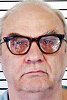
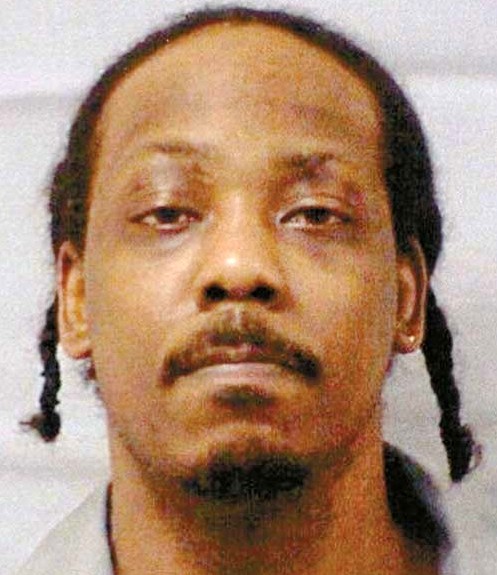
Dorsie Leslie Jones
Murderer Ervil LeBaron
Murderer · USA · 1972
Ervil Morrell LeBaron (1925 to August 16, 1981) was the leader of a polygamous…
35 victims
Ervil LeBaron
Murderer · USA · 1972
Ervil Morrell LeBaron (1925 to August 16, 1981) was the leader of a polygamous…
35 victims
 Brian Kevin Rosenfeld
Murderer · USA · 1985
Brian Kevin Rosenfeld Brian Kevin Rosenfeld was sentenced to three concurrent l…
23 victims
Brian Kevin Rosenfeld
Murderer · USA · 1985
Brian Kevin Rosenfeld Brian Kevin Rosenfeld was sentenced to three concurrent l…
23 victims
 Marvin Gray
Murderer · USA · 1975
Marvin Gray was convicted killer who claimed responsibility for 23 slayings and…
23 victims
Marvin Gray
Murderer · USA · 1975
Marvin Gray was convicted killer who claimed responsibility for 23 slayings and…
23 victims
 Yahweh ben Yahweh
Murderer · USA · 1980
Yahweh ben Yahweh was born and legally named Hulon Mitchell Jr. (October 27, 19…
23 victims
Yahweh ben Yahweh
Murderer · USA · 1980
Yahweh ben Yahweh was born and legally named Hulon Mitchell Jr. (October 27, 19…
23 victims
 Randy Haight
Murderer · USA · 1985
August 22, 1985 — Randy Haight murdered Patricia Vance and David Omer. · August…
2 victims
Randy Haight
Murderer · USA · 1985
August 22, 1985 — Randy Haight murdered Patricia Vance and David Omer. · August…
2 victims
 Lucien Carr
Homicide · USA · 1944
Lucien Carr (March 1, 1925 – January 28, 2005) was a key figure in the Beat gen…
1 victim
Lucien Carr
Homicide · USA · 1944
Lucien Carr (March 1, 1925 – January 28, 2005) was a key figure in the Beat gen…
1 victim
 Roscoe Arbuckle
Homicide ? · USA · 1921
Roscoe Conkling Arbuckle, also known as Fatty Arbuckle (March 24, 1887 – June 2…
1 victim
Roscoe Arbuckle
Homicide ? · USA · 1921
Roscoe Conkling Arbuckle, also known as Fatty Arbuckle (March 24, 1887 – June 2…
1 victim
 Kayle Barrington Bates
Murderer · 1982
Kayle Barrington Bates was convicted of first-degree murder, kidnapping, armed…
1 victim
Kayle Barrington Bates
Murderer · 1982
Kayle Barrington Bates was convicted of first-degree murder, kidnapping, armed…
1 victim
 Robert Dale Conklin
Murderer · USA · 1984
Defendant: Robert Dale Conklin · Gender: Male · Race: White · Date of birth: 02…
1 victim
Robert Dale Conklin
Murderer · USA · 1984
Defendant: Robert Dale Conklin · Gender: Male · Race: White · Date of birth: 02…
1 victim
 Carherine Thompson
Murderer · USA · 1990
Carherine Thompson was a widow whose husband, Melvin Thompson, was killed in We…
1 victim
Carherine Thompson
Murderer · USA · 1990
Carherine Thompson was a widow whose husband, Melvin Thompson, was killed in We…
1 victim
- Gender
- male
- Country
- USA
- Location
- Comanche County, Oklahoma, USA
- Date of birth
- November 6, 1939
- Age at first offence
- 40
- Characteristics
- alcohol
- Victim profile
- Stanley Eugene Buck, Sr., 48
- Method of murder
- Shooting
- Date(s) of murder
- March 14, 1979
- Years active
- 1979
- Date of arrest
- Same day
- Status
-
Executed
Executed by lethal injection in Oklahoma on February 1, 2001
Case record: Dorsie Leslie Jones
Background
Dorsie Leslie Jones was an inmate on Oklahoma’s death row for the longest period at the time of his execution, after an extended appeals process.
At the time of the killings, Dorsie “Wayne” Jones Jr. was 39 years old, and at sentencing he was 61 years old at the time of execution.
The offence
On August 14, 1979, Dorsie Leslie Jones was drinking beer with Betty Strain at the Wichita Lounge in Lawton, Oklahoma.
Royce Linker, who worked at the bar, noticed a gun protruding from the top of Jones’s boot. Linker asked Jones to cover the gun with his pant leg. Jones told Linker to “shut up or I’ll blow her head off.” Jones also stated that he came to kill everyone in the bar, and she would be first.
Jones pointed the gun at Linker, who ducked and crawled behind the bar to hide. Jones fired the gun, and the bullet hit Betty Strain. Strain fled from the bar.
Jones then turned to Stanley Buck Sr. and Stanley Buck Jr. and asked what they were doing. They indicated that they were playing pool. Jones shot both Buck Sr. and Buck Jr.
Jones asked Buck Sr. after the first shot if he was dead, and then shot him again. Buck Sr. died as a result of the gunshot wounds.
Jones shot Buck Jr. and then followed him outside. Jones said: “If I let you live, you’ll tell the cops, won’t you?” Jones then shot Buck Jr. a third time.
An emergency tracheotomy saved Buck Jr.’s life. Buck Jr. managed to stumble to a nearby fruit stand and motioned to call police because he could not talk.
Strain’s injuries resulted in the removal of her spleen, and she later died. Buck Jr.’s injuries left him paralyzed on his left side in the account that described his condition after the shooting; in other accounts he was partially paralyzed.
Investigation
The pistol was on the front seat of Jones’s truck when he was arrested. Lawton police arrested Jones as he parked his pickup truck in his driveway, and Lawton detectives arrested Jones without incident at his home a short time later.
Jones testified at trial that on the day of the murder he had probably taken the prescription drug Ativan and had drunk two shots of whiskey and one beer. His defense was that the interaction of the drug and alcohol rendered him unconscious of his acts and therefore temporarily insane. Jones testified that he did not know if he had done the things about which other witnesses had testified.
Witnesses said Jones did not appear drunk.
Arrest
Jones was arrested without incident at his home shortly after the shootings.
Trial
A jury found Jones guilty of first degree murder and two counts of assault and battery with a dangerous weapon.
The jury rejected Jones’s insanity defense and found him guilty of first degree murder after nine hours of deliberation.
At the sentencing stage, the jury found two aggravating circumstances: the murder was especially heinous, atrocious, or cruel, and Jones knowingly created a great risk of death to more than one person.
Jones was sentenced to death for the murder conviction and to twenty and fifteen years’ imprisonment for the other two convictions in the federal appellate court’s description; in the other trial account, Jones received a 20-year sentence for the shooting of Stanley Buck Jr. and a 12-year sentence for shooting Betty Strain.
Jones testified that he had taken Ativan in combination with alcohol on the day of the shootings. He attempted to show that the interaction between alcohol and medication made him unconscious of his actions that day. He argued that voluntary ingestion of drugs and alcohol resulted in his temporary insanity.
In addressing the insanity-by-intoxication issue, the trial court held that Jones did not present sufficient evidence to create a reasonable doubt that he was unconscious of what he was doing.
The court addressed the requirements for legal insanity by intoxication, stating that to constitute legal insanity by intoxication, the mental disease must result from chronic alcoholism and not be a merely temporary mental condition.
The jury also found two aggravating circumstances and received evidence in mitigation, including evidence of Jones’s good character.
Jones did not have a prior criminal record, was married, and had four children. Jones had been diagnosed as a latent schizophrenic and was under stress at the time of the shootings.
Jones’s appeal included an issue concerning the instruction defining “heinous, atrocious, or cruel,” and legal analysis addressed how Oklahoma narrowed the aggravator after precedent.
Sentencing
Jones was sentenced to death for the murder.
The jury found two aggravating circumstances: the murder was especially heinous, atrocious, or cruel; and Jones knowingly created a great risk of death to more than one person.
The court held that the death sentence was not disproportionate or excessive. The court further found that the death sentence was not imposed under the influence of passion, prejudice, or any arbitrary factor.
Appeals
The Oklahoma Court of Criminal Appeals upheld Jones’s conviction in July 1982, and it affirmed the state trial court’s denial of petitioner's first application for post-conviction relief, described as Jones v. State, 704 P.2d 1138.
A state court of appeals issued an order denying an application for post-conviction relief and affirmed the death sentence on August 2, 1985.
The US Court of Appeals affirmed the district court’s denial of habeas corpus relief on February 15, 2000 in the federal appellate decision described as Dorsie Leslie Jones, Jr. v. Gary Gibson, Warden, Oklahoma State Penitentiary; Attorney General of the State of Oklahoma.
In the federal appeal, Jones raised: (1) insufficient evidence to support the unconstitutionally applied heinous, atrocious, or cruel aggravating circumstance; (2) violation of the right to remain silent and the right to confrontation; (3) that the prosecutor improperly questioned him, leading the jury to believe he would be released if found not guilty by reason of insanity; and (4) ineffective assistance of appellate counsel.
The federal appellate court affirmed the district court’s denial of habeas corpus relief.
The federal appellate court discussed:
- The narrowed construction of “heinous, atrocious, or cruel” under Oklahoma law and concluded there was sufficient evidence to support a finding of torture or extreme mental cruelty under the properly narrowed aggravator.
- A Fifth Amendment claim relating to Jones’s silence that the court found procedurally barred.
- A Confrontation Clause issue relating to limiting cross-examination of Ms. Linker, finding that the trial court improperly curtailed cross-examination but concluding the error was harmless.
- A claim about prosecutorial questioning regarding consequences if found not guilty by reason of insanity, concluding no due process denial on the record.
- Ineffective assistance of appellate counsel, concluding no constitutional ineffectiveness because the omitted issues had no merit as discussed by the court.
Outcome
Dorsie “Wayne” Jones Jr. was executed by lethal injection on February 1, 2001, at the Oklahoma State Penitentiary in McAlester, Oklahoma, and was pronounced dead at 9:16 p.m. from a lethal dose of drugs.
Aftermath
The Oklahoma Pardon and Parole Board held a clemency hearing for Jones on January 23, 2001. The board voted 3-2 to deny clemency; Susan Bussey and Patrick Morgan voted in favor, and Currie Ballard, Flint Breckinridge and Stephanie Chappelle voted against.
Jones did not attend the clemency hearing in person. His attorney played a short videotape of him making a statement in which he repeated that he could not remember the events of March 14, 1979. He expressed remorse and apologized to Stanley Buck’s son, who was injured in the shooting: “Saying I’m sorry is the understatement of a lifetime”.
At the clemency hearing, board members heard evidence that Assistant District Attorney Robert Perrine did not believe the case warranted the death penalty and reportedly said that he only sought a death sentence after the Comanche County District Attorney told him to do so. Another prosecutor described Robert Perrine’s intentions regarding clemency, and it was stated that Robert Perrine died last year from a heart condition.
Jones’s recorded statement included that he asked to be spared for the sake of his family. It was stated that Jones suffered from heart disease and had been diagnosed with prostrate cancer. It was also stated that he was said to be a model prisoner who had only two disciplinary write-ups in 20 years, one in 1980 and one in 1981, neither involving violent incidents.
Between 15 and 20 vigils were held across the state. Two dozen people participated in the vigil outside the gates of Oklahoma State Penitentiary. A protest was held outside the governor’s mansion in Oklahoma City earlier in the day.
Spotted an error, or have more information about this case?