Raymond James Jones
Murderer Brian Kevin Rosenfeld
Murderer · USA · 1985
Brian Kevin Rosenfeld Brian Kevin Rosenfeld was sentenced to three concurrent l…
23 victims
Brian Kevin Rosenfeld
Murderer · USA · 1985
Brian Kevin Rosenfeld Brian Kevin Rosenfeld was sentenced to three concurrent l…
23 victims
 Yahweh ben Yahweh
Murderer · USA · 1980
Yahweh ben Yahweh was born and legally named Hulon Mitchell Jr. (October 27, 19…
23 victims
Yahweh ben Yahweh
Murderer · USA · 1980
Yahweh ben Yahweh was born and legally named Hulon Mitchell Jr. (October 27, 19…
23 victims
 Russell Ellwood
Murderer · USA · 1991
Russell Ellwood was a former taxi driver. Authorities suspected him of killing…
20 victims
Russell Ellwood
Murderer · USA · 1991
Russell Ellwood was a former taxi driver. Authorities suspected him of killing…
20 victims
 Robert Martines Perez
Murderer · USA · 1994
Name: Robert Martines Perez · Other name used in proceedings: Robert Martinez P…
15 victims
Robert Martines Perez
Murderer · USA · 1994
Name: Robert Martines Perez · Other name used in proceedings: Robert Martinez P…
15 victims
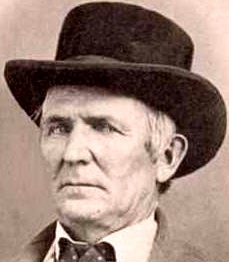 John Doyle Lee
Murderer · USA · 1857
Name: John Doyle Lee Lifespan: September 12, 1812 - March 23, 1877 Legal outcom…
120 victims
John Doyle Lee
Murderer · USA · 1857
Name: John Doyle Lee Lifespan: September 12, 1812 - March 23, 1877 Legal outcom…
120 victims
 Li Hao
Murderer · China · 2009
Li Hao was convicted of murder, rape, illegal detention, organized prostitution…
2 victims
Li Hao
Murderer · China · 2009
Li Hao was convicted of murder, rape, illegal detention, organized prostitution…
2 victims
 Vaughn Greenwood
Serial killer · USA · 1964
Vaughn Greenwood was known as the “Skid Row Slasher.” He was suspected of killi…
11 victims
Vaughn Greenwood
Serial killer · USA · 1964
Vaughn Greenwood was known as the “Skid Row Slasher.” He was suspected of killi…
11 victims
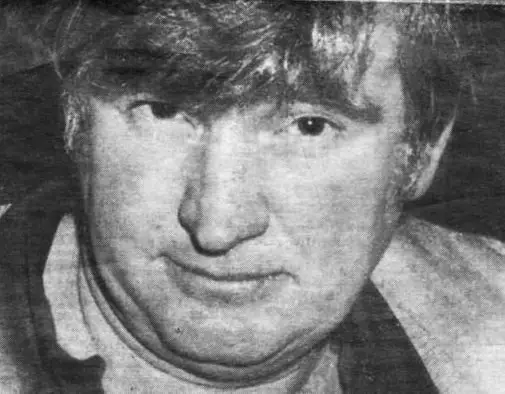 Raymond Edmunds
Murderer · Australia · 1966
Raymond Edmunds Raymond Edmunds was serving a life sentence for the 1966 murder…
2 victims
Raymond Edmunds
Murderer · Australia · 1966
Raymond Edmunds Raymond Edmunds was serving a life sentence for the 1966 murder…
2 victims
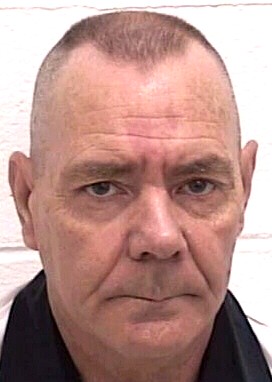 William Howard Putman
Murderer · USA · 1980
July 9, 1980 — William Putman purchased a .38 caliber revolver at a Talladega,…
3 victims
William Howard Putman
Murderer · USA · 1980
July 9, 1980 — William Putman purchased a .38 caliber revolver at a Talladega,…
3 victims
- Gender
- male
- Country
- USA
- Location
- Jefferson County, Texas, USA
- Date of birth
- 1960
- Age at first offence
- 28
- Characteristics
- robbery, arson
- Victim profile
- Su Van Dang, 51 (Vietnamese immigrant)
- Method of murder
- St abbing with knife
- Date(s) of murder
- June 17, 1988
- Years active
- 1988
- Date of arrest
- —
- Status
-
Executed
Executed by lethal injection in Texas on September 1, 1999
Case overview
Raymond James Jones was executed by lethal injection in Texas on September 1, 1999, for the murder of Su Van Dang and for robbery connected to the killing.
Timeline
- June 17, 1988 — Jones, then 28, and Su Van Dang, 51, were involved in an attack at Dang's home in Port Arthur, Texas, during which Jones beat and stabbed Dang, pursued him after he attempted to flee, and later set fire to the house to cover up the crime.
- September 1985 — Jones was released from prison after serving 2 1/2 years of a 10-year sentence for holding up a convenience store.
- September 1, 1999 — Jones died at 6:17 p.m., 8 minutes after the flow of lethal drugs began, after declining to make a last statement.
- March 29, 1999 — The United States Court of Appeals for the Fifth Circuit affirmed the district court’s denial of Jones’s 28 U.S.C. § 2254 petition.
- April 12, 1999 — The Fifth Circuit decision was revised.
The offence
Jones initiated an attack on Su Van Dang at Dang's house in Port Arthur, Texas.
Jones and Dang had been among people playing dominoes the previous evening, after which Jones and Dang went to Dang's house. According to court documents, Jones accompanied Dang to his house after the dominoes game. Jones then saw a stereo in the living room that he wanted, and he began to beat and stab Dang.
Dang pleaded for a bath, and Jones tried to drown him in his bathtub. Jones then began searching for money, found none, and put Dang in a closet. Jones tied Dang with an electrical cord, poured kerosene on Dang and on the floor around him, and set it afire. Jones left the house after the attack.
Investigators determined that Dang's killer also beat him with a lug wrench, tried to drown him in a bathtub, then tied him with an electrical cord from a lamp, poured kerosene on him, and set him ablaze in a closet. Police found Dang's soot-covered body the following morning. Police found eight wounds on Dang’s head and four stab wounds to his chest and back.
A separate account described additional details of the attack:
- Jones started his attack with a knife and a meat cleaver and used a second meat cleaver after the first one was not getting the job done.
- Dang ran out the front door and called for help; Jones ran after him and dragged him back into the house.
- Jones hit Dang on the head twice with the meat cleaver, dragged him into the bathroom, undressed him, put him in the tub, and attempted to drown him.
- After struggling with Dang in the tub for about a half hour, Jones pulled Dang into the hallway and hit him again with the cleaver.
- Jones tied Dang up with a lamp cord, hit him on the head with a lug wrench, and put him in a bedroom closet.
- Jones searched the house for valuables while Dang banged on the closet wall and talked in Vietnamese.
- Jones opened the closet door, saw a can of kerosene, poured fuel on Dang and on the floor of the closet, made a trail to the center of the bedroom, and lit the kerosene.
- Jones collected a portable stereo and other items and left.
Victim
Su Van Dang was 51 years old. He was a Vietnamese immigrant. His body was found soot-covered the following morning.
Investigation and police questioning
After police discovered Dang's body, they questioned Jones, who was the last person seen with Dang before the murder.
After giving Miranda warnings, one of the police officers asked Jones if he knew what his arrest was about. Jones responded: "some Vietnamese, huh?" Jones then said: "yea, I did it." Jones directed the officers to his sisters’ house, where police recovered a stereo that had been taken from the victim’s house the night of the murder.
Jones was arrested based on a warrant issued by a justice of the peace. The United States Court of Appeals’ footnote included that this warrant was found to be invalid for failure of probable cause. The Court also discussed that the Texas Court of Criminal Appeals found the arrest to be illegal.
Police later found Jones’ fingerprint in the bathroom. Police also found some of Jones' clothing at the murder scene and his fingerprint in the bathroom.
Confessions
Jones signed a typewritten confession two hours after his arrest. The confession was the first of two statements admitted at trial. The second statement was made the next afternoon.
Jones confessed in two written statements and directed investigators to the stereo he had taken to his sister’s house.
In his confession, Jones said that he decided to kill Dang so Jones would not be recognized as the thief of the victim's stereo. Jones said that he saw Dang's request to take a bath as the last wish of a dying man and that he decided to grant it. Jones also said that after he started the fire and was putting on his clothes to leave, he could still hear the victim making noises in the closet.
In his confession, Jones said:
"I already knew that I did not need to be in this place with this man if he was gay, but I had already seen that in the corner of the living room was a great big radio, stereo, cassette. When I saw this stereo I knew that I wanted this stereo, but I also knew that this man knew who I was and there was no way that I could get this radio with out him knowing it was me."
Arrest
Police discovered the soot-covered body of Su Van Dang on June 18, 1988.
After a neighbor identified Raymond Jones as one of the people who had been with the victim the night he was murdered, Jones was arrested based on a warrant issued by a justice of the peace. After Miranda warnings, Jones responded to an officer’s question and then admitted participation and directed officers to his sisters’ house.
Trial
Jones was charged and tried for capital murder.
The jury found Jones guilty of the capital offense and a death sentence was imposed.
The sentence was affirmed by the Court of Criminal Appeals of Texas, and a writ of certiorari was denied by the Supreme Court.
Sentencing
Jones was sentenced to die for the capital murder. The sentencing relied on Texas special issues, and the judge defined "deliberate" as "something more than intentional" and as a "conscious decision [embracing] more than a will to engage in conduct."
Under former article 37.071 of the Texas Code of Criminal Procedure, the jury was asked:
- whether the conduct of the defendant that caused the death of the deceased was committed deliberately and with reasonable expectation that the death of the deceased would result;
- whether there is a possibility that the defendant would commit criminal acts of violence that would constitute a continuing threat to society; and
- if raised by the evidence, whether the conduct of the defendant in killing the deceased was unreasonable in response to the provocation, if any, by the deceased.
Appeals
Jones filed a 28 U.S.C. § 2254 petition challenging his conviction and death sentence for the murder of Su Van Dang.
He alleged that:
- the trial court erred in not instructing the jury on the lesser included offense of murder;
- the trial court did not give a Penry instruction that would allow the jury to give mitigating effect to evidence of mental retardation;
- he received ineffective assistance of counsel;
- his confession was not voluntary;
- potential jurors were excluded in violation of Batson v. Kentucky;
- he was entitled to an evidentiary hearing under Townsend v. Sain;
- he was entitled to discovery.
The district court referred the case to a magistrate judge, who returned a report and recommendation that the writ be denied. The district court adopted the report as its final ruling.
The United States Court of Appeals for the Fifth Circuit affirmed the district court’s denial of the petition.
Lesser included offense claim
Jones contended that the trial court erred by not including an instruction on the lesser included offense of murder. He argued the murder was not motivated by the theft of the victim’s portable stereo and that his statements that he killed the victim due to homosexual advances or in self-defense showed other circumstances motivated the murder. He also relied on testimony of a witness who said that he saw Jones leave the house empty-handed after the murder, which Jones maintained showed the theft was an afterthought. Jones argued that because theft as an afterthought does not constitute capital murder, he should have been given a lesser included offense instruction.
The appellate court rejected the claim and explained that a capital defendant is entitled to lesser-included instructions only if the evidence would permit a rational jury to find guilt of the lesser offense and acquit him of the greater. The appellate court determined that Jones’s statements were contradicted by the unequivocal language in his own confession that theft motivated the murder and concluded that the jury could not have rationally acquitted him of the underlying felony.
Penry claim
Jones contended that the jury was precluded from making a reasoned moral response to mitigating evidence of mental retardation. Jones relied on testimony by Dr. Jerry Landrum, a psychologist, that Jones was within the borderline mentally retarded range of intellectual abilities and that Jones was significantly limited in understanding surrounding events. Jones also relied on testimony by a state psychiatrist that the IQ test scores overestimated Jones’s alertness and understanding.
Jones contended that the court not only failed to give a Penry instruction but instructed the jury away from consideration of mitigating evidence by not allowing a sentence less than death based on mitigating value beyond its relevance to special issues.
The appellate court found Jones had failed to show his mental abilities were a uniquely severe handicap and further found no evidence of the required nexus between any severe handicap and the criminal act. The court also rejected Jones’s contention that the instructions did not properly empower the jury, noting that Jones presented no evidence of mental retardation outside the scope of the special issues and that the jury was directed to consider all mitigating evidence.
Ineffective assistance of counsel
Jones argued his counsel was ineffective during trial and state habeas proceedings. He contended trial counsel gave minimal attention, failed to investigate adequately, spent little time with him, and failed to procure discovery or a hearing to develop mitigating claims. He also contended state habeas counsel was ineffective by failing to raise trial counsel ineffectiveness.
The appellate court stated that Jones did not present the ineffective assistance claim for review on either direct appeal or during state habeas proceedings, and the claim was procedurally barred. The court also concluded the claim would be dismissed as abuse of writ under state law if presented in a second state petition, and addressed cause and prejudice.
Fourth Amendment claims
Jones argued that because his arrest was illegal, his statements should be suppressed and the connection between the arrest and the statement was not attenuated. He also argued waiver of Miranda rights was not voluntary due to mental deficiencies and coercive circumstances.
The appellate court declined to reexamine the fourth amendment claim on federal habeas review because the state provided opportunity for full and fair litigation prior to trial. The appellate court also rejected the claim that his confession was not voluntary due to lack of evidence of coercive tactics or that the confession was not made intelligently.
Batson claims
Jones argued that the prosecution relied on discriminatory reasons for excluding three veniremen. The appellate court said the Texas Court of Criminal Appeals found the Batson challenges procedurally defaulted under state law because the trial objection did not match the complaint on appeal, and the appellate court declined to consider these federal habeas claims.
Evidentiary hearing and discovery
Jones contended he was entitled to an evidentiary hearing and discovery under pre-AEDPA law. The appellate court determined his reliance on Bracy v. Gramley was misplaced because he did not identify a factual dispute. The court also found his discovery claim failed because he did not make specific factual allegations showing entitlement.
Other details
Prior conviction and parole status
Jones had a prior conviction for robbing a convenience store. He served 2 1/2 years of a 10-year prison term before being paroled in September 1985.
Jones was on parole at the time of the June 17, 1988, attack and at the time of the murder.
Statements about motive and defense arguments raised on appeal
In appeals, Jones said:
- he killed the victim in self-defense while resisting a homosexual advance;
- he was mentally retarded;
- the theft of the stereo was an afterthought, meaning he should not have been charged with capital murder because the slaying was not part of another felony.
The appellate court addressed the issues, including the claim about theft as an afterthought and the Penry mental retardation mitigation claim.
Execution details and last statement
Jones declined to make a last statement. He died at 6:17 p.m., 8 minutes after the flow of lethal drugs began.
Notable witnesses and attendance
Jones had no last witness attendance details provided beyond that none of the victim's family attended Jones’s execution. Jones’s only witness was his spiritual advisor, Jack Wilcox.
Execution court-related procedural details
The appellate decision included footnotes:
- A warrant used for arrest was found to be invalid for failure of probable cause. It noted Jones v. State, 833 S.W.2d 118 (Tex. Crim. App. 1992).
- The Texas Court of Criminal Appeals found the arrest illegal but concluded two written statements made after the arrest were sufficiently attenuated to permit their use at trial, and also found objection waived regarding admission of the stereo at trial. It found oral statements at the time of arrest were not attenuated, but admission was harmless error. The footnote cited Jones v. State, 833 S.W.2d 118 (Tex. Crim. App. 1992).

Spotted an error, or have more information about this case?