Danny Keith Hooks
Mass murderer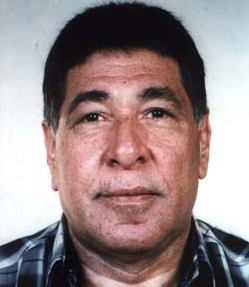 Gameel Al-Batouti
Mass murderer · USA · 1999
Gameel Al-Batouti (also rendered “Gamil ElBatouty” or “El Batouty” in U.S. offi…
216 victims
Gameel Al-Batouti
Mass murderer · USA · 1999
Gameel Al-Batouti (also rendered “Gamil ElBatouty” or “El Batouty” in U.S. offi…
216 victims
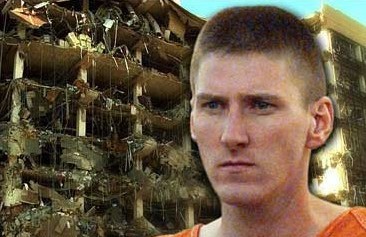 Timothy McVeigh
Mass murderer · USA · 1995
Timothy James McVeigh (April 23, 1968 – June 11, 2001) was a United States Army…
168 victims
Timothy McVeigh
Mass murderer · USA · 1995
Timothy James McVeigh (April 23, 1968 – June 11, 2001) was a United States Army…
168 victims
 Julio Gonzalez
Mass murderer · USA · 1990
Julio Gonzalez was sentenced to 174 twenty-five-year sentences (a total of 4,35…
87 victims
Julio Gonzalez
Mass murderer · USA · 1990
Julio Gonzalez was sentenced to 174 twenty-five-year sentences (a total of 4,35…
87 victims
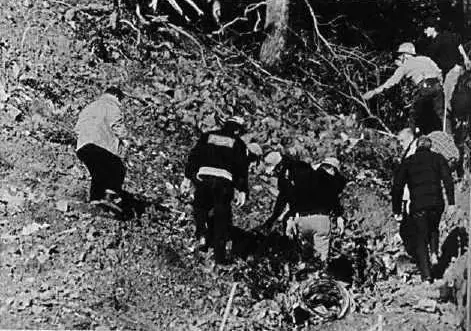 David Burke
Mass murderer · USA · 1987
David Augustus Burke (May 18, 1952–December 7, 1987) was an employee of USAir,…
43 victims
David Burke
Mass murderer · USA · 1987
David Augustus Burke (May 18, 1952–December 7, 1987) was an employee of USAir,…
43 victims
 George Jo Hennard
Mass murderer · USA · 1991
George Jo Hennard carried out a mass killing at a Luby’s Cafeteria in Killeen,…
23 victims
George Jo Hennard
Mass murderer · USA · 1991
George Jo Hennard carried out a mass killing at a Luby’s Cafeteria in Killeen,…
23 victims
 Elliot Rodger
Mass murderer · USA · 2014
Elliot Rodger (July 24, 1991 – May 23, 2014) perpetrated a killing spree in Isl…
6 victims
Elliot Rodger
Mass murderer · USA · 2014
Elliot Rodger (July 24, 1991 – May 23, 2014) perpetrated a killing spree in Isl…
6 victims
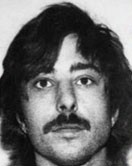 Brian Dugan
Serial killer · USA · 1983
Brian Dugan (born September 23, 1956) was an American rapist and serial killer…
3 victims
Brian Dugan
Serial killer · USA · 1983
Brian Dugan (born September 23, 1956) was an American rapist and serial killer…
3 victims
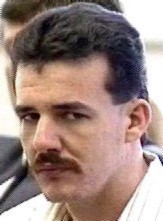 Shawn Humphries
Murderer · USA · 1994
Shawn Humphries was convicted of murder and sentenced to death for the shooting…
1 victim
Shawn Humphries
Murderer · USA · 1994
Shawn Humphries was convicted of murder and sentenced to death for the shooting…
1 victim
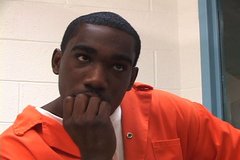 Ryan Matthews
Homicide ? · USA · 1997
Ryan Matthews was an African American juvenile who was 17 years of age at the t…
1 victim
Ryan Matthews
Homicide ? · USA · 1997
Ryan Matthews was an African American juvenile who was 17 years of age at the t…
1 victim
 Stephen Michael West
Murderer · USA · 1986
Stephen Michael West was sentenced to death in 1987. A jury in Union County fou…
2 victims
Stephen Michael West
Murderer · USA · 1986
Stephen Michael West was sentenced to death in 1987. A jury in Union County fou…
2 victims
- Gender
- male
- Country
- USA
- Location
- Oklahoma City, Oklahoma, USA
- Date of birth
- 1958
- Age at first offence
- 34
- Characteristics
- convicted rapist, drug addict
- Victim profile
- Sandra Thompson, 35, Phyllis Adams, 47, LaShawn Evans, 30, Carolyn Watson, 37, and Fransill Roberts, 34 (drug-addicted prostitutes)
- Method of murder
- St abbing with knife
- Date(s) of murder
- May 16, 1992
- Years active
- 1992
- Date of arrest
- February 4, 1997
- Status
-
Sentenced to death
Sentenced to death in 1998
Case record: Danny Keith Hooks
Parties
- Defendant/Appellant: Danny Keith Hooks
- Appellee: State of Oklahoma
- Trial judge: Honorable Daniel L. Owens, District Judge
- Court (appeal): Court of Criminal Appeals of Oklahoma
- Opinion by: CHAPEL, J.
- Concurring: STRUBHAR, P.J.; LUMPKIN, V.P.J. (in results); JOHNSON, J. (in results); LILE, J. (concurs)
Victims
Five women were stabbed to death at a home in Oklahoma City:
- Sandra Thompson, 35
- Phyllis Adams, 47
- LaShawn Evans, 30
- Carolyn Watson, 37
- Francill Roberts, 34
The offence
Hooks was convicted of five counts of Murder in the First Degree in violation of 21 O.S.1991, § 701.7, in the District Court of Oklahoma County, Case No. CF-97-657.
Circumstances of the killings (May 16, 1992)
- On May 16, 1992, the bodies of Phyllis Adams, LaShawn Evans, Sandra Thompson, Carolyn Watson, and Francill Roberts were found in a small bedroom in a crack house.
- Each woman was gagged and had been stabbed several times.
- The bodies were nude.
- Thompson, Watson, and Roberts were bound.
- The room was in disarray, and the victims' purses appeared to have been searched.
- There were no drugs or money in the house.
- Although there were five victims in a confined space, the evidence suggested one person committed the crimes.
- The women were killed in the bedroom.
Scene evidence described
- A trail of blood drops led to the front door.
- Luminol testing showed a single set of bloody footprints also leading from the bedroom to the front door.
- There was a great deal of the victims' blood in the bedroom.
- Some blood trail/drop evidence in the bedroom did not come from any of the victims.
- A bloody palm print was on the west wall of the bedroom closet.
- Police found a bloody boot print with "Honchos" embossed on the sole.
- Despite a thorough investigation, police found nobody who matched either the palm print or the blood drops.
- Evidence suggested someone wearing work boots walked through blood in the bedroom while at least some of the victims were being killed.
- Witnesses agreed Hooks usually wore work boots in April and May of 1992.
- Witnesses agreed Hooks was familiar with the house, had bought crack cocaine there many times, and knew at least one of the victims.
DNA and related forensic evidence
- In 1995, samples of the blood drops were submitted for DNA testing.
- Those results were distributed nationally in 1996.
- In 1997, California penal authorities informed the Oklahoma State Bureau of Investigation (OSBI) that they had a person with that DNA profile.
- Subsequent tests confirmed:
- The blood trail,
- The drops in the bedroom, and
- The bloody palm print all belonged to Hooks.
- DNA from semen found in Roberts's mouth was also consistent with Hooks' DNA.
Arrest and extradition-related events
- Hooks was arrested in California on February 4, 1997, for the murders of five women whose bound, gagged and stabbed bodies were found in an Oklahoma City drug house in 1992.
- Hooks was arrested in San Jose by FBI agents and San Jose police at the LeBaron Hotel in north San Jose.
- Hooks was held in the Santa Clara County jail pending extradition proceedings.
- The arrest followed a five-day manhunt in the Bay Area, primarily in Richmond and San Jose, involving about two dozen FBI agents and local police.
- Friday, Oklahoma City District Attorney Bob Macy filed five murder charges against Hooks after California authorities reported a match between:
- A DNA sample from the Oklahoma murder scene, and
- blood taken from Hooks after his rape conviction in California.
Prior criminal history (as described)
- Hooks was a transient with relatives in Oklahoma.
- He went to prison in California in 1988 for rape, kidnapping and assault with a deadly weapon.
- He was released in 1991.
Investigation narrative details
- Hooks had been mentioned once in reports on the Oklahoma City investigation but was never a suspect.
- Investigators linked a bloody palm print found at the scene with a print taken from Hooks in a drunken driving arrest in Oklahoma.
- Police had not initially identified someone matching the palm print or blood drops.
- After DNA matched, the physical evidence was linked to Hooks as described above.
Trial
Charges and counts
- The jury found Hooks guilty of five counts of Murder in the First Degree.
- Applicable statute cited: 21 O.S.1991, § 701.7.
- The trial occurred in the District Court of Oklahoma County, Case No. CF-97-657.
Aggravating circumstances found
For each count, the jury found two aggravating circumstances:
- Hooks had been previously convicted of a felony involving the use or threat of violence to the person.
- The murder was especially heinous, atrocious, or cruel.
Defendant testimony at trial (admission of presence)
- Hooks admitted he was at the house.
- He testified he went there during the evening of May 15, and sometime close to or shortly after midnight on May 16, he was there smoking crack cocaine with all the victims.
- He testified he only knew the woman who rented the house and could not remember any of the victims' names.
- He testified he had:
- “regular” sex with one woman, and
- oral sex with another.
- He testified that during the night they ran out of crack and he gave two of the women $30 to go buy more.
- After they returned and finished smoking, he testified they ran out of drugs and money and he left.
- He testified he got home—about a mile from the house—around 2:00 a.m.
- He testified he decided to go back sometime after 4:00 a.m.
- He testified that on the way he cut his left index finger falling off his bicycle while trying to fix the kick stand.
- He testified that when he got there, the house was dark and the door was ajar; he pushed it open, entered cautiously, and closed the door behind him.
- He testified he went to the bedroom and saw the bodies, and then went back to the front door.
- He testified he lifted the curtain, looked outside, then decided to go back in and check on the victims in case anyone was alive.
- He testified that he returned to the bedroom and determined each victim was dead.
- He testified that after he checked Evans's body he picked up a shirt and wrapped it around his cut finger.
- He testified he looked at the contents of the victims' purses on the west bed, then knelt and looked under the clothes in the closet.
- He testified he then left the house, dropping the shirt by the front door, and closed the door.
- He testified he did not tell anyone what he had seen because he was afraid authorities would revoke his California parole for being in a crack house.
- He testified that two weeks later he left the area.
- He testified that in November he was arrested in Holdenville, Oklahoma, on a domestic complaint and returned to California.
Jury selection issues
Hooks raised a claim under Proposition IX regarding the right to a jury composed of a fair cross-section of the community through systematic under-representation of African-Americans.
- Out of a jury venire of 65 persons called to hear Hooks's case, four or five appeared to be African-American.
- Trial counsel objected to the racial makeup of the venire and continued to object throughout the case.
- Counsel made an oral motion to quash the panel at the end of the first day of voir dire, which was denied.
- The trial court noted it had no control or influence over the racial makeup of the venire.
- The trial court stated the venire was summoned on a random selection basis using driver's license rolls.
- Hooks argued counsel substantially complied with the intent behind the statute and that a sufficient record enabled review.
- The Court concluded Hooks waived the claim under Oklahoma law and also concluded that Hooks had not shown error.
Evidence sufficiency
Hooks claimed the evidence was insufficient to convict him of first degree murder.
- The Court applied the standard that circumstantial evidence must exclude every reasonable hypothesis other than guilt.
- The Court concluded the evidence met this standard.
Circumstantial connections described by the Court
The Court listed multiple items connecting Hooks to the murders, including:
- Drops of Hooks's blood in the bedroom and around items connected to the discovery area.
- Hooks's blood formed a trail of drops from the bedroom to the front door, with parallel footprints.
- Hooks's palm print in blood found in the bedroom closet where Adams was attacked.
- Semen consistent with Hooks found in Roberts's mouth.
- Evidence that work boots walked through blood; witnesses agreed Hooks usually wore work boots in April and May 1992.
Contradictions identified by the Court
The Court stated Hooks's story was contradicted by evidence including that:
- Adams and Watson were with other people and got to the house sometime between 4:00 and 4:30 a.m. on May 16, so they could not have been partying with him between 12:30 and 2:00 a.m.
- The Court stated Hooks's description did not account for drops of his blood found on items under the west bed, and did not explain how his blood could have soaked into a jacket under Evans's head.
- The Court stated his explanation of the bloody palm print appeared somewhat confused.
- The Court concluded that while portions of Hooks's story were plausible, it did not exclude every reasonable hypothesis other than guilt.
Evidentiary and procedural issues during trial (Proposition III, V, VI)
Refusal to admit evidence about work boots (Proposition III)
Hooks argued the trial court erred by refusing to allow defense to present a witness regarding his work boots.
Key facts described:
- The State connected Hooks to “Honchos” work boots matching the bloody footprint.
- The State admitted a demonstrative exhibit: a pair of Honcho boots bought by police in 1992 after the crimes.
- Hooks admitted owning two pairs of boots in 1992: a pair of Army boots and lace-up work boots.
- Hooks denied owning “Honchos” boots.
- Hooks testified he did not know what happened to his Army boots and that he left his work boots with family when he was returned to California in November 1992.
- After trial began as the State emphasized the evidence, Hooks’s family brought his work boots from Holdenville to the Oklahoma County courthouse.
- Over Hooks's objection, the trial court refused to allow a witness to sponsor the boots.
- The Court held this refusal was error.
- The Court then concluded the error was harmless beyond a reasonable doubt and did not require relief.
Hearsay and bolstering issue (Proposition V)
Hooks complained about hearsay testimony concerning a police report that was read after witness testimony.
Key facts described:
- Billy Ray Johnson testified he took Hooks to the house to buy crack.
- Johnson initially said he wasn't sure which woman Hooks was going with.
- Johnson agreed with his prior consistent statement to police after the prosecutor read it.
- Hooks did not contest the exchange in which the prosecutor read Johnson’s prior consistent statement and Johnson agreed.
- After Johnson testified, prosecutors called Officer Burke to read his report on Johnson’s statement.
- Hooks objected; the objection was overruled and preserved.
- The Court found the admission was error but held it did not contribute to Hooks's convictions and sentences beyond a reasonable doubt.
Other-bad-acts evidence about group sex (Proposition VI)
Hooks alleged the trial court permitted introduction of other bad acts not part of the transaction resulting in death.
Key facts described:
- Prosecutors repeatedly elicited evidence that Hooks was interested in group sex.
- No sex crimes were charged.
- The Court noted:
- the victims were nude,
- four had old semen from various donors present in their bodies,
- Hooks admitted having sex with two victims.
- The Court found the evidence (about group sex as other bad acts) was erroneously admitted but did not unduly prejudice Hooks, concluding it did not require relief.
Sentencing and second-stage issues
Hooks was sentenced to death on each count.
Aggravating factors and sentence
- The jury found two aggravating circumstances for each count.
- In accordance with the jury's recommendation, Honorable Daniel L. Owens sentenced Hooks to death on each count.
Jury deadlock and alleged coercion (Proposition VII)
Hooks argued the jury was coerced into returning a death sentence.
Key events described:
- After five hours of second-stage deliberations, the jury sent a note indicating it was 11-1 for the death penalty and asked the trial court to interview the holdout juror and replace her with an alternate.
- The trial court responded that the law did not authorize replacing a juror and told the jury to continue deliberation.
- Within ten minutes, the jury returned a note: “We are unable to reach any unanimous sentence.”
- The trial court read aloud the capital sentencing deadlock instruction OUJI-CR (2d) 4-83.
- The State objected because the jury had not been out long enough to justify something like an Allen charge; the trial court declined to give that instruction at that time.
- Trial counsel requested an “Allen charge.”
- After the second note, the trial court overruled Hooks's mistrial motion and stated it would give an Allen charge, OUJI-CR (2d) 10-11.
- The trial court gave OUJI-CR (2d) 10-11, including the following language:
“This does not mean that those favoring any particular position should surrender their honest convictions as to the weight or affect [sic] of any evidence solely because of the opinion of other jurors or because of the importance of arriving at a decision. No juror should ever agree to a verdict that is contrary to the law and the Court's instruction nor find a fact or concur in a verdict which in good conscience he or she believes to be untrue. If at all possible, you should resolve any differences and come to a common conclusion so this case may be completed.”
- The court addressed logistical matters around dinner and allowed jurors to use motel rooms reserved should they want to break and resume next day, while stating it could not release jurors to their homes.
- Approximately 45 minutes later, the jury returned verdicts of death on all counts.
Court’s rulings on Proposition VII
- The Court concluded the trial court failed to give the correct deadlock instruction and should have repeated the Allen language in the final instruction.
- The Court concluded these errors did not coerce the verdict and declined to grant relief.
Specific rulings described within Proposition VII
- The Court stated the trial court’s accurate statement that the jury could not return to their homes until the close of proceedings was not inherently coercive.
- The Court stated the trial court omitted a necessary admonition not to abandon honestly held beliefs when releasing the jury after a deadlock.
- The Court distinguished Mooney due to lack of intervening improper communication or confusion engendered by after-dinner instructions.
- The Court discussed the distinction between OUJI-CR (2d) 4-83 and OUJI-CR (2d) 10-11 and its own overruling of earlier holdings to the contrary:
- The Court stated that where a capital jury is deadlocked on punishment, the trial court should give OUJI-CR (2d) 4-83.
- The Court also stated the Allen instruction was not per se coercive and declined relief on the facts presented.
Additional sentencing issues (Propositions VIII, X, XI)
Jury misunderstanding and response to note (Proposition VIII)
- During second-stage deliberations, the jury sent a note complaining that the holdout juror “refers on grounds not related to the law.”
- Hooks argued this phrase indicated misunderstanding requiring correction that the law never requires imposition of the death penalty.
- The Court found Hooks’s interpretation was speculation and that jury instructions did not suggest death was required after an aggravating circumstance.
- The Court found no error in the trial court’s response.
Victim impact evidence (Proposition X)
Hooks claimed victim impact evidence violated his rights.
Key facts described:
- Family members gave victim impact testimony for each victim in question-and-answer format.
- Hooks neither cross-examined these witnesses nor objected to victim impact testimony, waiving all but plain error.
- The Court addressed requirements for victim impact testimony and stated the victim impact instruction was given.
- The Court noted the trial court made no formal finding on aggravating circumstances in the record, but stated sufficient evidence supported more than one aggravating circumstance and found no plain error in failure to explicitly find.
- The Court addressed complaints about:
- Ms. Lewis testifying regarding Evans, including her testimony emphasizing effects on Evans's child and parent.
- Potential impropriety of her remarks, including:
- Lewis’s statement that Evans’s father said he would never see justice for his child, then died six months after her death.
- Alleged hearsay regarding other family members.
- The Court held that isolated error did not divert the jury from its duty and denied the proposition.
Constitutionality of “especially heinous, atrocious or cruel” aggravator (Proposition XI)
Hooks argued the aggravating circumstance was unconstitutional.
Key points described:
- The Court acknowledged Hooks relied on Robinson v. State but held Robinson involved proof of conscious victim suffering and that, where as here there was proof of conscious physical suffering or extreme mental cruelty, the Court would continue to uphold the aggravating circumstance.
- The Court denied the proposition.
Prosecutorial misconduct and closing argument (Proposition II)
Hooks alleged prosecutorial misconduct in first-stage argument/evidence and second-stage argument.
Court’s approach
- Hooks failed to object at trial, so the Court reviewed for plain error only.
- The Court recognized the State has wide latitude in closing argument and relief is reserved for grossly improper and unwarranted argument affecting rights.
Rulings described
- The Court acknowledged the prosecutors misused evidence in first stage and engaged in “egregiously improper argument.”
- The Court concluded these errors did not entitle Hooks to relief.
Examples of criticized arguments and evidence described
- Misleading evidence and boot-related questioning:
- The State did not show Honchos demonstrative boots during some witness testimony.
- The Court stated evidence suggested witnesses had seen the boots in interviews.
- The Court stated it would not hold this strategic decision constituted misconduct.
- Questioning of Ms. McClain:
- The Court described the prosecutor questioning Ms. McClain about whether she testified similarly at preliminary hearing and not lying.
- The Court found this led to perjury and may have bolstered testimony, but held it did not affect the verdict.
- Closing arguments criticized in detail included:
- Misstatements about law during “heinous, atrocious or cruel” discussion, including urging jurors to consider “what would you call it if someone did it to you” and references to family members; the Court called this error.
- Comments suggesting victims were kidnapped (based on gagging/binding evidence though kidnapping was not charged).
- Arguments about jury nullification and requirement of death sentencing, including references to system being “grind[ed] to a halt,” “The 12 of you must resolve this case,” and “one or two people could cripple the system, cut it up and eviscerate it.”
- Arguments about drugs:
- Lots of people do drugs but don’t kill, and statements about getting drugs in prison; the Court stated there was no evidence about access to drugs in prison and found the prosecutor should not have suggested it, but held the remark did not warrant relief.
- Personal opinion:
- Mr. Miller’s remarks regarding prosecutors’ struggles and not celebrating when a death verdict was received, and comments describing capital cases as the “most grueling part of my job.”
- Condemned arguments:
- “three hots and a cot”
- the exhortation to “pray if you want to.”
- The Court stated it could not condone the practice but found no relief was required on the record.
Effective assistance of counsel (Proposition IV)
Hooks argued ineffective assistance of trial counsel.
Key findings:
- The Court applied the standard requiring Hooks to show deficient performance and prejudice.
- The Court concluded counsel was not ineffective and denied the proposition.
- The Court discussed:
- Closing argument and marshaling evidence: the Court stated counsel used the evidence to argue the State had not proved guilt and would not find performance deficient.
- Failure to obtain work boots before trial began: the Court stated the verdicts were not affected by trial court error regarding the boots, so Hooks could not show prejudice.
- Failure to object to prosecutorial remarks/tactics: because state errors did not affect verdicts, counsel could not be ineffective for not objecting.
- Use of prior convictions for impeachment:
- During Hooks’s testimony, counsel ensured the jury knew Hooks had prior convictions for rape and assault with intent to commit bodily harm.
- The Court held prior convictions were relevant for impeachment purposes and counsel was not ineffective for omitting a motion to prohibit their use.
- Failure to object to victim impact evidence:
- The trial court held a brief hearing and instructed the jury; the Court had already found isolated errors in victim impact evidence did not affect verdicts, so no prejudice was shown.
- Cumulative error:
- The Court stated it had found error in Propositions II, III, V, VI, VII and VIII, but found the combination did not infect the trial or sentencing proceeding with unfairness.
Mandatory sentence review and affirmance
The Court performed mandatory sentence review under 21 O.S.1991, § 701.13(C).
- The Court determined the sentence of death was not imposed under the influence of passion, prejudice, or any other arbitrary factor.
- The Court found the sentence of death was factually substantiated and appropriate.
- The Court affirmed the judgment and sentence.
Outcome
- Hooks was convicted of five counts of Murder in the First Degree.
- On appeal, the judgments and sentences were AFFIRMED.
- The mandatory sentence review did not result in modification.
Other details
Jury selection procedure described
- The trial court stated the venire was summoned randomly using driver's license rolls.
Charges in the Bill of Particulars (aggravating circumstances not found)
In footnote discussion:
- The Bill of Particulars also alleged aggravating circumstances including:
- knowingly created a great risk of death to more than one person,
- murders committed for the purpose of avoiding arrest or prosecution,
- probability that Hooks would commit criminal acts of violence that would constitute a continuing threat to society.
- The jury did not find these aggravating circumstances.
Quotes included verbatim in the case record (from the opinion text)
- Jury note after deliberations:
“We are unable to reach any unanimous sentence.”
- OUJI-CR (2d) 10-11 instruction language provided to the jury:
- Jury note complaining about holdout juror:
“refers on grounds not related to the law.”
Case citation and procedural dates (as provided in the record text)
- Case citation: HOOKS v. STATE 2001 OK CR 19 P.3d 294 72 OBJ 371
- Case Number: D-98-1231
- Decided: 01/22/2001
- Modified: 03/12/2001
- As Corrected: March 13, 2001
Spotted an error, or have more information about this case?