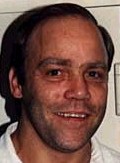
Richard Wayne Jones
Murderer Brian Kevin Rosenfeld
Murderer · USA · 1985
Brian Kevin Rosenfeld Brian Kevin Rosenfeld was sentenced to three concurrent l…
23 victims
Brian Kevin Rosenfeld
Murderer · USA · 1985
Brian Kevin Rosenfeld Brian Kevin Rosenfeld was sentenced to three concurrent l…
23 victims
 Yahweh ben Yahweh
Murderer · USA · 1980
Yahweh ben Yahweh was born and legally named Hulon Mitchell Jr. (October 27, 19…
23 victims
Yahweh ben Yahweh
Murderer · USA · 1980
Yahweh ben Yahweh was born and legally named Hulon Mitchell Jr. (October 27, 19…
23 victims
 Russell Ellwood
Murderer · USA · 1991
Russell Ellwood was a former taxi driver. Authorities suspected him of killing…
20 victims
Russell Ellwood
Murderer · USA · 1991
Russell Ellwood was a former taxi driver. Authorities suspected him of killing…
20 victims
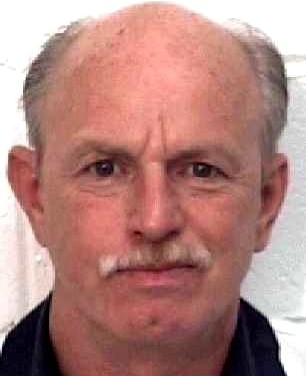 Robert Newland
Murderer · USA · 1986
Robert Newland (male) was convicted and sentenced to death in Georgia for the k…
1 victim
Robert Newland
Murderer · USA · 1986
Robert Newland (male) was convicted and sentenced to death in Georgia for the k…
1 victim
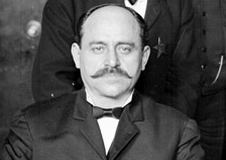 Johann Otto Hoch
Serial killer · USA · 1890
Johann Otto Hoch (1855 - 1906) was the most famous and last-used alias of a Ger…
15 victims
Johann Otto Hoch
Serial killer · USA · 1890
Johann Otto Hoch (1855 - 1906) was the most famous and last-used alias of a Ger…
15 victims
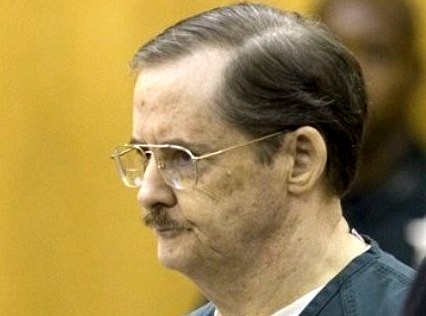 Nelson Serrano
Mass murderer · USA · 1997
Nelson Iván Serrano Sáenz was sentenced to death by lethal injection on June 26…
4 victims
Nelson Serrano
Mass murderer · USA · 1997
Nelson Iván Serrano Sáenz was sentenced to death by lethal injection on June 26…
4 victims
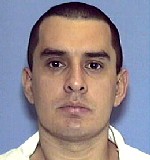 George Rivas
Murderer · USA · 2000
George Rivas was convicted of capital murder and was sentenced to death. He was…
1 victim
George Rivas
Murderer · USA · 2000
George Rivas was convicted of capital murder and was sentenced to death. He was…
1 victim
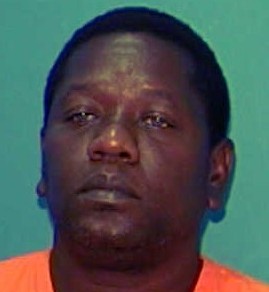 Melvin Trotter
Murderer · USA · 1986
Melvin Trotter was born 12/29/60. The case was in the Twelfth Judicial Circuit,…
1 victim
Melvin Trotter
Murderer · USA · 1986
Melvin Trotter was born 12/29/60. The case was in the Twelfth Judicial Circuit,…
1 victim
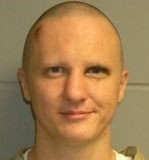 Jared Loughner
Mass murderer · USA · 2011
January 8, 2011 — Jared Lee Loughner opened fire at a constituent meeting held…
6 victims
Jared Loughner
Mass murderer · USA · 2011
January 8, 2011 — Jared Lee Loughner opened fire at a constituent meeting held…
6 victims
- Gender
- male
- Country
- USA
- Location
- Tarrant County, Texas, USA
- Date of birth
- April 9, 1960
- Age at first offence
- 26
- Characteristics
- kidnapping, robbery, arson
- Victim profile
- Tammy Livingston (female, 27)
- Method of murder
- St abbing with knife 19 times
- Date(s) of murder
- February 19, 1986
- Years active
- 1986
- Date of arrest
- Next day
- Status
-
Executed
Executed by lethal injection in Texas on August 23, 2000; conviction affirmed; clemency petitions 1 and 2 were considered; a request for a stay was denied by the Texas Board of Pardons and Paroles; Lt. Gov. Rick Perry declined to issue an emergency stay
Case identification
Richard Wayne Jones was born on April 9, 1960. He was executed at age 40 and was 26 at the time of the crime. He had been assigned TDCJ Number (not provided).
Timeline
- February 19, 1986 — Tammy Livingston was abducted from a parking lot in the Fort Worth area; she was abducted, robbed, and stabbed 17 times, and her body was later discovered after a grass fire.
- February 21, 1986 — Richard Wayne Jones was arrested after an attempt to have his girlfriend cash one of the victim’s checks.
- July 24, 1987 — Sentencing occurred; Jones was sentenced to death.
- April 29, 1992 — The Court of Criminal Appeals affirmed Jones’ conviction.
- February 2, 1993 — The U.S. Supreme Court denied certiorari.
- August 22, 2000 — Jones’ execution date appeared in execution information and scheduling materials.
- August 23, 2000 — Jones was executed by lethal injection in Texas.
- 6:19 p.m. — Jones was pronounced dead.
Background
Jones had a criminal history that included juvenile runaway activity, burglary and theft, aggravated robbery, and other convictions. Testimony at the punishment phase of Jones’ trial described additional juvenile and adult convictions. Jones was described as having a history of mental and cognitive issues: he had an IQ of 75 and was considered borderline retarded (3rd grade level). The case also described mental illness/cognitive dysfunction and ADHD-hyperactive.
Jones was described as having an abusive family background involving drinking and beatings. He began running away at 8. He was mostly raised in state schools. He made two suicide attempts. A later state school was closed for brutality shortly after he left.
Jones’ prior criminal history as described at trial included:
- Jones pled guilty in January 1978 to burglary for which he was placed on probation; the probation was revoked, resulting in Jones spending five years in jail.
- Jones pled guilty in January 1979 to three counts of felony theft of property in Tarrant County; he was sentenced to seven years in jail.
- Jones pled guilty in August 1983 to aggravated robbery with a deadly weapon in Tarrant County; he was sentenced to seven years in jail.
A Taco Bell manager in Grand Prairie testified that he had identified Jones as one of two men who robbed the restaurant on Aug. 2, 1982, and that Jones held a gun on employees during the robbery. A county jailer testified that while Jones’ murder trial was ongoing, weapons (toothbrush with a razor attached and a razor blade) were found in his cell.
The offence
Victim
The victim was Tammy Livingston, described as a white woman. Her age is given in multiple places as 27 or 29, and her race is stated as white. The relationship to Jones was stated as none.
Allegations and factual outline
Jones was alleged to have committed capital murder involving kidnapping, stabbing, robbery, and arson. The alleged conduct included:
- Livingston was abducted.
- Livingston was stabbed repeatedly, with authorities determining she was stabbed 17 times in the face and neck.
- Livingston’s remains were found after a grass fire at a vacant property area.
- The field where her body was left was set on fire; the body was burned.
- The victim was robbed, including credit cards and checks, and also her car was implicated in the case. Multiple passages also stated she was stabbed 19 times, and that her body was nude but there was no sexual assault.
Jones’ actions related to the kidnapping and robbery included following Livingston as she left a store at about 7:30 p.m., forcing himself into the driver’s seat as she backed out of a parking space, and later acquiring items associated with Livingston.
Fire and discovery
Later that evening, between 9:20 and 9:45, a Fort Worth resident heard screams coming from a vacant property. At about 11:20 that same evening, the Fort Worth Fire Department responded to a grass fire in the same area where screams had been heard. Firefighters discovered the charred remains of Tammy Livingston there.
Robbery details and subsequent attempts
After the murder, Jones bought a pair of boots with a credit card in the name of Tammy Livingston. Jones and a woman attempted to buy groceries at a Fort Worth Safeway with a check from the account of Tammy and Russell Livingston. The woman involved was arrested for trying to pass someone else’s check.
Investigation and evidence
Arrest and identification
Jones was arrested shortly after Livingston’s murder. An eyewitness to Livingston’s kidnapping from the Michael’s parking lot picked Jones out of a police line-up the morning after Jones’ arrest.
Jones was also linked by physical evidence including fingerprints:
- Jones’ fingerprint was found inside the Livingston vehicle.
- Jones’ left thumb print was found on the inside of the front window of the driver’s side of the car.
The case also described the recovery of Livingston’s car from a parking lot in Fort Worth the next morning after Jones was arrested.
Physical evidence
The evidence described included:
- A lot of blood around the body indicating she was killed in the field.
- A few spots of blood on the leg of jeans of Jones.
- A blood type match between the spots found on Jones’ jeans and Livingston’s.
- Fingerprints and hair samples at the crime scene and at the victim’s car.
- A pair of jeans and a shirt Jones was wearing the night of the murder were found to have blood spots that matched Livingston’s blood type. The case also included allegations that DNA testing was requested and denied prior to execution.
Confession
Jones signed a confession admitting to the kidnapping and murder of Tammy Livingston. The case also described that the confession was coerced and that police threats were made to Jones and his pregnant girlfriend if he did not confess.
Jones’ confession admission was described as being connected to threats involving the death penalty and to his girlfriend’s release being contingent upon his signing.
Co-defendants and asserted alternate perpetrator
The case described accomplices named as Walt Sellers and Brenda Jones Ashmore (Richard’s sister). Jones testified and maintained that he had nothing to do with Livingston’s murder and that the checks had come from Walter Sellers, a friend of his sister, Brenda. He also asserted that his confession was coerced and that Sellers was the actual killer.
The case described that three witnesses gave sworn statements that they heard Sellers implicate himself in the murder, and that witnesses corroborated Jones’ testimony that Sellers tried to sell items belonging to the victim.
The case also included allegations that a dagger was confiscated one month after the murder, kept by police, not subjected to forensic testing, and later destroyed.
Trial
Court and personnel
The case was tried in Tarrant County. The trial judge was CC "Kit" Cook. Prosecutors included Sharon Wilson, Scott Wise, and Brent Carr. Defense attorneys included Jack Strickland and Bill Lane.
Plea
Jones entered a plea of Not guilty.
Jury and conviction
The jury convicted Jones of capital murder. The trial described racial makeup of the jury as (not provided beyond “Racial Makeup of Jury” being present).
Confession and coercion at trial
The case described that Jones’ confession was coerced and that Jones confessed after he and his pregnant girlfriend were threatened with the death penalty.
Jones was shackled in court. The case also described that Jones denied involvement in the murder and that he could not explain the blood on his jeans; the eyewitness identification and fingerprint and confession were described as persuading the jury.
Eyewitnesses and testimony
Eyewitnesses included Ruthie Amato and 2 teenage daughters; Robert Speights heard screams from the crime scene. The case described contested aspects of eyewitness description and identification, including a clean-shaven description and descriptions that did not match Jones’ appearance at the time of the lineup in some accounts.
The case described that:
- An eyewitness picked Jones out of a police line-up.
- There were claims that two other witnesses failed to identify Jones in a line-up and that their failure was omitted from a police report.
- It was stated that one eyewitness identified Jones even though he did not fit the original description.
Defense theory and exculpatory evidence
Exculpatory evidence was offered as “No,” but the case also stated that Jones kept silent to protect his sister and that he knew Walt Sellers did the murder and eventually stated this.
Accomplices and jailhouse testimony
The case described that on Sellers, several witnesses said he confessed, and that jail-house testimony was discussed. The case also described that other testimony at trial referenced finds in Jones’ jail cell, including weapons.
Sentencing
Sentencing date and result
Jones was sentenced to death. The sentencing date was July 24, 1987.
Mitigation and mental health
Mitigating evidence by defense included information that no psychiatric investigation occurred. The case described borderline retardation with IQ of 75 (3rd grade level) and ADHD-hyperactive.
The case described abusive family drinking and beatings, running away, suicide attempts, and the closure of the last state school for brutality shortly after he left.
Appeals
Direct appeal
The direct appeal was to the Court of Criminal Appeals. The appellate brief filed date was present but not explicitly stated in one consistent dated way; however, the opinion date was given:
- April 29, 1992 — Opinion held that Jones’ conviction and death sentence were affirmed, described as Jones v State 843 S.W.2nd 487.
A rehearing was denied:
- Nov. 4, 1992 — Texas Court of Criminal Appeals denied rehearing. The U.S. Supreme Court certiorari decision was described:
- April 19, 1993 — U.S. Supreme Court denied Jones’ petition for writ of certiorari. Cert to S.Ct was described also as:
- February 2, 1993; denied April 19, 1993 — U.S. Supreme Court denied.
State habeas corpus
State habeas corpus included:
- May 25, 1994 — Court of Criminal Appeals denied state habeas relief based on the trial court’s recommendation for denial.
- June 28, 1994 — Court of Criminal Appeals denied Jones’ request for reconsideration.
Federal habeas and later rulings
The federal proceedings described included:
- Oct. 29, 1998 — District Court entered final judgment denying federal habeas relief.
- April 7, 2000 — Fifth Circuit Court of Appeals affirmed district court’s denial of relief. The U.S. Supreme Court denial of hearing was described.
A further federal timeline section also referenced:
- August 12, 1994 — Jones filed a petition for writ of habeas corpus in federal district court, and it was dismissed because several state issues were not resolved. After obtaining new counsel, Jones was allowed to return to state appeals to raise issues such as lack of effective trial counsel that had not been raised.
The case also described that Jones filed an application for post conviction habeas corpus on:
- November 1, 1993 — application for post conviction habeas corpus filed in state court.
Grounds alleged in habeas
The grounds included:
- Coerced confession.
- Physical evidence not supporting conviction.
- Real killer known.
- Need for DNA testing.
Stays and clemency
The case described multiple execution date scheduling references and subsequent legal filings, including:
- To date, Jones’ petition for writ of certiorari to the U.S. Supreme Court was pending.
- A week before execution, a state district judge refused to halt it.
- Jones’ defense lawyers failed to persuade officials to delay execution for DNA tests.
- The day before execution, the Texas Court of Criminal Appeals and the U.S. Supreme Court rejected Jones’ appeals.
- A stay of execution was denied by the Texas Board of Pardons and Paroles.
- Lt. Gov. Rick Perry declined to issue an emergency stay.
- Clemency petitions 1 and 2 were present in the status field.
Outcome and aftermath
Execution details and last statements
Jones was executed by lethal injection in Texas on August 23, 2000. He was pronounced dead at 6:19 p.m.
Before his execution, he made statements including:
"I want the victim's family to know that I didn't commit this crime."
"I didn't kill your loved one."
"Sharon Wilson, y'all convicted and innocent man and you know it. There are some lawyers hired that is gonna prove that, and I hope you can live with it."
"To my family and loved ones, I love you. Thank you for supporting me. Y'all stay strong. Warden, bring it on...."
Related case outcomes for other individuals
Yelena Comalander was convicted of forgery and perjury in 1987 and was put on 8 years’ probation. Walter Sellers was described as having been in and out of custody on theft, fraud, and drug charges since the murder and as currently serving a federal sentence for mail theft. He denied any role in Livingston’s murder. Brenda Jones was on probation for a drug conviction at the time of the murder and also denied any role in the slaying; she refused to comment regarding her brothers’ claims.
Other details
Coercion allegations and treatment in custody
The case described that Jones was interrogated for 12 hours and spent 21 hours in custody without food or sleep, during which police threatened him and his pregnant girlfriend with the death penalty if he did not confess.
Conflicting witness and description claims
The case included claims that:
- A suspect description did not match Jones as described in parts of the proceedings.
- Some witnesses failed to identify Jones in a line-up and later identification issues were contested.
Defense requests for testing
The case described that DNA testing was requested and denied prior to execution, and that defense counsel sought time to conduct DNA testing believed would prove innocence.
Additional procedural references
The case record included references to:
- A stay of execution described as granted by a federal court of appeals, followed by later denial decisions by a U.S. Magistrate Judge and a judge named Terry Means.
- Multiple asserted execution dates referenced as July 15th 1993, November 2nd 1993, August 8th 1994, and April 12th 1995, along with a new execution date set as AUGUST 22, 2000.
People named in proceedings
People named in the case included:
- Prosecutors: Sharon Wilson, Scott Wise, Brent Carr.
- Defense attorneys: Jack Strickland, Bill Lane.
- Trial judge: CC "Kit" Cook.
- Appellate and habeas counsel names included Strickland, Butcher, Lamoreaux; William Harris (Ft. Worth) and Rob Owen (Austin) for later stages.
- Appellate attorney references were present but not consistently dated beyond the named individuals.
- Witnesses: Ruthie Amato, Robert Speights, and two teenage daughters, plus other witnesses referenced in the record including Scott Christian, James Richard King, Douglas Wayne Daffern, Terry L. Gravelle, Robert Dean Miller, and Terry L. Gravelle and Miller as jailmates/witnesses referenced in accounts.
- Accomplices asserted: Walt Sellers and Brenda Jones Ashmore.
- Sister mentioned: Brenda.
- Brother-sister relationship included a sister who was described as drug addict and the defense’s asserted key.
Prior and additional criminal conduct references in the record
The record included statements about prison time for burglary, theft, and aggravated robbery, and also included testimony about weapons found in Jones’ cell during his trial.
Spotted an error, or have more information about this case?