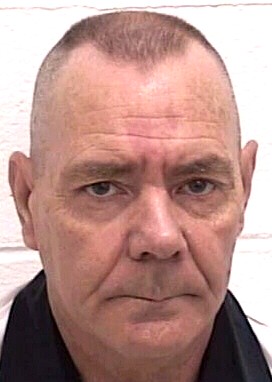
William Howard Putman
Murderer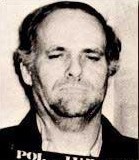 Ervil LeBaron
Murderer · USA · 1972
Ervil Morrell LeBaron (1925 to August 16, 1981) was the leader of a polygamous…
35 victims
Ervil LeBaron
Murderer · USA · 1972
Ervil Morrell LeBaron (1925 to August 16, 1981) was the leader of a polygamous…
35 victims
 Brian Kevin Rosenfeld
Murderer · USA · 1985
Brian Kevin Rosenfeld Brian Kevin Rosenfeld was sentenced to three concurrent l…
23 victims
Brian Kevin Rosenfeld
Murderer · USA · 1985
Brian Kevin Rosenfeld Brian Kevin Rosenfeld was sentenced to three concurrent l…
23 victims
 Marvin Gray
Murderer · USA · 1975
Marvin Gray was convicted killer who claimed responsibility for 23 slayings and…
23 victims
Marvin Gray
Murderer · USA · 1975
Marvin Gray was convicted killer who claimed responsibility for 23 slayings and…
23 victims
 Yahweh ben Yahweh
Murderer · USA · 1980
Yahweh ben Yahweh was born and legally named Hulon Mitchell Jr. (October 27, 19…
23 victims
Yahweh ben Yahweh
Murderer · USA · 1980
Yahweh ben Yahweh was born and legally named Hulon Mitchell Jr. (October 27, 19…
23 victims
 Kelley Gann
Murderer · USA · 2012
Kelley Lynn Gann was a 32-year-old Rosenberg woman. Kelley Gann caused the deat…
1 victim
Kelley Gann
Murderer · USA · 2012
Kelley Lynn Gann was a 32-year-old Rosenberg woman. Kelley Gann caused the deat…
1 victim
 Travis Baumgartner
Murderer · Canada · 2012
Sentenced to life in prison with no chance of parole for 40 years on September…
3 victims
Travis Baumgartner
Murderer · Canada · 2012
Sentenced to life in prison with no chance of parole for 40 years on September…
3 victims
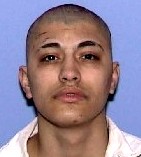 Licho Escamilla
Murderer · USA · 2001
11/25/2001 — Licho Escamilla was engaged in a fight in the parking lot of a nig…
1 victim
Licho Escamilla
Murderer · USA · 2001
11/25/2001 — Licho Escamilla was engaged in a fight in the parking lot of a nig…
1 victim
 Willie Leroy Jones
Murderer · USA · 1983
Willie LeRoy Jones was executed by electrocution in Virginia on September 11, 1…
2 victims
Willie Leroy Jones
Murderer · USA · 1983
Willie LeRoy Jones was executed by electrocution in Virginia on September 11, 1…
2 victims
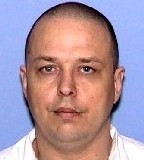 Robert Leslie Roberson
Murderer · USA · 2002
Robert Leslie Roberson III was a white male. His hair color was brown, his heig…
1 victim
Robert Leslie Roberson
Murderer · USA · 2002
Robert Leslie Roberson III was a white male. His hair color was brown, his heig…
1 victim
- Gender
- male
- Country
- USA
- Location
- Cook County, Georgia, USA
- Date of birth
- April 5, 1943
- Age at first offence
- 37
- Characteristics
- armed robbery, alcohol, murder-for-hire, robbery, rape
- Victim profile
- William Gerald Hodges, 49 / David N. Hardin, 22, and his wife, Katie Back, 28
- Method of murder
- Shooting ( .38-caliber revolver)
- Date(s) of murder
- July 10, 1980
- Years active
- 1980
- Date of arrest
- Same day
- Status
-
Executed
Executed by lethal injection in Georgia on November 13, 2002
Timeline
- July 9, 1980 — William Putman purchased a .38 caliber revolver at a Talladega, Alabama, pawn shop on May 9, 1980.
- July 9, 1980 — The body of William Gerald Hodges was found slumped over the wheel of his automobile in the parking lot of a truck stop in Valdosta.
- July 10, 1980 — The body of 49 year old school teacher William Gerald Hodges was found at a Valdosta truck stop fatally wounded by a shot to the mouth and to the shoulder.
- July 10, 1980 — David N. Hardin, 22, and Katie Back, 28, were asleep in a rest area off I-75 near Lenox; witnesses testified that a man approached without warning, shot Hardin in the back of the head, then demanded Katie Hardin leave with him.
- After July 10, 1980 and before 5:30 a.m. — Police arrived at the rest area just before 5:30 a.m., posted a lookout, and later spotted and followed a truck fitting the description to a rest area in Dooly County.
- After return to Cook County at approximately 7:30 a.m. — Putman’s clothing was removed and pocket contents were inventoried.
- October 4, 2002 — Putman filed an extraordinary motion for new trial in the Superior Court of Cook County, seeking a new trial as to sentence.
- October 7, 2002 — The United States Supreme Court declined to review issues decided by the federal courts.
- October 18, 2002 — The extraordinary motion was denied on October 18, 2002.
- October 24, 2002 — The Superior Court of Cook County filed an execution order setting the seven-day window for execution to open at noon, November 13, 2002, and end at noon on November 20, 2002.
- November 13, 2002 — The execution of William Howard Putman was carried out this evening at 7:20pm; Putman was pronounced dead at 7:24 p.m.
Background
William Howard Putman was executed by lethal injection in Georgia on November 13, 2002. Putman was sentenced to death for the July 1980 murders of David Hardin and Katie Christine Back at a rest area on Interstate 75 in Cook County. Putman also was serving a life sentence for the murder of William Gerald Hodges at a truck stop in Valdosta.
The offence
In July 1980, David Hardin and Katie Back were sleeping at a rest area off Interstate 75 near Lenox, with their children in the back seat and Hardin’s niece, Beverly Culver, in the back seat. Witnesses testified that a man approached without warning, shot Hardin in the back of the head, and then demanded that Katie Hardin leave with him. When Katie Hardin refused and screamed for her husband as he lay dying, she was shot in the head. Witnesses saw a dark-colored semi pulling an empty yellow flatbed and saw the driver approach the Hardin’s car; the vehicle description matched the one driven by Alabama truck driver William Putman. Ballistics tests confirmed that the three murders were committed with a .38-caliber revolver.
Investigation
A lookout was posted for a white male proceeding north on Interstate 75 driving a dark-blue or black truck pulling an empty, yellow flat-bed trailer. A truck fitting this description was spotted just south of Cordele and followed to a rest area in Dooly County. Officers smelled alcohol on Putman’s breath and initially took him to the Dooly County Sheriff’s Office for an intoximeter test indicating a blood alcohol level of .13 grams/percent. Officers recovered a .38 caliber revolver from under the driver’s seat of Putman’s truck; it had three live rounds and two spent cartridges in its chamber. A gun case and David Hardin’s wallet lay on the passenger’s seat. Putman had what appeared to be blood on his left pants leg; a serological examination established the reddish-brown substance had characteristics consistent with the blood of William Hodges and inconsistent with the blood of 98.3 percent of the general population.
After Putman’s arrival in Cook County, his clothing was removed and his pocket contents were inventoried. In his shirt pockets, officers found two .38 caliber cartridges and an insurance card bearing the name William G. Hodges. In his trousers pockets, officers found a gold Timex wristwatch and two gold rings, one having a red stone and the other a blue stone. The rings and watch were identified by friends as having belonged to William Hodges.
A fresh dent was discovered on the right rear corner of Hodges’ automobile; the dent was horizontal and two or three inches long. Yellow paint was present in the grooves of the dent, with loose flakes of yellow paint surrounding the dent. The yellow paint was the same color as the trailer of Putman’s truck. A .38 caliber bullet was recovered from the interior of Hodges’ automobile and another was recovered from inside his skull.
Putman testified that he was returning from Florida on the 9th and 10th of July. He admitted stopping at the truck stop in Valdosta at approximately 10:00 p.m. on the 9th and said he had two beers and three mixed drinks. He said he then went to sleep in his truck and, when he left a couple of hours later, he took with him a hitchhiker known only to him as “Jeff.” He said he stopped briefly at the first rest area north of Valdosta on Interstate 75 near Hahira to wash his hands, and subsequently let Jeff out at an exit near Adel. Putman denied having stopped at the Lenox rest area. He admitted owning the .38 revolver found in his truck but denied having shot anyone with it.
Arrest
Putman was arrested in Dooly County at another rest station after a lookout described his truck and trailer.
Trial
Putman was tried in Cook County in September 1982 for the July 1980 malice murders of David Hardin and his wife, Katie Christine Back. The jury found him guilty of both murders and sentenced him to death for each murder. The jury found the existence of two statutory aggravating circumstances under O.C.G.A. § 17-10-30(b)(2) to support each death sentence.
The Georgia Supreme Court affirmed the malice murder convictions and death sentences on direct appeal on October 18, 1983, and denied reconsideration on November 8, 1983. Putman v. State, 251 Ga. 605, 308 S.E.2d 145 (1983), cert. denied, 466 U.S. 954 (1984).
The United States Supreme Court declined to review issues from the direct appeal. The court ruled that two “mutually supporting” statutory aggravating circumstances—where each murder was committed during the murder of the other—could not be used to impose two death sentences. The court affirmed the death sentences on the basis that each murder was supported by an independent (b)(2) statutory aggravating circumstance, i.e., the armed robbery of David Hardin.
Sentencing
Before the Cook County trial, Putman was tried in Lowndes County for and found guilty of the murder of William Hodges and sentenced to life. In Lowndes County, his lawyers called nine witnesses at the penalty phase and presented mitigating evidence. Five family members, a co-worker, a lawyer, a prison deputy, and the defendant himself spoke out against a death sentence. Putman’s trial counsel in Cook County did not follow the earlier penalty phase strategy and called only four witnesses.
Appeals
Putman concluded a direct appeal from his Cook County criminal case, and two state and two federal habeas corpus appeals. He also filed an extraordinary motion for new trial in Cook County seeking to set aside his death sentences, and the extraordinary motion was denied on October 18, 2002.
A petition for writ of habeas corpus in the Superior Court of Butts County was filed on September 18, 1984, and a motion for stay of execution was filed the same day; the habeas court denied the petition and motion. Bypassing the Georgia Supreme Court, Putman filed a federal habeas corpus petition and a motion for stay of execution in the United States District Court, Middle District of Georgia on September 19, 1984; the court granted a stay and appointed new counsel. That federal case was dismissed several months later because the first state habeas case had not ended. On October 18, 1984, new lawyers filed a motion for new trial or alternatively to set aside the September 18th judgment and reopen the evidence, an amendment to the first petition, and a notice of appeal in the Butts County habeas corpus case. Those motions were denied. The Georgia Supreme Court granted Putman’s application for an appeal and remanded the case for an evidentiary hearing. After an evidentiary hearing in August 1985, the habeas court denied relief in April 1989. The Georgia Supreme Court denied Putman’s application for an appeal in July 1989. The United States Supreme Court declined to review issues decided by the state courts in Putman v. Zant, 493 U.S. 1012 (1989).
In June 1992, Putman filed his second state habeas corpus case in the Superior Court of Butts County alleging the prosecutor had failed to disclose six items of information. The day before a scheduled hearing on the warden’s motion to dismiss the petition as successive, Putman filed an amendment raising more claims. After an evidentiary hearing in August 1993, the court dismissed some grounds as “successive,” finding they could reasonably have been raised in the prior case. The court found a hearing warranted on the six grounds based on information Putman claimed had been withheld. After an evidentiary hearing on those six claims in October 1993, the court denied relief in July 1994, finding five of the six claims lacked merit and that the sixth claim was “successive” because it was based on information known to Putman when he litigated his prior habeas case. The Georgia Supreme Court denied Putman’s application for an appeal in January 1995 and denied reconsideration in April 1995. The United States Supreme Court declined to review any issues from the second state habeas case in Putman v. Thomas, 516 U.S. 1012, reh’g denied, 516 U.S. 1099 (1996).
In April 1997, Putman filed a second federal habeas corpus petition in the Middle District of Georgia seeking review of constitutional claims previously raised in state court cases. The district court denied relief in June 1999. In August 1999, the district court denied Putman’s motion to alter or amend judgment. Putman appealed to the United States Court of Appeals for the Eleventh Circuit. The circuit court issued its opinion and affirmed the district court’s denial of all relief in October 2001; Putman v. Head, 268 F.3d 1223 (11th Cir. 2001). Rehearing was denied in January 2002. On October 7, 2002, the United States Supreme Court declined to review issues decided by the federal courts in Putman v. Head, No. 01-10914.
Outcome
The trial court denied Putman’s extraordinary motion for new sentencing trial on October 18, 2002. The court-ordered execution was carried out on November 13, 2002.
Aftermath
William Putman’s execution took place at 7:20pm on November 13, 2002; he was pronounced dead at 7:24 p.m. Putman declined to make a final statement. When asked, Putman said, “No, thank you.” When asked if he wanted a prayer, he said, “No, No.” Putman declined to close his eyes as the chemicals used for execution went through his system and muttered something unintelligible. Putman appeared to have trouble breathing before the chemicals shut down his lungs.
The Pardons and Paroles Board considered and then denied clemency for Putman on Tuesday; the spokeswoman Heather Hedrick said, he didn’t seek clemency. Department of Corrections spokeswoman Peggy Chapman described Putman as having been “resigned to his fate,” calm and ready to die. No members of Putman’s family attended the execution.
Shannon Blincoe, daughter of the slain couple, witnessed the execution; she was in the front seat of the car when David and Katie were shot, and she was eight months old at the time of the murders. Bob Ellis, a district attorney who worked on the case, said the daughter told him “My mamma and daddy can finally rest in peace.” Ellis said he stayed in touch with the daughter since the trial.
Putman’s final meal was “three eggs over light, toast, bacon, hash browns, vanilla ice cream and two soft drinks.” Putman had instructed his attorney on Tuesday to drop his final appeals.
Putman’s counsel included Thomas H. Dunn of the Georgia Resource Center, Atlanta, Georgia. In his two state habeas corpus cases, Putman was represented by Don Samuel of Atlanta.
Spotted an error, or have more information about this case?