
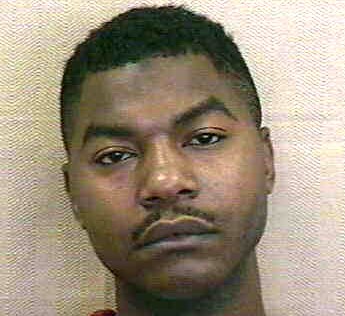
William Robert Jones
Murderer Brian Kevin Rosenfeld
Murderer · USA · 1985
Brian Kevin Rosenfeld Brian Kevin Rosenfeld was sentenced to three concurrent l…
23 victims
Brian Kevin Rosenfeld
Murderer · USA · 1985
Brian Kevin Rosenfeld Brian Kevin Rosenfeld was sentenced to three concurrent l…
23 victims
 Yahweh ben Yahweh
Murderer · USA · 1980
Yahweh ben Yahweh was born and legally named Hulon Mitchell Jr. (October 27, 19…
23 victims
Yahweh ben Yahweh
Murderer · USA · 1980
Yahweh ben Yahweh was born and legally named Hulon Mitchell Jr. (October 27, 19…
23 victims
 Russell Ellwood
Murderer · USA · 1991
Russell Ellwood was a former taxi driver. Authorities suspected him of killing…
20 victims
Russell Ellwood
Murderer · USA · 1991
Russell Ellwood was a former taxi driver. Authorities suspected him of killing…
20 victims
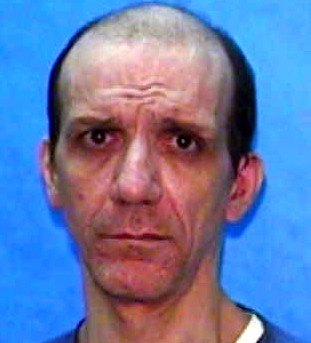 Francisco del Junco
Serial killer · USA · 1995
Francisco del Junco came to Miami in the 1980 Mariel boat lift. He was describe…
4 victims
Francisco del Junco
Serial killer · USA · 1995
Francisco del Junco came to Miami in the 1980 Mariel boat lift. He was describe…
4 victims
 Judith Neelley
Murderer · USA · 1982
Judith Neelley was also known as Judith Ann Adams Neelley. Judith Ann Adams Nee…
2 victims
Judith Neelley
Murderer · USA · 1982
Judith Neelley was also known as Judith Ann Adams Neelley. Judith Ann Adams Nee…
2 victims
 Stephen Leslie Bradley
Murderer · Australia · 1960
Stephen Leslie Bradley was convicted of the murder of eight-year-old Graeme Tho…
1 victim
Stephen Leslie Bradley
Murderer · Australia · 1960
Stephen Leslie Bradley was convicted of the murder of eight-year-old Graeme Tho…
1 victim
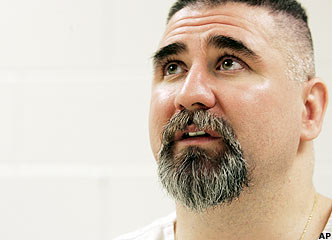 James Filiaggi
Murderer · USA · 1994
James J. Filiaggi (also referred to as James J. Filiaggi) was a death-row priso…
1 victim
James Filiaggi
Murderer · USA · 1994
James J. Filiaggi (also referred to as James J. Filiaggi) was a death-row priso…
1 victim
 John Francis Wille
Serial killer · USA · 1980
Nichole Lapatta, an 8-year-old girl from Laplace, Louisiana, was reported missi…
6 victims
John Francis Wille
Serial killer · USA · 1980
Nichole Lapatta, an 8-year-old girl from Laplace, Louisiana, was reported missi…
6 victims
- Gender
- male
- Country
- USA
- Location
- Kansas City, Missouri, USA
- Date of birth
- December 9, 1964
- Age at first offence
- 22
- Characteristics
- homosexual, drugs, alcohol, abuse
- Victim profile
- Stanley Albert, 49
- Method of murder
- Shooting
- Date(s) of murder
- January 16, 1986
- Years active
- 1986
- Date of arrest
- 3 days after
- Status
-
Executed
Executed by lethal injection in Missouri on November 20, 2002
Case record
William Robert Jones was executed by lethal injection in Missouri on November 20, 2002.
Jones was sometimes employed as a male stripper. He was bisexual and had a homosexual relationship with Stanley Albert. Jones and Albert became acquainted in late 1985. Jones was 21 and Albert was 49.
Jones was convicted by a jury of first degree, capital murder for the killing of Stanley Albert. The jury assessed the penalty of death.
Timeline
- late 1985 — Jones became acquainted with Stanley Albert and began a relationship that included homosexual involvement.
- July 1985 — Two male assailants brutally beat Jones at the Liberty Memorial in Kansas City; Jones sustained numerous injuries, including significant trauma to his head and a skull fracture.
- after July 1985 — Jones was admitted over a week to St. Mary’s hospital in Kansas City; tests disclosed cerebrum contusion of the left temporal and parietal lobes, and hematoma with associated edema in the right temporal lobe.
- late 1985 — Jones met Stanley Albert while jogging at the Liberty Memorial Mall.
- January 16, 1986 — Albert picked Jones up at his apartment; they went to George Owens Park to have a picnic and discuss the sale of Albert’s 1985 white Camaro Z28.
- January 16, 1986 — At the park, Albert propositioned Jones while Jones and Albert climbed a ranger tower; Jones said Albert grabbed him by the shoulder and Jones felt down the stairs; Jones struggled with Albert, who was attempting to pull down his pants; Jones managed to crawl to the car where his gun lay and shot Albert five times.
- January 16, 1986 — After the shooting, Jones wrapped Albert’s body in a blanket borrowed from his roommate for the picnic, drug it into the woods, and attempted to cover it up with leaves and dirt; Jones took the car and disposed of the gun at a trash can at a nearby Seven-Eleven store.
- January 19, 1986 — The Missouri Highway Patrol chased Jones for speeding in Lafayette County; after apprehending Jones, the police arrested him for the theft of the vehicle.
- March 2, 1986 — Albert’s body was discovered.
- April 16, 1986 — Prosecutors filed an information charging Jones with the capital murder of Albert.
- November 3, 1986 — The trial commenced.
- November 1986 — A jury in Jackson County, Missouri convicted Billy Jones of capital murder in the death of Stanley Albert.
- February 9, 1987 — Three months later, the trial court sentenced Billy to death by lethal injection.
- February 13, 1987 — Date of sentencing.
- 1988 — The Missouri Supreme Court denied Billy Jones’s claims.
- October 1990 — Jones initiated federal habeas proceedings by filing a Petition for Writ of Habeas Corpus.
- May 1998 — The United States District Court entered an Order denying Jones’s claims for relief.
- July 31, 2001 — The United States Court of Appeals for the Eighth Circuit denied relief, issuing its opinion.
- before March 14, 2002 — Jones anticipated filing a Petition for Writ of Certiorari with the United States Supreme Court if the Supreme Court had not already denied review.
- November 20, 2002 — Jones died at 12:04 a.m. CST at the Potosi Correctional Center after the injection of a series of lethal drugs.
- November 11, 2002 — A report on the execution of Robert William Jones in Potosi was dated “november 11, 2002”.
Background
Jones grew up in a “violent, chaotic, and dysfunctional family.” His parents fought frequently, both verbally and physically, and engaged in sexual conduct in front of Jones and his sister. His parents abused alcohol and marijuana and introduced both substances to their children.
Jones’s father was hot tempered and physically abusive and often threw objects during emotional rages. On one occasion, he threw Jones’s sister by her hair. Jones’s father frequently beat Jones with a belt and, on one occasion, broke a guitar over Jones’s head. Jones’s father believed children should be raised by “making them fear you.” Jones’s parents divorced just as he was entering adolescence, and Jones shuttled from one parent’s household to the other. Jones’s sister took up “exotic dancing” at the age of 15 and introduced Jones to people and circumstances he was not prepared to handle. Through exotic dancing, Jones was exposed to both heterosexual and homosexual relationships, which contributed to sexual confusion and conflict.
Jones suffered numerous head injuries during childhood that resulted in concussions and short term physical impairment.
In July 1985, Jones was brutally beaten by two male assailants at the Liberty Memorial in Kansas City. Jones sustained numerous injuries, including significant trauma to his head and a skull fracture. Hospital tests disclosed a cerebrum contusion of the left temporal and parietal lobes, and hematoma with associated edema in the right temporal lobe. After release from the hospital, family members observed changes in Jones’s mannerisms and conduct; he became volatile, moody, impulsive, and unable to control his temper. Jones frequently worked out on his punching bag until his knuckles bled, and on one occasion, in an irrational frenzy, hit himself in the head with a glass, producing cuts that required emergency room treatment.
Jones married Gerti Jones in January 2001. Jones’s supporters included international figures; calls to spare him came from as far away as Europe, where death penalty opponents urged his death sentence be set aside. Austrian and European political entities and officials also sought clemency.
The offence
Jones was convicted of capital murder in the death of Stanley Albert.
Jones said he took his gun for personal protection after the beating he received in July 1985. On January 16, 1986, Albert picked up Jones at his apartment so they could “mix business with pleasure.” They went to George Owens Park for a picnic and to discuss the sale of Albert’s 1985 white Camaro Z28.
At the park, Jones and Albert began to climb a ranger tower. Jones said that while climbing the stairs, Albert propositioned him. Jones began to walk down the stairs of the tower. Jones said Albert grabbed him by the shoulder and he felt down the stairs of the tower. Jones said that although dazed, he struggled with Albert, who was attempting to pull down his pants. Jones said he managed to crawl to the car, where his gun lay, and in a panic he shot Albert five times.
Jones wrapped Albert’s body in a blanket borrowed from his roommate for the picnic, drug Albert into the woods, and attempted to cover the body with leaves and dirt. Jones took Albert’s car and disposed of the gun at a trash can located at a nearby Seven-Eleven store.
Investigators said Jones shot Albert five times and then hid the body in a Kansas City-area nature park before driving the Camaro home and showing it off to friends. They said they found the body weeks later and cited bullets and vehicle license plates found in Jones’s home and Jones’s purchase of a shovel to bury the body.
Investigation and arrest
On January 19, 1986, the Missouri Highway Patrol chased Jones for speeding in Lafayette County. After apprehending Jones, the police arrested him for theft of the vehicle.
Jones’s family retained John Frankum and Kenneth Morgens to represent him.
Albert’s body was not discovered until March 2, 1986.
On April 16, 1986, prosecutors filed an information charging Jones with the capital murder of Albert.
Trial
The trial commenced on November 3, 1986. Jones did not testify during the guilt phase of the trial.
Jones was convicted by a jury of first degree, capital murder. During the penalty phase, the state adducted the testimony of three individuals, and Jones’s counsel failed to present any evidence for mitigation.
Jones testified at the penalty phase and denied involvement in Albert’s murder “as per advise of my lawyers.” The jury assessed the penalty of death.
Trial counsel were John Frankum and Kenneth Morgens.
Significant legal issues included:
- trial counsel’s failure to investigate Jones’s hospital records and have them evaluated by experts in light of a letter that described conduct akin to a dissociative experience and panic due to a homosexual assault
- trial counsel’s failure during the penalty phase to obtain and present a mental examination and evidence showing that Jones was abused as a child and later suffered a brain injury
Sentencing
The trial court sentenced Jones to death by lethal injection on February 9, 1987. The date of sentencing was also listed as February 13, 1987.
Appeals and post-conviction proceedings
In 1988, the Missouri Supreme Court denied Jones’s claims. Following that, the United States Supreme Court denied Jones’s Petition for Writ of Certiorari.
Jones later sought post-conviction relief in the Missouri state courts and later sought habeas corpus relief in the federal courts. All of Jones’s state post-conviction claims were denied, and the Missouri Supreme Court affirmed that denial.
In October 1990, Jones initiated his federal habeas proceedings by filing a Petition for Writ of Habeas Corpus. The District Court appointed counsel for Jones. An Amended Petition for Writ of Habeas Corpus and accompanying Memorandum were later filed. The District Court originally granted a hearing, then reversed that order and denied Jones’s request for an evidentiary hearing, relying only on the hearing record from the State post-conviction proceedings. In May 1998, the United States District Court entered an Order denying Jones’s claims for relief.
Subsequent challenges in the District Court were unsuccessful. Jones appealed the denial of his claims to the United States Court of Appeals for the Eighth Circuit. The Eighth Circuit denied relief and issued its opinion on July 31, 2001. A subsequent Petition for Rehearing by the panel or for rehearing by the entire court en banc was denied.
Outcome
Jones was executed by lethal injection in Missouri on November 20, 2002. Jones died at 12:04 a.m.
Prison officials said Jones’s last words included an apology to the family of his victim, but also a rebuke to his executioners:
“I regret what has happened. I do not deserve death for it. To the family of the victim: does this really give you a sense of closure or simply a sense of vengeance?”
Supporters and defenders had sought clemency. Letters written by Jones’s supporters were intended to support a Petition for Clemency to remove the sentence of death.
Other details
Jones’s home life was described as including parental abuse and exposure to drugs and sex education. Jones’s father had abusive episodes including throwing objects and beating Jones with a belt. Jones said he had admitted killing Albert in a letter to his attorney and described a disassociate experience. Jones wrote about upbringing and trauma in a personal statement and online prose from the Potosi Correctional Center.
Jones’s supporters included “Austrian government, the European Parliament, and the 44-member Council of Europe,” with the Council of Europe saying the execution would violate U.N. human rights resolutions. Prison opponents protested the execution outside the prison; prison officials said 32 capital punishment opponents protested the execution outside the prison.
Jones’s defense included claims that his mental state and brain damage affected his conduct. A neuropsychologist, Dr. William O’Connor, concluded Jones suffered from “egodystonic homosexuality,” a condition involving substantial conflict and confusion regarding sexual identity. O’Connor also concluded Jones suffered from borderline disorder. O’Connor concluded that, after reviewing medical records from Jones’s hospital stay following the Liberty Memorial beating, Jones suffered from residual brain damage. O’Connor testified that the brain damage could cause certain types of memory loss, gaps in thinking, and the inability to concentrate when in a panicked state. O’Connor testified that, because of sexual confusion, Jones entered into a disassociative or panicked state when Albert propositioned him. O’Connor further opined that Jones was incapable of appreciating the nature, quality, and wrongfulness of his conduct and could not conform his conduct to the requirements of the law.
At the State Post-Conviction Hearing, the State Post-Conviction Court denied Jones’s claims, stating it rejected Dr. O’Connor’s diagnosis of egodystonic homosexuality and depersonalization disorder with borderline personality disorder. The United States District Court similarly rejected Jones’s claims of mental disease and complaints about his attorneys’ failure to investigate and failure to present evidence in mitigation.
A statement by Cheryl A. Pilate included a discussion that letters should emphasize Jones’s youth at the time of the crime, his violent home life, head injuries, poor representation by his trial lawyer, and his prison rehabilitation including development of his artistic talent. Pilate also stated that letters would be presented to the governor at the appropriate time and that questions about the content could be directed to Pilate or Charles Rogers, her co-counsel on the case.
A report written by Christoph Feurstein described the execution process and included statements and quotations about the condemned person’s final hours and family presence, including the condemned person’s wife calling the executioners “murderers.” The report also included a narrative discussion of priests present during the execution, “blind were raised,” and a description of the condemned person being strapped to a stretcher covered by a white sheet, including claims that Jones had not been allowed to shower or shave for the last two days.
Spotted an error, or have more information about this case?