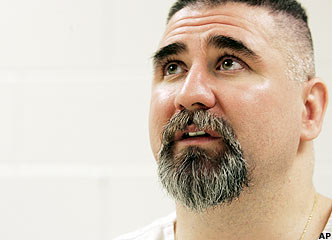
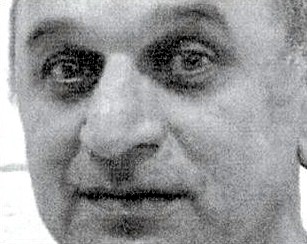
James Filiaggi
Murderer Brian Kevin Rosenfeld
Murderer · USA · 1985
Brian Kevin Rosenfeld Brian Kevin Rosenfeld was sentenced to three concurrent l…
23 victims
Brian Kevin Rosenfeld
Murderer · USA · 1985
Brian Kevin Rosenfeld Brian Kevin Rosenfeld was sentenced to three concurrent l…
23 victims
 Russell Ellwood
Murderer · USA · 1991
Russell Ellwood was a former taxi driver. Authorities suspected him of killing…
20 victims
Russell Ellwood
Murderer · USA · 1991
Russell Ellwood was a former taxi driver. Authorities suspected him of killing…
20 victims
 Robert Martines Perez
Murderer · USA · 1994
Name: Robert Martines Perez · Other name used in proceedings: Robert Martinez P…
15 victims
Robert Martines Perez
Murderer · USA · 1994
Name: Robert Martines Perez · Other name used in proceedings: Robert Martinez P…
15 victims
 Billy Frank Vickers
Murderer · USA · 1993
Billy Frank Vickers Vickers was executed by lethal injection in Texas on Januar…
14 victims
Billy Frank Vickers
Murderer · USA · 1993
Billy Frank Vickers Vickers was executed by lethal injection in Texas on Januar…
14 victims
 Lyle & Erik Menendez
Murderers · USA · 1989
Joseph Lyle Menendez (born January 10, 1968) and Erik Galen Menendez (born Nove…
2 victims
Lyle & Erik Menendez
Murderers · USA · 1989
Joseph Lyle Menendez (born January 10, 1968) and Erik Galen Menendez (born Nove…
2 victims
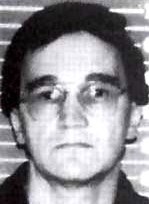 James DeBardeleben
Murderer? · USA · 1965
James DeBardeleben (James Mitchell “Mike” DeBardeleben), born March 20, 1940, w…
8 victims
James DeBardeleben
Murderer? · USA · 1965
James DeBardeleben (James Mitchell “Mike” DeBardeleben), born March 20, 1940, w…
8 victims
 Francis Heaulme
Serial killer · France · 1984
Francis Heaulme was sentenced to several life sentences in different trials, 19…
9 victims
Francis Heaulme
Serial killer · France · 1984
Francis Heaulme was sentenced to several life sentences in different trials, 19…
9 victims
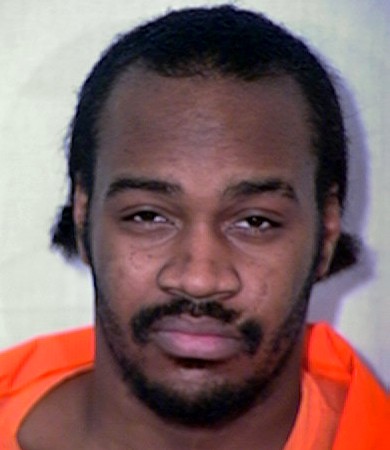 Ruben Johnson
Murderer · USA · 2000
Ruben Johnson was sentenced to death on December 23, 2003 in Maricopa County CR…
1 victim
Ruben Johnson
Murderer · USA · 2000
Ruben Johnson was sentenced to death on December 23, 2003 in Maricopa County CR…
1 victim
 Byron Smith
Murderer · USA · 2012
Byron Smith, 65, was involved in the killings of two teenage intruders in his h…
2 victims
Byron Smith
Murderer · USA · 2012
Byron Smith, 65, was involved in the killings of two teenage intruders in his h…
2 victims
- Gender
- male
- Country
- USA
- Location
- Lorain County, Ohio, USA
- Date of birth
- May 15, 1965
- Age at first offence
- 29
- Characteristics
- parricide
- Victim profile
- Lisa Huff (his ex-wife)
- Method of murder
- Shooting ( 9mm Luger pistol)
- Date(s) of murder
- January 24, 1994
- Years active
- 1994
- Date of arrest
- —
- Status
-
Executed
Executed by lethal injection in Ohio on April 24, 2007
Case details
James J. Filiaggi (also referred to as James J. Filiaggi) was a death-row prisoner with inmate number A311-180. He was Caucasian and was born 05/15/65. He was sentenced to death out of Lorain County for the aggravated murder of Lisa Huff Filiaggi.
He was convicted of aggravated murder and sentenced to death, and he also faced other charges connected to two separate incidents involving him and his ex-wife, Lisa Huff Filiaggi.
Background
James Filiaggi and Lisa Huff married in December 1991. Lisa filed for divorce nine months later. The divorce was granted in February 1993. During the marriage, there were two children born.
Lisa received custody of their children, while Filiaggi had visitation rights and was required to pay child support.
In the spring of 1993, Lisa and the two children moved into the home of Eric Beiswenger. In the fall of 1993, Lisa and Eric became engaged and shortly thereafter became repeated victims of telephone harassment and vandalism. Eric and Lisa suspected that Filiaggi was responsible and set up video cameras hoping to capture him on tape. Lisa carried a tape recorder with her.
Lisa wondered aloud to her family about when authorities would take her complaints seriously, asking her sister: “One of us dead?”
On December 19, 1993, Lisa and Eric went to the home of Filiaggi’s parents to pick up the children after a visit. Lisa carried a tape recorder in her pocket, which recorded an incident.
The offence
Felonious assault and domestic violence incident (December 19, 1993)
While Filiaggi put one child in a car seat in the back seat of the vehicle, he and Lisa were arguing. After putting the child in the seat, Filiaggi grabbed Lisa around the neck and she began screaming. Eric, who was outside the vehicle, grabbed Filiaggi by the waist and pulled him off Lisa. Filiaggi turned around and struck Eric in the face numerous times, and Eric suffered multiple broken bones in his face.
The assault ended when Filiaggi’s mother came out, grabbed him, and yelled at him to stop.
The recording was admitted into evidence. Eric and Lisa pressed charges, and Filiaggi was arrested and indicted for felonious assault and domestic violence. He was released on bond awaiting trial.
The picture window to Eric’s house was also broken on numerous occasions.
Window-vandalism and intimidation charges (January 20, 1994 and subsequent filings)
On January 20, 1994, the video camera recorded an incident showing Filiaggi as the person throwing a bottle at the window. Charges were filed for attempted vandalism, criminal trespassing, and intimidation of a witness.
Acquisition of firearm and cash advance (January 22 and January 24, 1994)
Two days later, Filiaggi purchased a 9mm Luger pistol, which had two clips for ammunition. He also purchased ammunition for the weapon despite already possessing another gun.
According to the defense theory, Filiaggi intended to go to Lisa’s house and kill himself in front of her.
On January 24, 1994, Filiaggi took a $1,000 cash advance on his Visa card. He left $600 to $700 with his girlfriend, Tracey Jones.
Shooting of Lisa Huff Filiaggi (night of January 24, 1994)
At approximately 10:45 p.m., the Lorain Police Department dispatcher received a call from Lisa, and the call was tape-recorded. Lisa told the dispatcher that Filiaggi was at her back door and breaking into her house.
Filiaggi broke down the door and entered the house. Still carrying the telephone, Lisa fled out the front door.
A neighbor named Robert Mutnansky, who lived two doors away, saw Lisa standing in the yard of the intervening neighbor and frantically looking around. Another neighbor was awakened by someone screaming: “God help me, someone, please, help me, he’s going to kill me.”
Lisa saw Mutnansky looking out the window and ran toward his front door. He let her in, and Lisa told him that her ex-husband was after her with a gun. She looked petrified and ran past him while Mutnansky locked the door behind her. Moments later, Mutnansky heard a couple of bangs on the door and the door came crashing in.
Filiaggi had a gun in his hand and asked Mutnansky where she went. Mutnansky said he did not know, and Filiaggi told Mutnansky to help find her. They started down the hallway.
When they came to a linen closet, with the door partially open, Filiaggi opened the door and found Lisa. Filiaggi pulled Lisa from the closet by the arm and swung her into the bathroom, which was across the hall from the closet. There was a struggle.
Mutnansky heard Filiaggi tell Lisa: “This will teach you to fuck with me,” and then heard two shots fired. Although shot in the shoulder, Lisa was able to get away and ran across the hallway into one of the bedrooms.
Mutnansky was pleading with Filiaggi not to shoot her. Filiaggi told Mutnansky to close the bedroom door and stay out. Mutnansky again heard Filiaggi tell Lisa: “This will teach you not to fuck with me” and heard two more shots.
Mutnansky then heard footsteps down the hallway. When Mutnansky came out, he saw Lisa slumped against the wall. She had been shot in the head. Mutnansky attempted to call 911 but noticed a policeman coming through his front door.
At about 11:15 p.m., in Amherst Township, Lisa’s stepfather Delbert Yepko was watching the news. He heard pounding at the front door. With a motion detector light on the side of the trailer that was not on and the area outside the door dark, he picked up a can of red pepper spray and went to the door. He opened the door about three inches and saw Filiaggi.
Filiaggi bashed the door in. He came in and said: “Are you ready to die?” Yepko saw a gun in Filiaggi’s right hand. Filiaggi brought the gun up to shoot Yepko and said: “I’m going to kill you.” Yepko sprayed Filiaggi in the face with the pepper spray, and Filiaggi shot at him twice but did not hit him.
Yepko managed to get out of the trailer without a coat or shoes, ran to four separate trailers, knocked on doors, and finally gained admittance to the fourth one where he was able to call 911. He tried to call Lisa but was shaking too badly.
Flight and events on January 25 and January 27, 1994
On the morning of January 25, 1994, between 8:00 a.m. and 9:00 a.m., Filiaggi arrived at the home of a college friend, Howard R. Matlack. Filiaggi asked if he could “crash,” and he lay down on the couch.
Matlack’s girlfriend took him to work later that morning. Her girlfriend later called Matlack and told him that Filiaggi had killed Lisa. Matlack confronted Filiaggi, and a gun fell to the floor. Filiaggi got up and then left.
On January 27, 1994, Filiaggi took another $1,000 cash advance. He fled the state but returned to Lorain when he discovered his parents may lose their house, which had been put up for his bond on the previous charges.
Filiaggi had rented a car at the Pittsburgh Airport that was later recovered in an area near Filiaggi’s parents’ home. The car contained the rental agreement and several rounds of 9 mm ammunition.
The murder weapon was never found.
Investigation and related proceedings
Police said there was a prior record of domestic violence and harassment complaints, including reports of threats and vandalism, but there had been “never enough evidence to prosecute.”
Lisa had bought a gun and went to a shooting range to practice.
In addition to the window-vandalism, the account included earlier reports that included tear gas being sprayed on Lisa’s car, and that used motor oil and rocks had been thrown at the front window. A protective order had been issued ordering Filiaggi not to have any contact with Lisa; Lorain police were not aware of it or of the pending charges at the time.
A prior protective order was described as having only limited effect.
The prosecuting decisions included charging Filiaggi with intimidation as a felony rather than stalking, described as a misdemeanor the first time.
Arrest and charges
The incident on December 19, 1993 led to charges of felonious assault and domestic violence, and Filiaggi was arrested and indicted.
Charges after the January 20, 1994 window incident included attempted vandalism, criminal trespassing, and intimidation of a witness.
Separate from those charges, the events of January 24, 1994 resulted in charges including aggravated murder, attempted aggravated murder, aggravated burglary, and kidnapping.
Filiaggi was found guilty of aggravated murder and the three capital specifications. The case proceeded to the penalty phase, and the panel sentenced him to death.
Capital specifications found
The aggravated murder was committed for the purpose of escaping detection, apprehension, trial, or punishment for another offense committed by Filiaggi.
The aggravated murder was part of a course of conduct involving the purposeful killing of or attempt to kill two or more persons by Filiaggi.
The victim, Lisa Huff Filiaggi, was a witness to prior offenses by Filiaggi and was purposely killed to prevent her testimony in a criminal proceeding concerning those prior offenses.
Trial
Filiaggi entered a plea of not guilty by reason of insanity and waived his right to be tried by a jury.
A three-judge panel heard the evidence. The verdict on aggravated murder and the accompanying specifications was entered by the panel, while the presiding judge alone determined verdicts on the remaining charges.
Competency and jury waiver issues during trial
Trial proceedings were set to begin on July 11, 1995.
During transport, officers shackled Filiaggi and placed a stun belt on him for security purposes. En route, Filiaggi was accidentally shocked by the stun belt. Court recessed until that afternoon.
On July 12, 1995, defense counsel told the trial court that, in the opinion of all three defense counsel, Filiaggi was not competent to stand trial, including understanding the nature of the charges or assisting in his defense. The court requested an evaluation, and the court recessed for the day.
On July 13, 1995, the court held a competency hearing. Dr. Thomas Haglund testified that he interviewed Filiaggi for about forty-five minutes and that Filiaggi believed he was still receiving shocks from the stun belt. Dr. Haglund indicated that Filiaggi was tense and agitated. At one point during the interview, Filiaggi began to lose control, breathed more rapidly, and his legs and feet began to shake.
Dr. Haglund testified on cross-examination that he did not think Filiaggi was malingering and that he was concerned about his mental condition and did not think he was able to continue with trial. Dr. Haglund also testified that Filiaggi was mentally alert, oriented, and able to answer questions, and he believed Filiaggi was able to assist in his defense and understand proceedings.
Defense counsel declined to call witnesses, and counsel did not contradict Dr. Haglund’s findings or report. The court determined that Filiaggi was competent and denied defense counsel’s requests for a mistrial.
Filiaggi continued to face motions concerning competence and mistrial requests during trial.
After conviction and sentence, defense counsel filed a motion for new trial on the grounds that Filiaggi was not competent. The trial court denied the motion.
Insanity defense and expert testimony
Filiaggi’s insanity plea was an affirmative defense to be proven by a preponderance of the evidence.
Four defense experts testified: Dr. Marc Robert Pagano, Dr. J. Alexander Bodkin, Dr. Paul Jay Markovitz, and Dr. Emil F. Coccaro. A forensic psychiatrist, Dr. Phillip Resnick, testified for the state in rebuttal.
Dr. Pagano diagnosed intermittent explosive disorder and bipolar disorder at the time of the offenses, relying on accounts by Filiaggi, his family, and defense counsel, and stating he was not giving an opinion on the question of legal insanity.
Dr. Bodkin also diagnosed bipolar disorder and intermittent explosive disorder and opined that because of these disorders Filiaggi did not know the wrongfulness of his conduct at the time of the murder and attempted murder. Dr. Bodkin received information from Filiaggi, his family, and the defense team.
Dr. Markovitz diagnosed bipolar disorder, intermittent explosive disorder, and attention deficit disorder. Dr. Markovitz testified that if he had been treating Filiaggi in the two weeks preceding the murder, he would have hospitalized him as suicidal, and he further opined that on the day of the incident with Beiswenger and on the day of the murder Filiaggi did not know right from wrong, based on facts of the case, interview with Filiaggi, lifelong behavior patterns, biochemical studies, and an overview of his life.
Dr. Coccaro did not examine Filiaggi but examined medical and chemical test results. Dr. Coccaro testified concerning bipolar disorder and intermittent explosive disorder and conceded it was possible for a person with impulsive aggressive history to plan a premeditated, intentional crime the person knows is wrong.
Dr. Resnick explained forensic evaluation versus clinical assessment and testified that he spent five and a half hours with Filiaggi and another two and three-quarter hours with him another day. He interviewed Filiaggi’s mother, father, and girlfriend, and reviewed police reports, witnesses’ reports, police records regarding earlier charges, and deputies’ accounts of assaults.
Dr. Resnick diagnosed antisocial personality disorder, alcohol abuse, and attention deficit/hyperactivity disorder of childhood. Dr. Resnick testified that Filiaggi did not suffer from mental diseases on the day of the killing that met the Ohio legal test for insanity and that Filiaggi knew the wrongfulness of his conduct. Dr. Resnick opined that the crimes were committed out of vengeance.
Dr. Resnick stated that while Filiaggi was contemplating suicide, he decided to kill Ms. Filiaggi. The court found that Filiaggi failed to prove insanity by a preponderance of the evidence and specifically found that Filiaggi knew the wrongfulness of his acts.
Sentencing
After conviction on aggravated murder, the panel sentenced Filiaggi to death.
A three-judge panel sentenced Filiaggi on August 1, 1995, to die in the electric chair.
The execution date was described as Jan. 24, 1996, in connection with the two-year mark from January 24, 1994.
Appeals
Direct appeal and remand of non-capital verdicts
Filiaggi appealed. The Supreme Court addressed multiple propositions of law.
The Supreme Court affirmed the aggravated murder conviction and death sentence after independently reviewing the record, weighing aggravating circumstances against mitigating factors, and examining proportionality.
The Supreme Court sustained Filiaggi’s fourth proposition of law and reversed and remanded the verdicts on the non-capital offenses including attempted aggravated murder, aggravated burglary, and kidnapping. The Supreme Court directed that the three-judge panel reconstitute itself and deliberate anew on those charges from the point at which the error occurred.
The Supreme Court overruled other propositions of law, including those concerning competency to stand trial, jury waiver, failure to admit psychological reports, and the insanity defense.
Habeas corpus appeal
Filiaggi filed a petition for writ of habeas corpus. The district court denied the petition, and the appellate court affirmed denial.
The appellate court held that:
- waiver of jury trial was not rendered unknowing, involuntary, or unintelligent by fact that Filiaggi was accidentally shocked with a stun belt and was on medication as a result; and
- Filiaggi failed to establish he was incompetent to stand trial.
Outcome
Filiaggi was executed by lethal injection in Ohio on April 24, 2007.
He was pronounced dead at 11:23 a.m.
Aftermath
Last words
Filiaggi’s final words were: “I know I flipped some worlds upside down. For me, it's fine, but the state needs to learn this ain't the answer. This is no deterrent to crime. Some are falsely convicted, railroaded. The state needs to wake up. Maybe they will follow the Europeans. God is the only one who knows.”
Execution-day events and prison logs
An Ohio Department of Rehabilitation and Correction log documented events during Filiaggi’s last hours.
Monday:
- 9:31 a.m.: “2 team members and I/M Filiaggi arrive at Death house.”
- 11:20 a.m.: “Revision to special meal request: If pierogies are approved, Inmate Filiaggi would like chopped onions on top of them.”
- 12:22 p.m.: “Warden telling him how visits will go.”
- 4:37 p.m.: “I/M given clean pants and a smock for his visitation period.”
- 7:50 p.m.: “Visits are very emotional.”
- 8:24 p.m.: “Visits have concluded for the day and will resume in the morning.”
- 10:59 p.m.: “I/M setting in chair talking on phone.”
Tuesday:
- 6:21 a.m.: “Visits to begin.”
- 6:58 a.m.: “Visit very quiet, very emotional.”
- 7:11 a.m.: “All 3 laughing loudly.”
- 8:04 a.m.: “Mom tells him she loves him.”
- 8:51 a.m.: “I/M and visitors praying.”
- 10:07 a.m.: “I/M continues to sit and write letters.”
- 10:23 a.m.: “Team Leader explains to I/M that U.S. Supreme Court denied his stay.”
- 11:01 a.m.: “Warden is approaching cell front to read the death warrant.”
- 11:10 a.m.: “Team is escorting I/M to death chamber.”
- 11:23 a.m.: “Warden announces time of death.”
- 11:28 a.m.: “Rev. Sims has entered chamber to annoint body & pray.”
- 11:40 a.m.: “Funeral director has possession of the body.”
The execution was delayed by about ninety minutes while officials awaited a Supreme Court ruling.
A special meal request was documented, including steak, potato and cheese pirogies (stuffed dumplings), a baked potato, dinner rolls, fresh vegetables, strawberry cheesecake and milk. The log also recorded revisions and additional requests, including chopped onions on top of the pirogies, extra sour cream, a toothpick request being denied, and a later change from a soda request to iced water and then coffee.
Filiaggi was anointed in a short religious ceremony by the prison system’s chaplain, Rev. Gary Sims, and Rev. Sims read a Bible verse and recited the Lord’s prayer. Rev. Sims had entered the chamber to annoint the body and pray.
Timeline
- December 1991 — James Filiaggi and Lisa Huff married.
- February 1993 — Lisa’s divorce was granted.
- Spring 1993 — Lisa and the children moved into the home of Eric Beiswenger.
- Fall 1993 — Lisa and Eric became engaged and became victims of telephone harassment and vandalism; Lisa carried a tape recorder and cameras were set up.
- December 19, 1993 — Filiaggi assaulted Eric Beiswenger and grabbed Lisa around the neck; the incident was recorded; Filiaggi was arrested and indicted for felonious assault and domestic violence.
- January 20, 1994 — A video camera recorded Filiaggi throwing a bottle at a window.
- January 22, 1994 — Filiaggi purchased a 9mm Luger pistol and ammunition.
- January 24, 1994 — Filiaggi took a $1,000 cash advance; at 10:45 p.m. he broke into Lisa’s house and shot her; he was also confronted by Delbert Yepko; Filiaggi fled.
- January 25, 1994 — Filiaggi stayed briefly at Howard R. Matlack’s home after asking to “crash,” then left after Matlack was confronted.
- January 27, 1994 — Filiaggi took another $1,000 cash advance and fled the state before returning.
- July 11, 1995 — Trial proceedings were set to begin; a stun belt misfired during transport.
- July 12, 1995 — Defense counsel raised the issue of competence; the court requested a forensic evaluation.
- July 13, 1995 — A competency hearing was held; Dr. Thomas Haglund testified.
- August 1, 1995 — Filiaggi was sentenced to death in the electric chair by the three-judge panel.
- April 24, 2007 — Filiaggi was executed by lethal injection in Ohio and pronounced dead at 11:23 a.m.
Other details
People
- Lisa Huff Filiaggi — ex-wife of James Filiaggi; victim; mother of two daughters born during the marriage.
- Tracey Jones — Filiaggi’s girlfriend; she received $600 to $700 from the $1,000 cash advance.
- Eric Beiswenger — fiance/partner of Lisa; was assaulted by Filiaggi on December 19, 1993.
- Robert Mutnansky — neighbor who entered into the events during the shooting incident.
- Delbert Yepko — Lisa’s stepfather; was threatened and sprayed with red pepper spray by him.
- Howard R. Matlack — college friend who provided a place to “crash” on the morning of January 25, 1994.
- Jane Yepko — mother of Lisa Filiaggi; attended sentencing proceedings described in the trial account.
- Delbert — referenced as Lisa’s stepfather.
- Andrea Dean — prisons spokeswoman mentioned regarding visitation issues.
- Rev. Gary Sims — prison religious services administrator who anointed Filiaggi and read a Bible verse and recited the Lord’s prayer.
- Rev. Sims entered the chamber to annoint the body & pray as recorded in the log.
- Rev. Neil Kookoothe — a Roman Catholic priest who visited Filiaggi and witnessed the execution.
- Gregory A. White — Lorain County Prosecuting Attorney.
- Jonathan E. Rosenbaum — Assistant Prosecuting Attorney.
- Jack W. Bradley — attorney for appellant.
- Renee W. Green — attorney for appellant.
- Lundberg Stratton — justice who authored discussion of propositions of law and independent review.
- Dr. Thomas Haglund — psychologist who testified at the competency hearing.
- Dr. Marc Robert Pagano — defense expert clinical psychologist.
- Dr. J. Alexander Bodkin — defense psychiatrist.
- Dr. Paul Jay Markovitz — defense psychiatrist.
- Dr. Emil F. Coccaro — defense expert.
- Dr. Phillip Resnick — prosecution rebuttal forensic psychiatrist.
- Anthony — described as raising the daughters after execution in one account.
Daughters
Filiaggi had two daughters; their names were Alexis and Jasmin in the sentencing account.
The daughters were described as refusing to attend the execution in one account, and it was described that the daughters were now 16 and 14 at the time of one execution report. Jasmin wrote a note to the Ohio Parole Board stating she had no sympathy for her father.
Additional quotations
The court recorded a repeated statement from Filiaggi during the shooting incident:
- “This will teach you to fuck with me”
- “This will teach you not to fuck with me” He also said to Delbert Yepko:
- “Are you ready to die?”
- “I’m going to kill you” And to Matlack’s household after asking to “crash,” he was later confronted and left after a gun fell to the floor.
Inmate and county
The death penalty clemency hearing materials identified that the hearing would be held at the Adult Parole Authority Office located at 1030 Alum Creek Drive, Columbus, Ohio at 10:00 a.m., and that Filiaggi was sentenced to death out of Lorain County for aggravated murder.
The case materials identified Lorain Correctional Institution and Mansfield Correctional Institution in describing death-row placement prior to the execution.
Spotted an error, or have more information about this case?