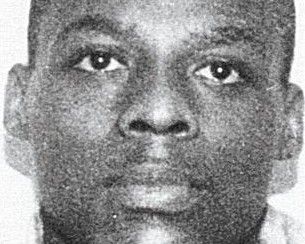
Willie Leroy Jones
Murderer Brian Kevin Rosenfeld
Murderer · USA · 1985
Brian Kevin Rosenfeld Brian Kevin Rosenfeld was sentenced to three concurrent l…
23 victims
Brian Kevin Rosenfeld
Murderer · USA · 1985
Brian Kevin Rosenfeld Brian Kevin Rosenfeld was sentenced to three concurrent l…
23 victims
 Marvin Gray
Murderer · USA · 1975
Marvin Gray was convicted killer who claimed responsibility for 23 slayings and…
23 victims
Marvin Gray
Murderer · USA · 1975
Marvin Gray was convicted killer who claimed responsibility for 23 slayings and…
23 victims
 Yahweh ben Yahweh
Murderer · USA · 1980
Yahweh ben Yahweh was born and legally named Hulon Mitchell Jr. (October 27, 19…
23 victims
Yahweh ben Yahweh
Murderer · USA · 1980
Yahweh ben Yahweh was born and legally named Hulon Mitchell Jr. (October 27, 19…
23 victims
 Russell Ellwood
Murderer · USA · 1991
Russell Ellwood was a former taxi driver. Authorities suspected him of killing…
20 victims
Russell Ellwood
Murderer · USA · 1991
Russell Ellwood was a former taxi driver. Authorities suspected him of killing…
20 victims
 Gabriel Avila
Murderer · USA · 2003
Gabriel Avila was a 27-year-old Mexican national. Katie Sepich was 22 and from…
1 victim
Gabriel Avila
Murderer · USA · 2003
Gabriel Avila was a 27-year-old Mexican national. Katie Sepich was 22 and from…
1 victim
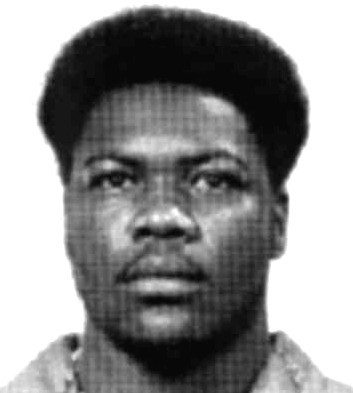 Edward Earl Williams
Murderer · USA · 1992
Edward Earl Williams was also identified as Akeem Aki-Khuam in the federal habe…
3 victims
Edward Earl Williams
Murderer · USA · 1992
Edward Earl Williams was also identified as Akeem Aki-Khuam in the federal habe…
3 victims
 Travis Glass
Murderer · USA · 2001
Travis Glass — defendant; convicted of murdering thirteen year old Steffini Wil…
1 victim
Travis Glass
Murderer · USA · 2001
Travis Glass — defendant; convicted of murdering thirteen year old Steffini Wil…
1 victim
 Windel Ray Workman
Murderer · USA · 1987
Windel Ray Workman was convicted and sentenced to death for the January 10, 198…
1 victim
Windel Ray Workman
Murderer · USA · 1987
Windel Ray Workman was convicted and sentenced to death for the January 10, 198…
1 victim
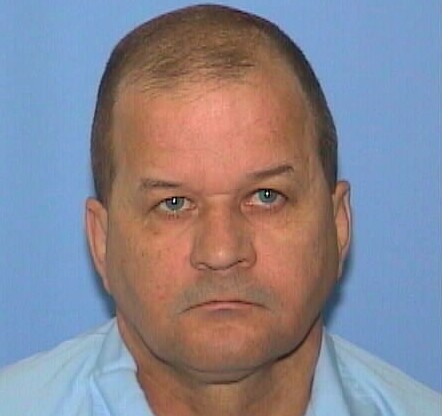 Luther Casteel
Murderer · USA · 2001
Luther Casteel was described by acquaintances as a divorced construction worker…
2 victims
Luther Casteel
Murderer · USA · 2001
Luther Casteel was described by acquaintances as a divorced construction worker…
2 victims
- Gender
- male
- Country
- USA
- Location
- Charles City County, Virginia, USA
- Date of birth
- 1958
- Age at first offence
- 25
- Characteristics
- robbery, arson
- Victim profile
- Graham and Myra Adkins
- Method of murder
- Shooting - Kerosene - Fire
- Date(s) of murder
- May 13, 1983
- Years active
- 1983
- Date of arrest
- —
- Status
-
Executed
Executed by electrocution in Virginia on September 11, 1992
Case record: Willie Leroy Jones
Background
Willie LeRoy Jones was executed by electrocution in Virginia on September 11, 1992. He was pronounced dead at 11:08 P.M. at the Greensville Correctional Center.
Jones asserted that "killing me is not the answer," and he said, "There's a place called prison." He also said he was prepared for his execution.
Jones was the 16th inmate put to death in Virginia and the 181st nationwide since 1976, when the Supreme Court let states resume executions. Less than five hours before the execution, the United States Supreme Court unanimously refused to grant a stay.
Gov. L. Douglas Wilder rejected Jones's clemency petition one hour before the execution.
People
- Willie LeRoy Jones — defendant; petitioner-appellant.
- Graham Adkins — victim; an elderly couple's husband, aged seventy-seven.
- Myra Adkins — victim; an elderly couple's wife; seventy-eight years old.
- Irene Jones — Graham Adkins's 78-year-old sister; sister of Graham Adkins.
- Edward W. Murray — Director of the Virginia Department of Corrections; respondent-appellee.
- L. Douglas Wilder — Governor of Virginia at the time of clemency.
- James C. Dimitris, M.D. — physician.
- Henry O. Gwaltney, Ed.D. — forensic clinical psychologist.
- William M. Lee, Ph.D. — forensic clinical psychologist.
- Jay Scales — friend of Jones; testified at trial regarding character.
- Michelle Ford — person suggested to counsel by Jones who was believed to be hostile because she was testifying for the Commonwealth.
- The Commonwealth's Attorney — offered a plea bargain.
- Trial counsel — Jones's counsel.
- The jury — found guilt and fixed penalty at death.
- Circuit Court of York County, Virginia — held hearings and entered orders including denial of habeas petitions and scheduling the execution date.
- United States District Court for the Eastern District of Virginia — denied habeas corpus petition and dismissed it; denied post-judgment motions.
- United States Magistrate — filed a report recommending denial and dismissal.
- United States Court of Appeals, Fourth Circuit — considered Jones's appeals regarding habeas corpus and Rule 60(b)/stay issues.
- Supreme Court of Virginia — reviewed and upheld convictions and sentences and denied petitions for appeal.
- United States Supreme Court — denied certiorari petitions and refused a stay; later denied a stay unanimously.
- Virginia Trial Lawyers Association — amicus curiae.
Timeline
- May 13, 1983 — Jones disguised himself and hitchhiked to Charles City; he knocked on the Adkins' door, identified himself as an undercover police officer looking for missing children, shot and killed Graham Adkins, bound and gagged Myra Adkins, stuffed her in a closet, shot her in the head, poured kerosene on her while she was still alive, blasted open a bedroom safe and stole life savings of more than $30,000, and set the house on fire in an attempt to hide his crimes.
- In January 1984 — Jones was tried by a jury in York County, Virginia and found guilty of the capital murders of Graham and Myra Adkins; the jury fixed his penalty at death.
- 1984 — Jones escaped from death row at the Mecklenburg Correctional Center; he and other escapees were recaptured and four have since been executed.
- 1984 — Jones unsuccessfully appealed his conviction and sentence to the Virginia Supreme Court (Jones v. Commonwealth, 228 Va. 427, 323 S.E.2d 554 (1984)).
- 1985 — The United States Supreme Court denied Jones' petition for a writ of certiorari (Jones v. Virginia, 472 U.S. 1012, 105 S.Ct. 2713, 86 L.Ed.2d 728 (1985)).
- June 15, 1987 — The Virginia Supreme Court refused Jones's petition for appeal in Jones v. Bair, No. 86-1152.
- 1987 — The United States Supreme Court denied Jones's petition for a writ of certiorari (Jones v. Bair, 484 U.S. 959, 108 S.Ct. 358, 98 L.Ed.2d 383 (1987)).
- March 22, 1988 — Jones filed a petition for a writ of habeas corpus in the United States District Court for the Eastern District of Virginia.
- January 4, 1990 — The district court denied and dismissed Jones' petition.
- April 9, 1990 — A motion to alter or amend was filed by Jones and denied by the district court.
- October 1, 1991 — The United States Court of Appeals for the Fourth Circuit affirmed the judgment of the district court (947 F.2d 1106).
- November 5, 1991 — Jones's petition for rehearing with suggestion for rehearing en banc was denied.
- April 6, 1992 — The United States Supreme Court denied Jones's petition for a writ of certiorari.
- May 26, 1992 — A petition for rehearing was denied by the United States Supreme Court.
- June 2, 1992 — The York County Circuit Court held a hearing for the setting of an execution date.
- June 9, 1992 — The circuit court scheduled Jones's execution for September 15, 1992.
- August 10, 1992 — Jones filed a second state habeas petition in the Circuit Court of York County.
- August 20, 1992 — Jones filed a Rule 60(b) motion in the United States District Court in Norfolk raising the same claim and asked for a stay of execution.
- August 24, 1992 — The Commonwealth filed a motion to dismiss the successive petition.
- August 27, 1992 — The circuit court dismissed the successive petition.
- September 8, 1992 — Jones filed an appeal in the Virginia Supreme Court; the district court denied Jones's motion because he had not exhausted state remedies; the district court also denied a stay of execution.
- September 11, 1992 — Jones was executed by electrocution in Virginia.
- September 15, 1992 — The circuit court had scheduled Jones's execution for this date (as set by order dated June 9, 1992).
- September 14, 1992 — Oral argument was scheduled in the Virginia Supreme Court after the Court requested a reply within three days.
- September 15, 1992 — (Execution scheduling date referenced by order dated June 9, 1992.)
- September 17, 1992 — A quoted newspaper headline appeared in the provided case narrative: "Virginia Sends Man To the Electric Chair For Couple's Slaying The New York Times September 17, 1992".
The offence
On May 13, 1983, smoke was noticed coming from the home of Graham and Myra Adkins, an elderly couple living in Charles City County. Several persons approached the house and, finding that no one responded to their knocking on the locked front door, broke the door open.
They found the body of Mr. Adkins, aged seventy-seven, lying near the door. Further rescue efforts were prevented by the intensity of the fire and smoke. When the police and other local authorities later examined the remains of the Adkins' home, they found evidence of petroleum distillates indicating that the fire was of incendiary origin.
They found an empty safe in a bedroom and the door of the safe in another room. They found the severely burned remains of the seventy-eight year-old Myra Adkins in a bedroom closet. When authorities examined the bodies of Mr. and Mrs. Adkins, they found that both had been shot in the head at close range. Both bodies had also been doused with accelerant.
The medical examiner testified that Mr. Adkins died within a short interval after a bullet was fired into his face and penetrated his brain. Mrs. Adkins received a head wound that would not have brought about death for several hours.
The medical examiner testified that Mrs. Adkins had been placed bound and gagged in the closet and died from carbon monoxide poisoning due to smoke inhalation. The testimony further stated that Jones bound and gagged and shot her, set her on fire while she was still living, and left her to die, which she did.
Jones stuffed Mrs. Adkins in a closet, shot her in the head and poured kerosene on her while she was still alive. He blasted open a bedroom safe and stole the couple's life savings of more than $30,000, then set the house on fire in an attempt to hide his crimes. After the murders, Jones went on a spending spree that took him to Hawaii, where he was arrested.
Jones knew the Adkins couple through their son. Jones disguised himself and hitchhiked to Charles City. He knocked on the Adkins' door and identified himself as an undercover police officer who was looking for missing children. After shooting Graham Adkins, he bound and gagged his wife. He then forced Mrs. Adkins into a closet, shot her at point-blank range in the face, doused her clothing with an accelerant, struck a match, and left her still alive and breathing to die of smoke inhalation.
The Virginia Supreme Court found that Mrs. Adkins had befriended the defendant and was a victim of a series of vicious assaults, only the last of which proved fatal. The Virginia Supreme Court found it reasonable to believe that the fire could have caused her to suffer intense pain and terror for some period of time; it stated that the evidence does not show whether or how long she remained conscious before she expired.
Investigation and arrest
Petroleum distillates were found indicating the fire was of incendiary origin. The evidence included an empty safe in a bedroom and the door of the safe in another room.
Jones admitted killing Graham and Myra Adkins in their rural home east of Richmond on May 13, 1983. Jones took the couple's $30,000 life savings and went on a spending spree that took him to Hawaii, where he was arrested.
Jones was among six men who escaped from death row at the Mecklenburg Correctional Center in 1984. All were recaptured, and four have since been executed.
Trial
In January 1984, Jones was tried by a jury in York County, Virginia. The jury found him guilty of the capital murders of Graham and Myra Adkins on two counts.
The jury on each count found that Jones' "conduct in committing the offense is outrageously or wantonly vile, horrible or inhuman in that it involved torture, depravity of mind, or aggravated battery to the victim beyond the minimum necessary to accomplish the act of murder...." The jury fixed his penalty at death and the trial court entered judgment accepting the jury's recommendation and confirming the verdicts.
Jones was indicted on two indictments, one for Mr. Adkins and one for Mrs. Adkins, on charges of killing during the commission of robbery while armed with a deadly weapon and also on a charge of killing more than one person as part of the same act or transaction.
Each indictment was returned pursuant to Virginia Code sections 18.2-31(d) and 18.2-31(g).
At the penalty phase, because Jones had no prior criminal record, the prosecutor did not argue future dangerousness. Jones was sentenced on the basis of the sole aggravating factor that his conduct in each murder was "outrageously or wantonly vile, horrible or inhuman in that it involved torture, depravity of mind or an aggravated battery to the victim," as provided for in Virginia's capital punishment statute, Va.Code Ann. § 19.2-264.2.
The trial court provided limiting definitions of depravity of mind and aggravated battery. The trial court also instructed the jury on mitigating and sentencing discretion as part of the penalty instructions.
The trial court instructed the jury that:
"If you find from the evidence that the Commonwealth has proven beyond a reasonable doubt that the offense was outrageously or wantonly vile, horrible or inhuman then you may fix the punishment of the defendant at death or if you believe from all the evidence that the death penalty is not justified, then you shall fix the punishment of the defendant at life imprisonment."
The trial court also instructed the jury:
"The Court instructs the Jury that even if you believe beyond a reasonable doubt that such facts and circumstances have been proven so as to permit the Death Penalty, it is still the prerogative of the Jury to decide whether death should be the punishment or not, and the Jury is under no obligation or compulsion to find the punishment should be death."
The jury verdict form stated that it had "considered the evidence in mitigation of the offense."
Jones's counsel did not call Jones to testify during the sentencing phase. Jones's counsel advised him not to take the stand at the penalty phase because a suppressed confession might be brought before the jury. Jones argued that he could have testified to "numerous compelling aspects" of his character and background that "could have had a significant impact" on the jury's sentencing decision.
Sentencing
The jury fixed Jones's penalty at death on each count after finding the offense conduct was "outrageously or wantonly vile, horrible or inhuman" in that it involved torture, depravity of mind, or aggravated battery to the victim beyond the minimum necessary to accomplish the act of murder.
The trial court entered judgment accepting the jury's recommendation and confirming the verdicts.
Appeals
Virginia Supreme Court appeals and habeas proceedings
Jones unsuccessfully appealed his conviction and sentence to the Virginia Supreme Court. Jones v. Commonwealth, 228 Va. 427, 323 S.E.2d 554 (1984).
Jones then filed a petition for a writ of habeas corpus in the Circuit Court of York County; this petition was denied. The Virginia Supreme Court found no error in the denial and refused Jones's petition for appeal (Jones v. Bair, No. 86-1152 (June 15, 1987)).
A plenary hearing was held by the Circuit Court of York County, Virginia, on April 22, 1986. Final order denying the petition in full was entered on September 9, 1986.
United States Supreme Court certiorari denials
- Jones v. Virginia, 472 U.S. 1012, 105 S.Ct. 2713, 86 L.Ed.2d 728 (1985) (denied certiorari).
- Jones v. Bair, 484 U.S. 959, 108 S.Ct. 358, 98 L.Ed.2d 383 (1987) (denied certiorari).
- Jones's petition was denied on April 6, 1992. A petition for rehearing was denied on May 26, 1992.
Fourth Circuit habeas and Rule 60(b) appeals
On October 1, 1991, the United States Court of Appeals for the Fourth Circuit affirmed the district court's denial of Jones's petition for a writ of habeas corpus (947 F.2d 1106). The court addressed Jones's arguments:
- ineffective assistance of counsel;
- constitutionally infirm aggravating factor in the jury instructions at the penalty phase;
- constitutional requirements concerning mitigating factors.
The Fourth Circuit affirmed the district court's rejection of those claims and concluded the district court properly denied the petition.
In a later appeal, on Sept. 11, 1992, the Fourth Circuit considered Jones's Rule 60(b) motion and motion for a stay of execution. The court held Virginia's death penalty statute was constitutional and affirmed the district court’s denial of the Rule 60(b) motion and denial of the motion for a stay of execution.
Ineffective assistance of counsel claims (as argued on appeal)
Jones argued that trial counsel was constitutionally ineffective by failing to advise properly with regard to an offered plea agreement.
On the morning of the first day of trial, the Commonwealth's Attorney offered Jones's counsel a plea bargain: if Jones entered guilty pleas to capital murder and arson charges, he would receive two consecutive life terms and some additional time on the arson charge. Counsel communicated the offer to Jones and discussed it with him on at least two occasions, reviewed evidence, and discussed strengths and weaknesses. Counsel estimated a seventy percent probability of conviction and a forty to fifty percent chance of receiving the death penalty. The state court found these estimates reasonable; counsel did not recommend acceptance and left the decision to Jones, who rejected the offer because he was innocent.
Jones also argued that counsel was ineffective for failing to investigate mitigating evidence, including seeking psychiatric evaluation and investigating character witnesses.
The state habeas court found that prior to trial Jones was examined by James C. Dimitris, M.D.; Henry O. Gwaltney, Ed.D.; and William M. Lee, Ph.D. Jones was found competent to stand trial and legally sane at the time of the alleged crimes. Dr. Lee and Dr. Gwaltney examined Jones for mitigating mental factors and circumstances; both reported finding no evidence that Jones was under the influence of extreme mental or emotional disturbance at the time of the crimes and no evidence that he lacked capacity to appreciate criminality or to conform his conduct to the requirements of law. The state court further found no evidence existed of mitigating mental circumstances at the time of the murders.
Jones argued that counsel utterly failed to conduct a psychiatric investigation and sought an independent evaluation. The appellate court addressed that the examinations had been performed and that Jones had not shown error in the state court's historical fact findings.
Jones argued that counsel failed to investigate character witnesses that could have evoked mercy. The alleged sources included:
- individuals suggested by Jones, including two church deacons and personnel at the high school and community college attended by Jones, who were not willing or able to testify; and Michelle Ford, who counsel believed would be hostile because she testified for the Commonwealth;
- witnesses not suggested by Jones who testified they would have testified if asked, found cumulative of testimony presented by Jones's mother and Jay Scales; and
- affiants who would have testified favorably, including Jones's sister; counsel made a conscious decision not to call her because she would display a cool and reserved demeanor.
Jones argued counsel failed to present evidence of an honorable discharge from the Army. The appellate court described the Commonwealth closing argument as:
"Was [Jones] honorably discharged from the Army? If he had had some valuable characteristics, some valuable acts that he had done there, I think that they would have been in front of you."
Jones argued he did receive an honorable discharge, and the appellate court reported a factual finding that counsel attempted to obtain the relevant Army records but records were not received until after trial.
Jones also challenged counsel's decision not to call him to testify at the penalty phase because his suppressed confession might be used. The district court and the appellate court reasoned that the effect would not have been prejudicial, and the appellate court held Jones did not show a reasonable probability of a different result.
Jury instruction challenges (as argued on appeal)
Jones argued that the jury instructions at the penalty phase were constitutionally defective in relation to the "vileness" aggravating factor and the treatment of mitigating circumstances.
The statute allowed death if the jury found beyond a reasonable doubt that:
- there was a probability, based on evidence of prior history of violence or circumstances surrounding the commission of the offense, that the defendant would commit criminal acts of violence constituting a continuing serious threat to society; or
- the defendant's conduct in committing the offense was outrageously or wantonly vile, horrible or inhuman involving torture, depravity of mind, or aggravated battery to the victim.
Jones's focus was on the vileness aggravating factor because the trial court did not instruct the jury on future dangerousness and the sentence was not based on that component.
Jones argued:
- disjunctive wording created ambiguity and did not assure unanimity as to which component of vileness was presented;
- the Virginia Supreme Court failed to adopt limiting construction of vileness; and
- the term "depravity of mind" was unconstitutionally vague.
The appellate court rejected those arguments and held Virginia's limiting constructions were constitutionally sufficient and properly applied to the facts in Jones's case. The Virginia Supreme Court's statement quoted in the appellate decision described Mrs. Adkins’s assaults and the circumstances of the fire and shooting, concluding it supported a finding of aggravated battery and depravity of mind. The appellate court also described that Mr. Adkins had died almost instantaneously from a single gunshot wound and that a death sentence based on vileness was not supported when victims died almost instantaneously from a single gunshot wound; nonetheless, the court explained that the Virginia Supreme Court found depravity of mind based on the attempted mutilation/mutilation of Mr. Adkins’s body and that depravity of mind could exist independently of torture or aggravated battery.
The appellate court further rejected Jones’s mitigation instruction challenge. Jones argued that the penalty instructions conflicted with Penry v. Lynaugh because they did not tell the jury it could consider mitigating circumstances. The appellate court held that, taken as a whole, the instructions allowed the jury to consider mitigating evidence and exercise discretion, citing that the term "all the evidence" included evidence in mitigation and aggravation, and that the jury verdict form stated it had considered mitigation evidence.
The appellate court described the trial court’s separate instruction on the jury’s prerogative to decide whether death should be the punishment and that it was under no compulsion to find death. It held the procedure satisfied individualized sentencing requirements under the Eighth and Fourteenth Amendments.
Additional federal habeas/Rule 60(b) proceedings and stay of execution
In the later Fourth Circuit proceeding, Jones argued that, due to recent Supreme Court cases, Virginia's death penalty statute was unconstitutional. The Fourth Circuit held that Virginia's death penalty statute was constitutional and affirmed the district court's denial of Jones's Rule 60(b) motion and denial of a stay of execution.
The district court had denied Jones’s motion on September 8, 1992 because he had not exhausted available state remedies while his appeal to the Virginia Supreme Court was pending. The district court also found Jones's constitutional challenge to the vileness criterion procedurally barred and without merit as a matter of law.
The Fourth Circuit discussed:
- requirements under 28 U.S.C. § 2254(b) for exhaustion;
- delay in filing the second state habeas petition (two full months after the execution date was set and at least two full months after the Supreme Court cases he relied on were decided);
- treating the papers as a successive habeas petition, and applying the standard that requires clear and convincing evidence that but for constitutional error no reasonable juror would have found the petitioner eligible for the death penalty under applicable state law;
- that even if the vileness factor was vague as applied, Jones had not met the successive petition standard; and
- that the cases he relied on (Stringer v. Black and Sochor v. Florida) did not effect a change in the law for purposes of the Rule 60(b)(6) argument.
The Fourth Circuit also rejected the arguments regarding vagueness, disjunctive phrasing, and the role of appellate review in determining aggravating factors, citing Clemons v. Mississippi and Walton v. Arizona, and discussing that Jones’s arguments assumed unconstitutionality of Virginia's statute and that he had been unable to show an unconstitutionally vague aggravating factor given limiting constructions.
Outcome
Jones was executed by electrocution in Virginia on September 11, 1992.
The Fourth Circuit affirmed the district court’s denial of Jones’s petition and affirmed denial of the Rule 60(b) motion and stay of execution.
The United States Supreme Court denied a stay and unanimously refused to grant it less than five hours before the execution. Gov. L. Douglas Wilder rejected clemency.
Other details
The case included discussion of the procedural posture and multiple appeals and petitions for habeas corpus in both state and federal courts, including denial of a writ of habeas corpus by the district court and dismissal, denial of a Rule 59(e) motion to alter or amend, and the subsequent appeals.
Jones alleged that trial counsel had ineffective assistance regarding:
- plea advice;
- failure to seek psychiatric evaluation or independent evaluation;
- failure to investigate character testimony;
- failure to present Army honorable discharge records to the jury due to delayed receipt of records;
- failure to call Jones to testify during sentencing.
Jones also raised constitutional challenges to the jury instructions on:
- vileness as applied and the disjunctive formulation;
- limiting constructions and vagueness of depravity of mind;
- mitigation instructions in relation to Penry v. Lynaugh.
The appeal record included quoted passages and holdings about the constitutionality of Virginia’s capital sentencing scheme, including that limiting instructions and appellate review satisfied constitutional requirements.


Spotted an error, or have more information about this case?