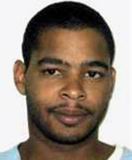
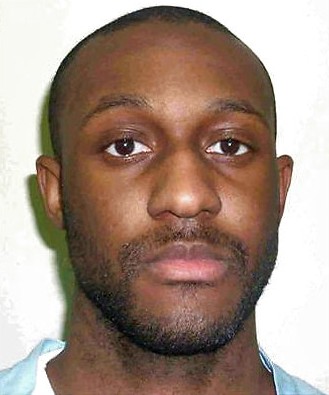
Jerry Terrell Jackson
Murderer Russell Ellwood
Murderer · USA · 1991
Russell Ellwood was a former taxi driver. Authorities suspected him of killing…
20 victims
Russell Ellwood
Murderer · USA · 1991
Russell Ellwood was a former taxi driver. Authorities suspected him of killing…
20 victims
 Robert Martines Perez
Murderer · USA · 1994
Name: Robert Martines Perez · Other name used in proceedings: Robert Martinez P…
15 victims
Robert Martines Perez
Murderer · USA · 1994
Name: Robert Martines Perez · Other name used in proceedings: Robert Martinez P…
15 victims
 Billy Frank Vickers
Murderer · USA · 1993
Billy Frank Vickers Vickers was executed by lethal injection in Texas on Januar…
14 victims
Billy Frank Vickers
Murderer · USA · 1993
Billy Frank Vickers Vickers was executed by lethal injection in Texas on Januar…
14 victims
 Joseph Ernest Atkins
Murderer · USA · 1969
Joseph Ernest Atkins was convicted of the 1985 murders of his father Benjamin A…
3 victims
Joseph Ernest Atkins
Murderer · USA · 1969
Joseph Ernest Atkins was convicted of the 1985 murders of his father Benjamin A…
3 victims
 Kaoru Kobayashi
Murderer · Japan · 2004
Kaoru Kobayashi (小林 薫, Kobayashi Kaoru, November 30, 1968 – February 21, 2013)…
1 victim
Kaoru Kobayashi
Murderer · Japan · 2004
Kaoru Kobayashi (小林 薫, Kobayashi Kaoru, November 30, 1968 – February 21, 2013)…
1 victim
 Andrew Kalajzich
Murderer · Australia · 1986
Andrew Kalajzich was convicted in relation to the murder of his wife, Megan Kal…
1 victim
Andrew Kalajzich
Murderer · Australia · 1986
Andrew Kalajzich was convicted in relation to the murder of his wife, Megan Kal…
1 victim
 Kenneth Richey
Homicide · USA · 1986
Kenneth Richey was a UK-US dual citizen. He was born August 3, 1964, in Zeist,…
1 victim
Kenneth Richey
Homicide · USA · 1986
Kenneth Richey was a UK-US dual citizen. He was born August 3, 1964, in Zeist,…
1 victim
- Gender
- male
- Country
- USA
- Location
- Williamsburg, Virginia, USA
- Date of birth
- J uly 22, 1981
- Age at first offence
- 20
- Characteristics
- rape, robbery, kidnapping, sexual abuse
- Victim profile
- Ruth W. Phillips, 88
- Method of murder
- Smothering
- Date(s) of murder
- August 25, 2001
- Years active
- 2001
- Date of arrest
- —
- Status
-
Executed
Sentenced to death on April 3, 2003. Executed by lethal injection in Virginia on August 18, 2011
Case record: Jerry Terrell Jackson
Background
Jerry Terrell Jackson was a Black male. He grew up in James City County. He was 20 at the time of the 2001 rape and murder of 88-year-old Ruth Phillips. He was 30 at the time of his execution.
During mitigation proceedings, evidence was presented that Jackson received diagnoses and had adjustment and behavioral problems as a youth. In 1993, he was diagnosed with “adjustment disorder with depressed mood and attention deficit, hyperactivity disorder.” In 1996, he was evaluated again because he had behavioral problems at home and was not doing well in school. Jackson expressed resentment toward his stepfather and acted out negative feelings aggressively. Testing indicated average intellectual functioning. During his school years, Jackson took medication for attention deficit hyperactivity disorder, and his mother reported continued behavioral problems at school, including fights. Jackson was eventually placed in a special school for students who cannot be controlled in a regular classroom setting. There was also evidence that Jackson suffered physical abuse as a child.
In federal habeas proceedings, the later-issued analysis discussed Jackson’s childhood abuse and mitigation evidence presented at trial, including testimony about physical and emotional abuse, and references to severe abuse and neglect, including allegations of sexual abuse.
The offence
Ruth W. Phillips, 88, lived alone in an apartment in Williamsburg. She did not show up to church, and her son became concerned because she was not answering her telephone.
On August 26, 2001, Richard Phillips discovered Ruth Phillips’s body “twisted and exposed” on a bed in her bedroom. The account later described her “leg was twisted around, and her pubic region was exposed[; h]er breast was exposed[; and h]er nightgown was up around her neck.”
Authorities found that the cause of death was asphyxia. Death by asphyxia occurs when the brain is without a supply of oxygen for four to six minutes although unconsciousness may come about within 15 to 30 seconds.
The jury convicted Jackson of two counts of capital murder for the premeditated killing of Ruth W. Phillips in the commission of rape or attempted rape, and in the commission of robbery or attempted robbery. The jury also convicted Jackson of statutory burglary, robbery, rape, and petit larceny. The trial court sentenced Jackson in accordance with the jury’s verdict.
During the investigation and at trial, the case involved Jackson’s use of force and sexual assault against Ruth Phillips, along with robbery of $60 and theft of her automobile. Authorities stated that when Ruth Phillips woke up and confronted Jackson, she offered him anything if he would leave. Instead, he put a pillow over her face and raped her; he later fled in her car and used $60 to buy marijuana.
Jackson’s account at different stages of the case varied. He admitted entering Ruth Phillips’s apartment, searching through and taking money out of her purse, and exiting through a back window after waiving Miranda rights in a December 2001 videotaped interview. In that statement, he said Ruth Phillips confronted him with: “What do you want? I'll give you whatever, just get out.” Jackson acknowledged holding a pillow over her face for two or three minutes and tried to make her “pass out” so she could not identify him. He also admitted inserting his penis into her vagina while holding the pillow over her face. He reported that after exiting through a back window he drove away in Ruth Phillips’s car, which he ultimately abandoned, and he used the sixty dollars he stole to purchase marijuana. Throughout the interview he denied anyone else was with him and insisted he did not mean to kill Ruth Phillips.
At trial, Jackson recanted his confession and testified to a different version. He claimed that on the day in question he had been playing basketball until around midnight, then came in contact with Alex Meekins and Jasper Meekins. Jackson stated that he decided to participate in their plan to break into Ruth Phillips’s apartment; Jackson testified that Alex entered through a window and then let Jasper and the defendant in through the front door. Jackson testified that while he was looking through Ruth Phillips’s purse, she woke up and asked what was going on, and that “Jasper Meekins, he put the pillow over her face and smothered her.” Jackson said he told Jasper to stop after hearing gurgling, and he pushed him off. Jackson testified that as they were leaving he pulled her nightgown down, put the blanket over her, picked the pillow up initially, and put it back. Jackson stated he confessed to Peterson because he thought that was what Peterson wanted to hear and because he wanted to “get out of there as fast as [he] could.” Jackson also testified he never told investigators about Jasper’s and Alex’s participation because he was “scared for [his] family on the streets” and had concerns about being a “snitch.” At trial Jackson denied raping or killing Ruth Phillips and denied having knowledge about who raped her or how his pubic hairs got on her body.
A mitochondrial DNA analysis of blood taken from Alex Meekins showed that his mtDNA sequence did not correspond to the mtDNA sequence of the three hairs recovered from Ruth Phillips’s body.
Investigation
On August 26, 2001, after Richard Phillips found the body, he called “911” using a cellular telephone.
An investigator with the James City County Police Department, Jeff Vellines, went to Ruth Phillips’s apartment and collected physical evidence, including items outside the apartment near the master bathroom window: a window screen, mirror case, and cosmetic items. Inside, Vellines discovered a black pocketbook on the floor next to Ruth Phillips’s bed and a brown wallet underneath the pocketbook. The wallet did not contain any money. However, a white square piece of paper in the wallet contained one latent fingerprint of value for identification purposes, which was compared with the defendant’s fingerprints and found to be “one and the same.”
Another investigator recovered hair from Ruth Phillips’s chest and another hair on the bed below the stomach area. During autopsy, additional hairs were collected from Ruth Phillips’s left thigh area. Microscopic examination revealed that one hair recovered from Ruth Phillips’s thigh area and two hairs were pubic hairs, but they were not consistent with samples of Ruth Phillips’s pubic hair. These three hairs, along with samples of the defendant’s blood and hair, underwent mitochondrial DNA analysis. The forensic scientist testified that Jackson could not be excluded as the source of the hairs found on Ruth Phillips’s body and bed. The “mtDNA sequence data” of each hair matched the “corresponding mtDNA sequence of the blood” taken from Jackson. Later, the testing result was described as consistent with Jackson’s mtDNA to the exclusion of 99.998% of the population with a 95% degree of confidence.
In December 2001, Vellines and Eric Peterson interviewed Jackson in the James City County Law Enforcement Center. After waiving Miranda rights, Jackson admitted entering Ruth Phillips’s apartment, searching through and taking money out of her purse, and exiting through a back window. Jackson stated he did not know Ruth Phillips was at home when he turned on the light and began going through her purse. Jackson said Ruth Phillips, lying in bed, confronted him and stated: “What do you want? I'll give you whatever, just get out.” Jackson said: “[I]t just scared me and I covered her up [.]” Jackson acknowledged holding a pillow over her face for two or three minutes and trying to make her “pass out” so she could not identify him. Jackson stated that when Ruth Phillips stopped screaming it was his “cue that she [had] passed out.” Jackson admitted inserting his penis into her vagina while holding the pillow over her face.
Jackson later denied that anyone else was with him during the incident during the interview and maintained he did not mean to kill Ruth Phillips.
Arrest
Jackson was interviewed by investigators in the James City County Law Enforcement Center in December 2001 after waiving Miranda rights.
Trial
Jackson’s trial was bifurcated into a guilt phase and a penalty phase.
Guilt phase
During the guilt phase, the Commonwealth introduced physical evidence including fingerprints and DNA analysis. The jury convicted Jackson of two counts of capital murder and various other state crimes: statutory burglary, robbery, rape, and petit larceny.
Jackson’s videotaped confession was introduced during trial, along with a transcript used by the jury while the video was played. The transcript was prepared because portions of the video were inaudible, and the court instructed jurors that the transcript was “merely a guide ... [and was] not evidence,” and that the evidence was the tape itself and the audio portion.
Jackson argued issues regarding the transcript’s accuracy, including missing words and transcript pagination problems. The circuit court allowed the jury to use the transcript as an aid to understanding the recording, and it instructed jurors on their responsibility to listen to the tape and determine what was said.
During closing argument, the Commonwealth used a pillow to demonstrate the length of time Jackson held the pillow over Ruth Phillips’s face. The circuit court overruled Jackson’s objection on the basis that the pillow was not the actual pillow found at the crime scene, and it directed the Commonwealth to tell the jury the pillow was “not the actual size and shape of the pillow used” and that it was for demonstrative purposes.
Jackson also challenged the admission of photographs, including an “in-life” photograph of Ruth Phillips and autopsy photographs of her face and vaginal area. The circuit court allowed use of the “in-life” photograph and admitted photographs including Commonwealth Exhibit Numbers 47 and 48 (front and side views of her face) and Commonwealth Exhibit Number 51 (an enlarged photograph of her vaginal area).
Jackson moved to strike the Commonwealth’s evidence as insufficient to prove willful, premeditated, and deliberate intent to kill. The Virginia Supreme Court described that in reviewing sufficiency challenges, it viewed the evidence in the light most favorable to the Commonwealth. The court concluded the evidence supported premeditation, including evidence that Jackson held a pillow over Ruth Phillips’s face for four to six minutes even though she would have become unconscious within 15 to 30 seconds.
Jury selection and jurors
Jackson assigned error to the circuit court’s failure to strike prospective jurors for cause.
For juror Reinsberg, defense counsel asked questions about whether the juror would require the defense to put on evidence to change her mind. The record included questions and answers:
- [DEFENSE COUNSEL]: “Would you require the defense to put on evidence to change your mind or influence your decision considering what you have read?”
- MS. REINSBERG: “Probably.”
- THE COURT: “Let me ask, what do you mean by that?”
- MS. REINSBERG: “From what we have read, I don't know, I was thinking the newspaper—”
- THE COURT: “Is accurate?”
- MS. REINSBERG: “Is accurate, so I would—I would want to know, it was accurate or inaccurate. Sometimes certain parts can be made up. That shouldn't be.”
The record also included: “THE COURT: Is accurate?” “MS. REINSBERG: Is accurate, so I would—I would want to know, it was accurate or inaccurate.” Additional exchanges included:
- [DEFENSE COUNSEL]: “Considering that response, have you formed an opinion of some sort as to the guilt or innocence of the Defendant if you are going to require us to put on evidence?”
- MS. REINSBERG: “No.”
Additional exchanges included questions by the Commonwealth’s attorney about burden of proof and sentencing:
- [COMMONWEALTH'S ATTORNEY]: “And you understand that at sentencing, if the jury has convicted the Defendant of capital murder, that the burden is on us to prove certain things beyond a reasonable doubt—”
- MS. REINSBERG: “Right.”
The Virginia Supreme Court concluded the circuit court did not err in refusing to strike juror Reinsberg for cause.
For juror Baffer, Jackson relied on answers in voir dire. The defense asked:
- [DEFENSE ATTORNEY]: “Do you hold the belief that death is the appropriate punishment for a person who commits a murder, rape and/or robbery unless he can convince you otherwise?”
- MR. BAFFER: “Yes.” Later:
- [DEFENSE ATTORNEY]: “You were asked an ‘automatic’ question by the Commonwealth. Would you automatically vote to impose the death penalty on a person you determine beyond a reasonable doubt constituted a continuing serious threat to society?”
- MR. BAFFER: “Yes.”
The circuit court engaged in an exchange with prospective juror Baffer:
- THE COURT: “[Defense counsel] asked you a question... if you found beyond a reasonable doubt... there is a probability that he would commit criminal acts of violence that would constitute a continuing serious threat to society, he asked you if you found that, would you always vote to impose the death penalty, and you said yes. Is that your understanding of what the law in Virginia is?”
- MR. BAFFER: “I'm not sure what the law of Virginia is on that.”
- THE COURT: “... Would you automatically impose the death penalty if you found future dangerousness existed?”
- MR. BAFFER: “No, if the alternative is he got life without parole, that would be adequate.”
The Virginia Supreme Court concluded the circuit court ruled properly in seating juror Baffer.
For juror Berube, Jackson moved to strike on the basis that she answered “No” to one question about being able to consider all mitigating factors. The Virginia Supreme Court concluded the circuit court did not err in finding she would be fair and impartial.
Juror misconduct
During a recess on the third day of trial, the jurors asked whether they could discuss among themselves evidence and testimony already presented. After agreement and instruction, Jackson later filed a post-trial motion for a new trial or an evidentiary hearing based on allegations that jurors discussed guilt or innocence prior to the close of all evidence. Jackson submitted an affidavit from alternate juror Picataggi, who stated that she “witnessed and heard discussion of this case, and its outcome, among the jurors before the close of evidence and in direct violation of the instructions of the court.”
At a hearing on Jackson’s motion, Picataggi testified that she had heard three discussions, two in the jury room and one at a local restaurant where the jury had gone for lunch. She acknowledged that no third person participated, and she could not recall whether discussions continued after the court instructed jurors not to do so. She described a discussion regarding the detective and defense counsel’s questioning involving the videotape and testified the jurors did not particularly like the way questioning occurred but that it “ultimately he got to the truth or to the bottom of it.” She admitted that no juror concluded Jackson’s guilt or innocence. The circuit court denied the motion, finding “no probable misconduct and clearly no prejudice” to Jackson.
The Virginia Supreme Court held that neither a new trial nor further investigation was warranted under the probability of prejudice standard and the rule against receiving juror testimony to impeach verdicts.
Video-taped confession issues
Jackson asserted that the circuit court erred in allowing the jury to use a transcript while the video was played, in overruling a mistrial motion due to problems while watching the video tape and using the transcript, and in allowing the jury to review the video-taped confession during deliberations. The circuit court directed preparation of a transcript because portions of the video were inaudible and it concluded it would help jurors. The circuit court instructed jurors the transcript was “merely a guide ... [and was] not evidence,” and that they should determine what was said by listening to the tape. During playing, the jurors’ transcripts were discovered to be partially out of order and later missing one page, and the tape was rewound approximately two minutes. The circuit court overruled Jackson’s mistrial motion, finding the jurors paid close attention and that problems were quickly corrected. The Virginia Supreme Court found no merit in the claims.
Sentencing
The Virginia Supreme Court described the statutory framework and the jury’s role in sentencing. At the conclusion of the penalty phase of a bifurcated trial, the jury fixed Jackson’s punishment at death on each of the capital murder convictions and found “that there is probability that he would commit criminal acts of violence that would constitute a continuing serious threat to society.”
The jury also fixed punishment of two life sentences for the rape and the robbery convictions, a 20-year sentence for the burglary conviction, and a 12-month sentence for the petit larceny conviction. The circuit court sentenced Jackson in accordance with the jury’s verdict and imposed fines totaling $102,500 as fixed by the jury.
The Commonwealth introduced 18 orders showing Jackson’s convictions or adjudications of delinquency for offenses including grand larceny, petit larceny, trespassing, drug possession, receiving stolen property, contempt of court, identity fraud, statutory burglary, credit card theft, and obtaining money under false pretenses.
Two correctional officers testified about two incidents involving Jackson while incarcerated. In one, Jackson refused to obey an order of a correctional officer, leading to a scuffle with officers as they attempted to remove his handcuffs. The other involved an altercation between Jackson and another inmate.
In mitigation, Jackson presented evidence about his adjustment and behavioral problems and about physical abuse suffered as a child.
On Nov. 5, 2002, the jury recommended that Jackson be sentenced to death. On April 3, 2003, Circuit Judge Samuel Powell imposed the death penalty. Jackson’s sentencing included a death penalty imposed by Circuit Judge Samuel Powell.
Jackson was on Virginia’s death row since April 3, 2003.
Appeals
Jackson appealed to the Virginia Supreme Court, which upheld his death sentence on January 16, 2004. The Virginia Supreme Court affirmed his convictions and the imposition of the death penalty after reviewing assignments of error including the admissibility of his confession, challenges to juror selection, juror misconduct, transcript use of his videotaped confession, photographs, and sufficiency of evidence for premeditation.
Jackson filed a petition for a stay of execution that was addressed by the U.S. Supreme Court. The U.S. Supreme Court turned down his petition for a stay of execution.
The U.S. Supreme Court rejected Jackson’s appeal on Thursday in the period leading up to his execution. The articles also reported that the U.S. Supreme Court turned down the stay petition with “two justices on the nine-member court — Ruth Ginsburg and Sonia Sotamayor — the lone members voting for the stay.”
Gov. Bob McDonnell denied Jackson’s appeal for clemency, stating he could find “no compelling reason” to intervene. The Virginia Department of Corrections spokesman Larry Traylor also stated that Jackson visited with family members, clergy, and his attorneys, and the execution team carried out the order without complications.
At the time of execution, the Virginia Attorney General’s office issued a statement, quoting Ken Cuccinelli: “Tonight, the death sentence of Jerry Jackson was carried out by the Commonwealth of Virginia for the brutal rape and murder of Ruth Phillips,” and also stating: “The just sentence of death has now been carried out. Our thoughts and prayers remain with the family and friends of Ruth Phillips.”
Federal habeas proceedings (appellate outcome)
In federal habeas proceedings, a U.S. District Judge Leonie M. Brinkema granted relief as to penalty-phase claims after an evidentiary hearing. The government appealed and the U.S. Court of Appeals reversed the district court’s grant of habeas relief. The Court of Appeals held that the writ was improvidently granted and reversed the district court’s grant of habeas relief.
The U.S. Court of Appeals’ decision stated: “For the foregoing reasons we reverse the district court's grant of habeas relief in this case. REVERSED.”
Outcome
Jerry Terrell Jackson was sentenced to death and executed by lethal injection in Virginia on August 18, 2011.
On Thursday, August 18, 2011, he was pronounced dead at 9:14 p.m. at Greensville Correctional Center in Jarratt. The execution used a revised, three-drug cocktail, and it was described as Virginia’s first inmate executed using the sedative pentobarbital as the first of three drugs administered in lethal injections. Department of Corrections spokesman Larry Traylor said there were no complications and that the execution team had trained on the amended protocol using the new drug, “read to “carry out the order of execution in a professional and constitutional manner.”
The execution team took about 15 minutes to insert two intravenous lines, one into each arm. Within four minutes of the lines being inserted, Jackson was pronounced dead. Jackson made no final statement. In one account, he shook his head and said “no” under his breath when asked if he had any final words, and tapped his foot while strapped to the gurney as the drugs were administered. Another account stated Jackson declined to make a last statement and the first chemicals started flowing.
No surviving family members of Ruth Phillips witnessed the execution. The articles described that Ruth Phillips’s son, Richard Phillips, was not in attendance and had said earlier he would not attend. Another account said there were no members of Ruth Phillips’ family in attendance, and that Jackson’s family met with him during the stay in a “contact visit,” meaning they were allowed to touch and hug him.
After execution, his death was described as the end of legal battles and as the 109th execution carried out in Virginia since resumption in 1976. His death left Virginia’s death-row population at 10.
Timeline
- April 3, 2003 — Circuit Judge Samuel Powell imposed the death penalty.
- November 5, 2002 — Jury recommended that Jackson be sentenced to death.
- January 16, 2004 — Virginia Supreme Court upheld Jackson’s death sentence.
- August 26, 2001 — Richard Phillips discovered Ruth Phillips’s body in her Williamsburg apartment.
- December 2001 — Investigators interviewed Jackson in the James City County Law Enforcement Center after he waived Miranda rights.
- August 18, 2011 — Jackson was executed by lethal injection in Virginia at Greensville Correctional Center.
Other details
Victim
Ruth W. Phillips was 88 years old when she was killed. She was described as a Williamsburg widow who worked as a seamstress making slip covers and draperies until her death. The case record also included descriptive quotes from the location of her body and from her confrontation with Jackson during his initial statement.
Richard Phillips was Ruth Phillips’s son. He found her body on August 26, 2001, after she did not attend church and was not answering her telephone. Richard Phillips identified an “in-life” photograph of Ruth Phillips during his direct examination in the guilt phase.
Property taken and use of money
Jackson admitted taking money out of Ruth Phillips’s purse. In accounts of the offence, authorities stated he stole $60 and her car, fled in her car, and used the $60 he stole to purchase marijuana. Authorities described that after she awoke and confronted him with an offer to give him anything if he would leave, he placed a pillow over her face and raped her, then stole $60 and her car.
Statements and verbatim quotes
- Richard Phillips’s description of her body included the quote: “twisted and exposed.”
- The account of Ruth Phillips’s body included: “leg was twisted around, and her pubic region was exposed[; h]er breast was exposed[; and h]er nightgown was up around her neck.”
- Jackson’s videotaped-interview confrontation included: “What do you want? I'll give you whatever, just get out.”
- Jackson’s description included: “[I]t just scared me and I covered her up [.]”
- Jackson’s statement about when she stopped screaming was: “cue that she [had] passed out.”
- Jackson’s state apology quote was: “I'm sorry Mrs. Phillips lost her life due to something that I done,” and “I'm sorry to Mr. Phillips that he hurt so much. I'm sorry that he lost his mother.”
- Jackson’s clemency response request and the governor’s language included: “no compelling reason.”
- Ken Cuccinelli’s execution statement included: “Tonight, the death sentence of Jerry Jackson was carried out by the Commonwealth of Virginia for the brutal rape and murder of Ruth Phillips,” and “The just sentence of death has now been carried out.
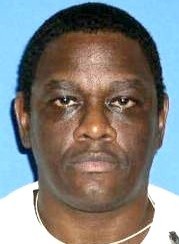
Spotted an error, or have more information about this case?