Horace Edward Kelly
Murderer Brian Kevin Rosenfeld
Murderer · USA · 1985
Brian Kevin Rosenfeld Brian Kevin Rosenfeld was sentenced to three concurrent l…
23 victims
Brian Kevin Rosenfeld
Murderer · USA · 1985
Brian Kevin Rosenfeld Brian Kevin Rosenfeld was sentenced to three concurrent l…
23 victims
 Marvin Gray
Murderer · USA · 1975
Marvin Gray was convicted killer who claimed responsibility for 23 slayings and…
23 victims
Marvin Gray
Murderer · USA · 1975
Marvin Gray was convicted killer who claimed responsibility for 23 slayings and…
23 victims
 Yahweh ben Yahweh
Murderer · USA · 1980
Yahweh ben Yahweh was born and legally named Hulon Mitchell Jr. (October 27, 19…
23 victims
Yahweh ben Yahweh
Murderer · USA · 1980
Yahweh ben Yahweh was born and legally named Hulon Mitchell Jr. (October 27, 19…
23 victims
 Russell Ellwood
Murderer · USA · 1991
Russell Ellwood was a former taxi driver. Authorities suspected him of killing…
20 victims
Russell Ellwood
Murderer · USA · 1991
Russell Ellwood was a former taxi driver. Authorities suspected him of killing…
20 victims
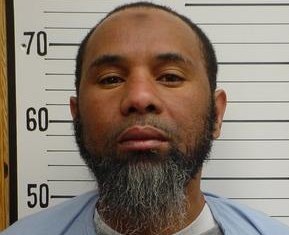 Michael Joe Boyd
Murderer · USA · 1983
Michael Joe Boyd was convicted of felony murder stemming from the shooting deat…
2 victims
Michael Joe Boyd
Murderer · USA · 1983
Michael Joe Boyd was convicted of felony murder stemming from the shooting deat…
2 victims
 William Ernest Leasure
Murderer · USA · 1977
William Ernest Leasure was called “Mild Bill” by his fellow Los Angeles police…
3 victims
William Ernest Leasure
Murderer · USA · 1977
William Ernest Leasure was called “Mild Bill” by his fellow Los Angeles police…
3 victims
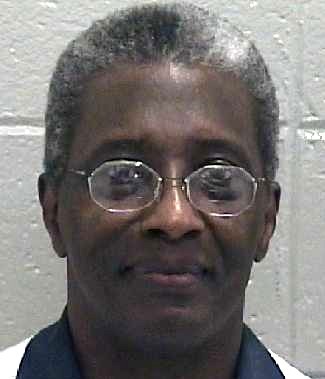 Brandon Astor Jones
Murderer · USA · 1979
Brandon Astor Jones, also known as Wilbur May, was convicted of murder and sent…
1 victim
Brandon Astor Jones
Murderer · USA · 1979
Brandon Astor Jones, also known as Wilbur May, was convicted of murder and sent…
1 victim
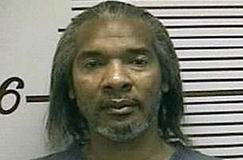 Freddie Lee Glenn
Spree killer · USA · 1975
January 6, 1957 — Freddie Lee Glenn was born. · June 19, 1975 — Glenn and accom…
5 victims
Freddie Lee Glenn
Spree killer · USA · 1975
January 6, 1957 — Freddie Lee Glenn was born. · June 19, 1975 — Glenn and accom…
5 victims
- Gender
- male
- Country
- USA
- Location
- San Bernardino, California, USA
- Date of birth
- 1959
- Age at first offence
- 25
- Characteristics
- rape, necrophilia
- Victim profile
- Sonia Reed (female, 21) / Ursula Houser (female, 42) / Daniel Osentkowski (male, 11)
- Method of murder
- Shooting ( .357 magnum revolver )
- Date(s) of murder
- November 16-25, 1984
- Years active
- 1984
- Date of arrest
- November 25, 1984
- Status
-
Sentenced to death
Sentenced to death on May 21, 1986
Case record: Horace Edward Kelly
Background
Horace E. Kelly was a 38-year-old death-row inmate discussed in connection with a competency hearing held in San Rafael, California. The competency hearing was scheduled just days before his execution; prison officials and state psychiatrists expressed doubts that he met the minimum mental competency standard, and his lawyers argued that his insanity developed after he was sent to death row.
A newsletter described Horace Kelly as a 39-year-old man who had been on death row for 13 years, who muttered to himself and did not answer questions logically. The newsletter stated that Horace thought death row was a vocational school and that, once he got his “certification,” he could go home. It also stated that, in his cell, Horace often sat in his own waste and rarely bathed, and that guards had to wear masks to clean his cell because of the stench.
The same newsletter included statements describing childhood abuse. It stated that at 3 years of age, Horace’s father scalded him with hot water, rammed his head into a wall, and continued the abuse for years, according to his family. It also stated that Horace’s sister, Cynthia, described their childhood, including a description of their mother hanging off the bed with their father on top of her and whipping her with an electrical cord while their mother was eight and a half months pregnant, and it stated that Cynthia described being beaten and raped by their father and mother and that Horace was also severely beaten and raped. The newsletter said that, while this kind of abuse did not justify the murders committed by Horace Kelly, it was clear that California could have provided social services such as day care and medical and mental health services that the Kelly family needed. The newsletter also stated that Horace was the first African-American scheduled to die in California in more than 30 years.
The newsletter stated that Horace was being rushed to the execution chamber under the terms of the 1996 Anti-Terrorism and Effective Death Penalty Act, signed by President Clinton. It also stated that activists from the Campaign to End the Death Penalty held a press conference and picket outside the courthouse on April 6 to raise the profile of Horace Kelly’s case in local and national media, and that this helped his attorneys win a temporary stay while the state decided if Kelly was sane enough to be executed. It further stated that California’s Attorney General Dan Lungren used the Kelly case to finesse procedures that would clear the way to execute other insane inmates, and that state and federal law, along with United Nations rules, strictly prohibited the execution of insane people, even if they became insane awaiting execution. It also stated that the competency jury had 10 whites and no Blacks, that all jurors were required to support the death penalty, and that the jury included two people who believed capital cases drag on too long and two people directly related to county sheriffs. The newsletter said that because the sanity hearing was being tried under civil, not criminal, rules, a nine-member verdict would be enough to condemn Horace, as opposed to the unanimous vote required in criminal cases. It stated that if the jury found Kelly incompetent, he would be sent to a mental institution for “treatment,” and that if, after treatment, his mental health improved, he may be deemed fit for execution. The newsletter included a quote from Horace’s lawyer: “Treating him just so he can be killed, now that's really insane.”
The offence
On November 16, 1984, police officers in San Bernardino, California were alerted to the discovery of a woman’s body at a local cemetery. The victim was nude from the waist down, with her bra unfastened. The victim had been raped before she was shot in the chest and neck with a .357 magnum revolver.
The victim was identified as 25-year-old Sonia Reed. She was last seen at a drug party the night of November 15.
The following day, 42-year-old Ursula Houser was found dead in a San Bernardino alley, two miles from the Reed murder scene. The victim had been shot twice from behind with a .357. She was then dragged 35 feet to concealment, where the gunman finished the assault by raping her corpse.
Ballistics tests matched bullets from the two shootings, and investigators knew they had a serial killer on their hands. The record stated that eight days elapsed before the next attack, in Riverside.
In the Riverside incident, Daniel Osentkowski, age 11, was walking his 13-year-old cousin home from a neighborhood store when they were accosted by a black man in uniform. The stranger drew a pistol and grabbed Osentkowski’s cousin, dragging the girl toward a van parked nearby. Osentkowski waded in on the attacker, kicking the man’s shins and freeing his cousin before the gunman opened fire. Osentkowski was fatally wounded and the gunman fled empty-handed. The would-be victim provided police with descriptions of both the man and the vehicle.
The record stated that Kelly was stopped in a light green van on the same evening in relation to the attempt involving Osentkowski’s cousin. He was arrested when officers found a recently-fired .357 magnum in his vehicle.
The record described the mode of the offences as including raping the victims and shooting them with a .357 magnum revolver. It stated that the gunman finished an assault by raping Ursula Houser’s corpse.
The record included a profile entry stating: “MO: Necrophile rape-slayer of two women; also shot 11-year-old boy while trying to abduct the victim's female cousin.”
Investigation
The record stated that ballistics tests matched bullets from the two shootings in San Bernardino, indicating a serial killer.
Arrest
On the evening of the Riverside attack attempt, 25-year-old Horace Kelly was stopped in a light green van. Officers arrested him and found a recently-fired .357 magnum in his vehicle.
The record stated that Kelly first denied everything and then confessed when his surviving victim made a positive identification.
Trial
Horace Kelly was convicted of murder and attempted murder in the Osentkowski incident.
The record further stated that, eight months later, Kelly was convicted on two counts of murder in San Bernardino, receiving another death sentence.
Sentencing
The record stated that Horace Kelly was sentenced to death on May 21, 1986 for the murder of Osentkowski and the attempted murder involving Osentkowski’s 13-year-old cousin.
It also stated that eight months later he received another death sentence after being convicted on two counts of murder in San Bernardino.
Appeals / competency proceedings
A competency hearing that was supposed to have lasted a week ended after more than a month when a divided Marin County jury found Horace E. Kelly, 38, mentally fit enough to be executed. The record stated that he was scheduled to be put to death “this summer” for the murder of three people in Southern California in 1984.
The record stated that it was unconstitutional to execute the insane and that mental competency hearings are often convened before someone accused of murder is tried or before someone convicted is sentenced. It stated that the Kelly hearing was called just days before his scheduled execution last month, when prison officials and state psychiatrists expressed doubts about his ability to meet the minimum mental competency standard. It stated that Kelly’s lawyers argued that his insanity developed after he was sent to death row, and that the threshold to be found competent for execution was so low that capital punishment experts could recall only a handful of cases where a condemned inmate was spared after such a hearing.
The record included a description of the competency standard as requiring that a jury or judge determine whether the inmate was “aware” of the pending execution and the reason for it; if so, the inmate was legally competent to die. It stated that, in a 9 to 3 verdict, the jury said yes to both questions even though one psychiatrist testified that when she asked Horace Kelly during an interview what crime he had committed, Kelly answered, “I'm here to go to college.”
The record stated that most mental-health experts who testified, including one appointed by the court, said Kelly was not competent enough to be executed. It included quotes:
“It was pretty much a surprise,” Michael Aiello, the jury foreman, said of the decision. “I thought we'd have a much closer vote. He's clearly insane.”
It included another quote from Robert B. Mountanos:
“I think he's ill,” Mr. Mountanos said. “But he's not insane.”
The record stated that Robert B. Mazer, Kelly’s main lawyer, said he would appeal and included a quote:
“Mr. Kelly has a broken brain,” Mr. Mazer said. “He's completely out of touch with reality.”
The record stated that only one of the half-dozen psychiatrists and psychologists testified that Kelly was competent to be executed, and that she reached the conclusion partly because Kelly beat her in a game of tic tac toe. It stated that the psychiatrist, Diane McEwen, appointed by the court, also said in court that Kelly was able to tell her the approximate ages of the three people he killed. The record stated that the other experts, including the other court-appointed psychiatrist, said Kelly was suffering from severe mental illness and was unable to communicate coherently.
The record stated that in his prison cell, according to testimony and prison logs, Kelly rolled his feces into little balls, hoarded food in the toilet, rarely bathed, and spoke in a low, rambling, incoherent string of mumbles. It stated that most of the time he remained silent. It stated that his keepers called him Smelly Kelly and wore face masks when they cleaned his cell or escorted him to meet with a small army of psychiatrists who interviewed him over the last few years and months. It stated that as the verdict was read, Kelly did what he had done for the entire hearing: he stared into the distance with a vacant expression.
In relation to the competency hearing schedule, the record stated:
- On April 17, 1998, a judge postponed Horace Kelly’s sanity hearing because 220 pages of his prison hospital records were missing from files handed over to his lawyers.
- Marin County Superior Court Judge William McGivern ordered San Quentin State Prison to provide the defense with Kelly’s complete psychiatric and medical records, and the prison said it complied on March 24.
- It stated that, on Wednesday, prison officials came up with 220 more pages showing Kelly was admitted to the prison hospital nine times for psychiatric or related matters.
- With the jury out of the courtroom, defense attorney Richard Mazer asked McGivern to postpone the hearing so that psychiatric witnesses could become familiar with the newly found material. It stated that Mazer said: “The materials are highly relevant,” and that Ed Berberian, the Marin County prosecutor, opposed the delay, saying the records were unimportant, and that the prosecutor said: “The purpose of the sanity hearing is to determine Kelly's present comprehension, not his history,” and that Berberian added that prosecutors would tell the jury that Kelly was malingering. It included a quote from Mazer: “We are talking schizophrenia. These are not the kinds of things that come and go like some form of mild neurosis,” and it included: “We are talking schizophrenia. These are not the kinds of things that come and go like some form of mild neurosis,” (retained only once as the same quote repeated in the text).
- It included another quote from Mazer about the newly found evidence: “We are talking schizophrenia. These are not the kinds of things that come and go like some form of mild neurosis.”
The record stated that Kelly was sentenced to death in Riverside and San Bernardino counties for the murders of two women and an 11-year-old boy, and that his execution had been set for Tuesday but was postponed until the jury decided whether he was sane. It stated that McGivern told the jury to report back next Tuesday when the trial was expected to begin, and that five alternate jurors were selected and sworn in on Thursday after 12 regular jurors were chosen the day earlier.
The record’s page included another statement about the competency hearing in a narrative: it said Kelly sat silently and almost motionless as alternate jurors were selected and sworn in.
Outcome
The record stated that the jury for Horace E. Kelly found him mentally fit enough to be executed in a 9 to 3 verdict.
The record included a “DISPOSITION” line stating: “Condemned 1986.”
Aftermath
The record stated that Kelly was scheduled to be put to death “this summer” for the murder of three people in Southern California in 1984. It also stated that the execution was postponed until the jury decided whether he was sane.
The record stated that the Campaign to End the Death Penalty held a press conference and picket outside the courthouse on April 6 to raise the profile of Kelly’s case, and that this helped attorneys win a temporary stay while the state decided if Kelly was sane enough to be executed.
Other details
The record included an entry with the following fields:
- “SEX: M”
- “RACE: B”
- “TYPE: T”
- “MOTIVE: Sex.”
- “MO: Necrophile rape-slayer of two women; also shot 11-year-old boy while trying to abduct the victim's female cousin.”
- “DISPOSITION: Condemned 1986.”
The record stated that Horace E. Kelly was a native of New Jersey, employed for the past two years as a security guard.
The record stated that Sonia Reed was last seen at a drug party the night of November 15.
The record stated that Ursula Houser was found dead in a San Bernardino alley two miles from the Reed murder scene.
The record stated that the gunman dragged Ursula Houser 35 feet to concealment.
The record stated that Daniel Osentkowski was walking his 13-year-old cousin home from a neighborhood store when they were accosted.
The record stated that Osentkowski was fatally wounded and that the gunman fled empty-handed.
The record included an assertion that investigators knew they had a serial killer on their hands based on ballistics matching between the two shootings.
The record stated that Horace Kelly had a light green van stopped by officers and a recently-fired .357 magnum found in his vehicle.
The record stated that Kelly first denied everything, then confessed when the surviving victim made a positive I.D.
Spotted an error, or have more information about this case?