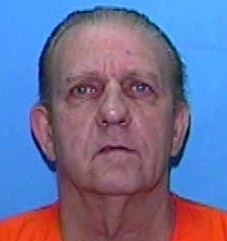
William Harold Kelley
Murderer Ervil LeBaron
Murderer · USA · 1972
Ervil Morrell LeBaron (1925 to August 16, 1981) was the leader of a polygamous…
35 victims
Ervil LeBaron
Murderer · USA · 1972
Ervil Morrell LeBaron (1925 to August 16, 1981) was the leader of a polygamous…
35 victims
 Marvin Gray
Murderer · USA · 1975
Marvin Gray was convicted killer who claimed responsibility for 23 slayings and…
23 victims
Marvin Gray
Murderer · USA · 1975
Marvin Gray was convicted killer who claimed responsibility for 23 slayings and…
23 victims
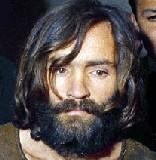 Charles Manson
Murderer · USA · 1969
Charles Milles Manson (born November 12, 1934) was an American criminal and mus…
9 victims
Charles Manson
Murderer · USA · 1969
Charles Milles Manson (born November 12, 1934) was an American criminal and mus…
9 victims
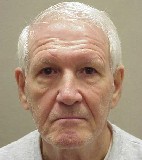 Robert Reldan
Murderer · USA · 1974
Name: Robert Reldan Robert Reldan was sentenced to life in prison on two counts…
8 victims
Robert Reldan
Murderer · USA · 1974
Name: Robert Reldan Robert Reldan was sentenced to life in prison on two counts…
8 victims
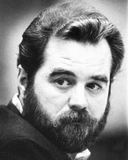 Dennis Duane Webb
Murderer · USA · 1973
Defendant: Dennis Duane Webb · Victims: John Rainwater and Lori Rainwater · Cou…
7 victims
Dennis Duane Webb
Murderer · USA · 1973
Defendant: Dennis Duane Webb · Victims: John Rainwater and Lori Rainwater · Cou…
7 victims
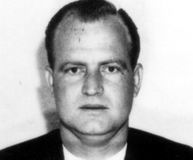 Gary Gene Tison
Murderer · USA · 1967
Gary Gene Tison was serving life sentences at the Arizona state prison. He had…
7 victims
Gary Gene Tison
Murderer · USA · 1967
Gary Gene Tison was serving life sentences at the Arizona state prison. He had…
7 victims
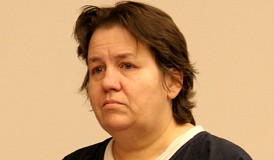 Shirley Winters
Murderer · USA · 1980
Shirley Winters was born February 27, 1958. She was an upstate New York residen…
2 victims
Shirley Winters
Murderer · USA · 1980
Shirley Winters was born February 27, 1958. She was an upstate New York residen…
2 victims
 John Glenn Moody
Murderer · USA · 1988
Name: John Glenn Moody · Sentence status: Executed by lethal injection in Texas…
1 victim
John Glenn Moody
Murderer · USA · 1988
Name: John Glenn Moody · Sentence status: Executed by lethal injection in Texas…
1 victim
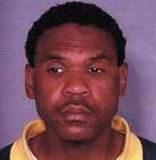 Mac Minister
Murderer · USA · 2005
Mac Minister was an American rapper. His real name was Andre Dow. He was 37 yea…
2 victims
Mac Minister
Murderer · USA · 2005
Mac Minister was an American rapper. His real name was Andre Dow. He was 37 yea…
2 victims
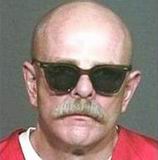 Barry Byron Mills
Murderer · USA · 1979
Barry Byron Mills (born 1948) was a leader of the Aryan Brotherhood (AB) prison…
8 victims
Barry Byron Mills
Murderer · USA · 1979
Barry Byron Mills (born 1948) was a leader of the Aryan Brotherhood (AB) prison…
8 victims
- Gender
- male
- Country
- USA
- Location
- Highlands County, Florida, USA
- Date of birth
- December 8, 1942
- Age at first offence
- 24
- Characteristics
- murder for hire
- Victim profile
- Charles Von Maxcy
- Method of murder
- St abbing with knife - Shooting
- Date(s) of murder
- October 3, 1966
- Years active
- 1966
- Date of arrest
- June 16, 1983 ( seventeen years after)
- Status
-
Sentenced to death
Sentenced to death on April 2, 1984
Case information
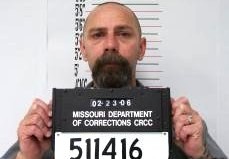
William Harold Kelley was an appellant in a direct appeal to the Florida Supreme Court and was prosecuted in the Tenth Judicial Circuit, Highlands County.
- Full name: William Harold Kelley
- Date of birth (DOB): 12/08/42
- Date of offence: 10/03/66
- Case number (trial): CR81-535
- Florida Supreme Court docket: 73088
- Sentencing judge: The Honorable E. Randolph Bentley, Jr.
- Attorneys (trial): William Kunstler; Jack Edmund — Assistant Public Defender
- Direct appeal attorneys: Barry Haight; Donald Ferguson — Private Attorney
- Collateral appeals attorney: Kevin J. Napper — Private
- Tenth Judicial Circuit: Highlands County
The offence
William Harold Kelley was convicted of the murder of Charles Von Maxcy.
Kelley was hired to kill Charles Von Maxcy by Charles Von Maxcy’s wife, Irene Von Maxcy, and her lover, John Sweet.
On 10/03/66, Charles Von Maxcy was fatally stabbed and shot in his residence by Kelley.
Irene Von Maxcy and Sweet planned to live together off the victim’s inheritance, which was over a million dollars.
Investigation and case developments before Kelley’s prosecution
After Sweet was released due to insufficient evidence, the case remained dormant for over 10 years.
In 1981, Sweet became involved in illegal mob activity in Massachusetts.
When questioned by the police, Sweet offered testimony on the murder of Von Maxcy in return for immunity.
Kelley’s prosecution was based mainly on Sweet’s testimony.
Irene Von Maxcy later recanted her testimony regarding Sweet’s involvement in the murder. Irene Von Maxcy served four and a half years for perjury.
Sweet’s sentence was reversed on appeal.
Arrest
William H. Kelley was arrested on June 16, 1983, roughly seventeen years after Maxcy’s murder.
By that time, Walter Bennett, who was Sweet’s contact for the murder contract, and Andrew von Etter, who was Kelley’s supposed partner in the killing, were both dead. Irene Maxcy had immunity for her role in the murder.
Three special agents of the FBI apprehended Kelley at a motel in Tampa, Florida.
The agents had received a tip that a guest of the motel met Kelley’s description.
When the agents informed Kelley of his indictment for the Maxcy murder, Kelley made statements indicating knowledge of the crime and suggested that the State would never be able to obtain a conviction. These statements became a subject of dispute at Kelley’s trial.
Trial
Indictment and counts
Kelley was indicted on 12/16/81 as follows:
- Count I: First-Degree Murder
Representation and investigation
The trial counsel included William Kunstler and Jack Edmund — Assistant Public Defender.
Kunstler and Mason, a New York law firm, was hired to serve as Kelley’s primary counsel on 12/07/83.
William Kunstler and Jack Edmund — Assistant Public Defender were part of the defense team; William Kunstler was also described as taking primary responsibility for many of the most important trial tasks, including the cross-examination of the state’s star witness, John Sweet.
Prior to trial, Kelley’s defense team included a paralegal named Harvey Brower, a disbarred Massachusetts lawyer, to serve as an investigator.
Before trial, Brower had disappeared.
Kunstler characterized Brower as a thief who “absconded” with fees without ever performing his investigatory duties.
First trial
Kelley’s first trial ended in a mistrial because the jury was unable to reach a verdict.
A trial timeline later described the mistrial:
- On January 30, the court declared a mistrial because the jury was unable to reach a verdict.
Second trial and key witnesses
Kelley’s second trial began in March of 1984 and resulted in a guilty verdict on first-degree murder, with a recommendation for the death penalty.
Kelley’s second trial commenced on March 27.
One of the State’s other key witnesses was Abe Namia, a private investigator hired by Sweet’s defense team when Sweet was being prosecuted.
Namia’s testimony corroborated Sweet’s and was admitted to rebut the inference that Sweet recently fabricated his version of the story.
According to Namia, Sweet had informed Namia that prior to the murder certain unidentified assassins had twice travelled to Florida to kill Maxcy.
Jury verdict
On 03/30/84, the jury found Kelley guilty of first degree murder.
On 03/30/84, the jury returned guilty verdicts on all counts of the indictment.
Sentencing phase and jury recommendation
At the end of the sentencing phase of the trial, a majority of the jury recommended that Kelley receive the death penalty.
On 04/02/84, the jury recommended death by a vote of 8-4.
Sentencing
On 04/02/84, the court sentenced Kelley to death.
- Count I: First-Degree Murder — Death
Sentencing
Kelley was sentenced to death on April 2, 1984.
Direct appeal to the Florida Supreme Court
Kelley filed his Direct Appeal to the Florida Supreme Court on 04/02/84.
Kelley contended that:
- Evidence that could have been used in his defense was destroyed five years before his indictment, violating his due procedural rights.
- The trial court committed error by allowing a witness to testify about an alleged conversation.
- The trial court failed to answer a question addressed to the court by the jury during its deliberations.
- The trial court violated his sixth amendment right of effective assistance of counsel.
- There was improper instruction to jurors regarding note-taking.
- The trial court violated his Miranda rights.
- Misleading comments were made by the judge during jurors’ deadlock instructions.
The Florida Supreme Court affirmed the conviction and sentence on 04/10/86.
Petition for writ of certiorari to the United States Supreme Court
On 07/09/86, Kelley filed a petition for Writ of Certiorari to the United States Supreme Court.
The petition was denied on 10/06/86.
Collateral appeals under 3.850
On 11/30/87, Kelley filed a 3.850 Motion to the Circuit Court.
On 09/06/88, the motion was denied.
On 09/08/88, Kelley filed a 3.850 Appeal to the Florida Supreme Court.
On 09/06/90, the appeal was denied.
Habeas corpus proceedings
On 04/08/91, a Petition for Writ of Habeas Corpus was filed to the Florida Supreme Court.
On 03/12/92, the petition was denied.
A motion for rehearing was denied on 05/26/92.
On 10/02/92, a Petition for Writ of Habeas Corpus was filed to the United States District Court, Southern District.
The petition was granted because of numerous nondisclosures of material and exculpatory evidence by the state needed to establish Brady violations.
The cumulative effect of the Brady violations prejudiced Kelley and warranted a new trial.
On 09/19/02, the petition was granted and the case was remanded for a new trial.
On 08/15/03, the State appealed the decision of the United States District Court to the United States Court of Appeals.
The Court held that the failure to disclose certain documents did not violate Brady, individually or cumulatively, and therefore reversed the United States District Court’s decision granting the habeas petition on 07/23/04.
On 10/24/03, a Petition for Writ of Habeas Corpus was filed to the Florida Supreme Court.
On 05/04/04, the petition was denied.
DNA motion under 3.853
On 01/19/06, Kelley filed a 3.853 Motion (DNA) to the Circuit Court.
An evidentiary hearing was held on 06/06/06.
On 06/29/06, the lower court issued an order denying Kelley’s 3.853 Motion.
On 08/08/06, Kelley filed a 3.853 Appeal to the Florida Supreme Court, which was currently pending.
Other trial and evidentiary details
Fingerprint report
In the course of investigating the Maxcy murder, the Highlands County Sheriff received a “Latent Fingerprint Report,” dated September 1, 1967, from the Florida Sheriffs Bureau.
The report reflected that 48 latent finger and palm print lifts were taken from Maxcy’s house and car.
The report further stated that the lifts were compared against the finger and palm prints of 81 persons, including Kelley, and that none of the lifts positively matched Kelley’s prints.
This report was not supplied to defense counsel.
State’s indictment-related discussions
The circumstances described included Kelley’s statements at arrest and disputes at trial regarding those statements.
Codefendant information and connected proceedings
Sweet was originally indicted and tried for the murder of Charles Von Maxcy.
Sweet’s first trial ended in a mistrial because the jury could not reach a verdict.
Sweet’s second trial resulted in conviction and sentencing to life imprisonment.
Irene Von Maxcy served four and a half years for perjury in connection with her testimony in Sweet’s trial.
Sweet was arrested in 1967 and charged with first degree murder.
The case timeline described also stated that:
- The circuit judge who had presided over Sweet’s case found that he had “no course other than to grant the motion.”
- The judge “reluctantly” ordered that Sweet “stand[s] discharged from further prosecution...”
- The state opted not to try him a third time.
- The judge’s action occurred on November 16, 1971.
Irene Von Maxcy was convicted of perjury in 1971 in connection with her testimony in the Sweet trial where she claimed a state investigator in the case was having an affair with her and “wanted to see Sweet put away.”
Irene Von Maxcy was sentenced to life imprisonment but served only four and one-half years before being released on parole.
Background on the arrangement described
The circumstances described included that Sweet and Irene Maxcy wanted to get her husband out of the way so they could enjoy the largess of his estate.
Sweet was connected with the Boston mob.
Sweet and Irene Maxcy’s agreement included a promise that a couple of gunmen would be paid $5,000 in advance and another $15,000 after the job was done.
On October 1, 1966, Sweet went to Daytona, Florida to meet Andrew von Etter, who was to do the killing, along with a partner.
The next day von Etter called Sweet to tell him the partner, William Kelley, had arrived.
On October 3, 1966, Sweet drove von Etter and Kelley to the estate.
The killers showed Sweet the weapons they would use, knives and a revolver, which they kept in a satchel.
After Sweet drove back to Sebring, Florida, Charles von Maxcy was murdered that day.
After the killing, Kelley told Sweet: “boy, [Maxcy] was a powerful guy. I stabbed him three or four times and he kept coming after us, so I had to shoot him in the head.”
Outcome
The United States Supreme Court denied certiorari on 10/06/86.
The 3.850 motion was denied on 09/06/88.
The 3.850 appeal was denied on 09/06/90.
The Petition for Writ of Habeas Corpus to the Florida Supreme Court was denied on 03/12/92, and a motion for rehearing was denied on 05/26/92.
The Petition for Writ of Habeas Corpus to the United States District Court, Southern District, was granted and remanded for a new trial on 09/19/02, and then reversed by the United States Court of Appeals on 07/23/04.
The Petition for Writ of Habeas Corpus to the Florida Supreme Court filed on 10/24/03 was denied on 05/04/04.
The 3.853 Motion (DNA) was denied by the lower court on 06/29/06, and the 3.853 appeal was pending as of 08/08/06.
Aftermath
The case involved ongoing litigation after the death sentence, including multiple habeas proceedings and a DNA-related 3.853 appeal that was pending.
Spotted an error, or have more information about this case?