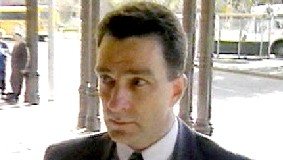
Henry Keogh
Murderer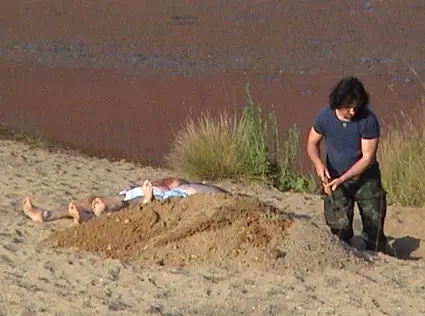 Joseph Schwab
Murderer · Australia · 1987
Joseph Schwab was a German man who murdered five tourists in the Northern Terri…
5 victims
Joseph Schwab
Murderer · Australia · 1987
Joseph Schwab was a German man who murdered five tourists in the Northern Terri…
5 victims
 Lindsay Robert Rose
Murderer · Australia · 1984
Lindsay Robert Rose was sentenced to five consecutive sentences of life impriso…
5 victims
Lindsay Robert Rose
Murderer · Australia · 1984
Lindsay Robert Rose was sentenced to five consecutive sentences of life impriso…
5 victims
 Carl Williams
Murderer · Australia · 2003
Carl Antony Williams (b. October 13, 1970) was an Australian convicted hitman a…
4 victims
Carl Williams
Murderer · Australia · 2003
Carl Antony Williams (b. October 13, 1970) was an Australian convicted hitman a…
4 victims
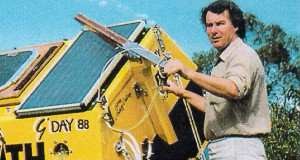 Ashley Coulston
Murderer · Australia · 1992
Ashley Coulston was an Australian sailor and triple murderer who was serving th…
3 victims
Ashley Coulston
Murderer · Australia · 1992
Ashley Coulston was an Australian sailor and triple murderer who was serving th…
3 victims
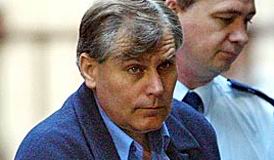 Bandali Debs
Murderer · Australia · 1997
Bandali Michael Debs (born 18 July 1953) was an Australian murderer. Debs was f…
3 victims
Bandali Debs
Murderer · Australia · 1997
Bandali Michael Debs (born 18 July 1953) was an Australian murderer. Debs was f…
3 victims
 Sef Gonzales
Murderer · Australia · 2001
Sef Gonzales (born September 16, 1980) was an Australian man who was convicted…
3 victims
Sef Gonzales
Murderer · Australia · 2001
Sef Gonzales (born September 16, 1980) was an Australian man who was convicted…
3 victims
 Mark Aaron Brown
Murderer · USA · 1994
Mark Aaron Brown (also referred to as Mark A. Brown) was born on November 13, 1…
2 victims
Mark Aaron Brown
Murderer · USA · 1994
Mark Aaron Brown (also referred to as Mark A. Brown) was born on November 13, 1…
2 victims
 John Rowles
Murderer · 1929
John Rowles was the subject of an investigation that connected multiple disappe…
3 victims
John Rowles
Murderer · 1929
John Rowles was the subject of an investigation that connected multiple disappe…
3 victims
 Charles Edward Smith
Murderer · USA · 1988
Charles Edward Smith was executed by lethal injection in Texas on May 16, 2007.…
1 victim
Charles Edward Smith
Murderer · USA · 1988
Charles Edward Smith was executed by lethal injection in Texas on May 16, 2007.…
1 victim
 Joseph Albert Guay
Mass murderer · In the Air - Canada · 1949
Joseph Albert Guay (born 1917) was a resident of Quebec City who was responsibl…
23 victims
Joseph Albert Guay
Mass murderer · In the Air - Canada · 1949
Joseph Albert Guay (born 1917) was a resident of Quebec City who was responsibl…
23 victims
 Radcliffe Haughton
Murderer · USA · 2012
Radcliffe Franklin Haughton was tentatively identified as the shooter. He was 4…
3 victims
Radcliffe Haughton
Murderer · USA · 2012
Radcliffe Franklin Haughton was tentatively identified as the shooter. He was 4…
3 victims
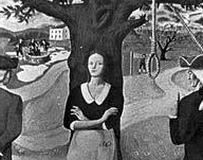 Bathsheba Spooner
Murderer · USA · 1778
Bathsheba Ruggles Spooner (February 15, 1746 – July 2, 1778) was executed by ha…
1 victim
Bathsheba Spooner
Murderer · USA · 1778
Bathsheba Ruggles Spooner (February 15, 1746 – July 2, 1778) was executed by ha…
1 victim
- Gender
- male
- Country
- Australia
- Location
- Margill, Adelaide, South Australia, Australia
- Date of birth
- 1954
- Age at first offence
- 40
- Characteristics
- to collect insurance money, history of mental illness
- Victim profile
- Anna-Jane Cheney, 29 (his fiancée)
- Method of murder
- Drowning in the bat
- Date(s) of murder
- March 18, 1994
- Years active
- 1994
- Date of arrest
- May 7, 1994
- Status
-
Imprisoned
Sentenced to a minimum of 25 years imprisonment on February 15, 1996
Case overview
Henry Vincent Keogh was an Australian convicted of murdering his fiancée, Anna-Jane Cheney. At the time of her death, Anna was 29 years of age. She was a legal practitioner and worked as the Acting Director of Professional Conduct of the Law Society of South Australia.
Timeline
- 1989 — Keogh’s relationship with Anna started.
- June 1991 — Keogh left his wife.
- May 1992 — Keogh and his wife divorced.
- March 1992 — There was a break in Keogh and Anna’s relationship “about March 1992”.
- 18 March 1992 — A meeting at the Oxford Hotel took place in the course of which Keogh first told Ms A about Anna.
- 17 July 1992 — The first sexual intercourse between Keogh and Ms A.
- 17 December 1992 — Ms A broke off the relationship with Keogh.
- 14 November 1992 — Keogh and Anna became engaged.
- 14 February 1994 — Keogh invited Ms A to lunch on St Valentine’s Day and they exchanged statements about their involvement with others.
- 1 February 1994 — Anna booked a wedding photographer.
- 13 November 1993 — Anna ordered her wedding dress.
- February–April 1993 — Keogh took out five life insurance policies on Anna’s life.
- April 1993 — Keogh and Anna had a holiday together in Hong Kong.
- 20 March 1994 — Anna died.
- 22 March 1994 — Keogh was spoken to at the Holden Hill police station; detectives wanted details of Anna’s financial position, insurance, and wills.
- 23 March 1994 — Keogh was seen by Mrs Hepburn-Brown, who advised him to get a lawyer.
- 30 November 1993 — A loan application from Anna was taken by Mr Davies; a life insurance figure of $36 was written in the life insurance box.
- 8 August 1995 — The second trial commenced.
- 22 December 1995 — The Supreme Court of South Australia decision in R v Henry Vincent Keogh 1995 SASC 5397 was given.
- 15 February 1996 — Keogh was sentenced to a minimum of 25 years imprisonment.
- January 2009 — Petition of Henry Keogh was discussed; Keogh was described as an Australian convicted of murder.
- 2002 — A petition was lodged by Keogh in 2002.
- May 2007 — Keogh applied for leave to appeal to the Supreme Court of South Australia.
- 22 June 2007 — Keogh’s appeal was dismissed.
- 16 November 2007 — The High Court of Australia rejected Keogh’s application for special leave to appeal.
- 4 February 2009 — A fourth petition was lodged by Henry Keogh with the Governor of South Australia.
- January 2009 — The petition process was described as “Petition of Henry Vincent Keogh - January 2009”.
The offence
Alleged killing
The Crown case was that Keogh killed Anna by deliberately drowning her in the bath at their home.
Defence theory
The defence case was that the bath was very slippery, Anna was tired and affected by alcohol, and she slipped or fainted and accidentally drowned.
Rescue and ambulance call
At 9.32 pm, Keogh rang St John Ambulance and said, “My fiancée has had an accident in the bath. I think she has drowned.” Keogh testified that he attempted to resuscitate Anna before the ambulance arrived. Two ambulance officers, Murgatroyd and Stevenson, arrived at 9.38 pm. The bathroom and the area around the head were described as dry, although hair was wet. Resuscitation attempts produced expulsions of water from Anna’s mouth and subsequently gastric contents.
The Crown alleged there had been no attempt by Keogh to resuscitate Anna prior to the ambulance arrival.
Investigation and forensic evidence
Autopsy findings and bruising described at trial
Dr Colin Manock performed the autopsy on Anna and completed it on Monday 21 March. He noted bruises on the left calf and on the right shin, along with bruising near the scalp and at the back of the neck.
He described a scenario in which gripping the left calf by an attacker could allow the head to slide under the water. He also testified that he believed Anna’s loss of consciousness and death occurred shortly after the bruises were sustained.
Dr Manock’s evidence included the following:
“Yes. It was possible to cover the bruises by putting a hand over the leg and a thumb approximating to the bruise on the inner aspects of the left leg and the three forefingers would encompass the bruises on the right aspect.”
“If the person is sitting at the plug end of the bath and an arm is put underneath both legs to grip the left calf, either by simply lifting or lifting the leg and pushing the head, then the head could slide under the water.”
Keogh’s blood alcohol was about 0.1% at the time of her death, as stated in the trial narrative.
Evidence about possible drowning mechanism
The prosecution advanced a “brides in the bath” theory involving the grip marks and deliberate drowning.
Defence expert evidence
Defence called forensic pathologists included Dr Ansford and Professor Cordner. Their evidence did not reject the possibility of accident and included opinions that unconsciousness before drowning was consistent with the findings.
Resuscitation evidence and gastric expulsion
The defence called anaesthetist Dr Edwards. The learned trial judge summed up Dr Edwards’ evidence:
“(Dr Edwards) said he saw nothing inconsistent as between what the ambulance officers saw and Keogh's description of his actions. He said that vomiting is a random event. It may or may not take place. He said that 60 ccs of water, about one-sixth of a Coca-Cola can, would escape if the patient were rolled on to her side. He said this could well dissipate and not leave any sign that it had been there.”
Additional statements about bruises during proceedings
During the trial, when asked about the age of the bruises, Manock responded:
“I could find no evidence of white blood-cell migration into the areas and therefore, I felt they were peri-mortem. In other words, they’d occurred close to the time of death. I felt that was probably within 4 hours.”
The prosecution stated:
“But there are two things, you might think, that are crucial to this case. If those four bruises on her lower left leg were inflicted at the same time, and that time was just before she died in the bath, there is no other explanation for them, other than a grip. If it was a grip, it must have been the grip of the accused. If it was the grip of the accused, it must have been part of the act of murder.”
Manock later stated that the bruise could have occurred up to a number of days prior to Cheney’s death.
Arrest
Two months after police initially viewed the death as a tragic accident, Henry Vincent Keogh was arrested and charged with murder.
Trial
Court and judge
The Supreme Court of South Australia heard the matter. The decision is stated as “R v Henry Vincent Keogh 1995 SASC 5397 22 December 1995 Matheson, Millhouse and Mullighan JJ”.
Jury and pre-trial publicity
The first trial ended with a hung jury. The second trial commenced on 8 August 1995, about five months after an article had been published while the first jury deliberated. The trial judge made statements to the jury panel about media publicity, directing them to bring an open and independent mind.
The trial judge stated:
“Ladies and gentlemen in the jury panel, in a moment the jury for this case will be empanelled; but in accordance with our usual practice, I'll ask the Director of Public Prosecutions in a moment to read you the names of the witnesses he proposes to call in the case.”
“In addition, I should also make mention of the fact that there has been a considerable amount of media publicity in relation to this case and no doubt that has engendered a good deal of discussion in the community about the case.”
He also warned:
“I repeat my warning, ladies and gentlemen, about previous publicity in this case or anything which you might have heard in relation to it.”
He instructed:
“You are not to regard anything you have heard outside the courtroom about this matter, but to deliver your verdict upon the evidence.”
Charges and verdict
Keogh was convicted of murdering his fiancée, Anna Cheney.
Grounds of appeal (as recorded in the trial appeal reasoning)
The appeal identified the following grounds:
- The trial judge erred in admitting the evidence of the witness Ms A; [name suppressed]
- The trial judge erred in admitting the evidence of the witness Ms B; [name suppressed]
- The trial judge erred in not permanently staying the trial because of irreparable unfairness due to pre-trial publicity
- The verdict of the jury was unsafe and unsatisfactory
Insurance evidence and alleged motive
The Crown argued that Keogh killed Anna to inherit more than $1 million in life insurance. The narrative described that Keogh took out five insurance policies on Anna’s life between February and April 1993; he was the sole beneficiary and stood to benefit by more than $1,125,000. The Crown alleged that Keogh forged Anna’s signatures on proposals and on cheques and debit authorities used to pay premiums. The defence argued that the policies were devices and were never meant to be claimed on, and maintained that Anna had full knowledge of the scheme.
The Crown conceded during the trial that Cheney was aware of at least two of these policies.
Sentencing
Keogh was sentenced to 26 years in prison in 1995 for the 1994 murder of his fiancée, Anna-Jane Cheney. He was sentenced to a minimum of 25 years imprisonment on February 15, 1996.
Appeals
Supreme Court of South Australia
In May 2007, Keogh applied for leave to appeal to the Supreme Court of South Australia. The appeal was dismissed on 22 June 2007.
High Court of Australia
On 16 November 2007, the High Court of Australia rejected Keogh’s application for special leave to appeal against a decision by the South Australian Court of Criminal Appeal that it did not have jurisdiction to reopen his appeal.
Further petitions
On 4 February 2009, Keogh lodged a fourth petition with the Governor of South Australia. It alleged that his conviction was obtained by fraud, deceit and manifest error. The Governor referred the petition by to the Attorney-General of South Australia. It was stated that the Attorney-General had said that if a further petition was lodged, it would be assessed and determined by an Acting Attorney-General (not himself) due to published comments about Keogh’s conviction.
In 2002, Keogh’s legal team, led by Kevin Borick QC, lodged a petition with a substantial number of complaints and raised doubts about evidence used in the conviction. South Australian Deputy Premier Kevin Foley said that after considering the report of the Solicitor General following an examination over two and a half years of 37 complaints contained in Keogh’s third petition, he formed the opinion that it did not disclose any arguable basis for a miscarriage of justice.
Outcome
Keogh remained convicted of murdering his fiancée, Anna-Jane Cheney.
Aftermath and later controversy described
Histological tissue analysis described as new evidence
The narrative described that a histological microscopic tissue analysis of the supposed “thumb bruise” contradicted bruising and showed no sign of bruising. It stated that the tissue work occurred after the autopsy but was not mentioned by Manock when he gave evidence at trial. It also said the existence of the analysis was revealed during Manock’s testimony at a 2004 Medical Board of South Australia hearing into complaints against him.
The Supreme Court ruled it did not have the power to reopen the appeal, and Keogh’s lawyer Kevin Borick QC stated he would apply immediately to the High Court for special leave to appeal.
Complaints about autopsy handling and scene control
Keogh’s defence team raised multiple complaints, including:
- Manock saw what he believed to be four bruises on the calf of Cheney, described as caused by a grip mark; when a sample was taken of the thumb bruise and examined for bruising, the result was negative.
- When asked during the trial about the age of bruises, Manock gave a timeframe consistent with peri-mortem occurrence within “probably within 4 hours,” and Keogh’s defence team disputed the interpretation.
- The “method of drowning proposed by Manock” was said to be not possible when the physical location of the bath against the wall was considered.
- Manock did not visit the scene until three months after the drowning theory was proposed.
- A professor of anatomy, Maciej Henneberg, was described as stating it would be impossible to drown someone by holding their legs over their head due to muscle power differences.
- Cheney’s body was released for cremation on the same day that her death was considered a murder.
- Cheney’s body was not examined by anyone other than Manock.
- Manock stated at the committal hearing: “I was at no time looking or thinking that the death was accidental because I could find no explanation as to why she would drown.”
- Photographs allegedly showed marks and swelling that may indicate the possibility of a severe allergic reaction.
- Manock did not at any stage review the medical records of Cheney.
- The scene was not cordoned off or controlled by police, and photographs reportedly appeared to show that Cheney’s body had been “tidied up”.
- It was stated that only three days following Cheney’s death was the death considered suspicious.
Medical Board and related review described
The narrative described that the medical board cleared Manock of unprofessional conduct in 2005, and that Borick won a Supreme Court review of that board decision.
Other details
Henry Keogh’s background and personal circumstances described
Keogh grew up in Adelaide, South Australia. He was educated at Saint Ignatius College and briefly at the School of Dentistry at The University of Adelaide. He was employed by Baker Young the stockbrokers and had previously been employed by the State Bank until January 1994. Keogh was 39 years of age at the time of the offence as described in the appeal reasoning. Keogh had been married and had three daughters. The relationship between Keogh and Anna started in 1989. Keogh left his wife in June 1991 and they were divorced in May 1992. In late 1991, Keogh moved into a house with Anna at Parkside. There was then a break in their relationship in about March 1992. The engagement was announced on 14 November 1992 and the wedding was planned for 24 April 1994. Anna had made a booking for a wedding reception at Ayers House on 15 April 1993, and her father had paid a deposit of $500. Anna ordered her wedding dress on 13 November 1993. Anna booked a wedding photographer on 1 February 1994.
Statements about alcohol
The narrative described that Anna had a blood alcohol level about 0.1% at the time of her death. The defence contended Anna was affected by alcohol.
Named individuals and roles included in the appeal reasoning and narrative
- Kevin Borick QC — Keogh’s legal team leader; described as Keogh’s lawyer.
- Kevin Foley — South Australian Deputy Premier; discussed the Solicitor General report and complaints.
- Colin Manock, Chief forensic pathologist — forensic pathologist involved.
- Maciej Henneberg — Professor of Anatomy at the University of Adelaide.
- Dr Stephen Cordner — head of the Victorian Institute of Forensic Medicine; testified for the defence.
- Dr Byron Collins — described as an independent forensic pathologist who provided assessments.
- Dr Ansford — defence forensic pathologist.
- Dr James — referenced as a pathologist who reviewed the work of Dr Manock.
- Dr Edwards — defence anaesthetist.
- Murgatroyd and Stevenson — ambulance officers.
- Tyson — woman police officer who took a short statement from Keogh.
Evidence about witnesses Ms A and Ms B
Ms A and Ms B were described as two women with whom Keogh had affairs during the time he lived with Anna and after they became engaged. The appeal narrative discussed the evidence being admitted for a limited purpose regarding Keogh’s perception of his relationship with Anna.
Identifiers and legal references mentioned
- “R v Henry Vincent Keogh 1995 SASC 5397”
- “Matheson, Millhouse and Mullighan JJ”
- “Murphy v The Queen (1988) 167 CLR 94”
- “R v Glennon (1992) 173 CLR 592”
- “Tuckiar v The King (1934) 52 CLR 335”
- “R v von Einem (1991) 55 SASR 199”
- “Wilson v The Queen (1970) 123 CLR 334”
- “R v Hissey (1973) 6 SASR 280”
- “M v The Queen (1994) 181 CLR 487”
- “Shepherd v The Queen (1990) 170 CLR 573”
- “Chamberlain and Another v The Queen (1983) 153 CLR 521”
Spotted an error, or have more information about this case?