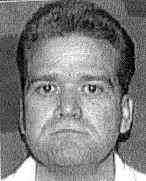
Ricky Eugene Kerr
Murderer Brian Kevin Rosenfeld
Murderer · USA · 1985
Brian Kevin Rosenfeld Brian Kevin Rosenfeld was sentenced to three concurrent l…
23 victims
Brian Kevin Rosenfeld
Murderer · USA · 1985
Brian Kevin Rosenfeld Brian Kevin Rosenfeld was sentenced to three concurrent l…
23 victims
 Russell Ellwood
Murderer · USA · 1991
Russell Ellwood was a former taxi driver. Authorities suspected him of killing…
20 victims
Russell Ellwood
Murderer · USA · 1991
Russell Ellwood was a former taxi driver. Authorities suspected him of killing…
20 victims
 Robert Martines Perez
Murderer · USA · 1994
Name: Robert Martines Perez · Other name used in proceedings: Robert Martinez P…
15 victims
Robert Martines Perez
Murderer · USA · 1994
Name: Robert Martines Perez · Other name used in proceedings: Robert Martinez P…
15 victims
 Billy Frank Vickers
Murderer · USA · 1993
Billy Frank Vickers Vickers was executed by lethal injection in Texas on Januar…
14 victims
Billy Frank Vickers
Murderer · USA · 1993
Billy Frank Vickers Vickers was executed by lethal injection in Texas on Januar…
14 victims
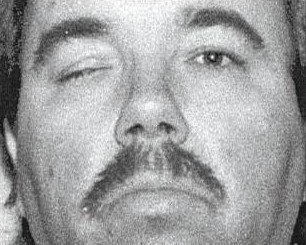 Dennis Wayne Eaton
Mass murderer · USA · 1989
Dennis Wayne Eaton was executed by lethal injection in Virginia on June 18, 199…
4 victims
Dennis Wayne Eaton
Mass murderer · USA · 1989
Dennis Wayne Eaton was executed by lethal injection in Virginia on June 18, 199…
4 victims
 Christopher Wayne Pritchard
Murderer · USA · 1988
Christopher “Chris” W. Pritchard (born November 25, 1968) was an American man c…
1 victim
Christopher Wayne Pritchard
Murderer · USA · 1988
Christopher “Chris” W. Pritchard (born November 25, 1968) was an American man c…
1 victim
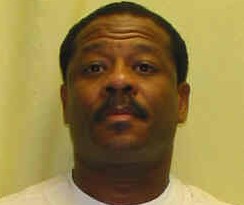 Jerome Henderson
Murderer · USA · 1985
Jerome Henderson was sentenced to death on August 5, 1985. The clemency report…
1 victim
Jerome Henderson
Murderer · USA · 1985
Jerome Henderson was sentenced to death on August 5, 1985. The clemency report…
1 victim
 Gerald Wayne Bivins
Murderer · USA · 1991
Gerald Wayne Bivins · January 16, 1991 — Bivins and two other men committed mul…
1 victim
Gerald Wayne Bivins
Murderer · USA · 1991
Gerald Wayne Bivins · January 16, 1991 — Bivins and two other men committed mul…
1 victim
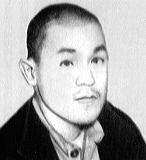 Yoshio Kodaira
Serial killer · Japan · 1932
Yoshio Kodaira ( 小平 義雄 , Kodaira Yoshio , January 28, 1905 - October 5, 1949) w…
10 victims
Yoshio Kodaira
Serial killer · Japan · 1932
Yoshio Kodaira ( 小平 義雄 , Kodaira Yoshio , January 28, 1905 - October 5, 1949) w…
10 victims
- Gender
- male
- Country
- USA
- Location
- Bexar County, Texas, USA
- Date of birth
- September 1, 1959
- Age at first offence
- 35
- Characteristics
- disputes
- Victim profile
- Elizabeth McDaniel, 57, and her son Gary Barbier, 42 (his landlords)
- Method of murder
- Shooting (.25-caliber revolver)
- Date(s) of murder
- August 31, 1994
- Years active
- 1994
- Date of arrest
- 3 days after
- Status
-
Sentenced to death
Sentenced to death on December 19, 1995
Case information
Name: Ricky Eugene Kerr Court: Court of Criminal Appeals of Texas Docket / Case number: No. 35,965-04 Ex Parte Ricky Eugene Kerr Proceeding: Application for a Writ of Habeas Corpus from Bexar County County: Bexar County Applicant: Ricky Eugene Kerr Type of proceeding: “subsequent” application for a writ of habeas corpus in a death penalty case
Timeline
- November 16, 1995 — A jury found applicant guilty of capital murder for the double murders of Elizabeth McDaniel and her son Gary Barbier; the jury answered statutorily mandated special punishment issues requiring a sentence of death.
- June 18, 1997 — The Court of Criminal Appeals affirmed applicant’s conviction and death sentence in State v. Kerr, No. 72,261.
- July 22, 1997 — Original habeas counsel filed a document entitled “Application for Post-Conviction Writ of Habeas Corpus Brought Pursuant to Article 11.071 of the Texas Code of Criminal Procedure.”
- August 12, 1997 — The convicting trial court entered Findings of Fact and Conclusions of Law concerning applicant’s original filing.
- August 20, 1997 — Applicant wrote a letter to the clerk of the Court complaining about entitlement to habeas counsel to “investigate any factual and legal grounds which would possibly supported [sic] relief from conviction and death sentence.”
- September 24, 1997 — The Court dismissed the original habeas application in Ex parte Ricky Eugene Kerr, No. 35,065-01.
- August 6, 2000 — Applicant’s current habeas counsel filed a writ application.
- January 2, 2002 — The Court delivered its order.
- December 19, 1995 — Sentenced to death (as reflected in the status field).
Background
Applicant Ricky Eugene Kerr filed a “subsequent” application for a writ of habeas corpus in a death penalty case. The Court of Criminal Appeals addressed whether the application was procedurally barred under Section 5 of article 11.071 because it was filed after an earlier application.
The Court rejected one rationale for why the application should not be barred. The Court agreed with another rationale. The Court concluded that the original filing was not an application for a writ of habeas corpus as defined under article 11.071, and therefore the August 6, 2000 filing was treated as the initial writ. The Court considered the application timely and issued the writ by operation of law.
The issue presented
Applicant contended that the current writ was not procedurally barred by Section 5 of article 11.071, which generally prohibits consideration of subsequent writs. He argued that his application filed on August 6, 2000 should be considered on its merits for either of two reasons:
- His original filing was not a true writ that attacked his conviction or sentence.
- His original habeas attorney did not provide effective assistance of counsel and thus he was entitled to a second go-around.
The Court rejected the second rationale but agreed with the first.
The offence / conviction underlying the habeas proceedings
On November 16, 1995, a jury found applicant guilty of capital murder for the double murders of Elizabeth McDaniel and her son Gary Barbier. The jury then answered the statutorily mandated special punishment issues in a manner requiring the trial court to assess a sentence of death.
Direct appeal was automatic. On June 18, 1997, the Court affirmed the conviction and death sentence in an unpublished opinion, State v. Kerr, No. 72,261.
Habeas proceedings and related filings
Appointment of habeas counsel
Meanwhile, the Court appointed applicant an attorney to represent him for purposes of filing a habeas corpus writ pursuant to article 11.071.
First habeas filing (styled as an article 11.071 application)
On July 22, 1997, original habeas counsel filed a document with the convicting court entitled:
- “Application for Post-Conviction Writ of Habeas Corpus Brought Pursuant to Article 11.071 of the Texas Code of Criminal Procedure.”
The Court found that the document was not, in fact, a true application for a writ of habeas corpus under article 11.071 because it did not attack applicant’s capital murder conviction or death sentence and raised no constitutional or jurisdictional claims concerning the fundamental fairness of the underlying trial or the accuracy of the verdict.
Instead, the document attacked the constitutionality of the habeas corpus statutory scheme itself as embodied in article 11.071. The trial court found that this did not entitle the inmate to relief from a judgment imposing a penalty of death.
Trial court findings on the first filing
The convicting trial court noted that the petitioner had not raised issues that, if resolved in his favor, would entitle him to a new trial or a new sentencing hearing. The trial court also found he had not brought claims attacking the legality of his conviction or sentence and had not brought claims within the parameters of errors that could form the basis for post-conviction relief.
The trial court’s Findings of Fact and Conclusions of Law (dated August 12, 1997) included the following verbatim statements:
“The petitioner has not raised any issues, which if resolved in his favor, would entitle him to a new trial, or a new sentencing hearing.
The petitioner has not brought forth any claims attacking the legality of his conviction or sentence. . . .
Petitioner's sole claim for relief makes no claim, express or implied, which falls within the parameters of the types of error [which] can form the basis for post-conviction relief.
He has not demonstrated the need for an evidentiary hearing, on the contrary, the petitioner seeks a finding from this Court that no contested factual issues exist.[ (3) ]
The Court will comply with this request.”
The Court’s opinion states that the trial court recommended that “this application for habeas corpus relief be denied in all respects.”
Court denial of the first habeas application
The Court agreed with the recommendation and denied relief because none was sought from the underlying conviction or sentence. The Court referenced:
- Ex parte Ricky Eugene Kerr, No. 35,065-01 (Tex. Crim. App. delivered September 24, 1997) (unpublished).
The Court stated that judges Meyers & Price were not participating in the decision. It also stated that Judge Baird wrote a short dissent (without written opinion) to the denial.
Applicant’s letter complaining about habeas counsel
The opinion states that Judge Baird dissented because applicant personally wrote a letter to the clerk of the Court on August 20, 1997, complaining that he was entitled to habeas counsel who would “investigate any factual and legal grounds which would possibly supported [sic] relief from conviction and death sentence.”
The opinion includes verbatim quoted language from applicant about the filing:
“[Habeas counsel] has filed only one claim for relief, essentially challenging the unitary review process of Art. 11.071 Code Crim. Proc. Ann. (Vernon Supp. 1997). I don't know whether this is a debatable issue, but I do know under all the "new habeas laws" prevent repeated writs and it is very important that counsel be as thorough as possible. I am sure if [habeas counsel] would have at least research the records and investigated the facts (which he is require[d] to do) he could have presented a complete post conviction writ of habeas corpus, now I am face[d] with the possibility of loosing [sic] all state and federal constitutional claims. Applicant may not be a legal scholar, but even he could recognize that the document his original habeas counsel filed on his behalf was not an application for a writ of habeas corpus attacking his capital murder conviction or death sentence.”
Execution date setting and motion for stay in state court
After the denial, the trial court set an execution date for February 25, 1998.
Shortly before that date, applicant filed:
- “Motion for Stay of Execution, Application for Writ of Habeas Corpus Pursuant to Art. V, Sec. 5 of the Texas Constitution or, in the Alternative, Motion to Vacate Prior Judgment and for Appointment of Competent Counsel Pursuant to Tex. Code Crim. Proc. Art. 11.071.”
The Court dismissed that motion in a short per curiam order on February 23, 1998.
Judge Overstreet dissented, arguing that applicant had not received effective assistance of counsel on his first “writ.” The dissent included verbatim quoted reasoning:
“The initial habeas attorney has even signed an affidavit admitting that he filed such a perfunctory habeas application because he erroneously thought he was precluded from challenging the conviction/sentence trial proceedings while the direct appeal was pending; i.e. because the direct appeal had not been decided before the deadline for the filing the writ application, he thought "that no issues could be raised attacking the validity of conviction or sentence." Thus applicant has been very effectively denied his right to challenge his conviction via Texas state habeas application because of his attorney's error. . . . . . .It appears that this Court, in approving such a charade, is punishing applicant, rewarding the State, and perhaps even encouraging other attorneys to file perfunctory "non-applications." Such a non-application certainly makes it easier on everyone-no need for the attorney, the State, or this Court to consider any potential challenges to anything that happened at trial. Nevertheless, the Legislature has provided convicted capital defendants with the right to make such challenges by habeas corpus application.”
The Court’s opinion states that judges Baird, Overstreet and Womack would have granted a stay of execution.
Federal habeas activity
On the same day that the Court dismissed the motion for stay of execution, applicant filed a stay in federal district court. The stay was granted.
The federal court appointed current habeas counsel as federal writ counsel and granted filing extensions so counsel could investigate and raise appropriate habeas claims.
On February 24, 1999, the federal district court dismissed, without prejudice, applicant’s federal writ of habeas corpus. The opinion includes verbatim quoted language:
“the courts of the State of Texas should be given an opportunity to address each of petitioner's numerous unexhausted claims for federal habeas corpus relief, as well as the cornucopia of new evidence supporting same that petitioner proposes to present to this Court.”
Third (instant) writ application and whether it was a subsequent writ
On March 1, 2000, applicant filed the instant third “writ” application with the convicting court, transmitted to the Court under art. 11.071, § 5 to determine whether it was a subsequent writ barred by Section 5.
The Court concluded it was not a subsequent writ. It was the first writ application that complied with article 11.071 requirements in that it “seeks relief from a judgment imposing a penalty of death.”
Legal reasoning about what qualifies as an “initial application”
The Court described changes under the Habeas Corpus Reform Act of 1995 and stated that it adopted a unitary system for death penalty habeas review, adopted an “abuse of the writ” doctrine limiting inmates to a one-time application except in exceptional circumstances, and provided for appointment and payment of counsel.
The Court quoted Representative Pete Gallego and Senator Montford’s committee discussion in describing those major changes and the expected “one bite of the apple” approach.
Quotes included in the Court’s opinion
The opinion includes verbatim quotations from Representative Pete Gallego:
“And we tell individuals that everything you can possibly raise the first time, we expect you to raise it initially, one bite of the apple, one shot. ... What we're attempting to do here is to say "raise everything at one time." You get one bite of the apple. If you have to stick the kitchen sink in there, put it all in there, and we will go through those claims one at a time and make a decision. But none of this "every week you file a new petition" which is currently basically what happens. ... The idea is this: you're going to be able to fund counsel in these instances and we are going to give you one very well-represented run at a habeas corpus proceeding. And unless you meet a very fine-tuned exception, you're not going to be able to come back time after time after time.”
The opinion also quoted Senator Montford’s testimony about the Habeas Corpus Reform Act making major changes (described in narrative form within the record as “Senator Montford explained…”). The record does not reproduce additional verbatim text for Senator Montford beyond being part of the narrative of what was explained.
Purpose of habeas corpus
The opinion discussed the “very purpose” of habeas corpus and cited cases and commentary. It included verbatim quotes from:
- Blackledge v. Allison:
- Ex parte Ramzy:
- 39 Am Jur 2d, Habeas Corpus § 1:
“the purpose of the writ of habeas corpus ... is not to determine the guilt or innocence of a prisoner; the primary, if not the only, object of the writ is to determine the legality of the restraint under which a person is held”
“the purpose of the writ of habeas corpus is to obtain a speedy adjudication of a person's right to liberation from illegal restraint”
“the very purpose of the writ of habeas corpus [is] to safeguard a person's freedom from detention in violation of constitutional guarantees”
Court’s application to Kerr’s earlier filings
The Court reasoned that a death penalty “writ” that does not challenge the validity of the underlying judgment and would not result in immediate relief from the capital murder conviction or death sentence is not an “initial application” for purposes of art. 11.071, § 5.
The Court concluded that neither of applicant’s first two filings qualified as an “initial application” for a writ of habeas corpus seeking “relief from a judgment imposing a penalty of death.” It reasoned that:
- The first motion attacked the constitutionality of the habeas statute itself and would not provide relief from the underlying conviction or death sentence.
- The second filing dealt with a stay of execution and an allegation of ineffective assistance of the original habeas counsel, which the Court described as derivative and aimed at avoiding a procedural bar rather than changing the underlying illegality.
Holding and disposition
The Court held that the timely filed document submitted by applicant’s original habeas counsel on July 22, 1997 was not “a writ of habeas corpus in which the applicant seeks relief from a judgment imposing a penalty of death.”
As a result, the Court held that the application for a writ of habeas corpus filed by applicant’s present habeas counsel on August 6, 2000 was applicant’s initial writ for purposes of art. 11.071.
The Court considered the August 6, 2000 application timely filed as of the Court’s date of decision, issued the writ by operation of law pursuant to art. 11.071, § 6(a), and returned the initial application and associated materials to the trial court for further proceedings.
Date Delivered: January 2, 2002 The order also included: Johnson, J., filed a concurring opinion; Keller, P.J., filed a dissenting opinion joined by Keasler, J.; Hervey, J., not participating.
Concurring opinion (Johnson, J.)
Johnson, J. joined Parts I and II of the majority opinion and concurred in the judgment.
Johnson, J. stated he disagreed with the majority’s reasoning that the Court declined “to place blame upon anyone” for applicant’s situation and disagreed that the original habeas counsel was competent and qualified as appointed. Johnson, J. also disagreed with the majority’s view differentiating “competent counsel” and “effective counsel.”
Johnson, J. attributed the criticism to the need for effective counsel and argued that the Court had responsibility because it appointed the counsel who filed the initial “non-writ.” Johnson, J. referenced purposes of the statute to provide one “very-well represented run at a habeas corpus proceeding.”
The concurring opinion included the following verbatim statement from Johnson, J.:
“Holding a general license to practice law does not guarantee that the attorney possesses sufficient knowledge of relevant areas of law such that the client receives competent counsel rather than the mere presence of a licensed attorney. Mere presence is not enough.”
Johnson, J. further stated:
“I also cannot agree that it is possible to differentiate between "competent counsel" and "effective counsel."”
Johnson, J. also stated:
“This case, combined with Graves, allows relief on a claim of ineffective assistance of habeas counsel only when habeas counsel is so ineffective that the writ application filed cannot even be considered a true writ application. Surely we can do better than that.”
Date Delivered: January 2, 2002.
Dissenting opinion (Keller, P.J., joined by Keasler, J.)
Keller, Presiding Judge, dissented because he disagreed with the majority’s conclusion that applicant’s first application was not a true application for writ of habeas corpus.
The dissent explained that the Court’s holding conflicted with how Article 11.07 had been construed before Article 11.071. It argued that the language “seeks relief from a judgment” was not meant to narrow claims to those attacking the conviction or verdict. The dissent asserted that the majority’s interpretation would disavow prior cases including Evans, Whiteside, Woodward, and McPherson.
The dissent discussed differences between Article 11.07 and Article 11.071, including:
- Article 11.07 contains “challenging the same conviction” language relevant to subsequent applications.
- Article 11.071 does not contain the same “challenging the conviction” language in its Section 5 subsequent application bar.
The dissent stated that, given the absence of that language in Article 11.071 § 5 and considering the parallel legislative adoption, any initial application would trigger the § 5 bar in death penalty cases regardless of whether the initial application attacked the conviction.
The dissent concluded:
- The present application was a subsequent application subject to § 5.
- Because applicant did not meet the enumerated exceptions, the application should have been barred.
The dissent included the verbatim conclusion:
“For these reasons, I conclude that the present application is indeed a subsequent application subject to §5. Because applicant fails to meet the enumerated exceptions, this application should be barred. I respectfully dissent.”
Date Filed: January 2, 2002 Publication: PUBLISH
Other details
References and cited authorities within the opinions
The Court’s opinion cited multiple authorities, including:
- Ex parte Mines, 26 S.W.3d 910, 912
- Ex parte Evans, 964 S.W.2d 643, 646-47
- Ex parte Carr, 511 S.W.2d 523, 525
- Ex parte Dora, 548 S.W.2d 392, 393
- Kerr v. Johnson, No. SA-98-CA-151-OG (W.D. Tex. Dated Feb. 24, 1999)
- Ex parte Graves, No. 73,424, (Tex. Crim. App. delivered January 2, 2000)
- Guillory v. State, 557 S.W.2d 118, 120
- Talley v. State, 593 S.W.2d 702, 704
- Ex parte Whiteside, 12 S.W.3d 819, 822 n.1
- Ex parte Woodward, 619 S.W.2d 179
- Ex parte McPherson, 32 S.W.3d 860, 861
Procedural and statutory references included in the record
The opinion discussed and referenced:
- Tex. Code Crim. Proc. Art. 11.071, including Sections 1, 2(c), 4A, 5, 6(a)
- Tex. Const. Art. 1, § 12
- Texas Government Code § 82.061
- Government Code § 501.0081 (as referenced in the dissent)
- S.B. 440, Acts 1995, 74th Leg., including committee and floor presentations
- Act and section citations appearing in footnotes (e.g., footnote references to “Vernon Supp. 2001” and other referenced materials)
Court panel notes
The order lists:
- Cochran, J. delivered the order, joined by Meyers, Price, Womack, and Holcomb, JJ.
- Johnson, J., filed a concurring opinion.
- Keller, P.J., filed a dissenting opinion joined by Keasler, J.
- Hervey, J., not participating.
Execution date setting mentioned in the record
The opinion stated that after the Court’s denial of the first habeas relief, the trial court set an execution date for February 25, 1998 and that applicant filed a motion for stay shortly before that appointed day.


Spotted an error, or have more information about this case?