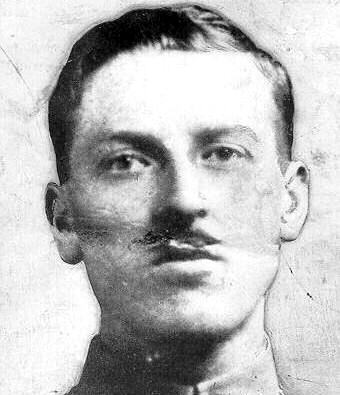
John Robinson
Murderer William Hale
Murderer · USA · 1921
Name: William Hale · Known as: the so-called "King of the Osage Hills" · Occupa…
24 victims
William Hale
Murderer · USA · 1921
Name: William Hale · Known as: the so-called "King of the Osage Hills" · Occupa…
24 victims
 Paul Jaworski
Murderer · USA · 1926
Paul Jaworski was born in Poland as Paul Poluszynski in 1900. He later immigrat…
20 victims
Paul Jaworski
Murderer · USA · 1926
Paul Jaworski was born in Poland as Paul Poluszynski in 1900. He later immigrat…
20 victims
 Harry Maione
Murderer · USA · 1937
Harry “Happy” Maione (1908 – February 19, 1942) was a New York mobster who serv…
12 victims
Harry Maione
Murderer · USA · 1937
Harry “Happy” Maione (1908 – February 19, 1942) was a New York mobster who serv…
12 victims
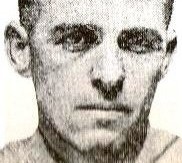 Edward Adams
Murderer · USA · 1920
Edward J. "Eddie" Adams was born in 1887 on a farm in Hutchinson, Kansas as W.J…
7 victims
Edward Adams
Murderer · USA · 1920
Edward J. "Eddie" Adams was born in 1887 on a farm in Hutchinson, Kansas as W.J…
7 victims
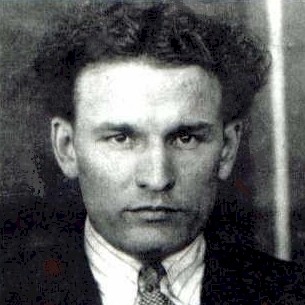 William Kenneth Wagner
Murderer · USA · 1924
William Kenneth (Kinnie) Wagner (born February 18, 1903 in Scott County, VA) wa…
6 victims
William Kenneth Wagner
Murderer · USA · 1924
William Kenneth (Kinnie) Wagner (born February 18, 1903 in Scott County, VA) wa…
6 victims
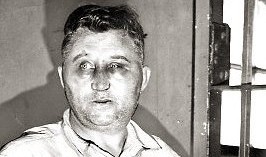 Harry Powers
Murderer · USA · 1931
Harry Powers was executed by hanging on March 18, 1932, at the West Virginia Pe…
5 victims
Harry Powers
Murderer · USA · 1931
Harry Powers was executed by hanging on March 18, 1932, at the West Virginia Pe…
5 victims
 Walanzo Robinson
Murderer · USA · 1989
May 19, 1989 — Walanzo Deon Robinson and Dennis Eugene Hill argued in northeast…
1 victim
Walanzo Robinson
Murderer · USA · 1989
May 19, 1989 — Walanzo Deon Robinson and Dennis Eugene Hill argued in northeast…
1 victim
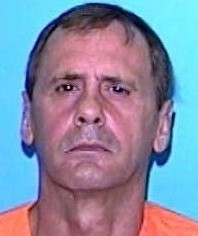 James Armando Card
Murderer · USA · 1981
Name: James Armando Card · Other aliases: James T. Conte or Mike Johnson · Date…
1 victim
James Armando Card
Murderer · USA · 1981
Name: James Armando Card · Other aliases: James T. Conte or Mike Johnson · Date…
1 victim
 Wesley Eugene Baker
Murderer · USA · 1991
Wesley Eugene Baker was convicted of murdering Jane Tyson in the course of a ro…
1 victim
Wesley Eugene Baker
Murderer · USA · 1991
Wesley Eugene Baker was convicted of murdering Jane Tyson in the course of a ro…
1 victim
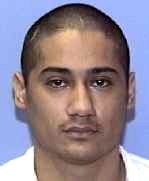 Geronimo Rene Gutierrez
Murderer · USA · 1999
Geronimo Rene Gutierrez was born on 06/12/1977. He was listed as Hispanic and m…
1 victim
Geronimo Rene Gutierrez
Murderer · USA · 1999
Geronimo Rene Gutierrez was born on 06/12/1977. He was listed as Hispanic and m…
1 victim
 Peter Lundin
Murderer · USA / Denmark · 1991
Peter Lundin was born in Solrød Strand, Denmark in 1971. His family migrated to…
4 victims
Peter Lundin
Murderer · USA / Denmark · 1991
Peter Lundin was born in Solrød Strand, Denmark in 1971. His family migrated to…
4 victims
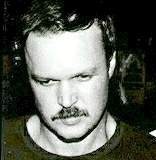 Larry Eyler
Serial killer · USA · 1982
Larry Eyler was born December 21, 1952, in Crawfordsville, Indiana, and was the…
23 victims
Larry Eyler
Serial killer · USA · 1982
Larry Eyler was born December 21, 1952, in Crawfordsville, Indiana, and was the…
23 victims
- Gender
- male
- Country
- London England United Kingdom
- Location
- London England United Kingdom
- Date of birth
- 1891
- Age at first offence
- 36
- Characteristics
- dismemberment, torture
- Victim profile
- Minnie Alice Bonati, 36 (prostitute)
- Method of murder
- Hitting with a coal-scuttle - Suffocation
- Date(s) of murder
- May 4, 1927
- Years active
- 1927
- Date of arrest
- May 23, 1927
- Status
-
Executed
Executed by hanging at Pentonville Prison on 12th August 1927
Background
John Robinson was an estate agent who struggled to stay in business. He rented rooms at a building identified as No. 86 in Rochester Row, Westminster. The tenant of two rooms on the second floor was missing, and police traced the lodgings in Kennington. Robinson left.
Mrs Robinson worked at the Greyhound Hotel in Hammersmith. She was not Robinson’s real wife because he had still been married to another when they married. Robinson had bigamously married her after he had left his first wife and their four children. When she learned this, she agreed to assist the police by meeting Robinson as he had requested.
The victim was Mrs Rolls, real name Mrs Minnie Alice Bonati. She had been married to an Italian waiter named Bonati but had left him to go and live with a man named Rolls and had subsequently taken his name. She was 36-years-old and had been working as a prostitute. She had last been seen alive in Sydney Street, Chelsea, between 3.45pm and 4pm on Wednesday 4th May.
The victim’s husband, Frederick Rolls, testified for the defence that the dead woman was an alcoholic and could become very violent.
A taxi driver had taken men to Rochester Row police station some time after 1pm on the Friday. After he had dropped this fare he was returning when he was hailed by a man standing outside a building opposite the police station and he helped him carry a large trunk from the building to the cab. The taxi-driver took the man to Charing Cross Station where the trunk had been deposited.
Sir Bernard Spilsbury carried out a post-mortem examination at Westminster Mortuary.
Chief Inspector George Cornish investigated the case and decided to back a hunch by washing the duster from the trunk.
The offence
John Robinson decided to get rid of the body by dismembering it and stuffing the body in a trunk, which he left at the Charing Cross Station left-luggage office.
On opening the trunk, police found five brown paper parcels tied with string. Each package was heavy and, on opening, contained a portion of a body wrapped in items of clothing, towels and a duster.
The post-mortem examination concluded that the body was that of a stout woman about 35-years-old. The woman had bruises on her stomach, forehead and back caused while unconscious. The woman died of asphyxiation. Sir Bernard believed the woman had been dead about a week.
In addition to the body portions, the trunk contained a pair of black shoes, a handbag, a pair of knickers with a tab marked 'P. HOLT', and several items of clothing bearing laundry marks. Police traced the knickers to a Mrs Holt who lived in Chelsea.
Police asked Mrs Holt to identify the head of the victim and she confirmed it as that of Mrs Rolls.
Police also considered it likely that the knickers had been stolen by one of the ten female servants that Mrs Holt had employed in the last two years. All the servants were accounted for except Mrs Rolls.
Investigation
Police traced the origins of the trunk and published photos of it in the press. A shopowner recognised it and identified it as one that he had sold for 12/6 to a dark man of average height with a military bearing.
From the laundry marks, police were able to trace the knickers to Mrs Holt in Chelsea. Police were surprised to find that she was still alive.
The building in Rochester Row was identified as No. 86. The tenant of two rooms on the second floor was missing and was identified as John Robinson, an estate agent.
Police found a telegram that had been returned and it was addressed to 'Robinson, Greyhound Hotel, Hammersmith'. This turned out to be Mrs Robinson.
Police found a bloodstained match in Robinson’s office in the wickerwork of a wastepaper basket.
Chief Inspector Cornish washed the duster from the trunk. It revealed the word 'GREYHOUND'.
Arrest
On Thursday 19th May, Mrs Robinson went to the Elephant & Castle, Walworth, accompanied by Chief Inspector George Cornish. Robinson was arrested and taken back to be interviewed at Scotland Yard.
Robinson denied any involvement in the killing. He was placed on an identity parade, but the shopkeeper, the taxi-driver and the porter all failed to pick him out and he was released.
On 23rd May, Robinson was brought back to Scotland Yard. He then made a statement in which he stated that:
"I met her at Victoria and took her to my office. I want to tell you all about it. I done it and cut her up."
Trial
The trial took place at the Old Bailey and opened on Monday 11th July.
Robinson’s defence was that he had been accosted by Mrs Bonati at Victoria Station and they had gone back to his office in Rochester Row. When they got there, he said she demanded money and when he refused she had become abusive and had tried to strike him. In order to protect himself, he had pushed her away but she had lost her footing and had fallen and hit her head on a coal-scuttle. He said that he left the office expecting her to recover and leave, but when he returned the woman was still lying there. He said that feeling sure no one would believe him, he had been in a panic. He said he had bought a knife and the trunk, dismembered the corpse, and deposited it at Charing Cross Station.
He admitted to everything except an intent to kill.
At trial, the prosecution argued that the injuries to her head were not enough to have killed her. Robinson’s defence was that Bonati had died of a heart attack. Sir Spilsbury argued that Bonati was in good health and said that the bruises on her chest suggested someone had knelt on her while holding her down and possibly suffocating her. The jury believed him.
One witness for the defence was Frederick Rolls, who testified that the dead woman was an alcoholic and could become very violent.
After hearing the evidence, the jury retired for an hour before returning a guilty verdict.
Sentencing
On Wednesday 13th July, 36-year-old Robinson was sentenced to death.
Outcome
Robinson was found guilty at the Old Bailey.
He was sentenced to death on Wednesday 13th July and was hanged at Pentonville Prison on 12th August 1927.
Aftermath
In the 1930s, Brighton became notorious for a series of “trunk murders” when dismembered female bodies were found crammed into separate trunks at Charing Cross Station in 1927 and two more bodies at King’s Cross and Brighton stations in 1934. Brighton became known by the unwanted nickname of “Queen of Slaughtering Places” and was described as the crime capital of England.
The first “trunk murder” was described as occurring on 10th May 1927 when staff at Charing Cross railway station noticed an unpleasant smell in the left luggage department and found the dismembered body of a woman.
Sir Bernard Spilsbury, who had worked on the Dr Crippen case in 1910, was called in to carry out a post-mortem examination at Westminster Mortuary. The body was described as limbless, with legs hacked off at the hips and arms removed from the shoulders. Each piece had been wrapped in brown paper and tied up with string. The crime was described as having been committed two-three weeks previously. A label on the woman’s clothes led police to a Mrs. Holt in South Kensington, who identified the body as that of Mrs. Rolls, who had worked for her as a cook. Rolls’ real name was Minnie Bonati. The investigation led police to Rochester Row where detectives interviewed numerous people.
The most suspicious character was described as John Robinson who sublet two rooms at number 86 under the name of Edwards & Co., an estate agent. He had informed his landlord he was bankrupt and left the building around 9th May.
On 21st May, Chief Inspector George Cornish noticed a label with “Greyhound” stitched onto on a duster found in the trunk. John Robinson’s wife was described as working at the Greyhound Hotel in Hammersmith.
Back at Rochester Row, police found a blood stained match and Robinson was taken to Scotland Yard for questioning.
Robinson was described as confessing to picking up a woman at Victoria Station and taking her back to his room. He said she demanded money and when he refused she rushed at him. He struck her and she fell hitting her head on a chair. Thinking she was merely dazed, Robinson went back to his office in Kennington. The next day he found her dead and decided to dispose of her body by cutting it up and putting it in the trunk.
On 23rd May, Robinson was described as being charged with murder.

Spotted an error, or have more information about this case?