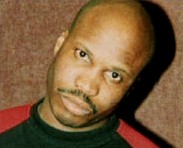
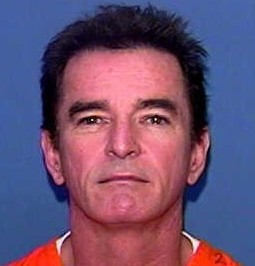
Maury Troy Travis
Serial killer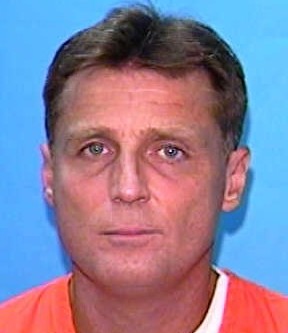 Glen Edward Rogers
Serial killer · USA · 1993
Glen Edward Rogers was a spree killer whose cross-country rampage in 1994-95 le…
70 victims
Glen Edward Rogers
Serial killer · USA · 1993
Glen Edward Rogers was a spree killer whose cross-country rampage in 1994-95 le…
70 victims
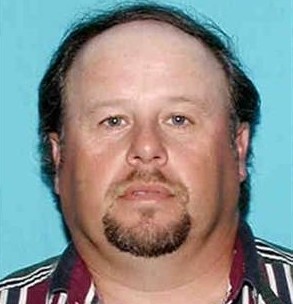 Ronald Dominique
Serial killer · USA · 1997
Ronald Joseph Dominique (born 1964) was an American serial killer from the Bayo…
23 victims
Ronald Dominique
Serial killer · USA · 1997
Ronald Joseph Dominique (born 1964) was an American serial killer from the Bayo…
23 victims
 Jeremy Jones
Serial killer · USA · 1992
Name: Jeremy Jones · Aliases/identities mentioned: John Paul Chapman · Age (as…
21 victims
Jeremy Jones
Serial killer · USA · 1992
Name: Jeremy Jones · Aliases/identities mentioned: John Paul Chapman · Age (as…
21 victims
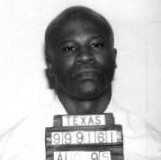 Desmond Jennings
Serial killer · USA · 1993
Desmond Jennings declined to make a last statement. Texas Attorney General John…
20 victims
Desmond Jennings
Serial killer · USA · 1993
Desmond Jennings declined to make a last statement. Texas Attorney General John…
20 victims
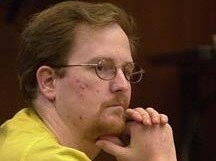 John Eric Armstrong
Serial killer · USA · 1992
John Eric Armstrong was a former USS Nimitz sailor of Dearborn Heights, Michiga…
18 victims
John Eric Armstrong
Serial killer · USA · 1992
John Eric Armstrong was a former USS Nimitz sailor of Dearborn Heights, Michiga…
18 victims
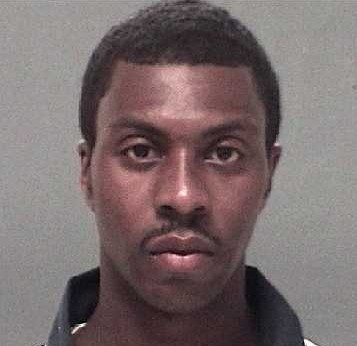 Richard Jameswhite
Serial killer · USA · 1992
Richard Jameswhite was a 19-year-old man wanted in Brooklyn for killings and al…
15 victims
Richard Jameswhite
Serial killer · USA · 1992
Richard Jameswhite was a 19-year-old man wanted in Brooklyn for killings and al…
15 victims
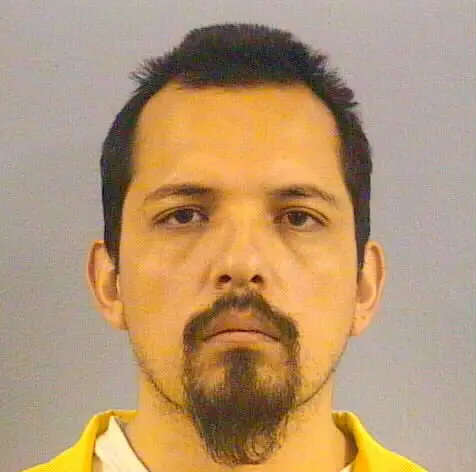 Juan Luna
Mass murderer · USA · 1993
Juan Luna was convicted of killing seven people in the Brown’s Chicken massacre…
7 victims
Juan Luna
Mass murderer · USA · 1993
Juan Luna was convicted of killing seven people in the Brown’s Chicken massacre…
7 victims
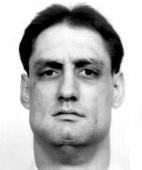 Jamie Bruce McCoskey
Murderer · USA · 1991
Jamie Bruce McCoskey was sentenced to death on March 5, 1993 and was later exec…
1 victim
Jamie Bruce McCoskey
Murderer · USA · 1991
Jamie Bruce McCoskey was sentenced to death on March 5, 1993 and was later exec…
1 victim
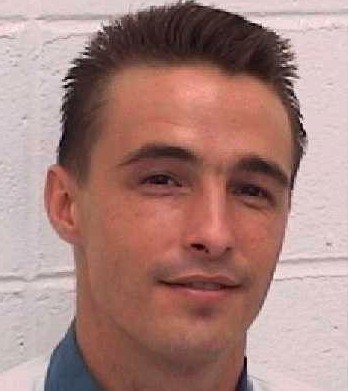 J. W. Ledford
Murderer · USA · 1992
J. W. Ledford Jr. was convicted of the malice murder of Dr. Harry Buchanan John…
1 victim
J. W. Ledford
Murderer · USA · 1992
J. W. Ledford Jr. was convicted of the malice murder of Dr. Harry Buchanan John…
1 victim
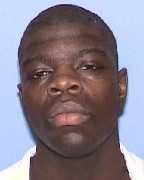 Derrick Charles
Murderer · USA · 2002
Derrick Dewayne Charles was charged with capital murder and pled guilty before…
3 victims
Derrick Charles
Murderer · USA · 2002
Derrick Dewayne Charles was charged with capital murder and pled guilty before…
3 victims
- Gender
- male
- Country
- USA
- Location
- Ferguson, Missouri, USA
- Date of birth
- October 25, 1965
- Age at first offence
- 36
- Characteristics
- rape, kidnapping
- Victim profile
- Women (prostitutes)
- Method of murder
- Ligature strangulation
- Date(s) of murder
- 2001 - 2002
- Years active
- 2001–2002
- Date of arrest
- June 7, 2002
- Status
-
Died in custody
Committed suicide by hanging himself in a St. Louis county jail on June 10, 2002
Case identity
Maury Troy Travis (born October 25, 1965; died June 10, 2002) was an American serial killer who committed suicide in a St. Louis county jail after being arrested for murder.
STATUS / Outcome
Travis was found hanged in his cell on June 10, 2002, in the St. Louis County Jail. County officials later admitted taking few precautions against suicide. Investigators ruled his death a suicide. He had written a suicide note. Three days after a June 7 arrest and interrogation, a pillowcase was pulled over his head and his hands were tied behind his back in the hanging.
Timeline
- October 25, 1965 — Travis was born in St. Louis.
- April 1976 — His family bought the house at 1001 Ford Avenue in Ferguson.
- June 1978 — His parents, Michael V. and Sandra A. Travis, were divorced in St. Louis County.
- 1985 — Travis graduated from McCluer High School.
- March 1988 — While home from college, he held up five shoe stores in St. Louis County.
- 1986–1988 — He attended Morris Brown College, a private college in Atlanta.
- A year later — He pleaded guilty of five counts each of robbery and armed criminal action.
- March 1989–June 1994 — Travis served his sentence in the Farmington Correctional Center.
- February 1998–January 1999 — He returned to prison for violating parole by possessing drugs.
- July 31, 2000 — The body of Mary Shields, 61, was found in East St. Louis.
- Nov. 29, 2000 — Travis returned to prison a second time for violating parole for drug possession.
- July 5, 1989 — The judge sentenced Travis to 15 years in prison.
- June 14, 1994 — He was paroled after five years and three months behind bars for the robberies.
- July 31, 2000 (context) — Police now believed Shields may have been Travis’ first murder victim.
- March 19, 2001 — He was released from prison.
- April 1, 2001 — The body of Alysa Greenwade, 34, was found in Washington Park.
- April 4, 2001 — A woman, 44, was found near death in East St. Louis but was never able to help police identify her attacker.
- May 15, 2001 — The body of Teresa Wilson, 36, was found in West Alton.
- May 23, 2001 — The body of Betty James, 46, was found in St. Louis.
- June 29, 2001 — The body of Verona Thompson, 36, was found in West Alton, just 16 feet from where Wilson was found.
- Aug. 25, 2001 — The body of Yvonne Crues, 50, was found in East St. Louis; police linked Travis to DNA in semen found in her.
- Oct. 8, 2001 — The body of Brenda Beasley, 33, was found in East St.
- Jan. 30, 2002 — An unidentified woman's skeleton was found near Mascoutah; police now suspected Travis.
- March 11 (year not specified) — An unidentified woman's skeleton was found near Highland; police now suspected Travis.
- March 28 (year not specified) — An unidentified woman's skeleton was found in Columbia, Ill.; police now suspected Travis.
- May 21 — The postmark date of a letter to Post-Dispatch reporter Bill Smith that included a map to another body and suggested there may be others.
- May 25 — Police found an unidentified woman's skeleton in West Alton where the map said it would be; they later tracked the map to Travis’ home computer.
- May 18 (context) — The date of the newspaper story that spurred the anonymous letter (as referenced in the investigation narrative).
- May 20 (context) — A computer downloaded a map from Expedia.com during the time in question; Microsoft reported the event on May 20.
- May 24 (context) — The Post-Dispatch gave the Illinois state police the map and letter.
- May 30 (context) — Expedia.com informed the FBI that records of access to the map could be obtained through Microsoft Corp.
- June 3 (context) — Microsoft reported back that only one computer had downloaded a map of the area during the time in question.
- June 4 (context) — WorldCom identified the user the evening of May 20 as MSN/maurytravis; the FBI then sought account information on MSN/maurytravis from Microsoft.
- June 7 — Police and FBI agents arrested Travis at his home on Ford Drive in Ferguson and searched the house; he was charged in federal court documents with two federal kidnapping counts and taken to the St. Louis County Jail.
- June 10, 2002 — Travis was found hanged in his cell; investigators ruled his death a suicide.
- June 17 (context) — Without ever admitting guilt, Travis hanged himself in jail.
- June 22, 2002 (context) — A news article described the ongoing investigation nearly two weeks after Travis was found hanged.
Background
Travis was described as a quiet, respectful boy who sometimes mowed a neighbor’s lawn without being asked and showed the neighbor how to use an electric hedge trimmer. The neighbor knew him by his nickname, Toby, and said he was a pleasant child with a soft heart and “I don't believe he could kill a fly,” and other longtime neighbors said they had virtually no recollection of the boy.
School records showed he was enrolled in 1981 as a ninth-grader at Ferguson Junior High School. By 1982, he was a student at McCluer High School. Sue Hanan, a retired English teacher at McCluer, said she recognized Travis’ name and photograph at the time of his arrest and remembered him as a student in her basic English class for students who failed an earlier English course. She described him as “very quiet and withdrawn, incredibly quiet for a teenager.” She also said, “Even the quiet ones can be noisy sometimes, but not him,”.
Other documents indicated he served two years in the Army Reserve, working as a medical and dental assistant. He took a variety of jobs with trucking companies in the area and volunteered at a local nursing home.
Records showed that by 1987, at age 22, Travis enrolled at Morris Brown College in Atlanta. It was about that time, he would later tell a judge, that he became addicted to cocaine. In March 1988, while home in Ferguson on a college spring break, he robbed five shoe stores in north and west St. Louis County in an eight-day period. In 1989, he pleaded guilty of the robberies using a plastic toy gun. At sentencing six months later, St. Louis County Circuit Judge Steven Goldman said letters of support seemed to indicate the crime spree was “an aberration in your character” resulting from the drug habit, and Travis told the judge he had gone through a drug rehabilitation program and was “clean,” and that he was “rehabilitated.”
Travis had been paroled after five years and three months behind bars for the robberies and worked in prison janitorial and food service areas. A spokesman for the Missouri Department of Corrections said none of his 13 conduct violations were particularly significant.
After his parole on June 14, 1994, he moved into a duplex in the 8800 block of Lucas & Hunt Road. The Rev. Linda Harrison, whose home shared a common wall with Travis’, said there was “not the tiniest” of problems while he was there. She said that once she was in the basement doing wash when he surprised her coming down the stairs, and that he was “so apologetic.” She said he told her: “Ms. Harrison, I'm so sorry.” She also said each time Travis came down into the shared basement, he would break into a hum or a song to let her know that he was coming. Harrison’s son, Zabray Harrison, said he often drank a couple of beers with Travis in front of their homes, and “I don't have a bad thing to say about him,” and that, “I guess you never know what happens behind closed doors.”
During the summers of 2000 and 2001, Travis was a waiter at the restaurant at the Mayfair Hotel downtown. A coworker, Dave Wucher, remembered Travis counseling him on the dangers of drugs and said Travis told him that crack and heroin were the worst thing that God put on this earth. Wucher also said Travis talked “every day” about his 2000 black Mitsubishi Eclipse, and that he told Wucher how to wax his car and how to take care of the engine. Wucher called the car Travis’ “pride and joy.” Wucher said Travis told him that East St. Louis was “a good place to dump things because there's not many police around.”
A conversation between Travis and Wucher’s girlfriend, Julie Kroenig, continued to be described as haunting Wucher and Kroenig. Kroenig said she was working as an intern for KDNL (Channel 30) news last July when Travis asked if her station had done a story on prostitutes getting killed. She said he “asked if my station had done a story on prostitutes getting killed.” She said Travis told her he had friends who knew about bodies getting dumped and that he specifically referred to a “serial killer.” Kroenig said she pitched the story to her boss at the TV station, but it “went nowhere” after they could find no information about serial killings of prostitutes. Police later said publicly in a Post-Dispatch story that a serial killer or killers may have been preying on local prostitutes.
Investigators said they were unable to find any evidence that Travis’ killing spree was preceded by instances of animal abuse and arson. Police also said Travis victimized people of his own race and noted differences including that Travis was African-American. Police said they found nothing in Travis’ past such as child abuse or an unusually traumatic relationship with a close family member that might have triggered the killings.
The offence
Victims and suspected killing pattern
Travis was described as having murdered at least 12 prostitutes and having claimed to have killed 17, in separate incidents between 2000 and 2002 in his home in Ferguson, Missouri. Investigators also set out indications of as many as 20 victims in the St. Louis area, and it was said that many victims were bound with ropes or handcuffs before they were strangled in bursts of “horrific violence.”
Four women were described as still unidentified by investigators. The bodies of at least four suspected victims were described as found in the East St. Louis area.
Police believed Travis may have killed 10 or more, and also reported that his total victims number between twelve and twenty.
In the timeline of killings, the following named victims appeared:
- Mary Shields, 61, found in East St. Louis.
- Alysa Greenwade, 34, found in Washington Park.
- Teresa Wilson, 36, found in West Alton.
- Betty James, 46, found in St. Louis.
- Verona Thompson, 36, found in West Alton.
- Yvonne Crues, 50, found in East St. Louis.
- Brenda Beasley, 33, found in East St. Louis.
Additional victims included:
- A woman, 44, found near death in East St. Louis who was never able to help police identify her attacker.
- An unidentified woman’s skeleton found near Mascoutah.
- An unidentified woman’s skeleton found near Highland.
- An unidentified woman’s skeleton found in Columbia, Ill.
- An unidentified woman’s skeleton found in West Alton after police found one where the map said it would be.
- An unidentified woman’s skeleton found in West Alton.
Police recognized Betty James from a videotape found in Travis’ home and matched a tire on his car to a track left on her leg.
Modus operandi and evidence described
Investigators described that videotapes were found hidden in a wall and showed Travis engaged in “bondage and rough, sadistic sex with women” and what appeared to be at least two killings. Only one woman on the tapes, Betty James, was described as identified. She was described as having been found murdered though her killing was not shown on the tapes.
Travis’ basement was described as modified into a kind of “sadistic torture chamber” where several women likely breathed their last breath. Investigators said there were restraints stained with blood and that DNA from semen found in two victims linked their deaths to Travis. A tire track on one victim’s leg was also described as linking Travis.
During the interrogation and arrest, investigators said they had found restraints and videotapes in Travis’ home.
Investigation
Anonymous letter and map trace
Travis was caught when an anonymous letter praising a story profiling a slain prostitute was received by a Post-Dispatch reporter. The letter included a map of part of West Alton, marked with an “X” to show where a body could be found. After finding a skeleton at that location, authorities focused on the map, which appeared to have come from an Internet service.
Detectives found an apparent match on Expedia.com. It was said that an affidavit by FBI agent Melanie Jimenez described that on May 30 Expedia told Jimenez that Microsoft provides information for its map site. The FBI used a subpoena to request records of any maps of West Alton made between the date of the newspaper story (May 18) and the May 21 postmark on the envelope. It took four days to get an answer.
On June 3, Microsoft reported that only one computer had done it and said that on May 20, the computer had “zoomed in on the map of the West Alton, Missouri, area approximately 10 times in a chronological order to end with an exact match of the map,” and that Microsoft could not provide a name, only an IP address: 65.227.106.78.
To translate the IP number, the FBI turned to WorldCom Inc., which provides local telephone numbers to connect Internet services to dial-up customers. WorldCom assigns a temporary IP address to each customer for each Internet session. Investigators sought who used the IP address at the relevant time.
On June 4, WorldCom’s Internet division UUnet identified the user the evening of May 20 as MSN/maurytravis. The MSN stood for Microsoft Network.
The FBI then went back to Microsoft Network later the same day to identify the customer. It was described as being Maury Troy Travis of Ferguson.
Arrest and search
On June 7, round-the-clock surveillance revealed that Travis lived at the house and police arrested him and obtained a search warrant that authorities said helped solidify the case with DNA and tire tread evidence linking Travis to some of the killings. Police said the search was based on what helped establish the case.
Travis was arrested at his home on Ford Drive in Ferguson and police searched the house. He was taken to the St. Louis County Jail. U.S. marshals asked jailers to put him on a suicide watch.
Arrest and interrogation
On June 7, police said they banged on the door of 1001 Ford Drive in the morning while Travis was still sleeping. He met them in his underwear and was groggy and agitated. He met investigators in his living room where sofas were arranged in what police called a kind of “conversation pit” around a coffee table, described as a “very normal living room” in a “very normal house.”
St. Louis homicide Detective Roy Douglas described Travis as “A very normal, average type of guy” and “Intelligent.” Sachs, described as a 42-year-old with a 22-year veteran background who headed the investigation, said Travis “didn't appreciate” the calico cat and that he stiffened and moved to the edge of his seat each time an investigator reached down to pet the animal. At one point, Travis picked up the cat and sat it next to him out of reach of investigators.
Investigators described a period where they tried to engage Travis in small talk and he deflected questions one by one. They asked where he grew up and what he did as a child; he replied: “Nothing,” and “Went to school. What did you do?” Sachs said Travis kept trying to redirect everything.
Travis asked about how police found him and how they knew he was the guy. Investigators told him about the map, and it was described that he had “had a problem” when he downloaded the map, and he cursed, saying: “(Expletive) computer!” and “Damned Internet!”
The narrative described an interrogation where Sachs sat with Travis for the next three hours until almost 2 p.m. Investigators said Travis answered questions about girlfriends, prostitutes, and abuse by saying: “Yes, Travis said, he had dated.” “Yes, Travis said, he had paid for prostitutes.” “No,” Travis said, when asked about child abuse. When asked how about you, Travis’ responses were described in context of the questioning.
It was described that Travis seemed to show genuine affection and concern for only his mother. Police said during the nearly eight hours they never saw any remorse or feelings of guilt: “Absolutely none,” Sachs said.
As evidence against Travis mounted through the day, it was described that Travis tapped his fingers nervously on the table. Police told him, “You know what we found in your basement,” and Travis replied, “Yeah, I knew you'd find it.” The narrative said they did not discuss specifics, including restraints stained with blood and the videotapes.
Several times as full realization struck him, Travis dropped his head and said: “I'm toast,” and “I'm toast.”
Investigators said Sachs questioned Travis for nearly eight hours, then Douglas and Walker conducted a more direct confrontational interview. Just 19 minutes into the interview, Travis asked for an attorney, and the interview was stopped. Travis said: “I am not going back to prison,” and “I am not going back.”
A woman from Pagedale whose daughter dated Travis just last year said she never could have imagined Travis was “a real Dr. Jekyll and Mr. Hyde.” She said, “He always seemed so happy, so laid-back,” and, “He was the perfect gentleman.”
Charges and legal proceedings
Travis was charged with two counts of kidnapping in federal court documents that also linked him to seven murders overall. Police thought he may have killed 10 or more. It was described that by the time he died, Travis was charged on two federal kidnapping counts that could have carried a death penalty.
Sentencing
No sentencing occurred because Travis died by suicide before further proceedings.
Aftermath
Investigators continued to sift through pieces of Travis’ life and evidence after his suicide. Police said they set up a separate, locked evidence room to store and catalog items seized from Travis’ home. Police continued reviewing the videotapes found hidden in a wall, with hopes of identifying at least four unidentified victims. It was described that one tape showed many women, presumed to be dead, some of which were forced to state their names on camera, while two remained unidentified possibly because they gave street aliases instead of real names.
A case update dated 10/23/2002 stated that police believed Travis’ total victims number between twelve and twenty.
The narrative also described that prosecutors in St. Louis and counties of St. Charles, St. Clair, Madison and Monroe were reviewing evidence against him for possible state charges.
Other details
Named individuals and roles mentioned
- FBI agent Melanie Jimenez was described in the investigation narrative as providing context via an affidavit.
- David Sobel, general counsel of the Electronic Privacy Information Center in Washington, discussed internet traceability and referenced the Electronic Communications Privacy Act of 1986.
- Cindy Cohn, attorney for the Electronic Frontier Foundation, discussed the uncertainty over whether a simple subpoena could obtain an IP address or whether a judge’s order was required.
- Mark Corallo, a Department of Justice spokesman, declined to comment on whether a subpoena sufficiently protected privacy.
- Nicolas Terry, a professor at St. Louis University School of Law, discussed concerns about what internet companies did with data collected.
- Timothy McVeigh was referenced in discussion of a high-profile case regarding the Electronic Communications Privacy Act.
- Stanley Sporkin was described as a federal judge in the McVeigh case who barred the Navy from discharging McVeigh and found that America Online had violated McVeigh’s rights.
- Tonya Klause was described as a Microsoft spokeswoman; she said the FBI had a subpoena for the information that identified Travis.
- Sudie Nolan was described as a WorldCom spokeswoman.
- Joe Spiess was described as a St. Louis County police detective who arrested Travis based on a car description and later said he was respectful and quiet and reserved.
Prior criminal history described in the narrative
- In March 1988, Travis robbed five shoe stores in north and west St.
- Travis pleaded guilty of the robberies on Jan. 19, 1989, telling the court he used a plastic toy gun to steal money to pay for drugs.
- A sentencing hearing six months later led to a sentence by St. Louis County Circuit Judge Steven Goldman.
- On July 5, 1989, the judge sentenced Travis to 15 years in prison; he was four months from his 24th birthday.
- Travis wrote a three-page letter to Goldman from the Farmington Correctional Center two months later; in the letter he wrote: “Daily and hourly also at any given moment I think of taking my life,” and said, “The condition here are excruciatingly tormenting to say the least,” and, “Staying in my cell and crying myself to sleep most every night will not help, but it's so very hard to believe this has happened to me.” The letter also said: “This whole situation is horrid and phantasmic.” It said: “If it weren't for such a caring cellmate, I'm very sure Id've committed suicide after my first day here at this institution.” The letter complained of homosexual rapes, cramped living conditions, poor food and a proliferation of drugs. The letter asked for his sentence to be replaced by a 120- or 180-day “shock” imprisonment and said: “You sir, are my last hope,” and “Please give me another chance in society. Please!!!”
- Later prison stints were described as for violating parole by possessing drugs (February 1998–January 1999) and for drug possession (Nov. 29, 2000), with a release on March 19, 2001.
Notes on internet privacy debate included in the narrative
The narrative included a discussion of the Electronic Communications Privacy Act of 1986 and the USA Patriot Act after Sept. 11. It quoted:
- David Sobel: “Many users are not aware of the tracks that are left behind when they surf the Web and visit various sites,” and “Most users have an illusion of anonymity when they use the Internet, which a case like this demonstrates is not well-founded because there is quite a bit of traceability on the Internet,”
- Cindy Cohn: that the lack of clarity meant prosecutors did need a judge’s order.
- A manual quote attributed to the U.S. Department of Justice: “unusually complicated,” and “Navigating through ECPA requires agents and prosecutors to apply the various classifications devised by ECPA's drafters to the facts of each case before they can figure out the proper procedure for obtaining the information sought,”
- A quote from the Electronic Communications Privacy Act debate: “There's no check and balance,” and “If law enforcement says, 'We want this information, and all we need is a subpoena,' there are not many (Internet service providers) that are going to say, 'No, you need a warrant.' There's a high level of cooperation.”
- A privacy policy quote attributed to Microsoft: “Microsoft may disclose personal information if required to do so by law or in the good faith belief that such action is necessary to: (a) conform to the edicts of the law or comply with legal process served on Microsoft or the site.”
Additional contextual definitions included
The narrative included an explanation titled “WHAT IS AN IP ADDRESS?” and a description titled “THE MATCHING IP ADDRESS 65 . 227 . 106 . 78 (First set of numbers ex. 65:) Identifies network to which a computer belongs (Rest of numbers: ex. 227.106.78) Identifies the actual computer on that network” and listed “THE DOWNLOAD MAY 20,” “INVESTIGATION BEGINS MAY 24,” “THE FBI GETS INVOLVED MAY 30,” “THE IP ADDRESS JUNE 3,” “THE USER NAME JUNE 4,” “THE INFORMATION JUNE 4,” and “THE ARREST JUNE 7” as steps in how the map was traced to Travis.
Spotted an error, or have more information about this case?