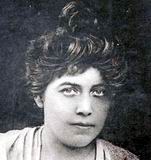
Marguerite Steinheil
Murderer?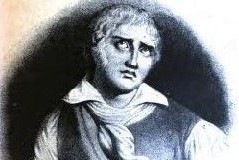 Joseph Lesurques
Murderer? · France · 1796
Joseph Lesurques was executed by guillotine on October 3, 1796. In late eightee…
2 victims
Joseph Lesurques
Murderer? · France · 1796
Joseph Lesurques was executed by guillotine on October 3, 1796. In late eightee…
2 victims
 Dr. Pierre Marie Bougrat
Murderer? · France · 1925
Dr. Pierre Marie Bougrat was a doctor in France. He had been awarded the Milita…
1 victim
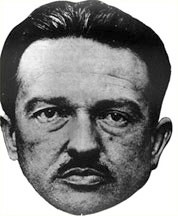
Dr. Pierre Marie Bougrat
Murderer? · France · 1925
Dr. Pierre Marie Bougrat was a doctor in France. He had been awarded the Milita…
1 victim
 Florence Maybrick
Murderer? · United Kingdom · 1899
Florence Elizabeth Maybrick (Florence Maybrick) was an American woman convicted…
1 victim
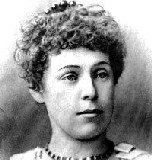
Florence Maybrick
Murderer? · United Kingdom · 1899
Florence Elizabeth Maybrick (Florence Maybrick) was an American woman convicted…
1 victim
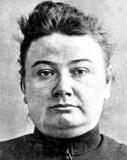 Jeanne Weber
Serial killer · France · 1905
Jeanne Weber (born 7 October 1874) was a French child-care provider and serial…
10 victims
Jeanne Weber
Serial killer · France · 1905
Jeanne Weber (born 7 October 1874) was a French child-care provider and serial…
10 victims
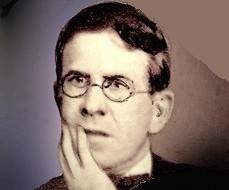 Dr. Bennett Clark Hyde
Murderer? · USA · 1909
Dr. Bennett Clark Hyde was accused in Kansas City of murdering members of the S…
3 victims
Dr. Bennett Clark Hyde
Murderer? · USA · 1909
Dr. Bennett Clark Hyde was accused in Kansas City of murdering members of the S…
3 victims
 Patricia Allanson
Murderer? · USA · 1974
Patricia Taylor Allanson Patricia Allanson was born in 1937. She grew up as “Pa…
3 victims
Patricia Allanson
Murderer? · USA · 1974
Patricia Taylor Allanson Patricia Allanson was born in 1937. She grew up as “Pa…
3 victims
 Moses Sithole
Serial killer · South Africa · 1994
Moses Sithole (November 17, 1964) was a serial rapist and serial killer in Sout…
38 victims
Moses Sithole
Serial killer · South Africa · 1994
Moses Sithole (November 17, 1964) was a serial rapist and serial killer in Sout…
38 victims
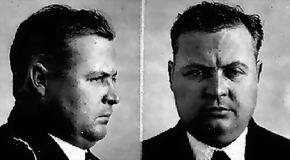 David Curtiss Stephenson
Murderer · USA · 1925
David Curtiss “Steve” Stephenson (21 August 1891 – 28 June 1966) was an America…
1 victim
David Curtiss Stephenson
Murderer · USA · 1925
David Curtiss “Steve” Stephenson (21 August 1891 – 28 June 1966) was an America…
1 victim
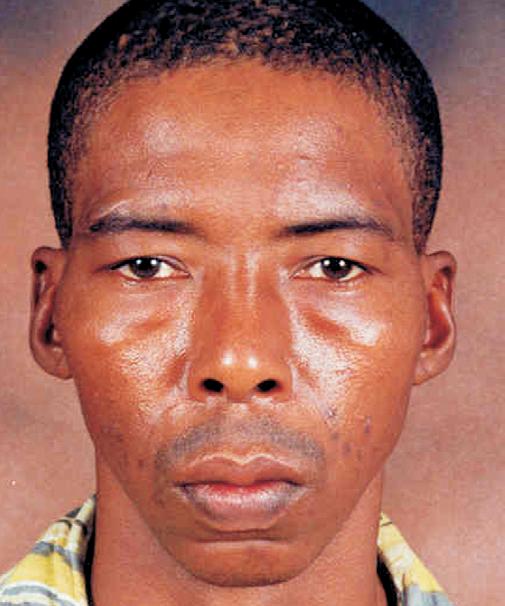 Samuel Sidyno
Spree killer · South Africa · 1998
Samuel Sidyno was a serial killer whose murders involved the Pretoria Zoo area.…
7 victims
Samuel Sidyno
Spree killer · South Africa · 1998
Samuel Sidyno was a serial killer whose murders involved the Pretoria Zoo area.…
7 victims
 D. H. Fleenor
Murderer · USA · 1982
D. H. Fleenor D. H. Fleenor was executed by lethal injection in Indiana on Dece…
2 victims
D. H. Fleenor
Murderer · USA · 1982
D. H. Fleenor D. H. Fleenor was executed by lethal injection in Indiana on Dece…
2 victims
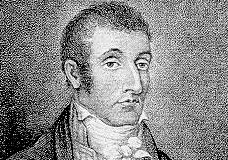 John Bellingham
Assassin · 1812
John Bellingham murdered Spencer Perceval, the British Prime Minister and Chanc…
1 victim
John Bellingham
Assassin · 1812
John Bellingham murdered Spencer Perceval, the British Prime Minister and Chanc…
1 victim
- Gender
- female
- Country
- France
- Location
- Paris, France
- Date of birth
- April 16, 1869
- Age at first offence
- 39
- Characteristics
- —
- Victim profile
- Her step mother, Emilie Japy, and her husband, Adolphe Steinheil
- Method of murder
- C hoking on her false teeth / Strangulation
- Date(s) of murder
- May 31, 1908
- Years active
- 1908
- Date of arrest
- November 1908
- Status
-
Died in custody
Acquitted on 14 November 1909; died in London on 17 July 1954
Case record: Marguerite Steinheil
Background
Marguerite Jeanne “Meg” Japy Steinheil was a French woman born in Beaucourt on 16 April 1869, to a wealthy family named Japy. She married Adolphe Steinheil, an artist, and they lived in Paris. After gaining prominence in Parisian society, she ran a salon that was frequented by men of eminence in French political and social circles, including Gounod, Ferdinand de Lesseps, René Lalique, Jules Massenet, François Coppée, Émile Zola, and Pierre Loti.
She became intimate with President Félix Faure. Gossip connected her to the president’s sudden death, but no proof was produced. She later became the subject of rumours involving a mysterious pearl necklace said to have been given to her by President Faure. After her acquittal, she lived in England in retirement.
She authored My Memoirs (New York 1912). After the trial she lived in London, where she was known as Mme de Serignac. On 26 June 1917, she married Robert Brooke Campbell Scarlett, 6th Baron Abinger, who died in 1927. She lived at 24 Adelaide Crescent in Hove from that year and died in a nursing home in Hove.
The offence
On the night of 30–31 May 1908, Marguerite Steinheil’s husband, Adolphe Steinheil, and her mother, Mme. Japy, were murdered and robbed in their residence in the Impasse Ronsin, off the Rue de Vaugirard. Marguerite Steinheil was found bound and gagged upon a bed.
It was later stated that both victims had died of suffocation. Her husband was said to have died by strangling, while her mother was said to have died by choking on her false teeth.
Investigation
Marguerite Steinheil initially stated that she had been tied up by four black-robed strangers: three men and a woman.
Some newspapers speculated that the strangers had come to her house in search of certain secret documents that President Faure had entrusted to her keeping, possibly relating to the Dreyfus affair. The police immediately regarded her as a suspect in the killings but had no hard evidence and made a pretense of abandoning the investigation.
Marguerite Steinheil attempted to frame her manservant, Rémy Couillard, by concealing a small pearl that she affirmed had been stolen at the time of the murder in a pocketbook belonging to Couillard. After that fabrication was discovered, she blamed Alexandre Wolff, the son of her old housekeeper, but he was able to establish an alibi.
Arrest
Marguerite Steinheil was arrested in November 1908 and taken to St. Lazare prison.
Trial
The crime created a sensation in Paris. It was revealed that she had had a great number of admirers, including even King Sisowath of Cambodia.
Opponents of the government attempted to make political capital of the affair. The anti-Semitic Libre Parole charged her with having poisoned President Faure. A sensational trial ended in her acquittal.
During the trial, the judge called her stories “tissues of lies”. After a strange man dressed in a red wig and black cloak appeared in court to testify about breaking into the Steinheil home, the case was described as having been ruined. The jury deliberated for 2 1/2 hours.
On 14 November 1909, the jury announced Marguerite Steinheil’s acquittal.
Outcome
Marguerite Steinheil was acquitted on 14 November 1909.
Other details
Marguerite Steinheil was present at the death of President Félix Faure, and she was suspected in some quarters of involvement. It had been alleged in connection with the president’s death that a seizure occurred while he had sexual contact with her, and rumours spread soon after his death. For several years, it was believed that his partner at the time of his death was actress Cécile Sorel. No proof was produced.
Félix Faure was introduced to Marguerite Steinheil at Chamonix in 1897, while he was giving an official contract to Adolphe Steinheil. Because of this, Félix Faure came often to their home on the Impasse Ronsin. On 16 February 1899, Félix Faure called Marguerite Steinheil by telephone, asking her to come to the palace at the end of the afternoon. Shortly afterward, servants were rung for and they found the president lying on the couch while Marguerite Steinheil adjusted her disordered clothing. Félix Faure died several hours later.
Legends attached to the circumstances of Félix Faure’s death included claims that she was performing oral sex on him when he had a fit and that he died with his convulsed hands tangled in her hair; these claims were described as not officially announced, while rumours started spreading immediately.
On 16 February 1899, the president’s death was later described as having been diagnosed as a cerebral haemorrhage. Eyewitness accounts and later historians’ discussions included assertions that Faure and Steinheil were involved in some kind of embrace, and that his aides hacked her hair with clumsiness. Pierre Darmon argued that it was unlikely the president died while having sex with her and said his first convulsions were very unlikely to have been spasms of satisfaction. Other discussion linked Far-right press suggestions to the Dreyfus Affair.
Marguerite Steinheil was nicknamed la pompe funèbre after Félix Faure’s death. She also acquired the nickname “the Red Widow” after she came under suspicion of killing her husband.
Her mother’s name was given as Emilie Japy, and it was said she died of a heart attack. It was also stated that Adolphe Steinheil was strangled.
Margins of press description included the claim that scandals involving politicians’ private and public life appeared for the first time in the press with the L’affaire Steinheil.
While being tried, it was said that the courtroom was packed on every day of the trial and that when Marguerite Steinheil took the stand, the obsession with her case reached a fever pitch. She was described as weeping, gnashing her teeth, and wailing about her innocence and her grief over the tragedy.
It was also said that after the trial she promptly quit France for England.

Spotted an error, or have more information about this case?