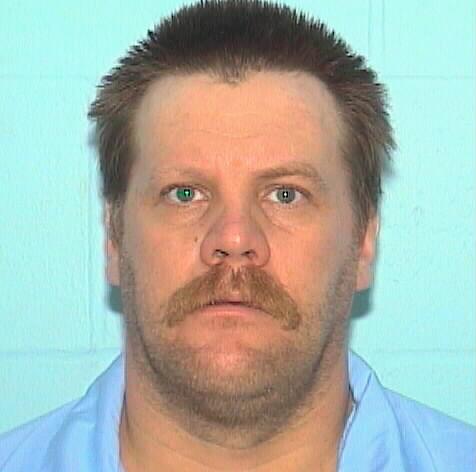
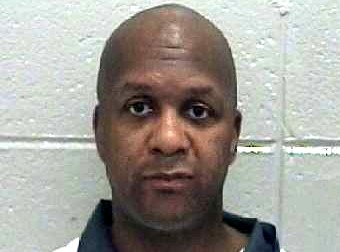
Larry Bright
Serial killer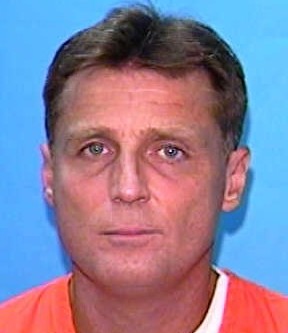 Glen Edward Rogers
Serial killer · USA · 1993
Glen Edward Rogers was a spree killer whose cross-country rampage in 1994-95 le…
70 victims
Glen Edward Rogers
Serial killer · USA · 1993
Glen Edward Rogers was a spree killer whose cross-country rampage in 1994-95 le…
70 victims
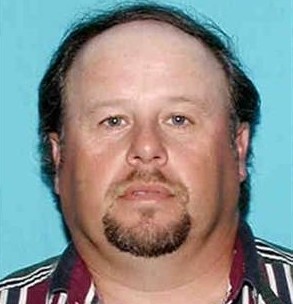 Ronald Dominique
Serial killer · USA · 1997
Ronald Joseph Dominique (born 1964) was an American serial killer from the Bayo…
23 victims
Ronald Dominique
Serial killer · USA · 1997
Ronald Joseph Dominique (born 1964) was an American serial killer from the Bayo…
23 victims
 Desmond Jennings
Serial killer · USA · 1993
Desmond Jennings declined to make a last statement. Texas Attorney General John…
20 victims
Desmond Jennings
Serial killer · USA · 1993
Desmond Jennings declined to make a last statement. Texas Attorney General John…
20 victims
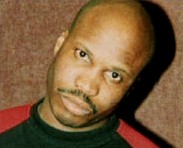 Maury Troy Travis
Serial killer · USA · 2001
Maury Troy Travis (born October 25, 1965; died June 10, 2002) was an American s…
17 victims
Maury Troy Travis
Serial killer · USA · 2001
Maury Troy Travis (born October 25, 1965; died June 10, 2002) was an American s…
17 victims
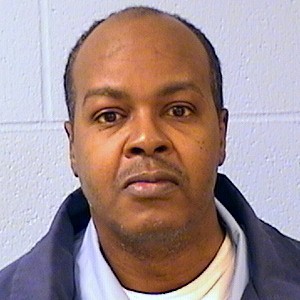 Andre Crawford
Serial killer · USA · 1993
Andre Crawford was convicted of rapes and murders of 11 women committed between…
11 victims
Andre Crawford
Serial killer · USA · 1993
Andre Crawford was convicted of rapes and murders of 11 women committed between…
11 victims
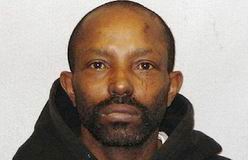 Anthony Sowell
Serial killer · USA · 2007
Anthony Edward Sowell (born August 19, 1959) was an American serial killer iden…
11 victims
Anthony Sowell
Serial killer · USA · 2007
Anthony Edward Sowell (born August 19, 1959) was an American serial killer iden…
11 victims
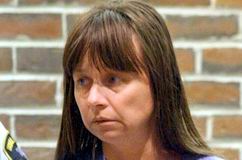 Julianne McCrery
Murderer · USA · 2011
Julianne McCrery was a Texas woman from Irving, Texas, who was 42 years old. Sh…
1 victim
Julianne McCrery
Murderer · USA · 2011
Julianne McCrery was a Texas woman from Irving, Texas, who was 42 years old. Sh…
1 victim
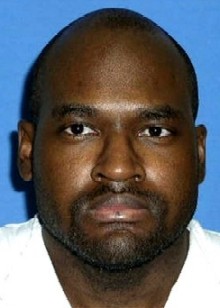 Sean Derrick O'Brien
Murderer · USA · 1993
Name: Sean Derrick O'Brien Sean Derrick O'Brien was executed by lethal injectio…
2 victims
Sean Derrick O'Brien
Murderer · USA · 1993
Name: Sean Derrick O'Brien Sean Derrick O'Brien was executed by lethal injectio…
2 victims
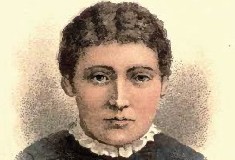 Roxalana Druse
Murderer · USA · 1884
Roxalana Druse (1847 – February 28, 1887) was the wife of William Druse and was…
1 victim
Roxalana Druse
Murderer · USA · 1884
Roxalana Druse (1847 – February 28, 1887) was the wife of William Druse and was…
1 victim
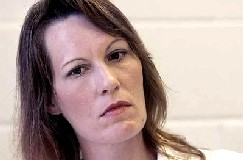 Debra Gindorf
Murderer · USA · 1985
Debra Lynn Gindorf was charged by indictment with six counts of murder for inte…
2 victims
Debra Gindorf
Murderer · USA · 1985
Debra Lynn Gindorf was charged by indictment with six counts of murder for inte…
2 victims
 Sipho Thwala
Serial killer · South Africa · 1996
Sipho Mandla Agmatir Thwala (born 1968) was a South African rapist and serial k…
16 victims
Sipho Thwala
Serial killer · South Africa · 1996
Sipho Mandla Agmatir Thwala (born 1968) was a South African rapist and serial k…
16 victims
- Gender
- male
- Country
- USA
- Location
- Peoria County, Illinois, USA
- Date of birth
- J uly 8, 1966
- Age at first offence
- 37
- Characteristics
- rape, drug addict
- Victim profile
- Sabrina Payne, 36 / Barbara Williams, 36 / Linda K. Neal, 40 / Brenda Erving, 41 / Shaconda Thomas, 32 / Shirley Ann Trapp, aka Carpenter, 45 / Tamara Walls, 29 / Laura Lollar, 33
- Method of murder
- Strangulation / Drug overdose ( gave enough cocaine to cause her death )
- Date(s) of murder
- 2003 - 2004
- Years active
- 2003–2004
- Date of arrest
- January 2005
- Status
-
Life imprisonment
Sentenced to life in prison without the possibility of parole on May 30, 2006; pleaded guilty to seven counts of first degree murder and one count of drug-induced homicide
Case identification
Larry Bright
Status and plea
Larry Bright pleaded guilty to seven counts of First Degree Murder and one count of Drug-Induced Homicide. He received a sentence of natural life on each of the seven First Degree Murder counts, with each sentence running concurrently. The First Degree Murder sentences ran concurrently with the 30 years received on the Drug Induced Homicide count. Truth in Sentencing applied, meaning Larry D. Bright would serve 100% of his sentences of natural life in prison without the possibility of parole. As part of the Plea Agreement, Larry D. Bright waived all rights to appeal.
Larry Bright did not comment in court, but in a statement read by a lawyer, he said: “I know I've committed some horrible and unthinkable acts. I am very sorry for the grief and heartache that I have caused.”
Background
From July 2003 until late 2004, Larry Bright went on a 15-month killing spree that resulted in the deaths of 8 women whose bodies were found in Peoria and Tazewell Counties. The bodies were either dumped along rural roads or burned in a fire pit in his backyard at 3418 W. Starr Court, Peoria, Illinois. Bright admitted to strangling seven victims and admitted the other death was drug induced.
Prosecutors said the killings involved burning some victims to ash and bits of bone in his backyard. Prosecutors said DNA tests had been unable to identify charred pieces of bone recovered from about a half-dozen sites where investigators said Bright told them he dumped remains of the women.
Authorities refused to discuss a motive, but they said Bright was fascinated with sex and pornography involving black women. Prosecutors also said the victims were black and that many were prostitutes and drug addicts, and that the victims led what authorities called “questionable lifestyles.”
Timeline
- January 2005 — Larry Bright was arrested and allegedly confessed to killing eight Peoria women during a 15-month span beginning in July 2003.
- March 2001 — Wanda Jackson’s body was found in a Pottstown field.
- February 2004 — The body of Barbara Williams was found in a ditch near Edwards.
- July 27, 2003 — Sabrina Payne’s body was found in a field near Tremont.
- September 25, 2004 — Linda K. Neal’s body was found near the Mackinaw River near Hopedale.
- October 15, 2004 — Brenda Erving’s body was found in a ditch near Farmington.
- May 30, 2006 — Larry Bright pleaded guilty to seven counts of First Degree Murder and one count of Drug-Induced Homicide and was sentenced to natural life on each of the seven counts, with each sentence running concurrently; the First Degree Murder sentences ran concurrently with 30 years on the Drug Induced Homicide count.
- June 2, 2006 — The Peoria County Sheriff confirmed Bright was not responsible for the murder of Wanda Jackson, and police returned to investigating her murder.
- June 29, 2006 — Figures showed defense costs for Larry Bright’s case exceeded $221,000.
- July 4, 2006 — A reward offered during the hunt for Peoria’s serial killer had not been paid out.
The offence
Investigators said Bright admitted strangling seven victims. Bright admitted that the other death was drug induced. Prosecutors said Bright confessed to killing eight women and that prosecutors said he burned half of the bodies to ash and bone and dumped the other remains along remote country roads in neighboring Peoria and Tazewell counties.
A relative described Bright as strangling seven women over a 15-month period and giving enough cocaine to an eighth to cause her death. The relative said Bright dumped four bodies along roads in rural Peoria and Tazewell counties and burned and scattered the ashes of the other four at various locations.
Investigation
Authorities and investigators connected the cases in Peoria and Tazewell Counties to Bright. Investigators said DNA tests were unable to identify charred pieces of bone recovered from multiple sites where investigators said Bright told them he dumped remains.
Peoria and Tazewell Counties jointly offered a $20,000 reward. Authorities said they fielded more than 1,000 tips in the investigation into the slayings of 10 Peoria women, including eight killed by Bright, but most tips involved minor details such as “He drove a red car” or “He has a mustache.” Peoria County Sheriff Mike McCoy said: “No one said, 'It's Larry Bright.'” McCoy said authorities did not have information sufficient to pay the reward.
Arrest
Larry Bright was arrested in January 2005.
Trial
Bright pleaded not guilty prior to his guilty plea. He tried to plead guilty during his first two court appearances last year, but judges rejected the attempts. Bright’s guilty plea on May 30, 2006 occurred after negotiations and a mental health evaluation.
A scheduled hearing for Bright was continued until early May, and a case management conference was canceled. Peoria County Circuit Judge James Shadid canceled the case management conference late Thursday afternoon. The order did not give any reason. First Assistant State’s Attorney Nancy Mermelstein said in a written statement: “Because nothing was going to happen today that would move the case forward, it was continued to May 8,”.
A judge set a deadline for possible plea negotiations. Peoria County Judge James Shadid told attorneys he would set a trial date and rule on a defense motion to move the trial out of Peoria County if talks failed to strike a deal before Bright’s next scheduled court appearance on May 30. The statement of Peoria County State’s Attorney Kevin Lyons included: “At the end of the day, the decision is mine and mine alone. ... But it is important to me that the decision is reached after being filtered through family members,” Lyons told reporters.
A Springfield psychiatrist completed a 116-page report based on a mental evaluation of Bright. Defense attorneys said they had not yet read Dr. Terry Killian’s findings. Lyons said he concluded Bright was not insane at the time of the killings based on a quick review of the report.
Bright’s court-appointed attorneys said pretrial plea negotiations were typical for a death penalty case. Defense attorney Jay Elmore said: “You're really not doing your jobs if you don't try to negotiate. ... We're hopeful something can be resolved but it might not be,”.
Sentencing
On May 30, 2006, Larry Bright was sentenced to natural life on each of the seven First Degree Murder counts, with each sentence to run concurrently. The First Degree Murder sentences ran concurrently with the 30 years received on the charge of Drug Induced Homicide.
Defense attorneys said the plea agreement spared Bright’s life in a case they had no chance of winning, and prosecutors said the deal provided closure for victims’ families.
Appeals
Outcome
Larry Bright pleaded guilty to seven counts of First Degree Murder and one count of Drug-Induced Homicide and was sentenced to life in prison without the possibility of parole.
Investigators later confirmed Bright was not responsible for the murder of Wanda Jackson. On Tuesday, the Peoria County Sheriff’s Department announced Bright was not responsible for the murder of Wanda Jackson, and police returned to investigating her murder. Police had created a task force to solve her murder and the murders of nine other women, and eight of those cases had been linked to Bright. Police said they had very few leads in connection with Wanda’s death.
Other victims and related cases mentioned
Victims listed by police in Bright’s case
The following individuals were listed by police as Larry Bright’s victims:
- Sabrina Payne, 36, body found July 27, 2003, in a field near Tremont.
- Barbara Williams, 36, body found Feb. 5, 2004, in a ditch near Edwards.
- Linda K. Neal, 40, body found Sept. 25, 2004, near the Mackinaw River near Hopedale.
- Brenda Erving, 41, body found Oct. 15, 2004, in a ditch near Farmington.
- Shaconda Thomas, 32, reported missing in August 2004.
- Shirley Ann Trapp, aka Carpenter, 45, reported missing in August 2004.
- Tamara Walls, 29, reported missing in September 2004.
- Laura Lollar, 33, reported missing in October 2004.
Specific murder charges described before the plea
Bright was charged with first degree murder in connection with three deaths:
- Tamara Wells, 29.
- Linda Neal, 40.
- Brenda Erving, 41.
Authorities said Bright allegedly choked all three of them.
Wanda Jackson and Frederickia Brown
Wanda Jackson was found dead in March 2001 in a Pottstown field. Bright was thought to have killed Wanda Jackson and Frederickia Brown, but Bright denied it. Police did not believe Bright killed either woman. Goldus Jackson said: “My personal opinion, I don't think he did it to Wanda, but I think that he might have knowledge,” and “I believe he knows who did it.” The sheriff said he would diligently work to close those two cases.
People and quoted statements
Family and advocates
Cassie Gass’ mother, Bonnie Fife of Canton, went missing in 2004, and about a year later, her remains were found in Bartonville. Gass’ sister dated Bright for a short period of time. Cassie Gass said: “To close the case and go on with your life,” “I think that would mean that you would know that she is at rest and you would know that whoever got whatever was coming to them.” Gass and her family were waiting for their mothers bones to be returned, so they could have a proper burial.
The Rev. Timothy Criss, who acted as a spokesman for the families, said: “We think that for the families, they are now able to say OK, I don't have a body but I have an admission and now we can put this to some kind of closure, put it to rest, have a memorial service for that matter and move on with their lives,”.
Goldus Jackson, the father of Wanda Jackson, said: “It's almost like a cold case, but they do find people after five and six years and I think I do feel like somebody out there knows something and hopefully they will come forward,”. He also said: “The Lord knows who did it, and that's good enough for me,”. He further said: “I would like to see him locked up, and I would like to see those pictures of the women that he murdered (be with him,),” and “They should stay in his cell and remind him every day of what he did. When he gets up, there are the pictures of these eight ladies. When he goes to sleep, there they are.”
Prosecutors and attorneys
Peoria County State’s Attorney Kevin Lyons said: “At the end of the day, the decision is mine and mine alone. ... But it is important to me that the decision is reached after being filtered through family members,”. Lyons said he would consider a defense bid for life in prison without parole if victims' families supported it. Lyons said: “At the end of the day, the decision is mine and mine alone. ... But it is important to me that the decision is reached after being filtered through family members,” (as repeated in the reported quote). Lyons said: “You're really not doing your jobs if you don't try to negotiate. ... We're hopeful something can be resolved but it might not be,” attributed to Jay Elmore in the same context.
Jay Elmore said: “You're really not doing your jobs if you don't try to negotiate. ...
Defense attorney Jeff Page said: “He broke down as soon as he said hi to me. He's never shown his feelings like that before,” was attributed to a relative rather than Page; however, Page was quoted separately that Bright’s adjustment and transformation occurred after more than a year in jail. The account included a quote from Bright’s attorney Jeff Page: Bright had undergone a transformation after more than a year in jail. Bright’s attorney Jeff Page also said: “Then you need to put pressure on the Legislature and your governor and try to persuade them to get rid of the death penalty if you think it costs too much,” and “It's just obscene that I would even comment on where I think our case would fit into the state average because I can't get by how outrageous and nutty the state average is . . . The figures tell me that whenever the state is paying, the case will be milked like a cow,” was attributed to Lyons in the trust fund discussion.
Kevin Lyons said: “It's just obscene that I would even comment on where I think our case would fit into the state average because I can't get by how outrageous and nutty the state average is . . . The figures tell me that whenever the state is paying, the case will be milked like a cow,”.
Sheriff and community members
Peoria County Sheriff Michael McCoy said: “The Lord knows who did it, and that's good enough for me,” was by Goldus Jackson. McCoy said he fielded more than 1,000 tips and said: “No one said, 'It's Larry Bright.'” McCoy said: “I think she was an integral part of the investigation,” and “She was very descriptive.” McCoy also said: “I think she was an integral part of the investigation,” and “She was very descriptive,”.
McCoy said: “We put up $20,000 thinking people would beat down our door,”.
McCoy said: “She didn't come to us,” “She didn't want us around her.”
Vicki Bomar said: “It's not really about the money,” “It's about the justice system.” Bomar also said: “I'd like to get a share. ... If there's other women who played a part (in Bright's arrest), it should be divided among us all.” Bomar said: “I didn't think he would live so close,” and “I didn't think he would live so close,”. She also said: “I think she was an integral part of the investigation” was McCoy.
Bomar said: “It's about the justice system.” She said: “I didn't think he would live so close,” and “I'd like to get a share. ... If there's other women who played a part (in Bright's arrest), it should be divided among us all.” Bomar said she was “just trying to live right for God.”
A relative of Bright agreed with the family members of his victims that he should die in prison, saying: “He's getting what he deserved,” “Those women are dead, and their families won't ever get to spend time with them. Larry will (live) even though he's behind bars.” The relative also said: “Larry just snapped,” and “I feel really sorry for the families and this brings closure for them. Hopefully they'll hold onto the good memories and not what Larry did.” The relative said: “He's very remorseful,” and “He broke down as soon as he said hi to me. He's never shown his feelings like that before. “I feel really sorry for the families and this brings closure for them. Hopefully they'll hold onto the good memories and not what Larry did.”
Other details
Bright’s prior incarceration and substance history described
A relative said Bright served a two-year stint in prison for vehicle and residential burglary when he was 19. The relative said Bright had smoked marijuana as a teen and later moved on to drugs such as cocaine, used coke and booze heavily after being released, and that his addiction escalated after he injured his back while working as a concrete worker for a construction company. The accident forced Bright to have three back surgeries, and the relative said he became addicted to painkillers. The account said his time in prison, drug and alcohol addiction, and inability to hold a steady job sent Bright into a deep depression. The account said that authorities believed this was when Bright started picking up black women for sex and drugs and that, at first, Bright “didn't set out to kill,” but later “a switch flipped” and he became a hunter.
Vicki Bomar’s account of an encounter with Bright
Vicki Bomar crossed paths with Bright in August 2004 while she worked as a streetwalker near Harrison Homes. A stranger in a blue pickup, later identified as Bright, offered her $200 and crack cocaine in exchange for sex. Bomar said they went back to his home on nearby Starr Court, where at knifepoint Bright beat and raped her. Afterward, Bright ordered her to get dressed and accompany him to his truck. Bomar said outside, instinct told her to run, and that Bright raced after her in his truck. Bomar said she saw a woman in a car whom she stopped, and Bomar told the woman she had been raped so the driver gave Bomar a ride home. Bomar said she did not contact police because she feared an arrest on two outstanding warrants: one for failure to appear on a traffic count and the other on a disorderly conduct charge. Bomar said she had heard word on the street that police were looking for information about a potential serial killer targeting prostitutes, but she said she did not think a South Sider like Bright could be the culprit, saying: “I didn't think he would live so close.” Two months later, Bomar was living at the South Side Mission and told other residents there about her knifepoint rape attack. Residents told cops to talk to Bomar, and prompted by police, she recounted her run-in. Bomar later said she recently got out of prison on a theft charge, that she lives with a daughter in Peoria and helps look after grandchildren, and that she was “just trying to live right for God.”
McCoy acknowledged Bomar’s information helped police pinpoint Bright and said: “I think she was an integral part of the investigation,” and “She was very descriptive.” McCoy said police had reservations about giving any money to Bomar because she was not the only one to relay encounters and because Bomar did not come forward voluntarily; police had to pressure her into talking. McCoy said: “We put up $20,000 thinking people would beat down our door,” and said he could not see the money going to Bomar. He also said: “She didn't come to us,” and “She didn't want us around her.”
The account said that two of Bright’s victims died after Bomar’s run-in with Bright and that no one would know what would have happened if she had gone to police right away.
Court appearance and hearing management
Peoria County State’s Attorney Kevin Lyons was said to have been sick much of the past week, which could have been a factor in canceling a conference. A case management conference was canceled late Thursday afternoon, and Judge James Shadid did not set a trial date or rule on a motion to move the trial out of Peoria County due to pre-trial publicity.
A Springfield psychiatrist completed a mental health report, and defense attorneys said they had not yet read Dr. Terry Killian’s findings.
Defense costs and Capital Litigation Trust Fund
Defense costs exceeded $221,000. Bills totaled $221,515, including expenses and submissions by Bright’s three attorneys, a mental health expert, and investigators, administered through the Capital Litigation Trust Fund. The figure did not include submissions from Peoria County State’s Attorney Kevin Lyons. The account said the rate under state law was $141.71 an hour and that the fund reimbursed work-related expenses such as travel and copying. The fund was created in 2000 to help both sides recoup costs and ensure a defendant could have the best possible defense if the case went to trial. The account quoted Lyons criticizing the state average and quoted Page on death penalty cost considerations.
The account also included examples: the 2004 trial of Cecil Sutherland convicted and sentenced to death for killing a 10-year-old girl, which resulted in $2.3 million in bills to the trust fund; and other Peoria County cases besides Bright since the fund was established including Jarvis Neely and Jayson Schertz, with summarized costs and outcomes.
Spotted an error, or have more information about this case?