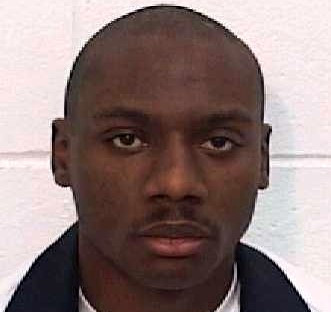
Warren King
Murderer Brian Kevin Rosenfeld
Murderer · USA · 1985
Brian Kevin Rosenfeld Brian Kevin Rosenfeld was sentenced to three concurrent l…
23 victims
Brian Kevin Rosenfeld
Murderer · USA · 1985
Brian Kevin Rosenfeld Brian Kevin Rosenfeld was sentenced to three concurrent l…
23 victims
 Russell Ellwood
Murderer · USA · 1991
Russell Ellwood was a former taxi driver. Authorities suspected him of killing…
20 victims
Russell Ellwood
Murderer · USA · 1991
Russell Ellwood was a former taxi driver. Authorities suspected him of killing…
20 victims
 Robert Martines Perez
Murderer · USA · 1994
Name: Robert Martines Perez · Other name used in proceedings: Robert Martinez P…
15 victims
Robert Martines Perez
Murderer · USA · 1994
Name: Robert Martines Perez · Other name used in proceedings: Robert Martinez P…
15 victims
 Billy Frank Vickers
Murderer · USA · 1993
Billy Frank Vickers Vickers was executed by lethal injection in Texas on Januar…
14 victims
Billy Frank Vickers
Murderer · USA · 1993
Billy Frank Vickers Vickers was executed by lethal injection in Texas on Januar…
14 victims
 Alfredo Galán
Serial killer · Spain · 2003
Alfredo Galán Sotillo (born April 5, 1978) was a Spanish serial killer. · Janua…
6 victims
Alfredo Galán
Serial killer · Spain · 2003
Alfredo Galán Sotillo (born April 5, 1978) was a Spanish serial killer. · Janua…
6 victims
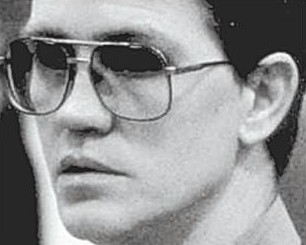 Kenneth Manuel Stewart
Murderer · USA · 1991
Kenneth Manuel Stewart Jr. was sentenced to death and was executed by electrocu…
2 victims
Kenneth Manuel Stewart
Murderer · USA · 1991
Kenneth Manuel Stewart Jr. was sentenced to death and was executed by electrocu…
2 victims
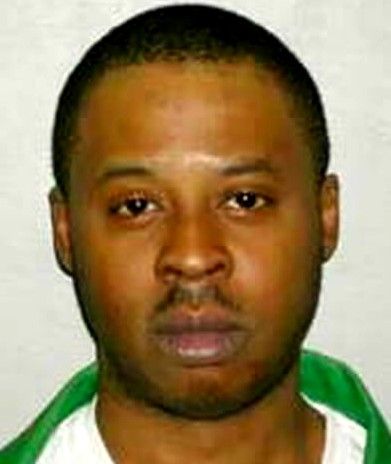 Joseph Gardner
Murderer · USA · 1992
Joseph Martin Luther Gardner was executed by lethal injection in South Carolina…
1 victim
Joseph Gardner
Murderer · USA · 1992
Joseph Martin Luther Gardner was executed by lethal injection in South Carolina…
1 victim
 Kenneth Edward Gentry
Murderer · USA · 1983
Kenneth Edward Gentry (#760) was executed by lethal injection in Texas on April…
1 victim
Kenneth Edward Gentry
Murderer · USA · 1983
Kenneth Edward Gentry (#760) was executed by lethal injection in Texas on April…
1 victim
 China Arnold
Murderer · USA · 2005
China Arnold (born March 29, 1980, in Dayton, Ohio) was a defendant in a murder…
1 victim
China Arnold
Murderer · USA · 2005
China Arnold (born March 29, 1980, in Dayton, Ohio) was a defendant in a murder…
1 victim
- Gender
- male
- Country
- USA
- Location
- Appling County, Georgia, USA
- Date of birth
- 1976
- Age at first offence
- 18
- Characteristics
- armed robbery, burglary, rape?
- Victim profile
- Karen Crosby (convenience store clerk)
- Method of murder
- Shooting (.380 caliber handgun)
- Date(s) of murder
- September 14, 1994
- Years active
- 1994
- Date of arrest
- Same day
- Status
-
Sentenced to death
Sentenced to death on September 24, 1998; conviction affirmed; electrocution challenge denied
Case overview
Warren King was convicted of malice murder, armed robbery, burglary, aggravated assault, false imprisonment, and possession of a firearm during the commission of a felony. The jury fixed his sentence for the murder at death.
Status and sentencing
King was sentenced to death on September 24, 1998. The sentencing phase resulted in a death sentence for the murder and consecutive prison terms for King's other crimes:
- life imprisonment for armed robbery
- twenty years for burglary
- twenty years for aggravated assault
- ten years for false imprisonment
- five years for possession of a firearm during the commission of a felony
Timeline
- September 13, 1994 — King and his cousin, Walter Smith, visited a convenience store in Surrency, Georgia, at approximately 10:45 p.m.
- September 14, 1994 — Shortly after midnight, Karen Crosby set the store's alarm, locked the door, and walked toward her automobile; King and Smith confronted her in the store's parking lot; King ordered Crosby at gunpoint to “give it up”; Crosby threw her keys to Smith; Smith entered the convenience store; the store's surveillance camera recorded Smith entering the store, the sounding of the store's alarm, Smith running from the store, and, approximately twenty-four seconds later, the sound of two gunshots.
- September 14, 1994 — King gave his first statement to authorities, denying knowledge of the crimes, after being told he was not under arrest, was told he could leave, was read his rights under Miranda v. Arizona, and signed a waiver of those rights.
- September 14, 1994 — King was returned to his residence after giving a statement denying knowledge of the crimes.
- September 14, 1994 — King was arrested later that day on an unrelated warrant for aggravated assault.
- September 15, 1994 — King was questioned for a second time in the evening after hearing Miranda rights read again and signing another waiver of those rights.
- September 16, 1994 — King was interviewed a third time in the early morning hours and admitted being present during the armed robbery.
- October 4, 1994 — King was indicted by an Appling County grand jury for malice murder, armed robbery, burglary, two counts of felony murder, aggravated assault, false imprisonment, and possession of a firearm during the commission of a felony.
- January 6, 1995 — The State filed written notice of its intent to seek the death penalty.
- September 14, 1998 — King's trial began; the jury found him guilty of malice murder, armed robbery, burglary, aggravated assault, false imprisonment, and possession of a firearm during the commission of the felony of false imprisonment.
- September 24, 1998 — The jury fixed the sentence for the murder at death.
- September 25, 1998 — The trial court ordered the death sentence for the murder and consecutive prison terms for King's other crimes.
- October 28, 1998 — King filed a motion for a new trial.
- November 19, 1998 — The trial court directed that the motion be deemed as timely filed.
- November 24, 1999 — King amended his motion for new trial.
- February 7, 2000 — The trial court denied the amended motion in an order filed on this date.
- February 28, 2000 — King filed his notice of appeal.
- March 29, 2000 — King's appeal was docketed in this Court.
- July 17, 2000 — King's appeal was orally argued.
- November 30, 2000 — Decided.
- December 15, 2000 — Reconsideration denied.
Background
On the night of September 13, 1994, King and his cousin, Walter Smith, visited a convenience store in Surrency, Georgia, at approximately 10:45 p.m. Smith testified that he found King later that night and that King suggested they rob the convenience store. Smith testified that he had previously obtained a .380 caliber handgun from a relative's home, and that King took the handgun from the seat of Smith's vehicle and carried it with him as the two parked and walked to the convenience store.
The offence
Shortly after midnight on September 14, 1994, Karen Crosby, an employee of the convenience store, set the store's alarm, locked the door, and walked toward her automobile. King and Smith confronted her in the store's parking lot. King ordered Crosby at gunpoint to "give it up." Crosby recognized King and spoke to him by name. Crosby then threw her keys to Smith. Smith entered the convenience store as King continued to hold Crosby at gunpoint.
The store's surveillance camera recorded Smith entering the store, the sounding of the store's alarm, Smith running from the store, and, approximately twenty-four seconds later, the sound of two gunshots.
King testified during the sentencing phase that Smith yelled at him repeatedly to shoot Crosby but that he, instead, handed the gun to Smith. Smith testified that, as he was running from the store, he heard the two shots, turned, and saw Crosby falling to the ground. Smith also testified that, as he and King were fleeing the scene, King exclaimed, "I hope I killed the bitch."
Investigation
A surveillance camera videotape and witness testimony identifying the persons recorded on the videotape were presented. The evidence showed that King was involved in the armed robbery and the events leading to the gunshots.
Arrest and statements
Before King gave his first statement on September 14, 1994, he was told he was not under arrest, was told he could leave, was read his rights under Miranda v. After giving a statement denying knowledge of the crimes, he was returned to his residence.
King was arrested later that day on an unrelated warrant for aggravated assault. King was questioned for a second time on the evening of September 15, 1994, after hearing Miranda rights read again and signing another waiver.
King was interviewed a third time in the early morning hours of September 16, 1994, and admitted being present during the armed robbery. Before this third interview, King once again was read his Miranda rights and signed a waiver.
At the suppression hearing, a law enforcement officer testified that King did not appear to be suffering from any mental incapacity and did not appear to be "sleepy or confused or muddled."
Trial
Charges and verdict
King was indicted and tried for malice murder, armed robbery, burglary, aggravated assault, false imprisonment, and possession of a firearm during the commission of a felony. The jury found him guilty of malice murder, armed robbery, burglary, aggravated assault, false imprisonment, and possession of a firearm during the commission of the felony of false imprisonment.
Sentencing phase aggravating circumstances
The jury fixed his sentence for the murder at death after finding the following statutory aggravating circumstances to exist:
- the murder was committed during the commission of the capital felony of armed robbery and during the commission of a burglary
- the murder was committed for the purpose of receiving money or other things of monetary value
- the murder was committed by King as the agent of another, Walter Smith
During the guilt-innocence phase, King was charged and the jury was also asked by defense counsel to consider King's mental capabilities during the sentencing phase in deciding his sentence. The court also addressed whether King had failed to show beyond a reasonable doubt that he was mentally retarded.
Juror issues during voir dire
King contended that the trial court erred by failing to excuse certain jurors and by excusing certain jurors for cause.
- Juror Hardee repeatedly answered affirmatively about considering mitigating circumstances with openness and stated he would not "start out with a predisposition" toward the death penalty. Only after defense counsel improperly questioned the juror about a hypothetical circumstance did he state he would consider life imprisonment only as a harsher alternative to the death penalty. The trial judge noted that defense counsel's questioning "implied that there were no mitigating circumstances."
- Juror Norris gave responses suggesting he would likely give little or no weight to certain hypothetical mitigation evidence, but also answered repeatedly that he would listen to all evidence and allow it to sway him.
- Juror Drew's responses reflected confusion about the meaning of the word "sentence," including an attempt to question defense counsel whether he was referring to "an actual sentence guilty or innocent. . . .". Her other responses indicated willingness to consider mitigating evidence and a sentence less than death.
- Juror Hipps's responses showed she would consider mitigation evidence and a sentence less than death. When defense counsel improperly questioned her about the weight of specific hypothetical evidence, she answered that she might give significant weight to a number of those evidentiary items. She stated that a person convicted of murder should "pay for it if it's done intentionally," and explained that she "would still have to hear the evidence" before stating what an appropriate sentence would be.
- Juror Vaughn stated she would give weight to some but probably not to others under improper questioning seeking weight for specific hypothetical mitigating circumstances, and later stated she would attempt to consider all of the evidence presented "with a genuine openness" and would meaningfully consider a sentence less than death.
King also challenged the excusal of jurors based on death penalty views:
- Juror Wilkerson stated his opposition to the death penalty was so strong it might affect his ability to render a correct verdict even during the guilt-innocence phase and he could never cast a vote in favor of the death penalty during jury deliberations.
- Juror Fuller indicated he believed he would automatically vote against the death penalty during jury deliberations, and stated he was "firmly" opposed to the death penalty in all other situations except he might tend to favor it if one of his close family members were murdered "particularly in the heat of the moment."
- The trial court excused jurors Richard McCall, Ernestine James, and Eddie Vann who were unable or unwilling to consider the death penalty as a sentencing option.
The appellate court also addressed that there was no violation of constitutional freedom of religion and conscience where a juror was stricken for cause based upon death penalty views derived from religion.
Objections and evidentiary rulings during trial
- The trial court sustained the State's objection when King attempted to ask Walter Smith why he had left high school in the tenth grade.
- The trial court restricted argumentative questioning by defense counsel.
- The trial court sustained an objection during the sentencing phase to a question about "problems" foster mother had had with other foster children prior to King's second stay with her, and later permitted King to question the witness more directly about whether King had been a follower or a leader when King and the other children fell into trouble together.
- During cross-examination, the State questioned one of King's expert witnesses about a "complaint for having sex with one of [his] patients . . . presently pending against [him]." The trial court ruled the questioning improper, gave a strongly-worded curative instruction, and denied King's renewed motion for a mistrial.
Mental retardation proceedings and instructions
The trial court charged the jury they were authorized to find King "guilty but mentally retarded" if they "believe[d] beyond a reasonable doubt that [he was] guilty and was mentally retarded at the time of the commission of the offense. . . ."
King contended that the trial court erred by not preventing the State from arguing King's mental retardation was an attempt at "putting responsibility somewhere else" and avoiding the death penalty. The trial court allowed one successful objection, and the State later continued arguing without objection. The State also recounted testimony of Dr. Dickinson about King potentially malingering during his mental evaluation to avoid the death penalty.
King sought a directed verdict on mental retardation; the trial court denied it because evidence conflicted on King's intellectual functioning, adaptive behavior impairments, and alleged malingering.
Sentencing review and appellate issues
Proportionality and death sentence review
The appellate court found that the death sentence was not imposed under the influence of passion, prejudice, or any other arbitrary factor. The court considered whether King's death sentence was disproportionate to sentences in other Georgia cases involving similar circumstances, including arguments that King's co-indictee had not yet been tried and sentenced and that King was allegedly mentally retarded. The appellate court concluded the death penalty was neither excessive nor disproportionate.
The appellate court also addressed that it was not persuaded the death sentence should be overturned because King's co-indictee had not yet been tried or sentenced, and it noted the jury evidence including planning involvement, carrying the handgun to the crime scene, firing the shots, and King's statement showing lack of remorse.
Other appellate contentions
The appellate decision addressed multiple pretrial and trial issues raised by King, including:
- denial of King's motion to quash his indictment based on the racial composition of grand jury forepersons in Appling County
- denial of King's motion to suppress statements made during two days following the murder
- denial of King's motion for a change of venue, including the contention of "small town syndrome"
- denial of King's motion to have execution by electrocution declared unconstitutional
- review of proportionality of death sentences being adequate
- challenges to the district attorney's selection of cases for seeking death penalty
- challenges to jury selection procedures under OCGA 15-12-164
- denial of requests for authorization for an unsworn statement or specially-limited cross-examination
- denial of discovery motions and rulings on applicability of OCGA 17-16-1 et seq. based on case docketing timing and State refusal to consent
- denial of a blanket motion for psychiatric histories of the State's witnesses based on privilege
- denial or limitation of discovery into informal notes, search and seizure procedures, arguably-suppressible evidence, prosecutor or police statements, and district attorney press releases
- limitation of discovery into prospective juror information
- rulings on discovery of expert materials based on reciprocal discovery principles
- denial of pretrial motions relating to voir dire procedures and jury questionnaires
- a claim related to a brief hearing outside King's presence on an order compelling Walter Smith to testify and use of derivative use immunity
- denial of pretrial motions regarding evidence of lack of deterrent effect of the death penalty, effects of electrocution, lingering doubt, and life imprisonment generally
- objections during sentencing argument, including the sustained objection to defense counsel's closing argument stating, "[A]sk yourself what Jesus would do."
Outcome
The appellate court affirmed King's conviction and affirmed the death sentence. A separate concurrence/dissent and a dissent were issued:
- SEARS, Justice, concurring in part and dissenting in part: SEARS concurred in affirmance of appellant's adjudication of guilt but dissented to Division 5 of the majority opinion and to affirmance of the death sentence only to the extent it required execution by means of electrocution.
- FLETCHER, Presiding Justice, dissenting: FLETCHER dissented, stating it was unconstitutional to require a capital defendant to establish mental retardation beyond a reasonable doubt during the guilt/innocence phase, and that the State's argument was improper because it had two interpretations, both improper, including a suggestion that a finding of mental retardation required a not guilty verdict and a suggestion that it would bar imposition of the death penalty.

Spotted an error, or have more information about this case?