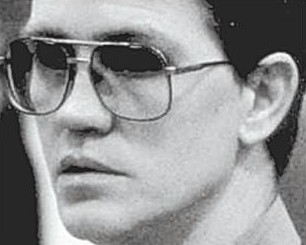
Kenneth Manuel Stewart
Murderer Brian Kevin Rosenfeld
Murderer · USA · 1985
Brian Kevin Rosenfeld Brian Kevin Rosenfeld was sentenced to three concurrent l…
23 victims
Brian Kevin Rosenfeld
Murderer · USA · 1985
Brian Kevin Rosenfeld Brian Kevin Rosenfeld was sentenced to three concurrent l…
23 victims
 Russell Ellwood
Murderer · USA · 1991
Russell Ellwood was a former taxi driver. Authorities suspected him of killing…
20 victims
Russell Ellwood
Murderer · USA · 1991
Russell Ellwood was a former taxi driver. Authorities suspected him of killing…
20 victims
 Robert Martines Perez
Murderer · USA · 1994
Name: Robert Martines Perez · Other name used in proceedings: Robert Martinez P…
15 victims
Robert Martines Perez
Murderer · USA · 1994
Name: Robert Martines Perez · Other name used in proceedings: Robert Martinez P…
15 victims
 Billy Frank Vickers
Murderer · USA · 1993
Billy Frank Vickers Vickers was executed by lethal injection in Texas on Januar…
14 victims
Billy Frank Vickers
Murderer · USA · 1993
Billy Frank Vickers Vickers was executed by lethal injection in Texas on Januar…
14 victims
 Edward Dean Kennedy
Murderer · USA · 1978
Edward D. Kennedy was listed as Edward Dean Kennedy (also styled as Edward D. K…
3 victims
Edward Dean Kennedy
Murderer · USA · 1978
Edward D. Kennedy was listed as Edward Dean Kennedy (also styled as Edward D. K…
3 victims
 Robert Lee Massie
Murderer · USA · 1965
Defendant: Robert Lee Massie · Status/Outcome: Executed by lethal injection in…
2 victims
Robert Lee Massie
Murderer · USA · 1965
Defendant: Robert Lee Massie · Status/Outcome: Executed by lethal injection in…
2 victims
 Heather Horst
Murderer · USA · 2013
Heather Horst was a member of the Minnesota Air National Guard and served in Sa…
1 victim
Heather Horst
Murderer · USA · 2013
Heather Horst was a member of the Minnesota Air National Guard and served in Sa…
1 victim
 Michael Carneal
Homicide · USA · 1997
Michael Carneal, aged 14, opened fire at Heath High School in West Paducah, Ken…
3 victims
Michael Carneal
Homicide · USA · 1997
Michael Carneal, aged 14, opened fire at Heath High School in West Paducah, Ken…
3 victims
 Katariina Pantila
Murderer · Finland · 2007
Katariina Meri-Tuulia Pantila was born as Katariina Hyttinen and had a first ma…
1 victim
Katariina Pantila
Murderer · Finland · 2007
Katariina Meri-Tuulia Pantila was born as Katariina Hyttinen and had a first ma…
1 victim
- Gender
- male
- Country
- USA
- Location
- Bedford County, Virginia , USA
- Date of birth
- 1955
- Age at first offence
- 36
- Characteristics
- parricide, rape, domestic violence
- Victim profile
- His wife, Cynthia Schultz Stewart, and his 5-month-old son Jonathan
- Method of murder
- Shooting ( .25-caliber pistol)
- Date(s) of murder
- May 12, 1991
- Years active
- 1991
- Date of arrest
- —
- Status
-
Executed
Executed by electrocution in Virginia on September 23, 1998; clemency petition denied by Governor Jim Gilmore
Case overview
Kenneth Manuel Stewart Jr. was sentenced to death and was executed by electrocution in Virginia on September 23, 1998. He was put to death in the electric chair at the Greenville Correctional Center.
Stewart was convicted of first-degree murder of his wife, Cynthia Schultz Stewart, and capital murder of his 5-month-old son, Jonathan Stewart. The jury also convicted him of two charges of using a firearm in the commission of these murders. The jury sentenced Stewart to life imprisonment for the murder of Cynthia Schultz Stewart and death for the murder of Jonathan Stewart. The trial judge imposed the jury’s sentences after reviewing all of the evidence.
The convictions and death sentence were upheld on numerous appeals, and a clemency petition was denied by Governor Jim Gilmore after a “thorough review of the Petition for Clemency.”
Timeline
- May 1986 — Stewart married Cynthia Schultz.
- May 1991 — Stewart killed his estranged wife Cynthia Schultz Stewart and his 5-month-old son Jonathan Stewart.
- 1991 — Stewart visited his wife and son at the Huddleston farmhouse they had rented from her parents and shot both of them twice in the head.
- May 7, 1992 — Kenneth Stewart Jr. entered death row.
- 1992 — A jury sentenced Stewart to death.
- April 27, 1994 — Timothy Spencer was executed.
- January 1, 1995 — Virginia changed its law to give inmates the option of dying by injection on a special gurney near the electric chair.
- Sept. 23, 1998 — Stewart was executed by electrocution.
- Sept. 1998 — Gov. Jim Gilmore denied Stewart’s request to order a brain scan and denied a separate petition for clemency.
- Sept. 24, 1998 — “Virginia man chose to die in electric chair” was published.
The offence
Stewart shot and killed his wife, Cynthia Schultz Stewart, and his son, Jonathan Stewart.
He and his wife had separated before the killings. Stewart was restricted in his visitation of his son. Stewart was not allowed to be alone with Jonathan; he was only allowed to visit with Cynthia present and he was never allowed to leave the house with Jonathan.
On the day of the murders, Stewart went to the house to discuss reconciling with his wife. When she refused, he shot her. Jonathan had been downstairs at the time of the crime; Stewart killed Jonathan after killing Cynthia.
Stewart carried Jonathan’s body upstairs and placed him in Cynthia’s arms. Stewart then hopped into Cynthia’s car and drove to New York. Just before leaving the Huddleston area, he threw his pistol into tall grass on the side of a road.
Prosecutors argued that Stewart knew what he was doing when he shot his wife and son. Prosecutor Jim Updike described to the jury how Stewart positioned his dead son in his dead wife’s arms and smoked Marlboro cigarettes after the killings. Updike showed jurors pictures of Johnathon’s body.
Background
Stewart was born-again Christian.
Stewart was described as having a history of abusing drugs and alcohol, and he said he had stopped drinking and turned to God to straighten out his life. The killings occurred after Stewart said he lost control following losing his job and family in early 1991.
After Stewart married Cynthia Schultz in 1986, “no more drug or alcohol abuse” was described as occurring and he had a steady job. After the birth of Kenneth and Cynthia’s son, Johnathon Edward, the couple began fighting, then separated.
Investigation and arrest
The provided material did not describe the investigation or arrest process.
Trial
At trial, expert testimony included “two experts, a defense psychiatrist and a psychologist who assisted the prosecution,” who concluded that Stewart was sane at the time of the murders and mentally competent to stand trial.
The jury convicted Stewart of:
- first-degree murder of his wife, Cynthia Schultz Stewart; and
- capital murder of his son, Jonathan Stewart; and also convicted him of two charges of using a firearm in the commission of these murders.
Stewart’s sentencing outcomes were:
- life imprisonment for the murder of Cynthia Schultz Stewart; and
- death for the murder of Jonathan Stewart.
The appellate litigation included a dispute over Stewart’s “heat-of-passion defense.” The appellate court ruled that the “heat -of-passion defense is justified only where the killing arises upon reasonable provocation.” It found that Cynthia’s rejection of Stewart was not reasonable provocation, and it denied his appeal.
Stewart also argued that there was not enough evidence to meet the “future dangerousness” requirement necessary for administering the death penalty.
Stewart maintained that the psychological expert for the Commonwealth, Dr. Centor, did not use statements made by Stewart during interviews when ascertaining his future dangerousness. Stewart appealed on the grounds that:
"it is absurd in the extreme to assume that" Dr. Centor did "not base his opinions on 'disclosures or statements by Defendant during the interview.'"
The appellate court disagreed with Stewart and rejected his appeal.
Sentencing
Stewart entered death row on May 7, 1992. He was executed on September 23, 1998.
Appeals and clemency
The convictions and death sentence were upheld on numerous appeals.
Gov. Jim Gilmore reviewed a petition for clemency and declined to intervene, stating:
“Upon a thorough review of the Petition for Clemency, the numerous court decisions regarding this case, and the circumstances of this matter, I decline to intervene.”
The provided material also states that Gov. Jim Gilmore denied Stewart’s request to order a brain scan and denied a separate petition for clemency less than 4 hours before the execution.
Execution
Stewart chose to die by electrocution rather than lethal injection.
He chose electrocution because, as described, death row inmates choosing lethal injection must be strapped to a gurney with their arms outstretched in the same manner as Jesus died on a cross. Stewart was described as saying he would not die with his arms outstretched.
Stewart said in an interview on the eve of his execution:
"They can shoot me, hang me, or do what they want to but I won't die with my arms outstretched, you know, like the son of God,"
Stewart made no final statement before he was strapped into the oak chair at the Greensville Correctional Center.
Stewart was fitted with a metal helmet and leg clamps attached to electric cables that delivered the fatal surges of electricity. He was pronounced dead at 9:11 p.m. at the Greenville Correctional Center.
The provided material states that Stewart was the first to die in the state’s electric chair since April 1994, when Timothy Spencer was executed. It also states that Stewart was the ninth death row inmate executed in Virginia in that year and the 55th since the U.S. Supreme Court allowed the death penalty to resume in 1976.
Other details
Stewart’s pistol was described as a .25-caliber pistol.
Ruth Schultz discovered the bodies later that day. Ruth Schultz had stopped by to thank her daughter for an African violet Cynthia had given her as a Mother’s Day gift.
Ed and Ruth Schultz decided not to witness the execution of their former son-in-law. Ed Schultz said before the execution:
"I really don't want to offer him any condolences."
A statement by Governor Jim Gilmore regarding the execution of Kenneth Stewart (Sept. 23, 1998) included the following:
“Kenneth Stewart shot and killed his wife, Cynthia Schultz Stewart, and his 5-month old son, Jonathan Stewart. Two experts, a defense psychiatrist and a psychologist who assisted the prosecution, concluded that Stewart was sane at the time he murdered his wife and son and mentally competent to stand trial. A jury convicted Stewart of first-degree murder of his wife and capital murder of his son, as well as two charges of using a firearm in the commission of these murders. The jury sentenced Stewart to life imprisonment for the murder of Cynthia Schultz Stewart and death for the murder of Jonathan Stewart. The trial judge imposed the jury's sentences after reviewing all of the evidence. Stewart's actions before, during and immediately after the murders strongly support the jury's conclusion that Stewart acted deliberately and consciously, and that he premeditated the execution-style murders. There has never been any question as to Stewart's guilt. The convictions and death sentence were upheld on numerous appeals. "Upon a thorough review of the Petition for Clemency, the numerous court decisions regarding this case, and the circumstances of this matter, I decline to intervene.””
Stewart was described as having said in response to a question about why he would not choose a more humane way of being put to death than the chair:
"There ain't no humane way to put a human being to death if you stop and think about it."
Stewart was also described as saying:
"you take anger, and you don't deal with it. And that'll fester for a while and it turns into rage. And then you take rage and mix that with jealousy and pour some alcohol over that and it just turns you into a madman. I just came completely unglued"
Stewart’s trial lawyer, Bedford public defender Webster Hogeland, was quoted as saying:
"Every day on earth is torture on him," Bedford public defender Webster Hogeland said. "Now he's asking to be killed in the most torturous way he has available to him. He wants it to be horrible on him."
The provided material describes the electric chair as “simply a homemade oak armchair with leather straps attached,” and it states that it was believed to have been built in the 1960s. It states a new electrical mechanism was installed when the chair was moved to Greenville and provides a description of the cycle:
"The electric cycle, 1,825 volts at approximately 7.5 amps for 30 seconds, then 240 volts at approximately 1.5 amps for 60 seconds... a 5-second pause intervenes, and the cycle is repeated, was designed to render the condemned brain dead within the 1st few moments. The function of the remainder of the cycle is to stop the body's organs so that a physician can certify that death has occurred," the department said.
Schultz couple from Smith Mountain Lake expressed satisfaction in 1992 when a jury sentenced Stewart to death, and said they would be glad when the execution was done. They also said:
"My daughter -- we haven't stopped thinking about her," Schultz said.
Spotted an error, or have more information about this case?