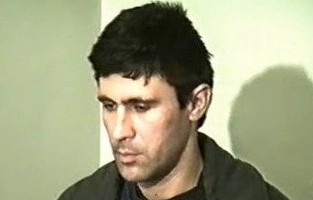
William Gollehon
Murderer Brian Kevin Rosenfeld
Murderer · USA · 1985
Brian Kevin Rosenfeld Brian Kevin Rosenfeld was sentenced to three concurrent l…
23 victims
Brian Kevin Rosenfeld
Murderer · USA · 1985
Brian Kevin Rosenfeld Brian Kevin Rosenfeld was sentenced to three concurrent l…
23 victims
 Marvin Gray
Murderer · USA · 1975
Marvin Gray was convicted killer who claimed responsibility for 23 slayings and…
23 victims
Marvin Gray
Murderer · USA · 1975
Marvin Gray was convicted killer who claimed responsibility for 23 slayings and…
23 victims
 Yahweh ben Yahweh
Murderer · USA · 1980
Yahweh ben Yahweh was born and legally named Hulon Mitchell Jr. (October 27, 19…
23 victims
Yahweh ben Yahweh
Murderer · USA · 1980
Yahweh ben Yahweh was born and legally named Hulon Mitchell Jr. (October 27, 19…
23 victims
 Russell Ellwood
Murderer · USA · 1991
Russell Ellwood was a former taxi driver. Authorities suspected him of killing…
20 victims
Russell Ellwood
Murderer · USA · 1991
Russell Ellwood was a former taxi driver. Authorities suspected him of killing…
20 victims
 Shayd Robinson
Murderer · New Zealand · 2012
Shayd Robinson was convicted of murder for stabbing Aaron Hadfield during an al…
1 victim
Shayd Robinson
Murderer · New Zealand · 2012
Shayd Robinson was convicted of murder for stabbing Aaron Hadfield during an al…
1 victim
 Ronald Lott
Murderer · USA · 1986
Ronald Clinton Lott was the petitioner-appellant in Lott v. Trammell before the…
2 victims
Ronald Lott
Murderer · USA · 1986
Ronald Clinton Lott was the petitioner-appellant in Lott v. Trammell before the…
2 victims
 Frederick Manning
Murderer · United Kingdom · 1849
Frederick Manning was executed by hanging at Horsemonger Lane Gaol on November…
1 victim
Frederick Manning
Murderer · United Kingdom · 1849
Frederick Manning was executed by hanging at Horsemonger Lane Gaol on November…
1 victim
 Carl Moseley
Murderer · USA · 1991
Carl Moseley was tried for first-degree murder. The State’s evidence included t…
2 victims
Carl Moseley
Murderer · USA · 1991
Carl Moseley was tried for first-degree murder. The State’s evidence included t…
2 victims
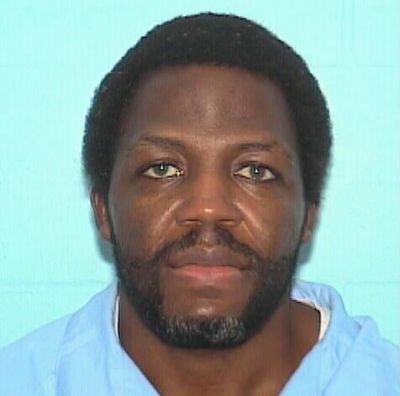 Hubert Geralds
Serial killer · USA · 1994
Hubert Geralds Jr. was mentally retarded and was described as having a sexual c…
5 victims
Hubert Geralds
Serial killer · USA · 1994
Hubert Geralds Jr. was mentally retarded and was described as having a sexual c…
5 victims
 Michael Mulder
Murderer · USA · 1996
July 8, 1996 — Michael J. Mulder robbed and killed 77-year-old John Ahart in hi…
1 victim
Michael Mulder
Murderer · USA · 1996
July 8, 1996 — Michael J. Mulder robbed and killed 77-year-old John Ahart in hi…
1 victim
- Gender
- male
- Country
- USA
- Location
- Montana, USA
- Date of birth
- ???
- Characteristics
- —
- Victim profile
- A woman / Gerald Pileggi (fellow inmate) / Five inmates
- Method of murder
- ??? / Beating with a baseball bat
- Date(s) of murder
- 1985 / September 2, 1990 / September 22, 1991
- Years active
- 1985–1991
- Date of arrest
- —
- Status
-
Imprisoned
Sentenced to death in 1992; sentenced to 30 years in prison and five concurrent terms of life imprisonment in 1993; sentenced to 130 years in prison in 1986
Case overview
William Jay Gollehon was sentenced to death in 1992 after he and Douglas Turner fatally beat fellow inmate Gerald Pileggi with a baseball bat at the Montana State Prison in 1990. He was already serving a 130-year sentence for killing a Billings woman in 1985. He had an appeal denied by the U.S. Supreme Court.
Gollehon was also serving time for his role in the 1991 riot at the prison.
Case information
- Supreme Court of the State of Montana: State of Montana v. Gollehon, 864 P.2d 1257 (1993)
- Defendant and Appellant: William Jay Gollehon
- Plaintiff and Respondent: State of Montana
- Supreme Court case number: No. 93-066
- Submitted on briefs: September 23, 1993
- Decided: December 7, 1993
- Reported as: State v. Gollehon (Supreme Court of Montana)
- Judicial opinion author: TRIEWEILER, Justice
- Parties: State of Montana, Plaintiff and Respondent; William Jay Gollehon, Defendant and Appellant
Timeline
- September 22, 1991 — Gollehon and eight other Montana State Prison inmates gained access to and took control of the maximum security unit of the prison; when officers regained control four hours later, five protective custody inmates had died as a result of the riot.
- February 3, 1992 — Gollehon was charged in an eight count information with two counts of kidnapping by accountability, one count of burglary, and five counts of deliberate homicide.
- 1993 — The Supreme Court of the State of Montana decided the appeal in State v. Gollehon, affirming the judgment of the District Court.
- 1992 — Gollehon was sentenced to death after the 1990 beating involving Douglas Turner and fellow inmate Gerald Pileggi.
- 1986 — Gollehon was sentenced to 130 years in prison.
- 1993 — Gollehon was sentenced to 30 years in prison and five concurrent terms of life imprisonment.
Background
At the time of the riot, there were ten protective custody inmates housed on D Block and a total of 68 inmates in the maximum security building. Gollehon was one of the maximum security inmates housed on C Block. During the morning of September 22, 1991, thirteen inmates, including Gollehon, were in the exercise yards.
The maximum security building was divided into two separate areas: “A Block,” “B Block,” and “C Block” located on the west side of the building, and “D Block,” “E Block,” and “F Block” located on the east side of the building. Control cages regulated power to A, B, and C Blocks on the west side and D, E, and F Blocks on the east side. Centered between the two units were six separate exercise yards.
The offence
Prison riot and deaths
On the morning of September 22, 1991, William Jay Gollehon and eight other Montana State Prison inmates gained access to, and took control of, the maximum security unit of the prison. When officers regained control of the building four hours later, five protective custody inmates had died as a result of the riot that Gollehon and others participated in.
While officers were returning some inmates from the exercise yards to their cells, Gollehon and eight other inmates broke through the wire fences separating the exercise areas and eventually gained access to the section of the maximum security building leading to A, B, and C Blocks. Once inside the building, the inmates reached both control cages and were ultimately able to open the doors to all of the blocks in the maximum security unit.
Five officers took refuge by locking themselves in a shower facility in C Block while the rioting inmates threatened to burn the officers out unless they released keys to other sections of the building. The officers complied, and then heard the inmates say they were going to go to D Block and “get” the protective custody inmates. The officers remained in the shower until they were released by other officers after the riot.
Two protective custody inmates who were working outside their cells took refuge by barricading themselves in the laundry room. The rioting inmates, including Gollehon, tried unsuccessfully to break down the door and to smoke them out of the laundry room by starting a fire.
At one point, not expecting to survive the attack, one of the inmates wrote the names of the inmates who were trying to get at them on the side of the dryer. Gollehon’s name was included.
Unable to get at the inmates in the laundry room, the rioting inmates entered D Block, opened the cells, and proceeded to kill five of the protective custody inmates.
Charges
On February 3, 1992, Gollehon was charged in an eight count information with:
- Two counts of kidnapping by accountability in violation of §§ 45-2-302 and 45-5-302, MCA
- One count of burglary in violation of § 45-6-204, MCA
- Five counts of deliberate homicide in violation of § 45-5-102(1)(b), MCA
Trial
Gollehon filed motions in the proceedings:
- A motion to dismiss the burglary and homicide charges on the grounds that the burglary statute was not applicable to the facts of the case and that the homicide counts, based on the felony murder theory, would, therefore, necessarily fall. This motion was denied.
- A motion to produce various items of physical evidence, including the clothing that he was wearing at the time of the alleged offenses and the clothing of the other inmates of the maximum security unit. This motion was denied because the State had destroyed the clothing and much of the personal property of the inmates after the riot.
Gollehon was convicted of all charges following a jury trial.
Sentencing
The District Court sentenced Gollehon as follows:
- 10 years imprisonment on each kidnapping count, with those sentences to run consecutively
- 20 years on the burglary count
- The kidnapping and burglary sentences ran consecutively
- Five concurrent terms of life imprisonment on the deliberate homicide convictions
- The life imprisonment terms ran consecutively with the kidnapping and burglary sentences and the sentences already being served for prior offenses
Appeals
Gollehon appealed from his convictions, presenting five issues:
- Whether the District Court erred when it denied his motion to dismiss the burglary charge.
- Whether the District Court erred when it denied his motion to dismiss the five counts of deliberate homicide.
- Whether the District Court abused its discretion when it admitted into evidence autopsy photographs of the victims.
- Whether the District Court erred when it denied his motion for mistrial on the basis of juror misconduct.
- Whether the State’s destruction of certain physical evidence denied him his constitutional right to due process of law.
I. Burglary charge dismissal
The burglary charge was based on the allegation that Gollehon had: “knowingly entered or remained unlawfully in an occupied structure, the D block area of the maximum security unit, with the purpose to commit an offense therein, namely, Riot.”
Section 45-2-101(40), MCA, defined “occupied structure” as: “Occupied structure” means any building, vehicle, or other place suitable for human occupancy or night lodging of persons or for carrying on business, whether or not a person is actually present. Each unit of a building consisting of two or more units separately secured or occupied is a separate occupied structure. [Emphasis added].
Gollehon argued for dismissal on the basis that the definition of occupied structure did not apply to his unauthorized entry into D Block, asserting that the maximum security unit was one single building and that no sections constituted a separate occupied structure apart from the remainder of the unit.
The Supreme Court held that the District Court correctly interpreted the statute and did not err when it denied Gollehon’s motion to dismiss the burglary charge. The Court concluded that the “occupied structure” definition encompassed D Block because the maximum security unit was a building consisting of several “blocks” that were physically distinct and separately secured, and each block consisted of separately secured cells intended for human occupancy. The Court held that this fit within the burglary statute and that the unauthorized entry by Gollehon and the other rioting inmates into D Block satisfied the elements.
Gollehon also argued that his conviction conflicted with § 45-1-102(1)(c), MCA, which required fair warning. He cited the absence of prior burglary charges for unauthorized prison entry and argued that the burglary statute did not specifically state it applied to prisons. He further asserted that the inference was that the Legislature did not intend such application.
The Supreme Court rejected those arguments, explaining that the burglary statute did not enumerate specific structures and instead referred to an “occupied structure,” which was generally defined. The Court held that general statutory language provided fair notice to all persons of conduct constituting burglary. It also held that the prison handbook’s internal rules did not exempt inmates from compliance with state law and that the handbook did not serve as an exclusive list of offenses for which an inmate could be charged in court.
The Court addressed that liability for burglary required unlawfully entering an occupied structure with the purpose to commit an offense therein, and stated that being in an unauthorized area did not by itself constitute burglary. However, because Gollehon entered D Block for the purpose of committing an offense during the riot, the Court concluded he was appropriately chargeable with burglary. The Court referenced a New York case, People v. Pringle (N.Y. App. Div. 1983), 465 N.Y.S.2d 742, where a nurse’s station within a prison was considered a “building” for burglary purposes because it was an independent unit with its own secure entrance, and it concluded that D Block was similarly an independent, separately secured area.
The Supreme Court held: “We hold that the District Court correctly concluded that Gollehon could be charged with burglary for his unauthorized entry into D Block during the September 1991 riot.”
II. Deliberate homicide dismissal
Gollehon argued that the homicide counts should have been dismissed because the burglary charge was improperly charged and therefore there was no underlying felony. The Supreme Court rejected the argument, holding that because the burglary charge was proper, the homicide dismissal argument lacked merit and the District Court did not err when it denied the motion to dismiss the deliberate homicide charges.
The Supreme Court noted that the deliberate homicide counts were brought under Montana’s felony-murder rule, § 45-5-102(1)(b), MCA, which provided that a person committed deliberate homicide if, during the course of the commission of burglary, “he or any person legally accountable for the crime causes the death of another human being.”
III. Autopsy photographs
During trial, the State introduced 20 color photographs taken by the medical examiner during autopsies of the five victims. The Supreme Court considered whether the admission of these graphic photographs was an abuse of discretion.
The Court identified the standard of review as whether the District Court abused its discretion and cited: State v. Crist (1992), 253 Mont. 442, 833 P.2d 1052.
The Court also noted the relevant evidentiary standard: “probative value is substantially outweighed by the danger of unfair prejudice.” Rule 403, M.R.Evid.; State v. Henry (1990), 241 Mont. 524, 788 P.2d 316.
The Court held that the District Court did not abuse its discretion, stating that while the photographs depicted the brutality and viciousness of the crimes, it did not believe they would have aroused jurors’ passions any more than other evidence of Gollehon’s conduct. It quoted: “[w]e will not demand that a trial be sanitized to the point that important and probative evidence must be excluded.” State v. Doll (1985), 214 Mont. 390, 400, 692 P.2d 473, 478.
IV. Motion for mistrial and juror misconduct
During trial, a brief conversation occurred among one, or possibly two, jurors and a correctional officer providing security at the courthouse who had testified earlier. After the presiding judge was notified, Gollehon moved for a mistrial due to juror misconduct.
The officer was questioned in chambers and testified that the conversation concerned the Montana State University football team. He stated that the conversation occurred when two persons were waiting outside the courtroom near his security post and that he did not realize they were members of the jury. Based on this testimony, Gollehon’s motion for mistrial was denied.
On appeal, Gollehon argued that the Court improperly denied the motion and erred by not examining the jurors in addition to the security guard. The Supreme Court described the applicable standard of review as requiring clear and convincing evidence that the trial court’s ruling was erroneous, citing: State v. Gambrel (1990), 246 Mont. 84, 803 P.2d 1071; State v. Salois (1988), 235 Mont. 276, 766 P.2d 1306.
The Supreme Court stated it would defer to the trial court’s determination where there was no showing of prejudice. It also discussed that the burden of rebutting a presumption of prejudice shifted only after a threshold showing of misconduct that injured or prejudiced the defendant, citing: State v. McNatt (1993), 257 Mont. 468, 472, 849 P.2d 1050, 1052-53.
The Supreme Court concluded there was no initial showing that the conversation resulted in prejudice, characterizing the conversation as a brief, casual interchange outside the courtroom doors. It held that the trial court’s denial was not clearly erroneous.
V. Destruction of physical evidence and due process
The Supreme Court addressed Gollehon’s claim that the State’s destruction of physical evidence denied him due process.
After prison officials regained control of the maximum security unit on September 22, 1991, all inmates who had participated in the riot were required to strip and immediately leave the building. Prior to trial, Gollehon’s counsel requested production of physical evidence, including the clothing worn by the maximum security inmates. The State responded that the inmates’ clothing had been destroyed after the riot, noting that the clothing issued to maximum security inmates had no identifying marks that would allow tracing to any particular inmate.
Gollehon argued that he was denied a fair trial because the State failed to produce what could have been powerful exculpatory evidence. He contended that the absence of blood on his clothing would have established that he had not engaged in struggles with inmates who were killed, and that the State’s destruction resulted in substantial prejudice.
The Supreme Court considered the procedural preservation of the issue, stating that rulings about the production of evidence had been made during trials of other rioting inmates and concluding that Gollehon’s motion in limine sufficiently preserved the issue for appellate consideration.
The Supreme Court stated that the right to obtain exculpatory evidence was personal and did not require police officers to take initiative or assist in procuring evidence. It cited: State v. Sadowski (1991), 247 Mont. 63, 79, 805 P.2d 537, 546.
It further stated that to claim a per se violation of due process, there had to be a showing of deliberate or intentional suppression of exculpatory evidence, citing: Sadowski, 805 P.2d at 547.
The Supreme Court applied the constitutional materiality test from: State v. Halter (1989), 238 Mont. 408, 777 P.2d 1313, quoting: “Whatever the duty the Constitution imposes on the State to preserve evidence, that duty must be limited to those that might be expected to play a significant role in the suspect's defense. To meet this standard of constitutional materiality ... evidence must both possess an exculpatory value that was apparent before the evidence was destroyed, and be of such a nature that the defendant would be unable to obtain comparable evidence by other reasonably available means.” Halter, 777 P.2d at 1316 (quoting California v. Trombetta (1984), 467 U.S. 479, 488-89, 104 S.Ct. 2528, 2534, 81 L.Ed.2d 413, 422).
The Supreme Court found no showing that the clothing was destroyed with knowledge of its potential exculpatory value or with intent to deliberately suppress evidence. It said the objective of ordering inmates to strip was to get the unit under control and restrain rioting inmates from further violence. It held that even if Gollehon could establish the absence of blood, it would not necessarily have negated his accountability for deaths during the riot under the charged statute. It concluded that destruction of the clothing did not constitute deliberate suppression of valuable exculpatory evidence and that Gollehon was not constitutionally deprived of due process.
Outcome
The Supreme Court of the State of Montana affirmed the judgment of the District Court.
TURNAGE, C.J., and HARRISON, GRAY, HUNT, NELSON and WEBER, JJ., concur.
Other details
Douglas Turner fatally beat fellow inmate Gerald Pileggi with a baseball bat at the Montana State Prison in 1990, and Gollehon was sentenced to death in 1992 after that incident.

Spotted an error, or have more information about this case?