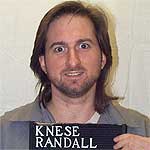
Randall Knese
Murderer Russell Ellwood
Murderer · USA · 1991
Russell Ellwood was a former taxi driver. Authorities suspected him of killing…
20 victims
Russell Ellwood
Murderer · USA · 1991
Russell Ellwood was a former taxi driver. Authorities suspected him of killing…
20 victims
 Robert Martines Perez
Murderer · USA · 1994
Name: Robert Martines Perez · Other name used in proceedings: Robert Martinez P…
15 victims
Robert Martines Perez
Murderer · USA · 1994
Name: Robert Martines Perez · Other name used in proceedings: Robert Martinez P…
15 victims
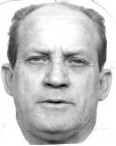 Billy Frank Vickers
Murderer · USA · 1993
Billy Frank Vickers Vickers was executed by lethal injection in Texas on Januar…
14 victims
Billy Frank Vickers
Murderer · USA · 1993
Billy Frank Vickers Vickers was executed by lethal injection in Texas on Januar…
14 victims
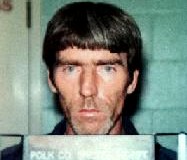 Daniel Joseph Blank
Serial killer · USA · 1996
Daniel Joseph Blank was a mechanic and was described as a gifted mechanic and a…
6 victims
Daniel Joseph Blank
Serial killer · USA · 1996
Daniel Joseph Blank was a mechanic and was described as a gifted mechanic and a…
6 victims
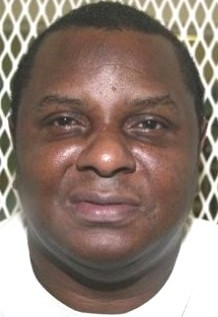 Michael Lynn Riley
Murderer · USA · 1986
Michael Lynn Riley was convicted of capital murder and sentenced to death for t…
1 victim
Michael Lynn Riley
Murderer · USA · 1986
Michael Lynn Riley was convicted of capital murder and sentenced to death for t…
1 victim
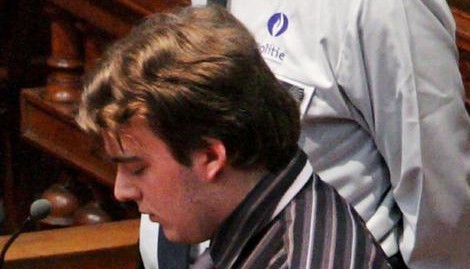 Hans Van Themsche
Murderer · Belgium · 2006
Hans Van Themsche (born 7 February 1988 in Wilrijk, Flemish Region of Belgium)…
2 victims
Hans Van Themsche
Murderer · Belgium · 2006
Hans Van Themsche (born 7 February 1988 in Wilrijk, Flemish Region of Belgium)…
2 victims
- Gender
- male
- Country
- USA
- Location
- St. Charles County, Missouri, USA
- Date of birth
- J une 16, 1967
- Age at first offence
- 29
- Characteristics
- attempted rape, parricide, drug addict
- Victim profile
- Karin Knese (his wife)
- Method of murder
- Strangulation
- Date(s) of murder
- March 23, 1996
- Years active
- 1996
- Date of arrest
- Same day
- Status
-
Sentenced to death
Sentenced to death on September 8, 1997
Case caption
State of Missouri v. Randall Knese, 985 S.W.2d 759 (Mo. banc 1999)
Court and decision
The case was decided in State v. Knese (No. 80225) on February 09, 1999.
Parties
- Appellant (defendant): Randall B. Knese
- Respondent (state): State of Missouri
- Counsel for appellant: Melinda K. Pendergraph, Asst. Public Defender, Columbia
- Counsel for respondent: Jeremiah W. (Jay) Nixon, Atty. Gen., Daniel W. Follett, Asst. Atty. Gen., Jefferson City
Timeline
- March 23, 1996 — A neighbor heard a dog barking and a man yelling; Knese entered a neighbor’s home, ran outside, attempted to enter a car, and injured himself while being dragged along the side of the car; police found Knese bloody in the road; an officer investigating Knese’s home found Karin Knese lying motionless on the floor; a paramedic pronounced Ms. Knese dead.
- February 09, 1999 — The appellate court issued its opinion affirming the convictions and the death sentence.
Background
Randall Knese appealed from his convictions for attempted forcible rape and first degree murder of his wife, Karin Knese, and from the death sentence imposed for the latter crime. Knese raised fifteen points of error. The appellate court affirmed.
The offence
Attempted forcible rape
Knese admitted attempting to sexually assault his wife, Karin Knese, shortly before the killing. According to Knese’s account, he ingested cocaine early on the morning after waking up early. About an hour after using cocaine, he went into the living room to talk about the couple’s problems. Karin Knese did not want to talk; she pushed Knese off the couch. Knese continued touching her, forced himself back onto the couch, and tried to engage in foreplay. When Karin Knese protested, Knese pulled off her pants and panties, forced himself on top of her, and attempted to have sex with her. Knese said they did not engage in intercourse because he could not sustain an erection.
Knese described Karin Knese as going “ballistic.” The two began to fight. Karin Knese screamed “rape.” Knese put one hand over her mouth while squeezing her neck with the other.
First degree murder
Knese described the fight escalating after Karin Knese grabbed a glass lampshade and swung, which Knese blocked with his arm, causing the lampshade to shatter. Karin Knese picked up a piece of glass and swung again; this time she cut Knese’s palm. Knese then took the glass and slashed her neck. The two fell to the floor, and Knese began to strangle Karin Knese. Knese said his hold was so tight that his thumb went through her skin, and that he also bit her neck. When Karin Knese put a finger in his eye, Knese headbutted her. At the end of the altercation, Knese stood up, kicked her head, and stood on her neck for five or ten minutes.
Crime scene condition and expert medical opinion
A forensic pathologist performed an autopsy on Karin Knese and listed the cause of death as manual strangulation and probable suffocation, combining to cause asphyxiation. The pathologist found multiple abrasions, large amounts of hemorrhage, bruising, lacerations and cuts about Karin Knese’s head and neck area.
The medical examiner gave an opinion that sexual assault was probable based on the body being in a prone position with legs spread and being partially nude, and on the fact that Karin Knese had been killed with the assailant very close to her body.
Investigation
On the morning of March 23, 1996:
- One neighbor heard a dog barking across the street and then heard a man yelling.
- When the neighbor went to her kitchen door, she saw Knese, wearing only sweatpants pulled down around his ankles, open the front door, run into her neighbor’s house, and land on the couch.
- Knese stood, pulled up his pants, and came into the kitchen, where he and the neighbor began to yell at each other.
- When the neighbor’s boyfriend came into the kitchen, Knese ran into the bedroom and sat on the television.
- After going into the bathroom, Knese came back into the kitchen and then ran outside.
- Another neighbor saw Knese standing outside, holding a broom and screaming.
- When the neighbor drove close to where Knese was standing, Knese jumped on the hood of the car.
- The neighbor noticed scratches on Knese’s face but no other apparent injuries.
- Knese slid off the hood and opened the passenger-side door, but the car gained speed; Knese was dragged along the car’s side until he eventually let go.
The neighbor who was driving called the police when she arrived at work.
Police found Knese lying in the road and noticed he was bloody and had multiple cuts and abrasions. When asked how he sustained the injuries:
- Knese originally said that “devil had come to get him.”
- He later said that “the bitch tried to kill” him.
Knese also told a paramedic that he did not want to be treated differently for what he had done. Knese was then taken to the hospital.
While one officer cared for Knese, another officer investigated Knese’s home. From the front porch, the officer saw Karin Knese lying motionless on the floor. Her body was partially nude, with her legs spread apart. The officer found no pulse or other signs of life. A paramedic later pronounced Ms. Knese dead.
Arrest
Police found Knese lying in the road after the car incident described by neighbors.
Trial
Charges and verdicts
Following trial:
- The jury convicted Knese of attempted rape and sentenced him to twenty years imprisonment on that charge.
- The jury convicted Knese of first degree murder of his wife, Karin Knese.
- For first degree murder, the jury recommended the death penalty.
Miranda and hospital statements
At the hospital, police advised Knese of his Miranda rights, and Knese waived them.
Knese made four statements about the events earlier in the day, and police audiotaped one statement. Throughout these statements, Knese admitted to killing his wife.
Before trial, Knese filed a one-page motion to suppress, moving “to suppress any and all statements obtained from the defendant of whatever kind or nature on the grounds that such statements were obtained in violation of defendants rights against self-incrimination as numerated in the Fifth-Amendment to the Constitution of the United States.” After a hearing, the motion was summarily overruled. Several hospital emergency room statements amounting to a detailed confession to the murder and attempted rape were presented to the jury.
Suppression hearing evidence about coherence and waiver
At the suppression hearing, the state presented evidence of four police officers:
- Officer Chestnut (evidence technician) collected Knese’s clothes and photographed his injuries. Chestnut first saw Knese at approximately 7:30 a.m. and was with him on and off for two hours. Chestnut did not ask Knese questions, and several statements made spontaneously by Knese were not introduced at trial. Chestnut testified Knese appeared “abnormal” and “wild”:
- “He had a wide open look in his eyes, far away stare. His eyes were rolling back and forth very rapidly, staring at the ceiling. He was lying flat on his back. His body was acting like he was pacing.”
- Chestnut testified that although Knese was initially “fading in and out of reality,” later Knese “calmed down and he seemed like he was more understanding of what was going on and understanding of what had transpired.”
- Sergeant Schwendemann spoke with Knese immediately before Chestnut. Schwendemann described Knese as “calm and rational.” Statements to Schwendemann were not presented at trial.
- Detective Harvey began interrogating Knese at approximately 8 a.m. Harvey testified Knese appeared “very coherent and understood what [Detective Harvey] was talking about.” Harvey advised Knese of his Miranda rights, and Knese indicated he understood each of the rights. Knese then made a detailed statement describing the altercation and admitting choking Karin Knese into unconsciousness. Harvey returned at 2:20 p.m. to have Knese repeat his confession on audio tape. Harvey gave Knese a form advising him of Miranda rights, read it to Knese as Knese read along, and after Knese agreed and indicated he understood the rights being waived, Harvey had Knese sign the waiver. Knese gave a detailed forty-minute interview describing how he killed his wife. Harvey returned again at 5:20 p.m. and, after again advising Miranda rights, asked Knese whether he had had intercourse with his wife prior to killing her; Knese indicated he had attempted to but was unable to maintain an erection.
- Detective Morrissey testified that Knese approached him at 9:50 a.m., after Knese had been Mirandized by Detective Harvey, and described the incident in some detail. Morrissey testified Knese was coherent during the statement and during statements made to Detective Harvey.
Knese argued on appeal that his waiver was not voluntary, knowing, and intelligent, and that his mental condition rendered his confession unintelligent.
Evidence presented at trial
Autopsy and crime scene exhibits (videos and photos)
One police officer testified while the state introduced a videotape of the crime scene and played a portion for the jury depicting the living room where the killing took place. The videotape showed Karin Knese’s nearly naked body and close-ups of wounds and her bloody and bruised face and neck.
Knese objected that the videotape was unduly prejudicial due to its gruesome nature. During testimony of a second officer, the state introduced eleven photos of the crime scene, including photos depicting Karin Knese’s body and close-ups of her injuries. One photo was later referred to by a crime scene technician to demonstrate where a piece of clothing was found.
In the guilt phase closing, the state referred to the photos and the videotape to argue that Karin Knese’s body condition and position indicated she was not killed in self-defense. In the penalty phase closing, the state referred to one crime scene photograph in arguing the killing was unreasonably brutal.
The autopsy photos introduced during the medical examiner’s testimony showed various injuries on Karin Knese’s body, on her hands and arms, inside her mouth, and on her head. Some injuries were visible in the crime scene photos and videotape while many were not. The medical examiner used the photographs to explain autopsy findings.
Expert qualification of the medical examiner
Dr. Case, the chief medical examiner for St. Charles County, performed the autopsy on Karin Knese and testified for the state. Knese argued Dr. Case was erroneously allowed to give opinions on:
- Probable sexual assault.
- The stimulant effects cocaine generally causes in its users.
Knese argued Dr. Case’s probable sexual assault determination was not a medical conclusion and that Dr. Case was not qualified to render the opinion. The court addressed that Dr. Case was qualified in forensic pathology, including determining the cause of death and the manner of death. Dr. Case testified the probable sexual assault finding was based on factors including that Karin Knese was strangled by an assailant at close range, the condition of her clothes, and the position of her body. Knese also contended Dr. Case should not testify about cocaine’s general stimulant effects, and that challenge was not preserved in the motion for new trial, leading to plain error review.
Jury instructions and arguments
Instruction on range of punishment at the guilt phase
Knese argued the trial court erred in failing to instruct the jury as to the range of punishment at the close of the guilt phase for the attempted rape conviction. The court explained that when murder in the first degree is submitted without waiver of death penalty, the trial proceeds in two stages, and at the first stage the trier decides only whether the defendant is guilty or not guilty; punishment is not submitted to the trier at the first stage. The court held the trial court did not err in omitting range-of-punishment issue from jury instructions at the close of the guilt phase.
Plain error claims during penalty phase
Knese requested plain error review of numerous unpreserved claims. The court discussed, among other issues:
- Penalty phase cross-examination of Knese: The state cross-examined Knese after he testified briefly at his penalty phase hearing, including asking about prior bad acts and incidents, including an alleged prior incident where he choked his wife, drug use, gambling, and incidents where he drove while intoxicated.
- Victim impact evidence: The prosecution called seven friends and family members of Karin Knese and introduced numerous photographs of Karin Knese and her family. The court discussed victim impact evidence as constitutionally permissible in capital sentencing proceedings, and noted Knese failed to object at trial.
- Improper argument: Knese challenged multiple prosecutor remarks in the guilt and penalty phases under plain error review standards.
Quotations included in the opinion regarding arguments and procedure
During discussion of guilt phase arguments, the court summarized prosecutor arguments that:
- “each time he cut her, each of those thirty times, she must have cried out in excruciating pain.”
- “Each of those cries was a plea for mercy. Each of those cries was a plea for another moment of life.”
The court also described an excerpt from the prosecutor’s biblical reference:
- “God help us all if that action (attempting to rape Ms. Knese while high on cocaine, while their baby slept in the next room) ever comes to be viewed as justification for taking a life.”
- “what I ask you to do, what I pray that you will do, and what I know you will do is” return a first degree murder verdict.
- The prosecutor twice said “God bless her.”
Appellate review: deliberation, aggravators, mitigation, and other issues
Sufficiency of evidence of deliberation
The appellate court rejected Knese’s argument that there was insufficient evidence of deliberation for first degree murder. It stated deliberation required “cool reflection for any length of time no matter how brief,” and that it was not necessary for the actor to brood over his actions for a long time. It reasoned Knese had ample opportunity to terminate the attack once it began. The appellate court referenced Knese’s statements to Detective Morrissey that after strangling for a long time, he became exhausted and kicked her multiple times and then stood on her neck until she stopped moving.
Aggravating circumstances and instructions
Two aggravating circumstances were submitted to the jury at the close of the penalty phase, including “depravity of mind.” The court quoted the “depravity of mind” aggravator instruction:
- “Whether the murder of Karin Knese involved depravity of mind and whether, as a result thereof, the murder was outrageously and wantonly vile, horrible, and inhuman. You can make a determination of depravity of mind only if you find: That the defendant committed repeated and excessive acts of physical abuse upon Karin Knese and the killing was therefore unreasonably brutal.”
The court held the instruction was not unconstitutionally vague and was supported by the evidence, including Knese’s statements and physical evidence presented at trial.
The appellate court also addressed an aggravating circumstance that the murder occurred while Knese was attempting to rape Karin Knese.
Mitigating instruction request on substantial impairment
Knese argued the trial court erred by not instructing the jury on the statutory mitigating factor of substantial impairment in appreciating criminality. The appellate court reviewed for plain error since Knese did not raise this in a motion for new trial.
The instruction given to the jury on mitigation included:
- Whether the defendant had no significant history of prior criminal activity.
- Whether the murder was committed while the defendant was under the influence of extreme mental or emotional disturbance.
- The age of the defendant at the time of the offense. The instruction also stated: “You shall also consider any other facts or circumstances which you find from the evidence in mitigation of punishment.”
The appellate court held there was no manifest injustice in failing to give the requested substantial impairment instruction, noting the slight evidence of alleged failure to comprehend criminality due to cocaine use and the fact that the extreme mental disturbance mitigating instruction was already given. It also held that the turbulent relationship evidence did not compel the requested instruction.
Voir dire and presence claims
The appellate court rejected a claim that the trial court committed plain error by failing during voir dire to ask whether jurors could impose a life sentence if instructed to do so. It also rejected claims relating to Knese’s right to be present at proceedings, including counsel’s stipulation to admission of three exhibits consisting of Knese’s clothes and blood, and noted Knese voluntarily left the courtroom for part of voir dire and therefore waived presence at that stage.
Rule 29.07 proceedings
Knese claimed that interrogation under Rule 29.07(b)(4) after trial regarding effectiveness of counsel violated rights to counsel, due process, and to remain silent. The appellate court held the claim was premature and did not affect the propriety of the trial.
Outcome
The appellate court affirmed the judgment of the trial court. It also performed an independent statutory review under section 565.035.3 and concluded:
- The death sentence was not imposed under the influence of passion, prejudice, or any other arbitrary factor.
- The evidence supported the jury’s findings of statutory aggravating circumstances.
- The sentence was not excessive or disproportionate compared with similar cases, considering the crime, the strength of the evidence, and the defendant.
Other details
Additional procedural and factual notes from the opinion
- The police advised Knese of Miranda rights at the hospital and Knese waived them.
- Police audiotaped one of Knese’s statements.
- Knese made four statements about the events earlier in the day.
- Knese waived his right to be present at a stage of voir dire; the court found his voluntary leaving meant the absence was voluntary and willful absent evidence to the contrary.
- The appellate court noted Knese did not object to victim impact evidence at trial.
Spotted an error, or have more information about this case?