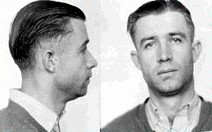
David Benjamin Knight
Murderer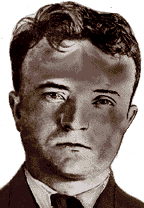 Paul Jaworski
Murderer · USA · 1926
Paul Jaworski was born in Poland as Paul Poluszynski in 1900. He later immigrat…
20 victims
Paul Jaworski
Murderer · USA · 1926
Paul Jaworski was born in Poland as Paul Poluszynski in 1900. He later immigrat…
20 victims
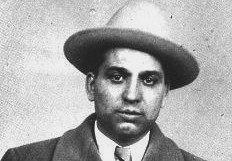 Harry Maione
Murderer · USA · 1937
Harry “Happy” Maione (1908 – February 19, 1942) was a New York mobster who serv…
12 victims
Harry Maione
Murderer · USA · 1937
Harry “Happy” Maione (1908 – February 19, 1942) was a New York mobster who serv…
12 victims
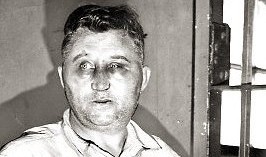 Harry Powers
Murderer · USA · 1931
Harry Powers was executed by hanging on March 18, 1932, at the West Virginia Pe…
5 victims
Harry Powers
Murderer · USA · 1931
Harry Powers was executed by hanging on March 18, 1932, at the West Virginia Pe…
5 victims
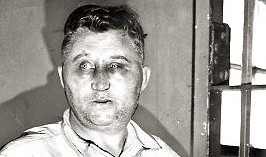 Herman Drenth
Murderer · USA · 1931
Herman Drenth was also known by the aliases Harry F. Powers and Cornelius O. Pi…
5 victims
Herman Drenth
Murderer · USA · 1931
Herman Drenth was also known by the aliases Harry F. Powers and Cornelius O. Pi…
5 victims
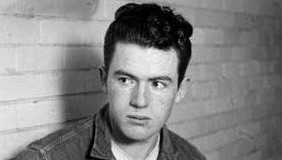 William Edward Hickman
Murderer · USA · 1926
William Edward Hickman was a man who tried to solve his financial problems by k…
5 victims
William Edward Hickman
Murderer · USA · 1926
William Edward Hickman was a man who tried to solve his financial problems by k…
5 victims
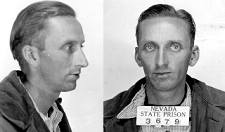 Luther Jones
Murderer · USA · 1936
Luther Jones Luther Jones was executed by asphyxiation-gas in Nevada on January…
4 victims
Luther Jones
Murderer · USA · 1936
Luther Jones Luther Jones was executed by asphyxiation-gas in Nevada on January…
4 victims
 Bernadette Protti
Homicide · USA · 1984
Bernadette Protti was an American juvenile who murdered her classmate Kirsten C…
1 victim
Bernadette Protti
Homicide · USA · 1984
Bernadette Protti was an American juvenile who murdered her classmate Kirsten C…
1 victim
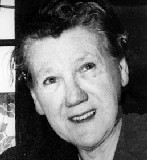 Mary Elizabeth Wilson
Serial killer · United Kingdom · 1955
Mary Elizabeth Wilson (c. 1893 - 1963), also known as the Merry widow of Windy…
4 victims
Mary Elizabeth Wilson
Serial killer · United Kingdom · 1955
Mary Elizabeth Wilson (c. 1893 - 1963), also known as the Merry widow of Windy…
4 victims
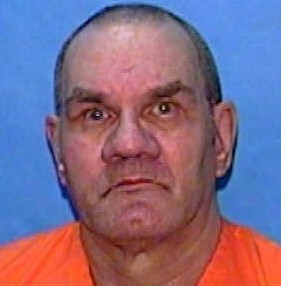 Paul Alfred Brown
Murderer · 1986
Paul Alfred Brown was convicted and sentenced to death for the murder of Paulin…
1 victim
Paul Alfred Brown
Murderer · 1986
Paul Alfred Brown was convicted and sentenced to death for the murder of Paulin…
1 victim
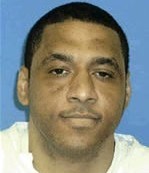 Kenneth Foster
Murderer · USA · 1996
Kenneth Foster, Jr. (born October 22, 1976) was a prisoner formerly on death ro…
1 victim
Kenneth Foster
Murderer · USA · 1996
Kenneth Foster, Jr. (born October 22, 1976) was a prisoner formerly on death ro…
1 victim
 Kanae Kijima
Serial killer · Japan · 2009
Kanae Kijima was sentenced to death on April 13, 2012. She was convicted of thr…
3 victims
Kanae Kijima
Serial killer · Japan · 2009
Kanae Kijima was sentenced to death on April 13, 2012. She was convicted of thr…
3 victims
- Gender
- male
- Country
- USA
- Location
- Maricopa County, Arizona, USA
- Date of birth
- J uly 8, 1904
- Age at first offence
- 31
- Characteristics
- argument, robbery
- Victim profile
- J. C. Kalb (male)
- Method of murder
- Hitting with a hammer
- Date(s) of murder
- December 29, 1935
- Years active
- 1935
- Date of arrest
- —
- Status
-
Executed
Executed by asphyxiation-gas in Arizona on September 3, 1937
Background
Howard C. Speakman and Judge Earl Anderson were involved in the case. Deputy C. A About the first day of December, 1935, the defendant Benjamin Knight and a woman by the name of Vesta Baker, and Vesta Baker’s two children, came to Maricopa County looking for work. They secured a job picking cotton at the Simmons ranch southwest of Coldwater, Arizona, and on the south side of the Gila river. The defendant remained at the Simmons ranch for a short while, left the ranch leaving Vesta Baker and her two children at the ranch.
The defendant went to Yuma, Arizona, and returned to a ranch near Buckeye, where he got a job as a cotton picker. At the ranch near Buckeye, defendant met the deceased, J C Kalb. Kalb and the defendant picked cotton together a few days, and decided to go to California. Kalb had an old Studebaker coach, a model about 1925 or 1926. Defendant Knight had a Pontiac coupe.
When Knight and Kalb decided to go to California, Knight sold his automobile to a second hand dealer, and Kalb and Knight went to Venice, California, in Kalb’s car. They stayed in Venice at Knight’s brother’s house two or three days and decided to return to Arizona. Knight and Kalb arrived at Coldwater, Arizona, on December 23, 1935.
Knight then borrowed Kalb’s car and left Kalb at the Coldwater store and went to the Simmons ranch to see Vesta Baker. He stayed at the ranch a short while, and he and Vesta Baker agreed that he would come back to the ranch and stay there and that Kalb could also stay at the ranch.
Kalb and the defendant went to the Simmons ranch on December 24 and stayed there until December 26. Then Knight, Vesta Baker, the two children, and Kalb moved to an auto court in the city of Phoenix. They spent the night of December 26 in the auto court.
On the morning of December 27, Kalb and Knight left the auto court saying they were going to hunt work, and they left in Kalb’s car. Knight returned to the auto court along about 8 or 9:00 o’clock that night, asked Vesta Baker if Kalb had returned, and was informed by Vesta Baker that she had not seen him since he left with the defendant that morning.
The offence
Knight and Kalb went to the lettuce sheds near Phoenix looking for work on the morning of December 27. They went to Coldwater about noon of that day and stayed around Coldwater until about sundown on the evening of the 27th. While they were around Coldwater, Knight and Kalb decided to go to the Simmons ranch to steal a wood saw attached to a tractor. They went to the Simmons ranch to steal the tractor.
They crossed the Gila river and parked their car behind a thicket some distance from the Simmons ranch. Knight and Kalb took some pliers, a hammer and wrenches to the tractor on the Simmons ranch and attempted to remove the wood saw, but found that it was too heavy to handle and abandoned the idea of taking the saw. While they were walking back from the Simmons ranch to the car, Kalb suggested that they rob Randley’s store near Coldwater. They then got into an argument about robbing the store, and Kalb struck at Knight with a Stilson wrench. Knight got a hammer out of his pocket and hit Kalb with the hammer. Knight said he did not know how many times he hit Kalb. Kalb fell to the ground in the road where they were walking.
Knight dragged Kalb’s body into the thicket by the side of the road. Knight then went to Kalb’s car parked nearby, got a cotton sack out of the automobile, and returned to the thicket. Knight went through Kalb’s pockets, took his purse and a can of tobacco, and put Kalb in the cotton sack. Knight said that at the time he put Kalb in the cotton sack Kalb was still living.
Knight dragged Kalb’s body through the thicket down to the river bank near Kalb’s car, put five or six big rocks in the sack with the body, and sat down to think about whether to throw the body in the river. Knight said he was studying whether to throw the body in the river. He changed his mind about sinking the body in the river, took the rocks out of the sack, and drove across the river out on the desert between the river and Coldwater where he turned off the road and threw the body into a pile of brush. He drove on towards Phoenix.
Knight also stated that he threw a sun visor that Kalb had been wearing away on the desert. Knight put a coat Kalb had been wearing under the hood of the car, wiped up the blood off the floor of the car, threw the floor mat out of the car because it was bloody, and then drove on home. Knight took the contents of Kalb’s purse—some 15 or 20c and a small quantity of gold dust—put them in his own purse, burned the papers and cards in Kalb’s purse, and threw the purse under the cabin where Knight and Vesta Baker were living.
On December 29, Kalb’s body was found in the pile of brush where Knight had left it. An examination showed that Kalb had been hit with some blunt instrument: a very crushing blow in the back of the head and another blow in the left temple. All papers or means of identification of the body had been removed and the two hip pockets of Kalb’s pants were turned wrong side out.
Investigation
A few days later the body was identified as J C Kalb by finger prints. A few days later two employees of the Simmons ranch were walking down the road which Kalb and Knight had followed in going to and from the tractor. They noticed a place in the road where something had been dragged across the road into a thicket. They followed the drag marks and found two large pools of blood in the thicket and a pair of pliers and a wrench which bore a took mark identical with marks on the remainder of the defendant’s tools; the wrench was identified by the defendant as his wrench.
At the place where the blood stains and the wrench and pliers were found there was also the butt of a smoked cigarette. Nearby and on the bank of the river was found a pile of rocks that had been piled up, which was identified by the defendant as being the rocks he had put in the sack with Kalb’s body.
After the two employees had found this place where the killing occurred, they went to the morgue and identified Kalb’s body as the man who had come to and left the Simmons ranch with the defendant Knight.
The evidence also showed that a rain had fallen a few hours before the killing, and that the marks where the body had been dragged out of the road and into the thicket were plainly visible. There were no signs of a fight or struggle in the road. Neither did the officers find any blood or blood stains in the road from where the body was dragged, but two large blood stains were found in the thicket about 8 or 10 feet from where the body had evidently fallen in the road.
It was the theory of the State that Kalb was hit in the temple while he was in the road and was later hit in the back of the head after he was taken into the thicket. This theory was arrived at from the evidence of the witness and a doctor that there would be little hemorrhage from an injury to the temple, but that there would be considerable hemorrhage from a blow on the back of the head.
The defendant made a statement to the County Attorney and the Sheriff of Maricopa County. In the statement, he told them that he and Kalb went to the lettuce sheds near Phoenix looking for work on the morning of December 27; went to Coldwater about noon; stayed around Coldwater until about sundown; decided to go to the Simmons ranch to steal a wood saw attached to a tractor; and attempted to remove it, then abandoned the idea because it was too heavy.
Knight further stated that while walking back from the Simmons ranch to the car, Kalb suggested robbing Randley’s store near Coldwater. He said they argued about robbing the store, and Kalb struck at him with a Stilson wrench. He said he hit Kalb with a hammer from his pocket; Kalb fell in the road; Knight dragged Kalb into the thicket; and at some point Kalb was still living. Knight then said he used a cotton sack, took Kalb’s purse and can of tobacco, placed Kalb in the sack, put rocks in the sack, later removed the rocks, drove across the river, turned off the road, and threw the body into a pile of brush. Knight stated he threw away Kalb’s sun visor, drove on, wiped blood off the car floor, discarded the floor mat, drove home, took money and gold dust from the purse, burned papers and cards, threw the purse under the cabin where Knight and Vesta Baker were living, and then stayed in the cabin that night.
Knight stated that the next day he and Vesta Baker drove to Chandler, Arizona, intending to sell Kalb’s car but changing his mind. He then returned to the auto court in Phoenix, and he and Vesta Baker packed their things, took Vesta Baker’s two children, and started to California. Knight stated that Kalb had a suit case and some clothing in it, and that they went through the suit case and discarded worn out and useless articles, put the worn articles in an old suit case, and then took Kalb’s suit case and other belongings any good in the car.
At Gila Bend they threw away the old suit case containing the worthless articles taken from Kalb’s suitcase. They drove without stopping until they crossed into California, where they stopped on the edge of the road and spent the night. The next day they drove to defendant’s brother’s house in Venice and arrived about out dark on the night of the 29th.
Just before reaching defendant’s brother’s house, Knight told Vesta Baker and her two children to tell his brother that Kalb had come to California with them and had gotten on a truck in Los Angeles and had gone to Watsonville. Knight parked the car in the alley near the brother’s house and stayed there from two to three days. He then rented a private garage where he stored the car.
After storing the car, Knight removed the battery and removed the tires from the two front wheels and took the battery and tires to his brother’s house. He took the tires off intending to sell them but later changed his mind and rolled them down an alley. Los Angeles officers testified that the car was found at the place Knight had left it, and that the tires and battery had been removed, and that the front wheels had been turned as far as they could be turned, and that the steering gear had been locked so the car could not be taken out of the garage without breaking the steering gear.
Knight stated that after he stored the car, he removed the title paper from off the wheel of the car, tore the title paper up, and flushed them down the toilet.
A witness named Bradley testified about the defendant and Kalb being in Bradley’s store about dark on the day of the killing. Bradley testified that the deceased made a purchase in the store and paid for it with a one dollar bill. Bradley testified that the deceased had five or six bills at the time, but that he did not know the denomination of the bills.
Evidence also showed that when the defendant and Kalb, Vesta Baker and the two children went to the auto court to rent cabins, the owner asked how many people would occupy the cabin and the defendant said that he, his wife, two children, and the defendant’s brother in law would all move in, but that the brother in law would only be there for a day or two. The evidence further showed that Kalb was not defendant’s brother in law.
Arrest
After Kalb’s body was found on the 29th of December, Knight was arrested after having been traced to Venice. He at first stated that he had come to California in a Ford truck with a man by the name of Wilson and that he had arrived in Venice before Christmas. He later changed his story and admitted that he drove Kalb’s car to California.
Knight claimed that on the morning of the 27th, Kalb left the lettuce sheds near Tolleson with another man. He said that that night the man Kalb left with returned to the sheds and told Knight that Kalb had gone to California and for Knight to take the car to California and leave the car on Town Ave between 5th and 6th streets. Knight said that the next morning he met the same man and was again told to take the car to California and leave it at the place stated, and that if he did not do so he would get in trouble. Knight then said he took the car to California, left it as directed, and that he never saw Kalb or the car since then.
He was returned to Phoenix and again made a similar statement to the officers, but later changed his story and admitted that he had killed Kalb and had disposed of the body as stated earlier.
Trial
Howard C. Speakman, Judge Earl Anderson, and Deputy C. A were referenced in connection with the case. Evidence included the defendant’s statement to the County Attorney and the Sheriff of Maricopa County, the discovery and identification of Kalb’s body, and witnesses including Bradley.
Sentencing
The case concluded with execution by asphyxiation-gas in Arizona on September 3, 1937.
Outcome
J C Kalb was found dead after the defendant described his disposal of the body. The defendant was executed by asphyxiation-gas in Arizona on September 3, 1937.
Other details
Names and relationships
Vesta Baker was the woman who came with the defendant and her two children. Kalb had been involved with the defendant in picking cotton and traveling. Knight claimed Kalb was not his brother in law; however, evidence showed that the owner of the auto court was told a brother in law would be occupying a cabin for a day or two, and evidence showed Kalb was not defendant’s brother in law.
Knight’s brother was in Venice.
Defendant’s personal statements
The defendant stated that his name is David Benjamin Knight. He stated that he was 32 years of age. He stated he was born in Ardmore, Oklahoma on July 8, 1904. He stated his father was not living and his mother lives in Reed, Oklahoma. He stated he has three brothers: one in Los Angeles, one in Burbank, California, and one in Wichita Falls, Texas. He stated he has three sisters: one in Carlsbad, New Mexico, one in Mule Shoe, Texas, and one in Chickasha, Oklahoma. He stated he is an American citizen.
He stated he had been in Arizona for two and one half years and in Maricopa County for six months. He stated he is an auto mechanic and last worked for Mr. Wilson at Buckeye, Arizona, for four weeks and quit because the job was completed.
He stated he was convicted in Lamb County, Texas for Grand Larceny in 1934. He stated he is married and has one child whose whereabouts are unknown.
Locations and places mentioned
Simmons ranch (southwest of Coldwater, Arizona), Coldwater, Arizona, Gila river, Yuma, Arizona, Buckeye, Arizona, Venice, California, Phoenix, Arizona, auto court in Phoenix, lettuce sheds near Phoenix, Coldwater store, Simmons ranch, Gila Bend, Desert between the river and Coldwater, Tolleson, Arizona, Town Ave between 5th and 6th streets, Los Angeles, Watsonville, Arizona, Chandler, Arizona, Randley’s store near Coldwater, Bradley’s store, Ardmore, Oklahoma, Reed, Oklahoma, Los Angeles, Burbank, California, Wichita Falls, Texas, Carlsbad, New Mexico, Mule Shoe, Texas, Chickasha, Oklahoma, Lamb County, Texas, Buckeye, Arizona, and Venice, California.
Evidence details preserved
The body had blunt instrument injuries: a very crushing blow in the back of the head and another blow in the left temple. Identification occurred by finger prints, and later by two employees of the Simmons ranch who identified Kalb’s body at the morgue. Two large pools of blood in the thicket were found along with a pair of pliers and a wrench with a tool mark identical with marks on the remainder of the defendant’s tools, and there was also the butt of a smoked cigarette at the location. A pile of rocks on the bank of the river matched rocks the defendant said he put in the sack with Kalb’s body.
Spotted an error, or have more information about this case?