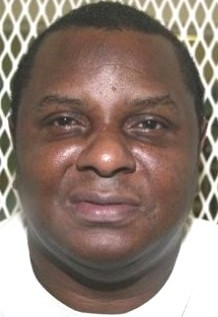
Michael Lynn Riley
Murderer Brian Kevin Rosenfeld
Murderer · USA · 1985
Brian Kevin Rosenfeld Brian Kevin Rosenfeld was sentenced to three concurrent l…
23 victims
Brian Kevin Rosenfeld
Murderer · USA · 1985
Brian Kevin Rosenfeld Brian Kevin Rosenfeld was sentenced to three concurrent l…
23 victims
 Yahweh ben Yahweh
Murderer · USA · 1980
Yahweh ben Yahweh was born and legally named Hulon Mitchell Jr. (October 27, 19…
23 victims
Yahweh ben Yahweh
Murderer · USA · 1980
Yahweh ben Yahweh was born and legally named Hulon Mitchell Jr. (October 27, 19…
23 victims
 Russell Ellwood
Murderer · USA · 1991
Russell Ellwood was a former taxi driver. Authorities suspected him of killing…
20 victims
Russell Ellwood
Murderer · USA · 1991
Russell Ellwood was a former taxi driver. Authorities suspected him of killing…
20 victims
 Theodore Wafer
Murderer · USA · 2013
The case concerned the shooting of Renisha McBride, a 19-year-old African-Ameri…
1 victim
Theodore Wafer
Murderer · USA · 2013
The case concerned the shooting of Renisha McBride, a 19-year-old African-Ameri…
1 victim
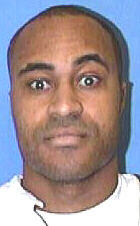 Demarco McCullum
Murderer · USA · 1994
Demarco Markeith McCullum was executed by lethal injection in Texas on November…
1 victim
Demarco McCullum
Murderer · USA · 1994
Demarco Markeith McCullum was executed by lethal injection in Texas on November…
1 victim
 George Stephenson
Mass murderer · United Kingdom · 1986
George Stephenson — defendant · John Daly — co-defendant · George Daly — co-def…
5 victims
George Stephenson
Mass murderer · United Kingdom · 1986
George Stephenson — defendant · John Daly — co-defendant · George Daly — co-def…
5 victims
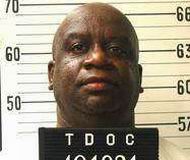 Robert Lee Faulkner
Murderer · USA · 1999
Robert Lee Faulkner was convicted of first degree premeditated murder of his wi…
1 victim
Robert Lee Faulkner
Murderer · USA · 1999
Robert Lee Faulkner was convicted of first degree premeditated murder of his wi…
1 victim
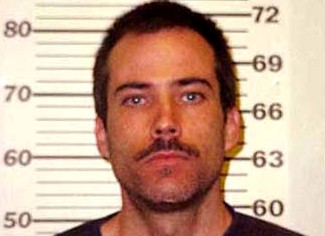 Eric Rudolph
Murderer · USA · 1996
Eric Robert Rudolph (born September 19, 1966), also known as the “Olympic Park…
2 victims
Eric Rudolph
Murderer · USA · 1996
Eric Robert Rudolph (born September 19, 1966), also known as the “Olympic Park…
2 victims
- Gender
- male
- Country
- USA
- Location
- Wood County, Texas, USA
- Date of birth
- May 9, 1958
- Age at first offence
- 28
- Characteristics
- robbery, torture
- Victim profile
- Wynone Lynn Harris, 23 (convenience store clerk)
- Method of murder
- St abbing with a butcher knife 31 times
- Date(s) of murder
- February 1, 1986
- Years active
- 1986
- Date of arrest
- Same day (surrenders)
- Status
-
Executed
Executed by lethal injection in Texas on May 19, 2009
Case overview
Michael Lynn Riley was convicted of capital murder and sentenced to death for the February 1, 1986, capital murder of Wynona Lynn Harris. He was executed by lethal injection in Texas on May 19, 2009.
Timeline
- February 1, 1986 (around 9:30 a.m.) — Riley fatally stabbed Wynona Lynn Harris at a convenience store in Quitman, where she worked as a clerk.
- November 17, 1986 — A jury found Riley guilty of capital murder; he was later sentenced to death.
- November 10, 1993 — The Texas Court of Criminal Appeals reversed Riley’s conviction and sentence.
- September 6, 1995 — Riley was again convicted of capital murder for the robbery and murder of Wynona Lynn Harris.
- September 8, 1995 — After a separate punishment hearing, Riley was sentenced to death by the jury.
- May 28, 1997 — The Texas Court of Criminal Appeals affirmed Riley’s conviction and sentence on direct appeal.
- April 1, 1998 — Riley filed an application for writ of habeas corpus with the state trial court.
- June 26, 1998 — The trial court held an evidentiary hearing on Riley’s allegations.
- September 8, 1998 — The state trial court entered findings of fact and conclusions of law recommending that relief be denied.
- December 16, 1998 — The Texas Court of Criminal Appeals adopted findings and denied Riley’s state habeas application.
- April 9, 1999 — Riley filed a federal petition for writ of habeas corpus in a U.S. district court.
- July 19, 2002 — The federal district court denied Riley the relief requested in his federal habeas petition.
- September 6, 2002 — The federal district court granted Riley a certificate of appealability on an ineffective counsel claim.
- July 16, 2003 — The Fifth Circuit Court issued a published opinion denying Riley’s request for additional COA.
- March 5, 2004 — The Fifth Circuit Court issued a published opinion affirming the district court’s denial of habeas relief.
- June 3, 2004 — Riley petitioned the U.S. Supreme Court for a writ of certiorari.
- January 10, 2005 — The Supreme Court denied Riley’s petition for certiorari.
- May 17, 2005 — The trial court held a hearing, and Riley’s initial execution date was set for September 22, 2005.
- September 14, 2005 — Riley filed a subsequent state habeas application in the trial court asserting that he is mentally retarded.
- September 15, 2005 — The Texas Court of Criminal Appeals stayed Riley’s execution and remanded to the trial court.
- September 12, 2007 — After a state trial court hearing and findings of fact and conclusions of law determining that Riley was not mentally retarded, the Texas Court of Criminal Appeals denied relief.
- September 13, 2007 — Riley filed a motion for authorization to file a successive habeas petition with the Fifth Circuit Court.
- December 21, 2007 — The Fifth Circuit Court denied Riley’s motion for authorization to file a successive petition.
The offence
On February 1, 1986, at approximately 9:30 a.m., Riley fatally stabbed Wynona Lynn Harris, a 23-year-old convenience store clerk in Quitman, where she worked as a clerk. Harris was stabbed 31 times.
Riley attacked Harris with a 10-inch butcher knife while she was counting some money; during the attack, some wounds were delivered with enough force to sever the underlying ribs.
Riley fled with money from the store. In some accounts, Riley fled with about $1,000 in a money bag, and in other accounts the amount left the store with was about $1,110 in cash.
Investigation and evidence
Later on February 1, 1986, Riley went to the Wood County sheriff’s office and indicated he knew something about the murder while denying being at the store that morning. After evidence emerged placing him at the store that morning, authorities brought Riley back for further questioning.
Police found physical evidence corroborating Riley’s confession. Investigators found footprints at the scene that led to an area just behind Riley’s house. Riley led authorities to evidence including discovery of bloodstained coveralls with cash hidden under brush in a field close to Riley’s house. In one description, there was $970 in one of the pockets of the coveralls.
Riley waived his Miranda rights and confessed to the crime. In his confession, Riley stated that he picked up a large butcher knife en route to the convenience store and that once in the store he waited until Harris’ back was turned before he stabbed her.
A milk delivery driver told police that he noticed a man in distinctive coveralls hanging around outside the store. A customer entered the store but could not find anyone and later found Harris’s battered body behind the counter.
Confession and statements
Riley confessed and, in later accounts from prison, described gambling losses in a dice game as what prompted the killing:
- "Dice took my life,"
- "It's the worst drug habit you can have." He also described wanting to “try to live the big life” and “live the life of a high roller.”
Trial
Pre-trial
In Riley’s second capital murder trial, his attorneys filed pre-trial motions including:
- a “Motion to Set Aside Indictment Due to Unconstitutionality of Statute” filed on June 16, 1995, and
- a “Motion to Quash Indictment” filed July 10, 1995.
At a hearing on July 10, 1995, the judge stated in open court that she denied the motion to quash the indictment and verbally denied Riley’s motion to set aside the indictment due to unconstitutionality of the statute. A colloquy ensued during which the court noted she would deny the motion on issues related to Penry and the unconstitutionality of the statute.
After the hearing, the written order checked “GRANTED” rather than “DENIED” in the space designated for the disposition of the motion. All parties proceeded to trial.
Jury selection issue and reversal
Riley’s first conviction and sentence were set aside based on a jury-selection error. The Texas Court of Criminal Appeals reversed the conviction and sentence on November 10, 1993, determining that a potential juror had been dismissed improperly.
Guilt phase and plea
At his retrial in 1995, Riley pleaded guilty in the guilt phase, although the State did not accept the plea because it sought the death penalty and entered a plea of “not guilty” for trial purposes.
Closing argument
Riley’s trial counsel was William C. Wright. During closing argument, Wright stated:
- "I'm not asking you to look at mitigation. It's not-not there. Wouldn't lie to you."
Wright later claimed at the state habeas hearing that the “no mitigation” argument was a measure taken to gain “credibility with the jury.”
Wright also stated during closing argument that Riley had confessed to the murder and had led police to evidence that they would likely not have found otherwise.
Witness testimony at punishment phase
During the punishment phase, the State introduced testimony from several witnesses, including law enforcement officers and probation officers, about Riley’s propensity for violence. Witnesses testified that Riley had a reputation for being violent and that, in their opinion, Riley would continue to commit acts of violence in the future.
The State presented juvenile records and statements written by Riley admitting to prior offenses involving thefts and burglaries, along with two prior convictions for forgery.
The State also presented evidence that Riley was involved in a fight with another inmate in November 1994, leading to segregation and removal from the prison work program.
Sentencing
First death sentence
After the first jury trial in November 1986, Riley was later sentenced to death.
Second death sentence
After the separate punishment hearing on September 8, 1995, Riley was sentenced to death by the jury.
Punishment-phase mental retardation issue
Several of Riley’s appeals asserted that he was mentally retarded and thus ineligible for capital punishment. In 1973, he was evaluated as having an I.Q. of 67, which was described as borderline retardation level, and the evaluation was admitted at his first trial.
In preparation for his second trial, his attorney William Wright interviewed Riley’s family and examined his school, probation, and juvenile records. Wright concluded that Riley was not retarded and decided not to present the 1973 evaluation into evidence, believing it could be counterproductive to the trial strategy.
Wright consulted with Dr. Patrick Lawrence, a psychologist, who evaluated Riley and testified that Riley did not pose a future danger to society, but Lawrence did not testify about Riley’s I.Q.
In September 2005, the Texas Court of Criminal Appeals stayed Riley’s execution and remanded. Later, after a hearing, the Texas Court of Criminal Appeals concluded that the state-court findings that Riley was not mentally retarded were supported by the record and denied relief on September 12, 2007.
Appeals and post-conviction proceedings
Direct appeal
- The Texas Court of Criminal Appeals reversed Riley’s conviction and sentence on November 10, 1993.
- The Texas Court of Criminal Appeals affirmed the conviction and sentence on May 28, 1997.
State habeas
Riley filed a state habeas application on April 1, 1998. The trial court held an evidentiary hearing on June 26, 1998 and made findings recommending denial on September 8, 1998. The Texas Court of Criminal Appeals adopted the findings and denied relief on December 16, 1998.
Riley later filed a subsequent state habeas application asserting that he was mentally retarded on September 14, 2005; the Texas Court of Criminal Appeals stayed execution on September 15, 2005 and remanded. After the trial court hearing and findings, the Texas Court of Criminal Appeals denied relief on September 12, 2007.
Federal habeas and certificate of appealability
Riley filed a federal petition for writ of habeas corpus in a U.S. district court on April 9, 1999. The district court denied relief on July 19, 2002 and granted a certificate of appealability on September 6, 2002 on an ineffective counsel claim.
On July 16, 2003, the Fifth Circuit Court issued a published opinion denying Riley’s request for additional COA. On March 5, 2004, it issued a published opinion affirming the district court’s denial of habeas relief.
Riley petitioned the U.S. Supreme Court for a writ of certiorari on June 3, 2004, and the Supreme Court denied the petition on January 10, 2005.
Successive habeas authorization
On September 13, 2007, Riley filed a motion for authorization to file a successive habeas petition with the Fifth Circuit Court. The Fifth Circuit denied the motion on December 21, 2007.
Court findings regarding ineffective assistance and jurisdiction claim
In Riley v. Cockrell, 339 F.3d 308 (5th Cir. 2003) (Habeas), the Court of Appeals denied Riley’s request for a COA on the jurisdiction claim and denied COA on ineffective assistance grounds addressing (1) counsel’s closing argument stating there was no mitigation and (2) counsel’s failure to argue acceptance of responsibility connected to Riley’s guilty plea.
In a related discussion of the ineffective assistance claims, trial counsel Wright testified at the state habeas hearing during a colloquy with Riley’s habeas lawyer Barry Bryant:
- BRYANT: "What would be the purpose of a lawyer arguing that his client is not a good guy?"
- WRIGHT: "I think the purpose is to-if you come in and strike the jurors as being unrealistic and untruthful on the small issues, that when you get to the big issues, you have no credibility left."
- BRYANT: "What did you hope to gain by saying, there's no mitigation, as opposed to simply not arguing it at all?"
- WRIGHT: "Credibility with the jury."
Outcome
Riley was executed by lethal injection in Texas on May 19, 2009. He was pronounced dead at 6:18 p.m. Eight minutes after the lethal drugs began to flow, Riley was pronounced dead at 6:18 p.m.
Aftermath and victim impact
Relatives of Wynona Harris attended the execution. Riley apologized repeatedly to the victim’s relatives, including her two daughters and husband:
- "I know I hurt you very bad,"
- "I want you to know I'm sorry. I hope one day you can move on and, if not, I understand."
Brandy Oaks accepted Riley’s apology. Oaks said:
- "This is a difficult day and there are no winners on either side,"
- "Her spirit will live on in our hearts and in our lives."
- "I think being here was something I needed. It's the last chapter in the book. I can close it. It's over for me, emotionally, I guess."
Oaks’s sister, Jennifer Bevill, said:
- "It's strange. It's almost like I never had her to begin with," and said she had to pray:
- "for forgiveness and love and mercy — forgiveness for this person that has done this to your family." Bevill also said:
- "In the long run, Jesus Crhist is our shoulder to cry on when you don't have anybody."
Riley also apologized to his mother for being “not the big son that you wanted me to be.” He told friends who were watching:
- "To the fellows on the row: stay strong. Fleetwood is out of here," and concluded a final statement by urging:
- "stay strong" and using his death row nickname:
- "Fleetwood is out of here."
Prior criminal history and institutional history
Riley had been arrested a total of eight times prior to his incarceration and death sentence for capital murder, according to the Texas Department of Criminal Justice.
He served time in prison on two separate occasions for burglary offenses. He received jail time for several other burglaries, and arrests for public intoxication, aggravated assault with serious bodily injury, theft by check, and forgery.
In one account, he was on probation in Wood County in 1976 for burglary with intent to commit theft, and in 1977 he violated parole and received a two-year state prison sentence for burglary with intent to commit theft, with discharge in 1978. In 1980, he received a nine-year prison term for burglary of a building and was paroled three years later. In 1985, he was placed on five years probation for writing a bad check and on a ten years probation for forgery.
Riley was on probation at the time of the arrest for the murder because he was charged with forgery for writing a bad check.
During incarceration, the State presented evidence of a fight with another inmate in November 1994, after which Riley was placed in segregation and taken off the prison work program.

Spotted an error, or have more information about this case?