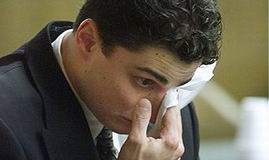
Raffi Kodikian
Murderer Russell Ellwood
Murderer · USA · 1991
Russell Ellwood was a former taxi driver. Authorities suspected him of killing…
20 victims
Russell Ellwood
Murderer · USA · 1991
Russell Ellwood was a former taxi driver. Authorities suspected him of killing…
20 victims
 Robert Martines Perez
Murderer · USA · 1994
Name: Robert Martines Perez · Other name used in proceedings: Robert Martinez P…
15 victims
Robert Martines Perez
Murderer · USA · 1994
Name: Robert Martines Perez · Other name used in proceedings: Robert Martinez P…
15 victims
 Billy Frank Vickers
Murderer · USA · 1993
Billy Frank Vickers Vickers was executed by lethal injection in Texas on Januar…
14 victims
Billy Frank Vickers
Murderer · USA · 1993
Billy Frank Vickers Vickers was executed by lethal injection in Texas on Januar…
14 victims
 Jeremy McLaughlin
Homicide - Murderer · New Zealand · 1995
Jeremy George Edward McLaughlin (35) — defendant · Jade Bayliss (13) — victim;…
2 victims
Jeremy McLaughlin
Homicide - Murderer · New Zealand · 1995
Jeremy George Edward McLaughlin (35) — defendant · Jade Bayliss (13) — victim;…
2 victims
 Roger Dale Stafford
Mass murderer · USA · 1978
Roger Dale Stafford was a white man who was 27 when he received death sentences…
9 victims
Roger Dale Stafford
Mass murderer · USA · 1978
Roger Dale Stafford was a white man who was 27 when he received death sentences…
9 victims
 Wade Michael Page
Mass murderer · USA · 2012
Wade Michael Page was an American white supremacist and a United States Army ve…
6 victims
Wade Michael Page
Mass murderer · USA · 2012
Wade Michael Page was an American white supremacist and a United States Army ve…
6 victims
 Kenneth Erskine
Serial killer · United Kingdom · 1987
Kenneth Erskine (born 1962) was an English serial killer known as the “Stockwel…
7 victims
Kenneth Erskine
Serial killer · United Kingdom · 1987
Kenneth Erskine (born 1962) was an English serial killer known as the “Stockwel…
7 victims
 Leif Christian Halvorsen
Murderer · USA · 1983
Leif Christian Halvorsen was sentenced to death on September 15, 1983 in Fayett…
3 victims
Leif Christian Halvorsen
Murderer · USA · 1983
Leif Christian Halvorsen was sentenced to death on September 15, 1983 in Fayett…
3 victims
- Gender
- male
- Country
- USA
- Location
- Rattlesnake Canyon , New Mexico, USA
- Date of birth
- 1974
- Age at first offence
- 25
- Characteristics
- murder for hire, torture, drug addict, attempted rape
- Victim profile
- David Coughlin, 26 (his best friend)
- Method of murder
- St abbing with knife
- Date(s) of murder
- August 8, 1999
- Years active
- 1999
- Date of arrest
- Next day
- Status
-
Released
Sentenced to fifteen-years in prison, and suspended thirteen-years of the sentence as probation; served 16 months; released in November 2001
Name
Raffi Kodikian
Background
Raffi Kodikian and David Coughlin were best friends since college. They lived in Boston, Massachusetts. Kodikian was an aspiring journalist, and Coughlin was a traffic policy analyst.
In July 1999, Kodikian and Coughlin set off on a road trip from Boston to California, where Coughlin planned to attend graduate school.
The offence
Kodikian was responsible for the killing of David Coughlin in 1999 in the desert of southern New Mexico in the United States, after they became lost while hiking.
The killing occurred on their fourth day in the backcountry of Carlsbad Caverns National Park. After days of hiking, the two became lost and dehydrated. Kodikian and Coughlin had brought only three pints of water and one pint of Gatorade. One pint of water was used to boil hot dogs during their first evening in the canyon.
Although they had a topographical map, neither knew how to properly read it. They took extreme measures to survive, including licking rocks, eating cactus fruit, and even drinking their own urine. Kodikian abandoned the idea of drinking his own urine after gagging.
The third night, Coughlin began vomiting, according to Kodikian.
Kodikian later wrote in his journal on August 8: "I killed & burried (sic) my best friend today. Dave had been in pain all night. At around 5 or 6, he turned to me and begged that I put my knife through his chest. I did, and a second time when he wouldn't die."
Kodikian stabbed Coughlin in the chest twice, and the second blow pierced his heart. Kodikian then buried Coughlin’s body under rocks, including some weighing more than 70 pounds. The autopsy revealed that while Coughlin was dehydrated, it did not appear to be fatal.
In court, it became clear during sentencing that Coughlin’s vomiting was not indicative of severe dehydration but instead was most likely a reaction to unripe cactus fruit.
During closing argument, prosecutors cited that Kodikian had testified that he and Coughlin considered suicide, but the knife was too dull to cut Kodikian’s wrist.
Investigation
Lance Mattson, a park ranger who had been searching for the campers, discovered Kodikian badly dehydrated. When the ranger inquired about Coughlin, Kodikian pointed to a pile of rocks and replied, "I killed him."
Authorities further noted that Kodikian had buried Coughlin’s body under rocks, some weighing more than 70 pounds. The weight of the rocks and the completion of the task seemed remarkable for someone seriously dehydrated.
The sheriff also stated that Kodikian was "moderately to severely dehydrated," and was not close to dying when Mattson found him.
While one theory was that Coughlin confessed to having earlier had a liaison with an ex-girlfriend of Kodikian, Sheriff Click sent Capt. Eddie Carrasco to Boston, but Carrasco discovered nothing. Sheriff Click said: "No one I talked with ever heard a cross word between them. They were the best of friends".
Prosecutors showed a video tape of officials removing the rocks from Coughlin's tomb, showing his shirt soaked in blood from a chest wound.
Park officials testified that Kodikian and Coughlin were only a half-hour walk from their car, and were woefully equipped for desert camping. Park officials also testified that Kodikian was coherent in the afternoon sun when found lying in his tent with only a pair of shorts on.
In the course of questioning, the prosecution and defense addressed whether Kodikian’s actions were consistent with the circumstances and whether the desert conditions could have affected mental state.
Arrest
After receiving saline through IV at the scene, Kodikian was handcuffed. Authorities found Kodikian dazed, dehydrated, and wounded. He cut his own wrists but claimed the knife was too dull to cause lethal wounds.
Hours later, park and local authorities were questioning Kodikian’s story. Kodikian recovered and returned to his native Pennsylvania.
Trial
Kodikian pleaded guilty to second-degree murder.
At trial, Kodikian’s attorney, Gary Mitchell, described the killing as an act of kindness. Mitchell further stated it was part of a death pact between the friends and that Kodikian intended to kill himself too, but was too weak to do so.
During sentencing, the prosecutor asked Kodikian whether he knew what he was doing at the time. Kodikian said: "What I thought I was doing was keeping my friend from going through 12 to 24 hours of hell before he died,"
Sentencing
Kodikian faced a possible maximum penalty of 20 years in prison.
District Judge Jay Forbes sentenced Kodikian to 15 years with all but two years suspended, followed by five years of probation.
During the sentencing hearing, it was said that Kodikian was sentenced Wednesday to two years in prison, with 15 years total and thirteen years of the sentence suspended as probation. The maximum penalty was 20 years.
The prosecutor asked questions about Kodikian’s knowledge at the time of the killing. The court also considered expert testimony about dehydration and pain, and how unripe cactus fruit may have caused vomiting.
The prosecutor argued that the law does not allow murder on the basis that the defendant believes it is in the victim’s best interest. The prosecutor also argued that Coughlin would have survived if not stabbed and made use of testimony from experts in dehydration. The prosecutor said: "Where there is life, there is hope. The defendant purposely took David Coughlin's life. ... David Coughlin would be alive today if Raffi Kodikian had not killed him," and added: "The law says you may not murder another person just because you think it's in their best interest."
The prosecutor also said: "This defendant is not an evil person," and "He is not a bad person. But he did do a bad thing."
Defense attorney Gary Mitchell asked for no prison time and compared Kodikian’s situation to soldiers in combat. Mitchell argued that Coughlin and Kodikian were "placed in an absolutely horrible situation of total hopelessness." Mitchell also described the sentence as "extremely fair," and said he had not decided whether to appeal.
During the sentencing hearing, Chief District Judge Jay W. Forbes said: "He had a conscious and rational understanding of what he did at the time he murdered David Coughlin," and added: "(But) Raffi's remorse is genuine; I don't question that."
After the hearing, Kodikian told reporters that he still believed he did the right thing. Kodikian said: "I feel that anybody in my position who would turn their back on their friend wouldn't have been deserving of coming out of the canyon in the first place,"
Appeals
No appeal decision was stated in the material.
Under the plea bargain, Kodikian retained the right to appeal the judge's ruling barring the defense from arguing before a jury that Kodikian suffered from "involuntary intoxication" brought on by dehydration at the time of the killing.
Outcome
Kodikian served 16 months in prison and was released in November 2001.
Other details
Coughlin was reported as age 26 at sentencing in one account.
The two men planned to camp in Rattlesnake Canyon for one night, then head back out the next morning, but they could not find the trail they took down when they attempted to hike out.
Kodikian testified that they spent the next three days searching for a path that would lead them to the top, and that when they could not find one they would return to their campsite in hopes they would be rescued.
Kodikian testified that they quickly ran out of water. He also testified that after two days with buzzards circling overhead and nothing to eat except prickly pear fruit, they discussed committing suicide.
Kodikian said that on the third day, Coughlin spent several hours vomiting mucus and bile.
Kodikian testified that on the next day, Coughlin, convinced the two would never be found, begged Kodikian to end his pain. Kodikian said Coughlin told him to get the knife and put it in his chest, and Kodikian said he stabbed him twice.
The material included an account of creating and writing farewell messages in a notebook to families and an account that buzzards circled overhead during their ordeal.
A family statement was faxed to prosecutor Les Williams and read in court. The statement said: "We can think of no reason why Raffi would have wished David any harm or pain," and also said: "Moreover, we cannot presume to know what transpired, or the thoughts and emotions the two experienced during the days before David's death. To be sure, we have questions. However, we find it difficult to believe there was any malicious intent."
Lance Mattson was the park ranger searching for the campers. Sheriff Michael A. Click was named. Capt. Eddie Carrasco was sent to Boston.
During sentencing discussions, medical experts testified that heat-related panic has been documented and could put people into a mental state where they would make irrational decisions under the conditions described.
Multiple narrative accounts described how the two men were woefully unprepared, including references to trail markers being within view and park roads being visible from ridges surrounding their location.
Spotted an error, or have more information about this case?