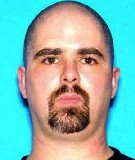
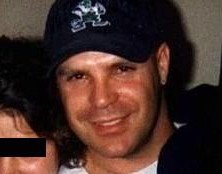
Wade Michael Page
Mass murderer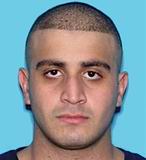 Omar Mateen
Mass murderer · USA · 2016
Omar Mir Seddique Mateen was an American mass murderer who killed 49 people and…
49 victims
Omar Mateen
Mass murderer · USA · 2016
Omar Mir Seddique Mateen was an American mass murderer who killed 49 people and…
49 victims
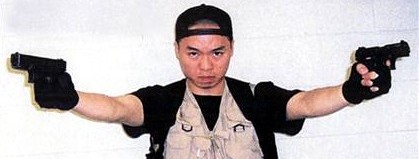 Seung-Hui Cho
Mass murderer · USA · 2007
Seung-Hui Cho was a mass murderer who shot and killed 32 people and wounded man…
32 victims
Seung-Hui Cho
Mass murderer · USA · 2007
Seung-Hui Cho was a mass murderer who shot and killed 32 people and wounded man…
32 victims
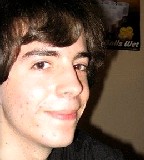 Adam Lanza
Mass murderer · USA · 2012
Adam Lanza, 20, fatally shot twenty children and six adult staff members in a m…
27 victims
Adam Lanza
Mass murderer · USA · 2012
Adam Lanza, 20, fatally shot twenty children and six adult staff members in a m…
27 victims
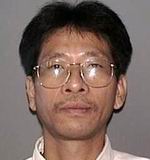 Jiverly Wong
Mass murderer · USA · 2009
December 8, 1967 — Jiverly Antares Wong was born. · late 1980s — Wong first cam…
13 victims
Jiverly Wong
Mass murderer · USA · 2009
December 8, 1967 — Jiverly Antares Wong was born. · late 1980s — Wong first cam…
13 victims
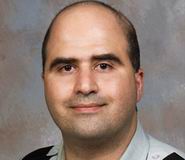 Nidal Hasan
Mass murderer · USA · 2009
Nidal Malik Hasan (born September 8, 1970) was a former United States Army Medi…
13 victims
Nidal Hasan
Mass murderer · USA · 2009
Nidal Malik Hasan (born September 8, 1970) was a former United States Army Medi…
13 victims
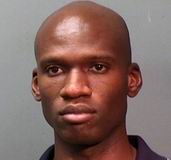 Aaron Alexis
Mass murderer · USA · 2013
Aaron Alexis was a lone gunman who carried out a mass shooting at the headquart…
12 victims
Aaron Alexis
Mass murderer · USA · 2013
Aaron Alexis was a lone gunman who carried out a mass shooting at the headquart…
12 victims
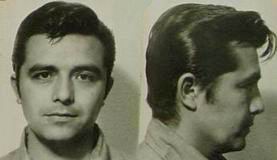 Perry Edward Smith
Mass murderer · USA · 1959
Perry Edward Smith (October 27, 1928 – April 14, 1965) was one of two ex-convic…
4 victims
Perry Edward Smith
Mass murderer · USA · 1959
Perry Edward Smith (October 27, 1928 – April 14, 1965) was one of two ex-convic…
4 victims
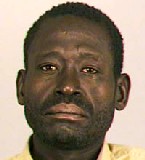 Johnson Aziga
Murderer · Canada · 2003
Johnson Aziga (born 1956) was a Ugandan-born Canadian man resident in Hamilton,…
2 victims
Johnson Aziga
Murderer · Canada · 2003
Johnson Aziga (born 1956) was a Ugandan-born Canadian man resident in Hamilton,…
2 victims
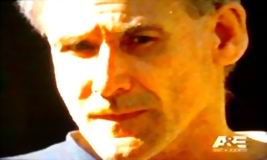 Ronald Glenn West
Murderer · Canada · 1970
Ronald Glenn West was a Toronto police officer and served as a traffic cop at T…
2 victims
Ronald Glenn West
Murderer · Canada · 1970
Ronald Glenn West was a Toronto police officer and served as a traffic cop at T…
2 victims
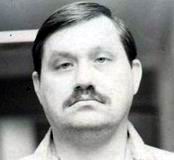 Donald Edward Beaty
Murderer · USA · 1984
Donald Edward Beaty was a maintenance man and resident maintenance manager at t…
1 victim
Donald Edward Beaty
Murderer · USA · 1984
Donald Edward Beaty was a maintenance man and resident maintenance manager at t…
1 victim
- Gender
- male
- Country
- USA
- Location
- Oak Creek, Milwaukee County, Wisconsin , USA
- Date of birth
- November 11, 1971
- Age at first offence
- 41
- Characteristics
- white supremacist, shooting spree
- Victim profile
- O ne woman: Paramjit Kaur, 41; and five men: Satwant Singh Kaleka, 65, the founder of the temple; Prakash Singh, 39, an assistant priest; Sita Singh, 41; Ranjit Singh, 49; and Suveg Singh, 84
- Method of murder
- Shooting
- Date(s) of murder
- August 5, 2012
- Years active
- 2012
- Date of arrest
- —
- Status
-
Died in custody
Committed suicide by shooting himself in the head after he was shot in the stomach by a responding police officer
Case overview
Wade Michael Page was an American white supremacist and a United States Army veteran from Cudahy, Wisconsin. On August 5, 2012, he fatally shot six people and wounded four others in a mass shooting at a Sikh temple in Oak Creek, Wisconsin. All of the dead were members of the Sikh faith. Page committed suicide by shooting himself in the head after he was shot in the stomach by a responding police officer.
Timeline
- August 5, 2012 — Police responded to a shooting at a Sikh gurdwara in Oak Creek at around 10:25 a.m. CDT; Page fatally shot six people, wounded four others, was shot in the stomach, and then shot himself in the head after being shot by a responding police officer.
- August 10, 2012 — Federal buildings flew flags at half-staff until this date in response to the victims.
- August 22, 2012 — Lt. Brian Murphy was discharged from the hospital.
- August 23, 2012 — Michelle Obama visited the temple.
- September 19, 2012 — A Congressional hearing addressed hate crimes in response to the tragedy; the Senate Judiciary Committee’s Subcommittee on the Constitution, Civil Rights and Human Rights convened by Senator Dick Durbin.
- Late Tuesday — Misty Cook was arrested on suspicion of being a felon in possession of a gun.
- July 28, 2012 — Page legally purchased the handgun used in the shooting in West Allis, Wisconsin.
- November 11, 1971 — Wade Michael Page was born.
- August 1998 — Page separated from the U.S. Army in 1998 (after being forced out by a general discharge).
- June 1994 — While at Fort Bliss, the El Paso police arrested Page and charged him with criminal mischief.
- 2005 — Cook was convicted of fleeing a traffic officer in Milwaukee County and received a sentence of 18 months’ probation and served 97 days in jail.
- 2000 through 2007 — Page lived in the Denver suburb of Littleton.
- 2000 — Page began entering the white power music scene.
- 2005 — Page founded the band End Apathy.
- 2006 to 2010 — Page worked as a truck driver.
The offence
Page carried out the mass shooting at a Sikh gurdwara in Oak Creek, Wisconsin, when the temple was preparing langar, a Sikh communal meal, for later in the day. Witnesses suggested that women and children would have been at the temple preparing for the meal at the time of the incident, with children’s classes scheduled to begin at 11:30 a.m.
He used a Springfield XD(M) 9-millimeter semi-automatic pistol, which he had legally purchased in Wisconsin. Four people were killed inside the temple, and three people, including Page, died outside.
Page killed five men and one woman, ranging in age from 39 to 84.
Investigation and law enforcement response
Emergency calls arrived around 10:25 a.m. CDT, and police responded to the shooting at the Sikh gurdwara in Oak Creek. Authorities treated the incident as an act of domestic terrorism, with the Joint Terrorism Task Force investigating the site. Oak Creek police handed the investigation over to the FBI.
Police were also investigating possible ties to white supremacist groups and other racial motivations. The FBI said there was no reason to think anyone else was involved in the attack, and they were not aware of any past threat made against the temple.
Authorities released an audio recording of the incident made while the first responding officer, Lieutenant Brian Murphy, was shot by the gunman. It contained the words:
"I have someone walking out the driveway towards me. Man with a gun, white t-shirt,"
The recording was followed by the sound of gunfire. In September 2012, authorities released video recordings taken by squad cars during the incident, including the moments when Murphy was shot and when the gunman was shot by another officer.
After the initial reports that Page had died from being shot by police officers, the FBI later clarified that Page, after being shot by an officer, died from a self-inflicted gunshot wound to the head.
Arrest and immediate deaths
On arrival, police engaged the gunman, later identified as Wade Michael Page. He had shot several people at the temple, killing six.
Page wounded an officer. After being shot in the stomach by another responding officer, Page fatally shot himself in the head.
Murphy was shot fifteen times by Page, but survived.
Victims and injured
Fatal victims
The six victims killed included one woman and five men:
- Paramjit Kaur, 41
- Satwant Singh Kaleka, 65, the founder of the temple
- Prakash Singh, 39, an assistant priest
- Sita Singh, 41
- Ranjit Singh, 49
- Suveg Singh, 84
All of the male victims wore turbans as part of their Sikh faith. Four of the victims were Indian nationals, while the rest were Americans.
Injured
The injured included a responding officer, Lt. Brian Murphy, who was shot fifteen times at close range, including once in the neck. He was discharged from the hospital on August 22, 2012. Three men were transported to Froedtert Hospital, including one of the responding officers.
Perpetrator
Wade Michael Page (November 11, 1971 – August 5, 2012) was an American white supremacist then living in Cudahy, Wisconsin. He was born and grew up in Colorado.
Military service and discharge
He served in the U.S. Army from April 1992 through October 1998, before being forced out by a general discharge. In the Army, Page had learned to repair the Hawk missile system, before becoming a psychological operations specialist. He was demoted and received a general discharge for “patterns of misconduct,” including being drunk while on duty and going absent without leave.
A narrative of his service also included that he completed his basic training at Fort Sill in Oklahoma and served at Fort Bliss in El Paso and Fort Bragg in North Carolina. He was listed as a psychological operations specialist and was never deployed overseas, with an additional statement that he had talked about combat.
Page was also described as having received an “other than honorable” discharge in accounts of his military history. Pentagon officials also said he had been demoted, from sergeant to specialist, before leaving the service.
Work and residence
After his discharge, Page returned to Colorado and lived in the Denver suburb of Littleton from 2000 through 2007. He worked as a truck driver from 2006 to 2010 but was fired after receiving a citation for impaired driving due to drinking.
He lived alone, rarely left his apartment, and avoided eye contact with neighbors. A former friend described him as a “loner” and said he had talked about an “impending racial holy war.” A neighbor described him as “stunned” that the man he had known could have done something so violent, and said Page told him he had broken up with a girlfriend in early June.
Criminal justice and firearms purchase
Page legally purchased the handgun used in the shooting on July 28, 2012 at a gun shop in West Allis, Wisconsin. He passed the background checks required and paid cash for the gun, along with three 19-round magazines. The shop owner said Page’s appearance and demeanor “raised no eyebrows whatsoever.”
Page legally purchased a Springfield Armory XDM with three 19-round ammunition magazines at the Shooters Shop. He picked up the gun at the shop two days later, took it down to the shop’s basement range for some target practice, and left soon after without incident. He did not buy any other firearms or ammunition at the store.
An investigator confirmation reported that Page’s weapon had been purchased at Nugent’s shop. Local investigators asked the ATF to trace a second gun, which belonged to Page’s ex-girlfriend, Misty Cook. She was arrested late Tuesday on suspicion of being a felon in possession of a gun.
Court records reported that Brenda Misty Cook was convicted in 2005 of fleeing a traffic officer in Milwaukee County, and was sentenced to 18 months’ probation and served 97 days in jail. Cook shared Wade’s fascination with the white power movement.
Cook declined to comment and asked for privacy, stating:
"In light of this senseless tragedy, I must respectfully decline any requests for comments. If I could say something to ease the pain of the victims and their families I would gladly do so. Unfortunately words do not begin to heal the pain they are going through. I ask that you please respect my privacy in dealing with this issue as it is a great struggle for me."
Ideology and group ties
Page had ties to white supremacist and neo-Nazi groups and was reportedly a member of the Hammerskins. He entered the white power music scene in 2000 and became involved in several neo-Nazi bands. He founded the band End Apathy in 2005 and played in the band Definite Hate, both considered racist white-power bands by the Southern Poverty Law Center.
The Southern Poverty Law Center revealed that Page was a known white supremacist within hours of the shootings, with links including the Hammerskin Nation and involvement in an underground music scene often referred to as “white power music” or “hate rock.” A band interview was mentioned as having included his claim that he sold all of his possessions so he could travel around the country attending white power festivals such as Hammerfest.
Page was described as giving a comment in a 2005 interview posted by online music magazine Label56.com. When asked to elaborate in 2005 on the meaning of the band’s lyrics, Page replied:
"The topics vary from sociological issues, religion, and how the value of human life has been degraded by being submissive to tyranny and hypocrisy that we are subjugated to."
A tattoo of the number "14" was described as a reference to the “14 words” slogan. Another tattoo described as an Odin or Celtic cross was described as a symbol among neo-Nazis. An additional claim said his posting used “88,” described as “Heil, Hitler” by neo-Nazis and skinheads, with “14” referenced as the number of words in the rallying slogan of the white supremacist movement.
Earlier arrest and court sentence
In June 1994, while he was at Fort Bliss, the El Paso police arrested Page and charged him with criminal mischief. It was described that he was intoxicated and playing pool at a bar called the Attic when he “began kicking large holes in the Sheetrock wall with his boots,” as said by Renee Railey, a spokeswoman for the El Paso County district attorney.
Page pleaded guilty to the misdemeanor and was sentenced to 90 days in jail, though he was allowed to fulfill the sentence through 180 days of probation. He paid $645 in fines and court costs and was ordered to complete 24 hours of community service.
Reactions and aftermath
Government and public responses
The incident drew notable reactions from President Barack Obama and Indian Prime Minister Manmohan Singh. Obama offered condolences, calling the Sikh community “a part of our broader American family,” and ordered flags at federal buildings flown at half-staff until August 10. Obama also called for “soul searching” on how to reduce violence.
Wisconsin Governor Scott Walker and other officials issued statements of sympathy for the victims and their families.
Nancy Powell, the United States Ambassador to India, attended prayers for the victims at Gurudwara Bangla Sahib in New Delhi. Manmohan Singh, himself a Sikh, said that the attack being at a Sikh temple added to the pain, and stated that India stood in support of all peace-loving Americans who condemned the shooting.
Following the incident, there were vigils and protests against the United States by Sikhs in India. On August 9, Indian members of parliament in New Delhi joined ranks in parliament to offer condolences to the families of the victims. Jathedar Giani Gurbachan Singh called the shooting a “security lapse” by the U.S. government and recommended that Sikhs in the United States adopt all possible security measures at their temples.
Many Sikh Americans did not approve of protests in India and strongly condemned actions such as flag-burnings.
Candlelight vigils and assistance
U.S.-based Sikh community groups pledged assistance to the victims and their families, urged Sikh Americans to organize interfaith vigils, and organized to send an emergency response team to Wisconsin. Many Americans held candlelight vigils, and dignitaries such as Governor Walker attended.
Quotes by officials
U.S. Attorney General Eric Holder described the incident as "an act of terrorism, an act of hatred, a hate crime."
Oak Creek Police Chief John Edwards declined to speculate on the motive, saying:
"I don't know why, and I don't know that we'll ever know, because when he died, that died with him what his motive was or what he was thinking. Reactions"
Fundraising and hospital aftermath
Sikhs for Justice, a New York-based group, pledged a $10,000 award to Murphy. Two Sikh residents of Yuba City, California donated another $100,000 to officer Murphy for his “heroic act and bravery.”
Other details
Audio and video evidence
Authorities released an audio recording captured while Lieutenant Brian Murphy was shot and described it as containing the words:
and gunfire afterward.
Temple and victims’ faith
The victims were described as being at a Sikh gurdwara and the temple was preparing langar at the time of the incident.
Spotted an error, or have more information about this case?