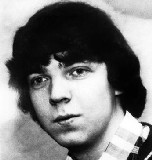
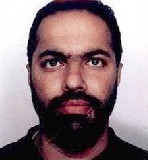
Gundolf Köhler
Mass murderer Alexander Keith
Mass murderer · Germany · 1875
Alexander “Sandy” Keith Jr. (1827–1875) was known by the assumed name of Willia…
88 victims
Alexander Keith
Mass murderer · Germany · 1875
Alexander “Sandy” Keith Jr. (1827–1875) was known by the assumed name of Willia…
88 victims
 Robert Steinhäuser
Mass murderer · Germany · 2002
Robert Steinhäuser committed suicide by shooting himself the same day. The Erfu…
16 victims
Robert Steinhäuser
Mass murderer · Germany · 2002
Robert Steinhäuser committed suicide by shooting himself the same day. The Erfu…
16 victims
 Walter Seifert
Mass murderer · Germany · 1964
Committed suicide by poisoning himself with cyanide the same day; died next day…
10 victims
Walter Seifert
Mass murderer · Germany · 1964
Committed suicide by poisoning himself with cyanide the same day; died next day…
10 victims
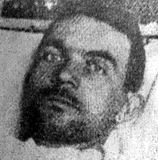 Fritz Angerstein
Mass murderer · Germany · 1924
Fritz Heinrich Angerstein was executed by decapitation with an axe in the court…
8 victims
Fritz Angerstein
Mass murderer · Germany · 1924
Fritz Heinrich Angerstein was executed by decapitation with an axe in the court…
8 victims
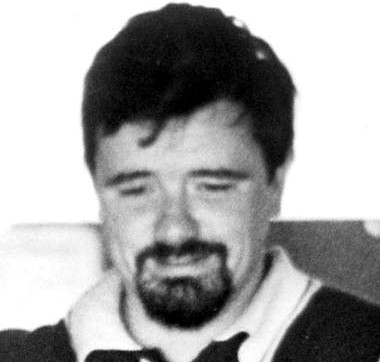 Erwin Mikolajczyk
Mass murderer · Germany · 1994
Erwin Mikolajczyk killed himself by detonating a homemade bomb the same day as…
6 victims
Erwin Mikolajczyk
Mass murderer · Germany · 1994
Erwin Mikolajczyk killed himself by detonating a homemade bomb the same day as…
6 victims
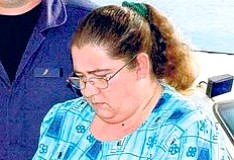 Francisca Ballesteros
Serial killer · Spain · 1990
Francisca Ballesteros was born in 1969 and was a Spanish serial killer. She was…
3 victims
Francisca Ballesteros
Serial killer · Spain · 1990
Francisca Ballesteros was born in 1969 and was a Spanish serial killer. She was…
3 victims
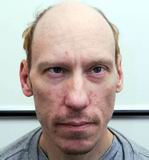 Stephen Port
Serial killer · United Kingdom · 2014
Stephen Port (born 1975) was a convicted British rapist and serial killer who m…
4 victims
Stephen Port
Serial killer · United Kingdom · 2014
Stephen Port (born 1975) was a convicted British rapist and serial killer who m…
4 victims
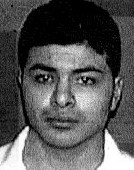 Edward Brian Capetillo
Homicide · USA
Edward Brian Capetillo was a Latino male who was 17 years of age at the time of…
1995 victims
Edward Brian Capetillo
Homicide · USA
Edward Brian Capetillo was a Latino male who was 17 years of age at the time of…
1995 victims
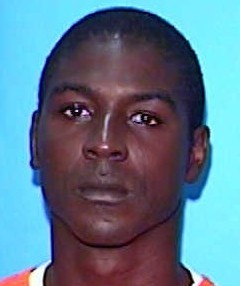 Kenneth Dessaure
Murderer · USA · 1999
Name: Kenneth Dessaure · Date of birth: 01/28/78 · Supreme Court of Florida opi…
1 victim
Kenneth Dessaure
Murderer · USA · 1999
Name: Kenneth Dessaure · Date of birth: 01/28/78 · Supreme Court of Florida opi…
1 victim
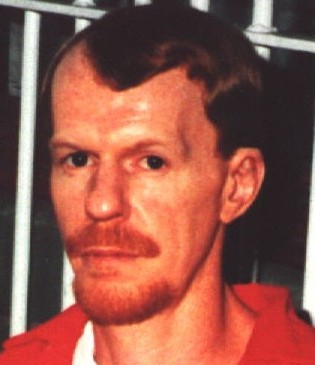 Keith Canaan
Murderer · USA · 1985
Keith Canaan was a white male. He was identified as Keith Canaan, Keith B. Cana…
1 victim
Keith Canaan
Murderer · USA · 1985
Keith Canaan was a white male. He was identified as Keith Canaan, Keith B. Cana…
1 victim
- Gender
- male
- Country
- Germany
- Location
- Munich, Bavaria, Germany
- Date of birth
- August 27, 1959
- Age at first offence
- 21
- Characteristics
- anarchist, hate crime
- Victim profile
- Men, women and children
- Method of murder
- Pipe bomb
- Date(s) of murder
- September 26, 1980
- Years active
- 1980
- Date of arrest
- —
- Status
-
Died in custody
Killed in the blast on September 26, 1980 after planting a pipe bomb at the Munich Oktoberfest on September 26, 1980
Identity
Gundolf Köhler (August 27, 1959 – September 26, 1980) was a German right-wing extremist.
Background
Köhler was born in Schwenningen. He studied geology in Tübingen and was described as a loner and a gun aficionado. While at Tübingen, he was a member of Hochschulring Tübinger Studenten, a right-wing student group. By the time of his death, he had moved to Donaueschingen. Köhler was also a member of the neo-Nazi Wehrsportgruppe Hoffman (Hoffman Military Sports Group).
The offence
Köhler planted a pipe bomb in a trash can on September 26, 1980 near one of the entrances to the Munich Oktoberfest. The bomb exploded at 10:19 PM, killing 13 and injuring over 200. Another account stated the bomb detonated at 10:20 p.m. and that 13 people were killed and 219 were injured, many of whom lost limbs.
Köhler was killed in the attack himself and did not get away. He was determined to have been the sole perpetrator of the attack. Some authors argued for a larger conspiracy with connections to Operation Gladio. The motives were described as unknown in the investigation report, which noted that the fact that Köhler had failed an important intermediate examination could have provided “the final impetus” to commit the crime.
Investigation
Early in the case, there had been speculation about Köhler’s right-wing extremist background, and later doubts emerged as to whether the 21-year-old was truly alone at the scene of the crime on Sept. 26, 1980.
In May 1981, the Bavarian State Office of Criminal Investigation (LKA) postulated the “sole perpetrator” theory in its “final comment” on the case. The Federal Prosecutor’s Office also noted that there was “no evidence whatsoever” that “third parties” could have influenced Köhler.
Later re-examination described multiple alleged investigative shortcomings. The documents described agencies as having been aware of Köhler’s right-wing extremist connections before the attack but not seriously following up on important clues. Evidence, including what was left of the bomb, was removed on the night of the attack. Witnesses were not adequately questioned and important leads were not pursued. More thorough investigations were said to have potentially uncovered the right-wing extremist network behind Köhler. It was also alleged that the “final comment” made no mention whatsoever of direct right-wing connections or possible accomplices.
The investigators described Köhler as the unremarkable son of middle-class parents in Donaueschingen. The investigation report concluded that his motives were unknown.
Contacts and right-wing extremist involvement
Köhler’s first interactions with the far-right NPD party began when he was 14. He attended the party’s state convention and campaign events. In Donaueschingen, he was in close contact with a former Nazi who served as a father figure and strongly influenced his worldview. For years, Köhler kept a portrait of Hitler above his bed and collected badges, books and pictures from the Nazi era. On one of his birthdays, he treated himself to a steel helmet and military boots, and he joined a shooting club to practice using a weapon.
One of Köhler’s friends told police after the bombing: "He supported the extermination of Jews and communists in the Third Reich." The friend also said Köhler had raved about being part of an SS or Reichswehr military organization in Germany “to be able to take action against communists.”
Köhler traveled to the eastern French city of Strasbourg to visit a brothel. Friends who had accompanied him later said that when he saw a group of orthodox Jews there, he said that: "Adolf had forgotten to gas them, and now we had to pay for the pensions of these old men." One of Köhler’s brothers later told police: "This radical right-wing sensibility stabilized over the years."
Köhler was described as a member of the Viking Youth, modeled after the Hitler Youth, and described as the most important German neo-Nazi youth organization at the time. The group’s several hundred uniformed members were led by a Gauführer, a term meant to invoke Nazi officials known as Gauleiter. They learned how to shoot, committed pipe-bomb attacks, and, calling themselves “youth loyal to the German Reich,” were determined to combat the left. In 1978, “Viking disciples” attacked four NATO soldiers at a military training area in the northern state of Lower Saxony and stole several submachine guns and magazines.
During a search of Köhler’s room, police did not recognize his Viking Youth membership card at first. The operations manager of the “Theresienwiese Special Commission” wrote in a report: "Because I was unfamiliar with this organization (Viking Youth), I paid no attention to this membership card. I considered such cards to be part of Gundolf Köhler's collection, a hobby." The officers later took the membership card when Köhler’s room was searched again two weeks later, but the membership card was not mentioned in the final comment and there was no further investigation of the organization.
The authorities were also described as showing little interest in Köhler’s involvement in the Wehrsportgruppe (Military Sports Group, WSG) run by neo-Nazi Karl-Heinz Hoffmann, including that he had attended one of their meetings “sometime in the past.”
Statements by political figures
In March 1979, Strauss spoke in the state parliament: "Don't make fools of yourselves by attributing significance to certain groups -- you mentioned Hoffmann's Wehrsportgruppe Hoffmann today -- that they have never had, do not have and will never acquire in Bavaria." He also said that Hoffmann ought to be: "left alone" and added that if he “happens to enjoy going for a walk in the country on a Sunday with a backpack and 'battledress' held up with a waist belt.” In January 1980, the CSU chairman had nothing but derision for the ban of Hoffmann’s WSG by a coalition government in Bonn involving the Social Democratic Party and the Free Democratic Party.
Strauss also appeared at the Theresienwiese festival grounds late that night, and the Bundestag election campaign was described as being in full swing. A few hours later, Strauss wrote an opinion piece for the weekly newspaper Welt am Sonntag. In the opinion piece he wrote: "For months I have been receiving indications that an attack was to be expected before the elections," and also: "the terror began on the left. We have been warning against such a development for years." Strauss later speculated on possible perpetrators, saying the attack might be the work of then Libyan leader Moammar Gadhafi, the Stasi or the KGB.
Later, another quote attributed to Strauss stated: "One mustn't be too squeamish with auxiliary troops," no matter how reactionary they might be.
Gerold Tandler was described as close associate of Strauss and as Bavarian interior figure. Tandler said about the Wehrsportgruppe after the attack: "As a result, Köhler's act of violence was not used as an opportunity to thoroughly investigate the Wehrsportgruppe , the right-wing extremist terrorist network in Germany and the role of the perpetrator." Tandler also stated: "At no point" the group constituted: "a threat."
Possible wider network and contested theories of perpetrators
Re-examination alleged that German military counterintelligence intercepted letters between Hoffmann and Köhler that remained classified. It also alleged that the Baden-Württemberg state intelligence service had Köhler under observation because his name appeared on two WSG membership lists in 1977 and 1979.
The investigators also noted ties to Hochschulring Tübinger Studenten. Köhler was described as being advised by Hoffmann to seek help from Axel Heinzmann. Heinzmann was described as an NPD member today and at the time as a young politician for the conservative Christian Democrats (CDU), the national sister party to Bavaria’s CSU. The narrative stated Heinzmann was known at the university by his and Hitler’s initials “A.H.” It also stated that Heinzmann had a driving force role behind the Aktionsgemeinschaft Vierte Partei (Fourth Party Action Group) which had ties to the CSU and aimed to expand the party’s reach nationwide. The account described joint conferences between NPD officials and CSU Bundestag members including Hans Graf Huyn. It stated that the meetings were called Africa Seminars and were about fighting communism. One meeting slogan was recorded: "Our freedom is being defended on the Cape," and it was said CSU and NPD politicians traveled to southern Africa in the late 1970s.
An alleged brawl in December 1976 was described as involving about 200 anti-fascists trying to prevent a neo-Nazi meeting. It was described as one of the “most brutal altercations in the city since 1945.” Hoffmann, Heinzmann and their friends including Köhler were described as being in the thick of the brawl.
A flyer titled “Is Bloodshed Necessary?” was said to have included bragging that Hoffmann and supporters beat seven leftists so badly they had to be hospitalized and had also “injured many others.” The narrative stated Köhler also bragged about the beatings, saying he had: "participated in the activities of a radical right-wing group in Tübingen" and that he had: "really cleaned up," as he later told friends in Donaueschingen.
The re-examination narrative described a sequence of later right-wing extremist violence after the Oktoberfest bombing, including the murders of Shlomo Levin and his girlfriend in Erlangen near Stuttgart; suspicion that the murder was committed by Uwe Behrendt; Behrendt fleeing to East Germany through Hoffmann’s Bavarian residence at Ermreuth Castle; and Behrendt being found shot to death in Lebanon three months later. The narrative also described a wave of bank robberies designed to raise cash based on the RAF model, a case in which a robbery led to a deadly shootout in a Munich street between neo-Nazis and police, and car bombs wounding US soldiers in Giessen. It also described another friend of Köhler, Stefan Wagner, going on a rampage in Frankfurt, and before turning his gun on himself, Wagner telling his hostages he had been an accomplice in the Oktoberfest bombing.
Hermann, Köhler’s brother, was described as having testified that he did not believe the killer had acted alone. Hermann said: "He wanted change within Germany, and he felt that he was part of a small elite unit that felt the same," and added: "In the event of a change in Germany, this group was to be prepared to assume power." He also said Köhler had advocated: "a "violent overthrow,"" and insisted that: "the people would clamor for a Führer."
Timeline
- 1976 (December) — A brawl was described as occurring in Tübingen involving about 200 anti-fascists attempting to prevent a neo-Nazi meeting; Hoffmann, Heinzmann and their friends including Köhler were described as being involved.
- 1978 — “Viking disciples” attacked four NATO soldiers in Lower Saxony and stole several submachine guns and magazines.
- September 26, 1980 — Köhler planted a pipe bomb in a trash can near an entrance to the Munich Oktoberfest; the bomb exploded at 10:19 PM (another account said 10:20 PM), killing 13 and injuring over 200 (another account said 219 injured); Köhler was killed in the blast.
- 1981 (May) — The Bavarian LKA postulated the “sole perpetrator” theory in its “final comment.”
- 1981 (March) — Strauss spoke in the state parliament about right-wing extremist groups.
- 1984 — Karl-Heinz Hoffmann wrote in a 1984 novel that the Oktoberfest bomb was detonated by remote control.
- 1997 — Items collected by the “Theresienwiese Special Commission” were destroyed in 1997.
- 2010 (September 14) — An account described re-examination of whether the attack was carried out by a right-wing extremist acting alone.
- 2011 (October 25) — Another account described reopening of the case and evaluation of files.
Witnesses and disputed lead accounts
After the blast, four youths told police they had seen Köhler with several young men wearing German armed forces parkas shortly before the attack. Sketches were described as being drawn of Köhler and possible accomplices, largely coinciding with statements made by another witness. The narrative described investigators as showing little interest in that possible lead.
An account described that SPD/FDP federal government wanted to send investigators to the crime scene that night but the Bavarians put them off.
A key eyewitness named Frank Lauterjung was described as having survived the explosion. He was described as having been questioned at least five times in 1980 and as having died of heart failure two years later at age 38. Lauterjung was described as having told investigators that he had noticed Köhler engaged in a heated conversation with two men in green parkas about half an hour before the attack. It was described that the two men were never found, not among the victims, and did not contact authorities as witnesses.
The narrative described Lauterjung as being an avowed right-wing extremist and as having held senior positions with the Bund Heimattreuer Jugend (BHJ) in the mid-1960s, where he served as “deputy national leader” and “regional commander.” It said the BHJ organized tent camps and paid homage to ex-Nazi Hans-Ulrich Rudel, and that members closed letters with the phrase “Heil Dir!” (“Hail you!”). It said the BHJ expelled Lauterjung after he accused the far-right NPD party of “rehashed emotional nationalism,” and that it claimed he had lied in his application for membership by stating he was “single,” though he was actually divorced. It also stated a BHJ leader suspected early on that Lauterjung may have been a “provocateur” infiltrating the organization and possibly working for Germany’s domestic intelligence agency, the Office for the Protection of the Constitution. The narrative said this suspicion was reinforced by the fact that he would sometimes “disappear for four weeks at a time, as if he had been wiped off the face of the earth.”
Lauterjung claimed he had been looking for sex at a public toilet at the Oktoberfest grounds known as a gay meeting place. He said he believed Köhler was doing the same and described Köhler as an unkempt “intellectual outsider type” in a red plaid jacket. Lauterjung’s testimony was described as stating Köhler was carrying a heavy, cylindrical object in a white plastic bag and tampering with it, and that he was also carrying a small suitcase. The narrative stated the suitcase disappeared after the explosion, even though other witnesses said they had seen it immediately after the attack standing on the ground a few meters from the trash can.
A woman’s testimony was described as stating she saw two young men standing next to Köhler’s body. One was described as lashing out wildly and shouting: "I didn't want it! It's not my fault! Just kill me!" It was described that the police could not clear up the incident because the man was never questioned.
Another woman from North Rhine-Westphalia was described as stating that she had seen a car with five passengers near the entrance to the Oktoberfest a week before the bombing shortly after it had opened. The woman described a large object wrapped in black material on the back seat and remembered license plate number VS-DD 500. The narrative said it was a Ford owned by Köhler’s father. Köhler’s mother later told police that her son had been at home at the time, and the investigators believed her even though Köhler’s parents were in fact away that weekend. The narrative suggested the group might have attempted to stage the attack a week earlier, but also recorded investigative conclusions that the detonator and control unit were missing and that not even a trace of the detonating device was found among thousands of pieces of debris. The investigators assumed a faulty fuse had caused the bomb to detonate earlier than planned, while the narrative stated there was no evidence supporting this assumption. It referenced Hoffmann’s claim about remote control in a 1984 novel.
After the bombing, Munich papers received calls claiming responsibility from “the right-wingers in Bologna,” who supposedly placed the bomb in Munich. An attorney and Green Party member of parliament, Hans-Christian Ströbele, was described as seeing this as a promising lead. It was also stated that German authorities had not gained access to interrogation reports from Italian bombers convicted in Italy in 1995.
Claims by other right-wing extremist figures
Karl-Heinz Hoffmann was described as having been in prison for several years for other crimes and as later raising woolly-coated pigs in Saxony. He was quoted denying involvement in Italy and denying being mentor or instigator for Köhler. Hoffmann said: "I was not in Italy in 1980, I never saw or spoke with Fiebelkorn, and I don't know anything about him. I was neither the mentor nor the instigator for Gundolf Köhler, who, incidentally, was not a perpetrator but the victim of a staged attack. All investigative proceedings against me in that case were discontinued." A separate account described Hoffmann’s later claim in a video posted on YouTube that Köhler was a victim and that he was blown up by backers so as to point the blame at his Wehrsportgruppe.
Additional details on Köhler’s plans and conversations
An account described Köhler speaking with close friends in early August 1980 about a Bundestag election scheduled for October. He wanted to vote for Strauss but said it was also important for the NPD to receive more votes. The account stated he said that only violence could produce change and that it was time for someone besides the left to stage an attack, namely the right. It also stated Köhler said that a bombing attack in Bonn, Hamburg or Munich might be a good idea, adding: "The attack, he added, "could be blamed on the left, and then Strauss will be elected."" The narrative stated that neo-fascists in Italy had already done something similar and referenced the Bologna train station bombing that had devastated the station, killing 85 and injuring 200.
Another witness was described as having said that three weeks before the attack, Köhler spoke with friends about his mentor Hoffmann. The witness statement was quoted as: "Gundolf quoted Hoffmann, who had said several times that the bigger the target and its values, the more victims there could be."
Aftermath
The narrative stated that reopening was advocated and described a nonpartisan resolution to resume the investigation adopted by the Bavarian state parliament. It described that too many questions remained unanswered, including who Köhler was and what made him a killer and what the political motivations were. It described political and legal efforts to reopen and ongoing debates about whether the attack was a lone act or part of a larger extremist network.
A separate account described Robert Höckmayr and his family attending the Oktoberfest on Sept. 26, 1980 and said he had seen the flash and loud bang. It stated that he saw things that could not be fully processed, and that he remained disabled and had not received therapy. It also stated he expected a compensation fund for victims of Sept. 26, 1980 and said: "I would like to regain a piece of my human dignity."
Another survivor figure named Robert Platzer was described as having been 12 at the time and having recalled seeing a young man bending over a waste basket at the entrance as if he were trying to lift something heavy with both hands. Platzer said: "I saw a young man bending over a waste basket at the entrance," and continued: "It was as if he were trying to lift something heavy with both hands." Platzer recalled that at that moment a bomb exploded in the young man’s hands and recounted: "At that moment, a bomb exploded in the young man's hands." He said he witnessed deaths of two siblings whose bodies were ripped apart and hurled through the air: "Platzer witnessed the deaths of two of his siblings, whose bodies were ripped apart and hurled through the air."
Spotted an error, or have more information about this case?