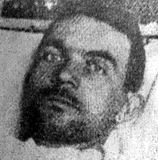
Fritz Angerstein
Mass murderer Alexander Keith
Mass murderer · Germany · 1875
Alexander “Sandy” Keith Jr. (1827–1875) was known by the assumed name of Willia…
88 victims
Alexander Keith
Mass murderer · Germany · 1875
Alexander “Sandy” Keith Jr. (1827–1875) was known by the assumed name of Willia…
88 victims
 Robert Steinhäuser
Mass murderer · Germany · 2002
Robert Steinhäuser committed suicide by shooting himself the same day. The Erfu…
16 victims
Robert Steinhäuser
Mass murderer · Germany · 2002
Robert Steinhäuser committed suicide by shooting himself the same day. The Erfu…
16 victims
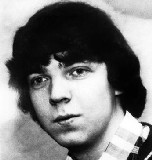 Gundolf Köhler
Mass murderer · Germany · 1980
Gundolf Köhler (August 27, 1959 – September 26, 1980) was a German right-wing e…
12 victims
Gundolf Köhler
Mass murderer · Germany · 1980
Gundolf Köhler (August 27, 1959 – September 26, 1980) was a German right-wing e…
12 victims
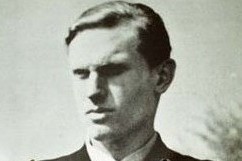 Walter Seifert
Mass murderer · Germany · 1964
Committed suicide by poisoning himself with cyanide the same day; died next day…
10 victims
Walter Seifert
Mass murderer · Germany · 1964
Committed suicide by poisoning himself with cyanide the same day; died next day…
10 victims
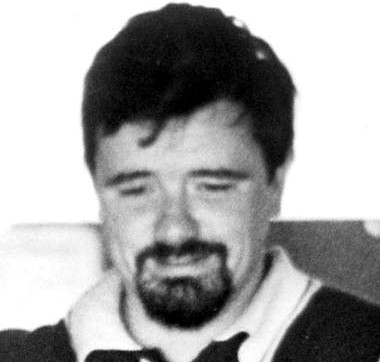 Erwin Mikolajczyk
Mass murderer · Germany · 1994
Erwin Mikolajczyk killed himself by detonating a homemade bomb the same day as…
6 victims
Erwin Mikolajczyk
Mass murderer · Germany · 1994
Erwin Mikolajczyk killed himself by detonating a homemade bomb the same day as…
6 victims
 Shelia Eddy
Homicide · USA · 2012
Shelia Eddy murdered her one-time best friend, Skylar Neese, after Neese disapp…
1 victim
Shelia Eddy
Homicide · USA · 2012
Shelia Eddy murdered her one-time best friend, Skylar Neese, after Neese disapp…
1 victim
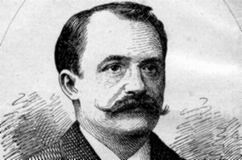 Hugo Schenk
Serial killer · Austria · 1883
Hugo Schenk was executed by hanging on April 22, 1884. · April 22, 1884 — Hugo…
6 victims
Hugo Schenk
Serial killer · Austria · 1883
Hugo Schenk was executed by hanging on April 22, 1884. · April 22, 1884 — Hugo…
6 victims
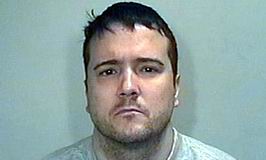 Stephen Shaun Griffiths
Serial killer · United Kingdom · 2009
Stephen Shaun Griffiths was convicted after pleading guilty to killing three wo…
3 victims
Stephen Shaun Griffiths
Serial killer · United Kingdom · 2009
Stephen Shaun Griffiths was convicted after pleading guilty to killing three wo…
3 victims
 Pierre Parent
Murderer · Canada · 2010
Pierre Parent pleaded guilty to manslaughter in the 2010 death of Catharine Oli…
1 victim
Pierre Parent
Murderer · Canada · 2010
Pierre Parent pleaded guilty to manslaughter in the 2010 death of Catharine Oli…
1 victim
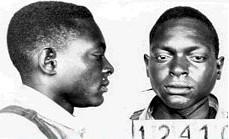 Charles Sanders
Murderer · USA · 1942
Charles Sanders was one of the defendants in a case involving Coy Collier Quall…
1 victim
Charles Sanders
Murderer · USA · 1942
Charles Sanders was one of the defendants in a case involving Coy Collier Quall…
1 victim
- Gender
- male
- Country
- Germany
- Location
- Hayger, Hesse, Germany
- Date of birth
- January 3, 1891
- Age at first offence
- 33
- Characteristics
- dismemberment, torture
- Victim profile
- Käthe Angerstein (his wife) / ... Barth (his mother-in-law) / Minna Stoll (maidservant) / Ella Barth, 18 (his sister-in-law) / Ditthart (bookkeeper) / Kiel (clerk) / Geist (his gardener) / Rudi Darr (gardener's assistant)
- Method of murder
- Stabbing with knife / Hitting with an axe
- Date(s) of murder
- December 1, 1924
- Years active
- 1924
- Date of arrest
- 3 days after
- Status
-
Executed
Executed by decapitation with an axe in the courtyard of the Central Prison Freiendiez on November 17, 1925
Case record: Fritz Heinrich Angerstein
Status
Fritz Heinrich Angerstein was executed by decapitation with an axe in the courtyard of the Central Prison Freiendiez on November 17, 1925.
Timeline
- January 3, 1891 — Fritz Heinrich Angerstein was born in Dillenburg.
- 1911 — Angerstein married Käthe Barth.
- 1920 — Angerstein’s limestone mine in Haiger was taken over by the firm van der Zypen.
- 1921 — Käthe wrote a letter to Angerstein about her illness.
- 1921 — Angerstein and family moved to Haiger after Angerstein received free lodging in a villa belonging to van der Zypen.
- November 1924 — A colleague discovered Angerstein’s embezzlement.
- December 1, 1924 — Angerstein killed his wife and seven other people at his home in Haiger; he then set the house on fire, stabbed himself, and claimed bandits were responsible.
- July 6, 1925 — Angerstein’s trial began in Limburg an der Lahn.
- July 13, 1925 — After six days of trial, Angerstein was sentenced to death for each of eight murders; other charges were dismissed.
- November 17, 1925 — Angerstein was decapitated with an axe in the courtyard of the Central Prison Freiendiez.
Background
Fritz Heinrich Angerstein (January 3, 1891 – November 17, 1925) was a German mass murderer. He killed his wife and seven other people at his home in Haiger, German Reich on December 1, 1924. Later that day he set fire to the house, stabbed himself and claimed a group of bandits was responsible for the crime, though within three days he confessed to having committed the murders himself.
Angerstein was widely publicised in the media at the time of trial. Because public reaction might turn against him, he was brought to Limburg only two weeks before the trial started.
Angerstein was born on January 3, 1891 in Dillenburg, the seventh of ten children. His father worked as a carpenter and later as a steelworker, and also served as mayor of the community.
From an early age Angerstein suffered from tuberculosis and had a rib surgically removed. At the age of 14, he began working for a land surveying bureau, before being employed by Nassauische Bergbau AG. Since 1917 he was procurator of a limestone mine in Haiger, which was taken over by van der Zypen in 1920. In 1911, Angerstein married Käthe Barth, described as a devout methodist. The marriage was described as happy, and Angerstein gave the impression of a loving and caring husband, even though he suffered under the ailing condition of his wife.
Käthe Barth suffered from severe hysteria and, in 1920, fell ill with an unknown intestinal disease. Angerstein himself suffered from various types of tuberculosis. The couple had no children. Angerstein’s wife miscarried six times.
The relationship with Angerstein’s mother-in-law was described as strained because they were unable to have children and because of her poor treatment of his wife. Angerstein related that his mother-in-law often reduced his wife’s diet to soup due to her ailments, and that the soup was often scorched, after which his wife would not eat anything at all.
In the same account, Angerstein stated that he once whipped his mother-in-law with a dog whip because of a burnt meal, after his wife had run away because of it. He also stated that he decided to shoot his mother-in-law and himself should his wife not return home.
In 1921 Käthe wrote a letter to Angerstein telling him that due to her illness she could not be the wife he needed. After Angerstein talked to her, they made a mutual decision to drown themselves because they were both sick at that time; when Angerstein was carrying his wife into the water and they were already halfway in, they heard someone sing a song, whereupon they came to their senses again and aborted their suicide attempt.
In 1921 Angerstein, together with his wife, mother-in-law and sister-in-law, moved to Haiger after he received free lodging in a villa belonging to van der Zypen. Angerstein’s salary was 390 Reichsmark per month. The ground floor consisted of five bureaus for Angerstein and his assistants. The first floor consisted of living quarters for Angerstein, his wife, his sister-in-law and mother-in-law, and the attic was for their maidservant.
Angerstein claimed van der Zypen owed him 90,000 Mark. He later got into financial troubles and began to embezzle money from his employer. According to court, the total sum was 14,892 Reichsmark. The fraud was discovered by one of Angerstein’s colleagues in November 1924.
On the Friday before the murders, Angerstein witnessed his wife put away a notebook containing her last wishes, stating she was expecting to die soon. He found and read the notebook in the night from Nov. 30 to Dec. 1.
On the Saturday before the murders, Angerstein met with procurist Nix for wage accounting and paid salaries. Nix confronted him with discrepancies in the accounting.
The offence
What Angerstein did
In the night from November 30 to December 1, 1924, Angerstein damaged a telephone wire and water pipes.
On December 1, between 12 and 1 a.m., Angerstein awoke and he and his wife suffered from severe heart pain. Angerstein wanted to call a doctor, but his wife held him back. He fetched his mother-in-law. After she returned to her bed, Angerstein sat beside his wife, who was lying in bed. His wife read him a letter.
Angerstein then changed the pillowslip stained by his wife’s vomiting. While doing this, he found the letter his wife had hidden in the linen cupboard. Angerstein became agitated. He overheard his wife and mother-in-law talking about another letter stating that his brother-in-law had syphilis and that the disease could spread to other family members, agitating him even more. Angerstein then talked with his wife about the letter. He remembered his wife telling him that she wanted to die the same hour he died. He then decided to kill his wife and himself.
When his wife fainted, Angerstein fetched his revolver from an adjacent room. When he returned, his wife was awake. She grabbed his hand and took the revolver from him, saying "His own wife, Lord forgive him!", before fainting again. Angerstein then fetched his hunting dagger and fatally stabbed his wife 18 times with it.
He ran downstairs to his study and attempted to shoot himself, but both revolvers failed. He ran down to the cellar looking for something with which to kill himself. Finding an axe, he intended to cut off his own hand, but hearing his 50-year-old mother-in-law scream, he ran back upstairs and killed her because—according to his later claim—he was angry about her having treated his wife badly.
After killing his wife, Angerstein realized that the maidservant Minna Stoll was standing in front of him. She ran away and up the stairs to the attic. Just before she reached the door to the attic, Angerstein caught up with her, grabbed her from behind and hit her over the head with the axe, whereupon she collapsed.
Angerstein later stated that he killed Minna Stoll because she burnt meals, was unclean and because he and his wife were generally displeased with her. Her body was later found burnt on the first floor.
Angerstein returned to his bedroom and hacked at the bodies of his mother-in-law and wife again, fearing they might get up again. His mother-in-law was said to have been still moaning. He then returned to the kitchen, washed the axe and his hands, sat down and slept.
When his 18-year-old sister-in-law Ella Barth returned during the night from a train journey, she went upstairs and into the bathroom. Angerstein followed her and killed her with the axe, then covered her up because he could not stand to look at her.
At approximately seven o’clock on Monday, December 1, a bookkeeper named Ditthart and a clerk named Kiel arrived at the villa to work. Angerstein called them into his study one after the other, locked the door and killed them with the axe.
During the course of the day he also killed the son of his gardener, Geist, and another labouror working for him, Darr, with a hatchet. He feared that they both might have seen the dead bodies.
Angerstein’s German shepherd was later found in the locked cellar with its head smashed in.
Maschinenmeister Ebert arrived, and Angerstein handed him a letter for his brother before sending him away. When Angerstein was questioned about his dishevelled state, he answered that he was sick.
Afterwards Angerstein poured out petrol, reportedly possibly brought with a truck found a few kilometres outside of the town, in his study on the ground floor and the rooms on the first floor. He went shopping in the city, buying two chocolate bars according to himself for his "dear wife", and a flashlight. He also visited a bookshop.
After sunset he returned home and set the petrol alight, though the ground floor did not catch fire.
He stabbed himself several times, causing severe but not life-threatening wounds, and also stabbed himself with his hat. He then called for help. He claimed he had been attacked by bandits who had killed everyone in the house and left him for dead. He subsequently claimed that he had committed the murders in a fit of madness. Angerstein told his helpers and the police that he was assaulted in his villa after he returning from town.
Firefighters soon managed to extinguish the flames. Some witnesses claimed to have seen 15 to 25 bandits.
Angerstein was brought to the hospital in Haiger, where he was operated on. Police were sent for from Siegen and Wetzlar for protection, and militias were formed.
Georg Popp helped in the investigation of the murders. The investigators raised doubts about Angerstein’s story. Rigor mortis had already set in in the corpses, contradicting Angerstein’s claims about when the killings had taken place. Angerstein’s fingerprints were found on the dagger and on the dead bodies. There were no signs of a robbery.
During interrogation by the prosecutor, Angerstein denied having committed the killings himself, but made contradictory statements. He was arrested although he remained in hospital. After the autopsy he was accused of having committed the murders, and Angerstein finally confessed to his brother in the presence of a police officer.
Victims
- Käthe Angerstein — Angerstein’s wife.
- Barth — Angerstein’s mother-in-law.
- Minna Stoll — Angerstein’s maidservant.
- Ella Barth — Angerstein’s sister-in-law, 18.
- Ditthart — bookkeeper.
- Kiel — clerk.
- Geist — Angerstein’s gardener’s son.
- Rudi Darr — gardener.
- Darr — gardener’s assistant.
Motive and speculation
There was much speculation surrounding the motive behind the murders. It was assumed that Angerstein had been gripped by paranoia due to his embezzlement and was attempting to get rid of witnesses. Reference was made in this context to Angerstein’s suicide attempt.
Rumors circulated to the effect that Angerstein was inspired by the Sixth and Seventh Books of Moses, which states that by killing nine people a seal may be activated that provides great riches.
Investigation and arrest
After the fires were extinguished, Angerstein was operated on in Haiger hospital. Police were sent from Siegen and Wetzlar for protection and militias were formed. Georg Popp helped in the investigation.
Investigators raised doubts about Angerstein’s claims about the timing of the killings because rigor mortis had already set in in the corpses.
During interrogation by the prosecutor, Angerstein denied committing the killings himself and made contradictory statements. He was arrested while still in hospital. Following the autopsy, he was accused of committing the murders and he then confessed to his brother in the presence of a police officer.
Trial
Fritz Haarmann and Peter Kürten were referenced as having similar notoriety in connection with mass murder trials of the Weimar Republic; Angerstein’s trial was described as a sensational media spectacle.
Angerstein’s trial began on July 6 at the court in Limburg an der Lahn. It drew significant publicity and media coverage.
Angerstein was accused of 13 counts: eight counts of murder; two counts of embezzlement; and one count each of forging documents, arson, and perjury.
Angerstein claimed he did not embezzle money, but that van der Zypen owed him money.
A total of 153 witnesses were called and 27 experts gave evidence. Angerstein admitted to bribery and embezzlement.
Sentencing
On July 13, after six days of trial, Angerstein was sentenced to death once for each of the eight murders. He was deprived of his civil rights for the rest of his life. The other charges were dismissed, including the forging documents, arson, and perjury counts.
Angerstein accepted the verdict, stating that he did not want mercy and that his deed could only be expiated with his blood.
Appeals
No appeals were described.
Outcome
Angerstein was executed on November 17, 1925 at 8 a.m. He was decapitated with an axe by executioner Carl Gröpler in the courtyard of the Central Prison Freiendiez.
Aftermath
Optogram claims and doubts
The case gained notoriety for claims that an optogram, described as a photograph taken from a dead person’s retina, played a role in identifying and convicting a murderer.
Reports said that Professor Doehne of Cologne University photographed the retinas of two of Angerstein’s victims, yielding one picture showing Angerstein’s face and a second picture showing Angerstein attacking his gardener with a hatchet. Substantial doubts were raised about these claims.
Spotted an error, or have more information about this case?