
Alexander Keith
Mass murderer
88known / alleged victims
Similar offenders
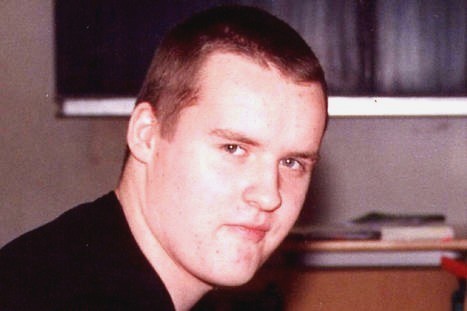 Robert Steinhäuser
Mass murderer · Germany · 2002
Robert Steinhäuser committed suicide by shooting himself the same day. The Erfu…
16 victims
Robert Steinhäuser
Mass murderer · Germany · 2002
Robert Steinhäuser committed suicide by shooting himself the same day. The Erfu…
16 victims
 Gundolf Köhler
Mass murderer · Germany · 1980
Gundolf Köhler (August 27, 1959 – September 26, 1980) was a German right-wing e…
12 victims
Gundolf Köhler
Mass murderer · Germany · 1980
Gundolf Köhler (August 27, 1959 – September 26, 1980) was a German right-wing e…
12 victims
 Walter Seifert
Mass murderer · Germany · 1964
Committed suicide by poisoning himself with cyanide the same day; died next day…
10 victims
Walter Seifert
Mass murderer · Germany · 1964
Committed suicide by poisoning himself with cyanide the same day; died next day…
10 victims
 Fritz Angerstein
Mass murderer · Germany · 1924
Fritz Heinrich Angerstein was executed by decapitation with an axe in the court…
8 victims
Fritz Angerstein
Mass murderer · Germany · 1924
Fritz Heinrich Angerstein was executed by decapitation with an axe in the court…
8 victims
 Erwin Mikolajczyk
Mass murderer · Germany · 1994
Erwin Mikolajczyk killed himself by detonating a homemade bomb the same day as…
6 victims
Erwin Mikolajczyk
Mass murderer · Germany · 1994
Erwin Mikolajczyk killed himself by detonating a homemade bomb the same day as…
6 victims
EU
Eugen Berwald
Mass murderer · Germany · 1994
In 1996, a Frankfurt court convicted Russian immigrant Eugen Berwald for the mu…
6 victims
Random profiles
 Michael Overstreet
Murderer · USA · 1997
Michael Dean Overstreet was sentenced to death on July 31, 2000. Michael Dean O…
1 victim
Michael Overstreet
Murderer · USA · 1997
Michael Dean Overstreet was sentenced to death on July 31, 2000. Michael Dean O…
1 victim
 Champ Ferguson
Murderer · USA · 1861
Champ Ferguson was born November 29, 1821 in Clinton County, Kentucky, near the…
100 victims
Champ Ferguson
Murderer · USA · 1861
Champ Ferguson was born November 29, 1821 in Clinton County, Kentucky, near the…
100 victims
 Richard Dinkins
Murderer · USA · 1990
Richard Dinkins was executed in Texas on January 29, 2003. He was convicted of…
2 victims
Richard Dinkins
Murderer · USA · 1990
Richard Dinkins was executed in Texas on January 29, 2003. He was convicted of…
2 victims
 Jeffery Lynn Williams
Murderer · USA · 1994
Jeffery Lynn Williams was convicted of capital murder for killing Barbara Jacks…
1 victim
Jeffery Lynn Williams
Murderer · USA · 1994
Jeffery Lynn Williams was convicted of capital murder for killing Barbara Jacks…
1 victim
 Scotty Lee Moore
Murderer · USA · 1983
Scotty Lee Moore was 42 years old at the time of his execution in Oklahoma. Moo…
1 victim
Scotty Lee Moore
Murderer · USA · 1983
Scotty Lee Moore was 42 years old at the time of his execution in Oklahoma. Moo…
1 victim
 Ronald Fluke
Murderer · USA · 1997
Ronald Dunaway Fluke was convicted of three counts of First Degree Murder in vi…
3 victims
Ronald Fluke
Murderer · USA · 1997
Ronald Dunaway Fluke was convicted of three counts of First Degree Murder in vi…
3 victims
Case Facts
- Gender
- male
- Country
- Germany
- Location
- Bremerhaven, Bremen, Germany
- Date of birth
- September 23, 1830
- Age at first offence
- 45
- Characteristics
- financial gain
- Victim profile
- Men, women and children
- Method of murder
- Barrel-bomb (dynamite)
- Date(s) of murder
- December 11, 1875
- Years active
- 1875
- Date of arrest
- —
- Status
-
Died in custody
Committed suicide by shooting himself the same day.
Case Summary
Identifiers and aliases
- Alexander “Sandy” Keith Jr. (1827–1875) was known by the assumed name of William King Thomas.
- “Dynamite Fiend” was a nickname associated with Alexander Keith Jr.
Background
- Alexander Keith Jr. was born in 1827 in Caithness, Scotland.
- He immigrated to Halifax when he was a small boy.
- He was the nephew of Alexander Keith, founder of the Alexander Keith’s brewery.
- He worked for a time as a clerk in his uncle’s brewery.
- During the American Civil War, he became a secret agent for the Confederate States of America.
- His wartime role involved blockade running and acting as a courier.
- He was involved with Luke Blackburn in an infamous plot to send clothes infected with yellow fever to northern cities in the United States.
- In 1865, he swindled his associates-in-crime and fled to St. Louis, Missouri.
- In St. Louis, he married Cecelia Paris, a milliner’s daughter from St. Louis.
- He fled again with Cecelia to Germany when he was hunted down by one of his victims.
- In Germany, they lived in Dresden and Leipzig under the assumed name of William King Thomas.
- He and Cecelia hobnobbed with wealthy socialites and Saxon generals in Germany.
- When the couple began to run out of money, Keith devised a plot to blow up passenger ships and collect insurance money.
The offence
- Keith’s plan used bombs to attack passenger ships and collect insurance money.
- The major catastrophe occurred in Bremerhaven in December 1875.
- The explosion happened when one of his bombs accidentally went off on a dock.
- The explosion killed eighty people.
- Witnesses described the scene as a battlefield.
- The blast caved in the bow of the Mosel and buckled the deck of the Simson, its tug.
- Cabins and decks were covered with sand, broken glass and pieces of wood and twisted iron.
- On the cobbled loading area of the dock, the explosion produced “a black, smoking hole 6 feet deep and 7 feet wide.”
- Body parts lay everywhere, and the air was filled with the moans of the wounded and the dying.
- Keith killed 81 people and seriously injured 50 more.
Investigation
- After the tragedy was revealled as a murder/insurance scam on a large scale, other ship disappearances were looked into to see if Keith and possible associates were involved.
- The disappearance of the SS City of Boston was investigated; it vanished in January 1870.
- A massive investigation ensued after Keith’s death to find his real identity and to establish whether he had had accomplices.
- The news spread in the international press and struck panic in ocean travelers.
Arrest
- No arrest is described in connection with the dock explosion and its immediate aftermath.
- After the blast, police inspectors interrogated Keith and extracted a brief confession.
Death and final moments
- On December 13, 1875, Keith traveled under the name William King Thomas.
- He took his bomb, packed in a barrel, to the harbor.
- Outside on the busy quay, porters loaded the barrel into a horse-drawn wagon and wheeled it toward the ship.
- The barrel was being attached to a winch when it suddenly fell, hit the dock and exploded.
- Keith was aboard the Mosel and heard the blast that signaled his fatal mistake.
- He rushed onto the deck and looked down at the carnage.
- He took deep swigs from his schnapps flask before descending to his cabin.
- Keith wrote:
- To his wife: “God bless you and my darling children, you will never see me to speak to again.”
- To the Mosel’s captain: “What I have seen today I cannot stand.”
- He then picked up his revolver and pumped two bullets into his head.
- Rescuers discovered him groaning in his cabin and took him to the baggage hall, which had been turned into a makeshift hospital.
- He lay among his victims while suspicious police inspectors interrogated him and finally extracted a brief confession.
- Five days later, Cecelia was led to Keith in his final hours.
- Seeing him in such a terrible state, Cecelia begged the doctors: “Kill him! Kill him!”
- Cecelia threw herself at her husband’s side and urged him to repent, but Keith gave her no satisfaction.
- Keith’s last words were: “I have been a thick head. The fellows in New York are guilty.”
- Keith died in a week’s time.
People connected to the case
- Cecelia Paris: milliner’s daughter from St. Louis; Keith’s wife; she pleaded with doctors and urged Keith to repent.
- Alexander Keith: founder of Alexander Keith’s brewery; Keith’s uncle.
- Luke Blackburn: associated with Keith in a plot involving clothes infected with yellow fever.
- Dr. Luke Blackburn: described in connection with organizing the yellow-fever shipment plot.
- Luke Blackburn later became governor of Kentucky.
- Confederacy blockade runners in Halifax were involved with Keith’s activities.
- Luther Rice Smoot: a U.S. marshal, a St. Louis detective and one of Keith’s victims; Keith had stolen $25,000 from him.
- Luke Blackburn is referenced as being involved in the yellow-fever plot.
- Theodore Dreiser: wrote that the Southern was “my favorite cure for all despondent gray days—where all was warm, brisk, colorful, gay, in fact. Here was no least sign of poverty or want, but only of comfort or luxury.”
- Allan Pinkerton: a famous detective who rushed to St. Louis to confirm Keith’s identity; he had been hired by Bremen police to investigate.
- The Bremen coroner requested permission to preserve the “Dynamite Fiend’s” head for scientific purposes.
Other details
- Keith worked for a time as a clerk in his uncle’s brewery.
- Keith was described as a fat, bearded gentleman who constantly bragged about his blockade-running days.
- St. Louis Republican reporters were told about the mysterious stranger by a clerk from the Southern Hotel.
- The Dynamite Fiend’s head was preserved in a jar and kept in a Bremen museum.
- The rest of Keith’s body was tossed into a pauper’s grave.
- Local legend held that during an Allied bombing of the city, the jar burst and the head was dumped into general mayhem, where it was mixed with newly dismembered body parts and later came to rest with the “unidentified.”
- There were claims that Keith had been a bear of a man with a huge appetite and memorably bad table manners; he flashed wads of cash and impressed staff with tales of speculations on Wall Street.
- The name “Alexander King Thompson” was used in the context of a gentleman taking rooms in St. Louis’s Southern Hotel.
- Keith took deep swigs from his schnapps flask before descending to his cabin.
- Cecelia was described as being led to Keith in his final hours five days later.
- Psychologists and writers speculated on motives and character of the “Dynamite Fiend.”
- After his death, a plan was described to cut off Keith’s head for phrenologists to analyze “the bumps on his head.”
- A statement attributed to Keith’s last words to his doctors included: “I have had ill luck; that's all.”


Spotted an error, or have more information about this case?