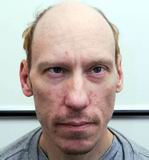
Stephen Port
Serial killer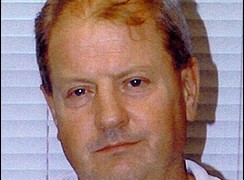 Steven Wright
Serial killer · United Kingdom · 2006
Steven Gerald James Wright was a British serial murderer, also known as the Suf…
5 victims
Steven Wright
Serial killer · United Kingdom · 2006
Steven Gerald James Wright was a British serial murderer, also known as the Suf…
5 victims
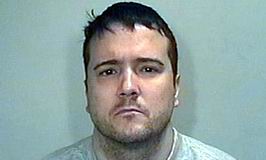 Stephen Shaun Griffiths
Serial killer · United Kingdom · 2009
Stephen Shaun Griffiths was convicted after pleading guilty to killing three wo…
3 victims
Stephen Shaun Griffiths
Serial killer · United Kingdom · 2009
Stephen Shaun Griffiths was convicted after pleading guilty to killing three wo…
3 victims
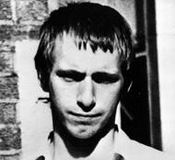 Bruce Lee
Serial killer · United Kingdom · 1973
Bruce Lee was born Peter George Dinsdale in 1960. He later changed his name to…
26 victims
Bruce Lee
Serial killer · United Kingdom · 1973
Bruce Lee was born Peter George Dinsdale in 1960. He later changed his name to…
26 victims
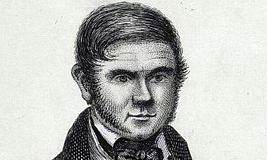 William Burke
Serial killer · United Kingdom · 1827
William Burke (1792 – 28 January 1829) was born in Urney, near Strabane, in the…
17 victims
William Burke
Serial killer · United Kingdom · 1827
William Burke (1792 – 28 January 1829) was born in Urney, near Strabane, in the…
17 victims
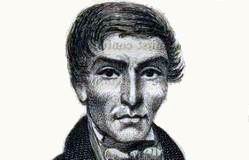 William Hare
Serial killer · United Kingdom · 1827
William Hare and Brendan “Dynes” Burke committed serial murders in Edinburgh, S…
17 victims
William Hare
Serial killer · United Kingdom · 1827
William Hare and Brendan “Dynes” Burke committed serial murders in Edinburgh, S…
17 victims
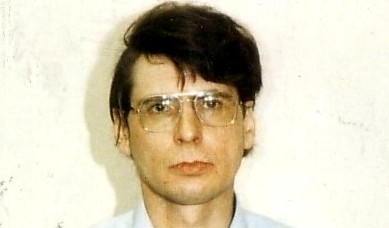 Dennis Nilsen
Serial killer · United Kingdom · 1978
Dennis Andrew Nilsen was born on November 23, 1945. He lived in London. He was…
16 victims
Dennis Nilsen
Serial killer · United Kingdom · 1978
Dennis Andrew Nilsen was born on November 23, 1945. He lived in London. He was…
16 victims
 Peter Odighizuwa
Murderer · USA · 2002
Peter Odighizuwa was a 43-year-old Nigerian former student at the Appalachian S…
3 victims
Peter Odighizuwa
Murderer · USA · 2002
Peter Odighizuwa was a 43-year-old Nigerian former student at the Appalachian S…
3 victims
 Stella Nickell
Murderer · USA · 1986
Stella Nickell was prosecuted in federal court over deaths linked to product ta…
2 victims
Stella Nickell
Murderer · USA · 1986
Stella Nickell was prosecuted in federal court over deaths linked to product ta…
2 victims
 Cristopher Anthony Davis
Murderer · USA · 1995
Defendant: Christopher Anthony Davis (also referred to as Christopher A. Davis)…
3 victims
Cristopher Anthony Davis
Murderer · USA · 1995
Defendant: Christopher Anthony Davis (also referred to as Christopher A. Davis)…
3 victims
 Pete Russell
Murderer · USA · 2001
Pete Russell, Jr. was listed with TDCJ Number 999443 and Date of Birth 05/02/19…
1 victim
Pete Russell
Murderer · USA · 2001
Pete Russell, Jr. was listed with TDCJ Number 999443 and Date of Birth 05/02/19…
1 victim
 George Wallace Brown
Murderer · 1990
George Wallace Brown was prosecuted in the Tenth Judicial Circuit, Polk County,…
1 victim
George Wallace Brown
Murderer · 1990
George Wallace Brown was prosecuted in the Tenth Judicial Circuit, Polk County,…
1 victim
- Gender
- male
- Country
- United Kingdom
- Location
- Barking, London, England, United Kingdom
- Date of birth
- 1975
- Age at first offence
- 39
- Characteristics
- serial rapist, rape, poisoner
- Victim profile
- Anthony Walgate, 23 / Gabriel Kovari, 22 / Daniel Whitworth, 21 / Jack Taylor, 25
- Method of murder
- Poisoning ( gamma-Hydroxybutyric acid (GHB) )
- Date(s) of murder
- June 2014 - September 2015
- Years active
- 2014–2015
- Date of arrest
- October 15, 2015
- Status
-
Released
Sentenced to life imprisonment with a whole life order on 25 November 2016, meaning he will not become eligible for parole and is unlikely to be released from prison
Case overview
Stephen Port (born 1975) was a convicted British rapist and serial killer who murdered at least four men and committed multiple rapes. Port lived alone in a flat in Barking, London, and worked as a chef at a Stagecoach bus depot in West Ham. He met his victims via online gay social networks. He used gamma-Hydroxybutyric acid (GHB), which was described as a date-rape drug, adding it to drinks given to his victims, raping them, and murdering four of them in his flat in Barking.
At his trial, the judge accepted that Port’s intention was only to cause “really serious harm” rather than death. The judge found that Port must have foreseen a high risk of death, especially after the death of his first victim, and this was sufficient for him to be convicted of murder in English law.
Port was sentenced to life imprisonment with a whole life order on 25 November 2016.
Background
Port was born in Southend-on-Sea. When he was a year old, he moved to Dagenham, where he grew up and his parents still lived. He came out as gay in the mid-2000s.
Port worked as a chef at a Stagecoach bus depot in West Ham and lived in Barking, London.
The offence
Port murdered at least four men and committed multiple rapes. He surreptitiously used other drugs on his victims in addition to GHB: amyl nitrite (poppers), Viagra, mephedrone (meow meow) and methamphetamine (crystal meth). The prosecution said that postmortem examinations on the four young men who died revealed that each had died from a drug overdose featuring high levels of GHB.
The judge highlighted that Port manipulated and controlled his victims through the “chilling and calculated use of the drug GHB”, administering it without their permission so he could penetrate them while they were unconscious. A significant degree of planning was involved in obtaining the drugs in advance and in luring the victims to his flat.
The court described how Port attempted to cover up two of his murders with a fake suicide note.
Victims and victim count
Port’s crimes involved multiple victims. In total, eleven men were victims of Port’s crimes. He was convicted of assaults by penetration, rapes and murders of four named men, as well as rapes of three other men he drugged, and other counts of administering a substance with intent and sexual assaults.
Investigation
Police announced they were investigating at least 58 deaths connected to the use of gamma-Hydroxybutyric acid (GHB) in response to the Port case.
Questions over the Metropolitan Police investigation were raised. Despite the bodies of four men being found in the vicinity of Port’s flat in just over a year from late summer 2014, the Metropolitan Police neglected to link the deaths. The first three victims were initially thought not to have died in suspicious circumstances. The Metropolitan Police had told LGBT independent advisory group and the PinkNews website that the crimes were not linked.
The Independent Police Complaints Commission (IPCC) investigated whether 17 police officers in the Met should face disciplinary action. The investigation also covered the police handling of the case, including whether discrimination played any part in actions and decisions.
The judge referred to the police investigation in his sentencing remarks, stating that it was not for him to say whether the seeming bizarre coincidence of three gay young men being found dead so close together might have given rise to suspicions that these deaths were not ordinary self-administered drug overdoses, but that the competence and adequacy of the investigation would later be examined by others.
Arrest
Port was arrested after police discovered he hired Anthony Walgate as an escort. He was charged with perverting the course of justice by making a false police statement and was released on bail.
Port was later arrested again after being identified on CCTV walking with Jack Taylor near Barking station shortly before Taylor’s death.
Trial
Port went on trial in connection with assaults by penetration, rapes, murders and administering a substance with intent.
Charges and verdicts
On 23 November 2016, Port was convicted of the assaults by penetration, rapes and murders of Anthony Walgate, 23, Gabriel Kovari, 22, Daniel Whitworth, 21 and Jack Taylor, 25, as well as the rapes of three other men he drugged, and ten counts of administering a substance with intent, and four sexual assaults. He was found guilty on all counts.
At the Old Bailey on 23 November 2016, the jury convicted Port unanimously of the murders of Gabriel Kovari, Daniel Whitworth and Jack Taylor and by a majority verdict of 11-1 of the murder of Anthony Walgate. The jury of 10 women and two men convicted him of 17 offences against a number of victims, including four murders.
These charges included seven counts of administering a substance, three rapes and three sexual assaults. Jurors were continuing deliberations on other charges at the time of one report.
He denied all charges.
Pre-sentence remarks accepted by judge
The judge accepted that Port’s intention was only to cause really serious harm rather than cause death. The judge found that Port must have foreseen a high risk of death, especially after the death of Anthony Walgate, the first victim. The judge concluded that Port’s conduct met the legal requirements for murder in English law.
Prosecution and judge framing of intent and planning
The court described the murders as part of a persistent course of conduct of Port surreptitiously drugging young men so he could penetrate them while they were unconscious. The judge described planning in obtaining drugs in advance and luring victims to his flat.
The judge described Port as having killed victims by administering an overdose, then dragged them out into the street in one case or took them to the churchyard in other cases, and abandoned their bodies in a manner that robbed them of their dignity and greatly increased the distress of their loving families.
Evidence linking Port to the deaths and cover-ups
Evidence linking Port to Anthony Walgate’s death was missed at the time. Port was later convicted of perverting the course of justice in March 2015 because his account of the death to the police varied.
Port planted a fake suicide note alongside the body of Daniel Whitworth that suggested he was responsible for the death of one of the other victims, Kovari, and that he had killed himself out of guilt.
The judge highlighted Port’s attempt to cover up two of his murders with a fake suicide note as “wicked and monstrous”.
A suicide note was described as including the line: “BTW, please do not blame the guy I was with last night, we only had sex, then I left. He knows nothing of what I have done.”
Sentencing
Date and court
On 25 November 2016 at the Old Bailey, Mr Justice Openshaw sentenced Port to life imprisonment with a whole life order.
Sentencing remarks (verbatim)
Mr Justice Openshaw said:
“I accept his intention was only to cause really serious harm rather than cause death but he must have known and foreseen there was a high risk of death, the more so after the death of Anthony Walgate, the first victim.”
“The murders were committed as part of a persistent course of conduct of the defendant surreptitiously drugging these young men so that he could penetrate them while they were unconscious. “A significant degree of planning went into obtaining the drugs in advance and in luring the victims to his flat. Having killed them by administering an overdose, he dragged them out into the street in one case, or took them to the churchyard in the other cases, and abandoned their bodies in a manner which robbed them of their dignity, and thereby greatly increased the distress of their loving families.”
“I have no doubt that the seriousness of the offending is so exceptionally high that the whole-life order is justified; indeed it is required. The sentence therefore upon the counts of murder is a sentence of life imprisonment. I decline to set a minimum term. The result is a whole-life sentence and the defendant will die in prison.”
Impact statements and remarks by prosecutors and others (verbatim)
Malcolm McHaffie, Deputy Chief Crown Prosecutor for CPS London, said:
“Over a period of three years the defendant committed a series of murders and serious sexual offences against young men. Port manipulated and controlled these men through the chilling and calculated use of the drug GHB, which he administered without their permission.... This was a technically challenging case, complicated by a significant amount of evidence taken from the numerous social media sites Port used.”
At sentencing, Jonathan Rees QC read aloud victim impact statements. Relatives described their devastation.
Port’s mother later said anonymously to ITV news:
“I know he’s my son – he’s a kind boy. “He said all along, ‘I didn’t murder anyone mum,’ he said. Honest truth. ‘I didn’t murder anyone’ - that’s what he told me last Sunday on the telephone.”
David Etheridge QC, for Port, said in mitigation that Port had descended into a “vortex” of drug-taking and that “gratification of his sexual life was central”.
Stuart Cundy, a police commander who leads the Met’s specialist crime and operations unit, offered personal letters of apology to the victims’ families.
A member of the public shouted in court: “I hope you die a long, slow death, you piece of shit.”
Appeals
No appeal outcome was included in the provided material.
Outcome
Port was convicted of the assaults by penetration, rapes and murders of Anthony Walgate, Gabriel Kovari, Daniel Whitworth and Jack Taylor, as well as additional rapes of three other men he drugged, and counts of administering a substance with intent and sexual assaults. He was sentenced to life imprisonment with a whole life order on 25 November 2016.
Aftermath
The Metropolitan Police began investigating at least 58 deaths connected to the use of gamma-Hydroxybutyric acid (GHB) in response to the Port case.
The IPCC investigated police handling and potential misconduct involving 17 police officers in the Met.
Port’s family later said they continued to believe he was innocent.
Timeline
- 15 June 2014 — Port contacted Anthony Walgate through the Sleepyboys male escort website and offered £800 for his services for an overnight stay on 17 June.
- 19 June 2014 — Anthony Walgate’s body was found propped in a sitting position near the communal entrance outside Port’s flat in Barking, east London. Port told police he found the victim like that and called 999 because he thought he might be drunk, collapsed or suffering a seizure.
- 26 June 2014 — Port was arrested after police discovered he hired Walgate as an escort; he was charged with perverting the course of justice by making a false police statement and released on bail.
- 23 August 2014 — Gabriel Kovari, 22, went to stay at Port’s flat.
- 28 August 2014 — Kovari’s body was found propped up in a sitting position against the graveyard wall at St Margaret’s church, Barking, 500 metres from Port’s flat.
- 18 September 2014 — Daniel Whitworth arranged to meet Port in Barking.
- 20 September 2014 — Whitworth’s body was found propped up in a sitting position against the same graveyard wall, with an apparent suicide note in Port’s left hand.
- 23 March 2015 — Port pleaded guilty to perverting the course of justice in the case of Walgate’s death and was sentenced to eight months’ imprisonment.
- 4 June 2015 — Port was released with an electronic tag.
- 13 September 2015 — Jack Taylor communicated with Port on Grindr in the early hours and travelled to Barking, arriving at 3am.
- 14 September 2015 — Taylor’s body was found in the same position as the others by the same graveyard wall.
- 15 October 2015 — Port was identified on CCTV walking with Taylor near Barking station shortly before Taylor’s death, and Port was arrested.
- 23 November 2016 — Port was convicted of murders, rapes, assaults by penetration and administering a substance with intent.
- 25 November 2016 — Mr Justice Openshaw sentenced Port to life imprisonment with a whole life order.
Other details
Individual victims (as named in the material)
- Anthony Walgate (23) — A fashion student from Hull who on occasion worked as an escort and was contacted through the Sleepyboys male escort website. Port offered him £800 for his services. His body was found propped in a sitting position near the communal entrance outside Port’s flat in Barking. His mother described him as “clever, funny and talented” and wanted to be a famous fashion designer. Port’s jury convictions included the murder of Walgate.
- Gabriel Kovari (22) — A man described as having moved to London from Slovakia. His body was found in the graveyard of the church of St Margaret of Antioch in Barking, propped in a sitting position against the graveyard wall. His brother, Adam, spoke about the impact on the family.
- Daniel Whitworth (21) — A chef from Gravesend in Kent. His body was found in the graveyard of the church of St Margaret of Antioch in Barking. A fake suicide note was planted alongside his body. His father, Adam Whitworth, described living two parallel lives where grief tainted everyday life. His partner and Daniel’s stepmother, Amanda Pearson, said: “bitter and cynical”, and that the “rich and fulfilling life ahead of us with Dan has been stolen from us”. The inquests returned open verdicts.
- Jack Taylor (25) — Lived with his parents in Dagenham and worked as a forklift truck driver. Taylor’s sister Donna said: “We finally have justice for Jack and the other boys. A sick and twisted scumbag will never be able to hurt or destroy any other family’s life. Jack can finally rest in peace. We will always be completely heartbroken.”
Inquests and coroner concerns (verbatim)
The inquests on the deaths returned open verdicts.
Nadia Persaud, the coroner, said:
“some concerns surrounding Daniel's death which have not been answered by the police investigation”
She continued:
“most concerning are the findings by the pathologist of manual handling prior to his death”
She also noted:
“the bed sheet that he was found wrapped in was not forensically analysed, and the bottle of GBL which was found near him was also not tested for fingerprints or DNA”
Persaud recorded an open verdict and said:
“My concerns of a third-party involvement in Daniel coming to be in the graveyard on 20 September cannot be allayed by the evidence that has been produced to the court. “I cannot say beyond reasonable doubt that I am satisfied that he voluntarily took his own life. I also cannot say that I am satisfied that he was unlawfully killed.”
A detective inspector quoted during the inquest said the bed sheet had not been examined:
“circumstances at the time indicated towards no other external parties being involved”
During the inquest, it was stated:
“The potential outcome of having the blanket analysed, the bed sheet analysed, could have been to identify maybe where he had been the night before, who had contact with him. But it wasn’t submitted”
Quotations connected to dating apps and precautions
The Norfolk chief constable, Simon Bailey, said:
“The rising popularity of online dating apps and websites has contributed to an increase in the number of recorded crimes,”
He also said:
“We strongly encourage users to report offences and seek support if they become a victim of any type of crime. “
“I would urge those who use online dating apps to be as security-conscious as possible and not to share personal data with anyone until they are sure about those they are communicating with.”
Bailey also said:
“The greatest danger was often at the first face-to-face meeting.”
He urged:
“If you are planning on meeting someone for the first time, take precautions and meet in a public place,”
and:
“Individuals should stop all communication with anyone who attempts to pressurise them into something they are not comfortable with. If this happens you should contact the dating app provider immediately to discuss your concerns and always report any criminal activity to the police.”
Port replied when asked about safety rules as an escort:
“I would never accept a drink or anything to eat off a client. And I always took my own lube, condoms and poppers.”
Port’s drug use and preferred meeting methods (as described)
Port used a range of drugs described as including poppers or bottles of amyl nitrite, Viagra, mephedrone (Meow Meow), methamphetamine (crystal meth) and GHB/GBL in liquid form.
Port used dating apps including Grindr and Gaydar, and was described as also using FitLads, SlaveBoys, Hornet and Badoo. The material stated that Port used a false name and a fake profile picture in some personal information. It also stated he used names including “shyguy”, “top fun Joe”, “Basketballguy” and a variety of others, and cited a preference for “under 30” and slim men. One profile said:
“I am a shy, polite guy. Enjoy keeping in shape, love to have a good time. I am romantic, caring and would take good care of my partner. I am successful, educated and determined,”
and another said:
“I’m looking for fun/date/bf who is between 18-24, slim, smooth twink type, not too camp tho .... who has plenty of energy and enjoys a good time.”
Port also used a website for one victim: Sleepyboys.
Related investigations and broader context mentioned in the material
The material stated that the Independent Police Complaints Commission was investigating the Metropolitan Police’s initial response, including whether “discrimination played any part in actions and decisions”.
The material also stated that Port’s case prompted a police warning about dating apps and included reference to another case involving Stefano Brizzi, who killed a police officer, Gordon Semple, who he met via the Grindr app.
The material also stated that figures showed the number of allegations of rapes linked to dating websites rose sixfold in the last five years, and that in 2014, 184 people reported being raped by someone they had met via a dating app or website, up from 33 in 2009.
Statements attributed to prosecution and court framing (verbatim)
Jonathan Rees QC, prosecuting, said:
“The prosecution say this is a case about a man – the defendant – who, in the pursuit of nothing more than his own sexual gratification, variously drugged, sexually assaulted and in four cases killed young gay men he had invited back to his flat,”
He also told jurors the case would feature fairly graphic evidence of a sexual nature which they should approach in “a cool, dispassionate and analytical manner”.
Rees said Port described himself as “70% more gay than straight” with a preference for young, smaller, boyish-type men “often referred to as ‘twinks’”.
Rees said:
“appetite for penetrating drugged young men”
and that the jury heard Port had the propensity:
“to render young gay men unconscious with drugs without their consent so he could have sex with them in that state. That was his particular inclination, his particular fetish, and what turned him on,”
Rees said:
“GHB is of particular significance in this case. The postmortem examinations on the four young men who died revealed that each had died from a drug overdose featuring high levels of GHB,”
and also said:
“It offends common sense to suggest that it was just an unfortunate coincidence that all of these men happened to die from an overdose featuring high levels of GHB shortly after meeting the defendant.”
Spotted an error, or have more information about this case?