
John Kogut
Murderer ? Lamont Underwood
Murderer ? · USA · 1994
Lamont Claxton Underwood, known as “L.C.,” was a former Salisbury policeman. Pr…
2 victims
Lamont Underwood
Murderer ? · USA · 1994
Lamont Claxton Underwood, known as “L.C.,” was a former Salisbury policeman. Pr…
2 victims
 Ellis Wayne Felker
Murderer ? · USA · 1981
Ellis Wayne Felker (c. 1948 – November 15, 1996) was convicted of murder and re…
1 victim
Ellis Wayne Felker
Murderer ? · USA · 1981
Ellis Wayne Felker (c. 1948 – November 15, 1996) was convicted of murder and re…
1 victim
 Joseph Amrine
Murderer ? · USA · 1985
Joseph Amrine was a death row inmate in Missouri. He was housed with the victim…
1 victim
Joseph Amrine
Murderer ? · USA · 1985
Joseph Amrine was a death row inmate in Missouri. He was housed with the victim…
1 victim
 Larry Griffin
Murderer ? · USA · 1980
Larry Griffin — defendant; executed in Missouri on June 21, 1995 · Quintin Moss…
1 victim
Larry Griffin
Murderer ? · USA · 1980
Larry Griffin — defendant; executed in Missouri on June 21, 1995 · Quintin Moss…
1 victim
 Lemuel Prion
Murderer ? · USA · 1992
October 24, 1992 — The arms of the 21-year-old female victim were discovered in…
1 victim
Lemuel Prion
Murderer ? · USA · 1992
October 24, 1992 — The arms of the 21-year-old female victim were discovered in…
1 victim
 Lendell Hunter
Murderer ? · USA · 1975
Lendell Hunter carried out a string of violent rapes that shocked Augusta, Geor…
1 victim
Lendell Hunter
Murderer ? · USA · 1975
Lendell Hunter carried out a string of violent rapes that shocked Augusta, Geor…
1 victim
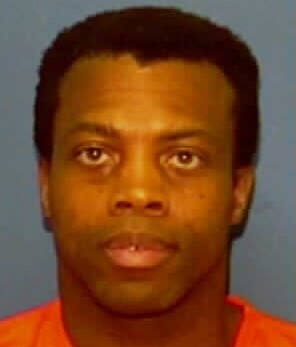 Pedro Medina
Murderer · USA · 1982
Pedro Medina was a Cuban refugee who was executed by electrocution in Florida o…
1 victim
Pedro Medina
Murderer · USA · 1982
Pedro Medina was a Cuban refugee who was executed by electrocution in Florida o…
1 victim
 Brenda Humphrey
Murderer · USA · 1987
Brenda Humphrey was convicted with Gregory Wilson for the kidnapping, rape, rob…
1 victim
Brenda Humphrey
Murderer · USA · 1987
Brenda Humphrey was convicted with Gregory Wilson for the kidnapping, rape, rob…
1 victim
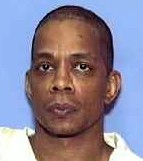 Anthony Bartee
Murderer · USA · 1996
Anthony Bartee (TDCJ Number: 999282) Bartee was born on 08/57. He was received…
1 victim
Anthony Bartee
Murderer · USA · 1996
Anthony Bartee (TDCJ Number: 999282) Bartee was born on 08/57. He was received…
1 victim
 Jonathan Yeo
Murderer · Canada · 1991
Jonathan Yeo died by suicide by gunshot to avoid arrest in August 1991. On Augu…
2 victims
Jonathan Yeo
Murderer · Canada · 1991
Jonathan Yeo died by suicide by gunshot to avoid arrest in August 1991. On Augu…
2 victims
- Gender
- male
- Country
- USA
- Location
- Long Island, New York, USA
- Date of birth
- 1964
- Age at first offence
- 20
- Characteristics
- rape, convicted rapist
- Victim profile
- Theresa Fusco (female, 16)
- Method of murder
- Ligature strangulation
- Date(s) of murder
- November 10, 1984
- Years active
- 1984
- Date of arrest
- March 26, 1985
- Status
-
Acquitted / overturned
Exonerated December 21, 2005
Case record: John Kogut
Background
John Kogut was a 21-year-old high school dropout and unemployed landscaper.
In 1984 and early 1985, Long Island was the scene of several rapes and murders aimed at teenage girls, with evidence suggesting that the crimes had been committed by a mobile group including three or more young men. Police solved one case and had indications that the perpetrators—and unknown accomplices—may have been responsible for other slayings in the area. New evidence, secured by newsman Maury Terry, further indicated the possible involvement of a devil-worship cult with ties to other lethal groups in New York City and in California.
The first Long Island victim was 15-year-old Kelly Morrissey, who vanished on the short walk home from a popular teenage hangout on June 12, 1984.
Five months later, on November 11, Theresa Fusco, a friend of the missing girl, was forced into a van after leaving a skating rink in Lynbrook, one mile from the spot where Morrissey disappeared. On December 5, Fusco’s body was found, beaten, strangled, and raped by at least three men.
Kelly Morrissey was still missing, but her diary contained entries describing at least one date with Kogut prior to her disappearance.
The offence
Theresa Fusco was abducted, and her body was found on December 5. The body was beaten, strangled, and raped by at least three men.
John Kogut steadfastly refused to discuss the cult angle while admitting his role in the rape and strangulation of Theresa Fusco. After she was raped, he said the girl had threatened to inform police, whereupon one of Kogut’s associates handed him a rope, with instructions to "Do what you gotta do."
On April 22, Jacqueline Martarella’s raped and strangled corpse was found beside a golf course at Lawrence, Long Island.
Investigation
Police began asking Kogut questions about the Fusco homicide while he was jailed on charges of burglary and disorderly conduct. After cracking under interrogation, he confessed to the crime, naming two accomplices, and was formally charged with the murder on March 26, 1985.
Investigators were already collecting evidence of Kogut’s alleged participation in a Satanic cult that favored the rape of young virgins as a form of "sacrifice." Kogut’s friends informed police that he had once burned the mark of an inverted cross on his arm. Acquaintances of Theresa Fusco recalled her discussions of a Satanic coven reportedly active in the Long Beach-Oceanside area.
Visiting the scene, journalist Maury Terry reported discovery of a "cult sign" linked with Satanists in Queens and Yonkers, who allegedly participated in the infamous "Son of Sam" murders in 1976 and '77. Not far from the dump site, searchers discovered an abandoned root cellar, its walls festooned with cult symbols and slogans. Outside, some articles of clothing were found, described by Jacqueline Martarella’s parents as "very similar" to items she wore on the night of her disappearance.
On May 9, 1985, authorities went public with their theory that a gang of twelve associates was linked with three known murders and at least four rapes in which the victims had survived.
Arrest
John Kogut was jailed on charges of burglary and disorderly conduct when police began asking him questions about the Fusco homicide.
Trial
Kogut’s 1986 trial was separate from that of Dennis Halstead and John Restivo, who were also tried and convicted of rape and murder on the theory that the three men had acted together in abducting, raping, and killing the victim.
Confession
After nearly 18 hours of interrogation, detectives produced a confession from Kogut.
The confession was hand written by the interrogating officer for Kogut’s signature, allegedly after five other versions of the confession that were never transcribed. Kogut was then taken to the crime scene. He could not point the police to any evidence from the crime that was missing, such as the victim’s clothes, jewelry, or murder weapon. The next day, the confession was recorded on video tape. It contained no details that were not previously known by law enforcement.
According to the confession, Restivo, Halstead, and Kogut were all in Restivo’s van. They approached the victim, who was on foot, and she entered the van voluntarily. When the victim demanded to be let out of the van, she was stopped, stripped, and raped by Halstead and Restivo. They drove to a cemetery, where the victim was taken out of the van and Kogut strangled her with a piece of rope. The victim’s body was then rolled into a blanket and dumped in another location.
Evidence at trial
At trial, prosecutors argued that the hairs found in Restivo’s van provided corroboration of the confession, and all three men were tried for rape and murder. All three men denied having anything to do with the abduction, rape, or murder and offered separate alibi defenses. Prosecutors also relied on snitch testimony against all three men.
Kogut was convicted in May 1986 and was sentenced to 31.5 years to life.
Restivo and Halstead were convicted in November 1986 and were then sentenced to 33 1/3 years to life.
Before Kogut’s trial, a teenage friend—Bob Fletcher—who had testified to Kogut’s Satanism and involvement in pornography committed suicide in Rosedale, Queens. Police have been unable to explain the disappearance of the weapon that he used to shoot himself.
Sentencing
Kogut was sentenced to 31.5 years to life in May 1986.
Appeals / Post-conviction proceedings
Biological evidence work began when Centurion Ministries began working on behalf of all three defendants in 1994. The Innocence Project began working on Restivo’s case in 1997.
In postconviction proceedings that secured the defendants’ release, Kogut was represented by Wilmer, Cutler & Pickering. Halstead was represented by Pace Law School’s Postconviction Clinic.
DNA testing and exclusions
DNA testing in this case went through many rounds over a period of ten years, despite repeated exclusions of all three men. The prosecution initially argued that the samples tested (vaginal slides) were not the "best" samples available and could have failed to detect semen from the defendants present on the original swabs. In 2003, however, the defense team obtained property records from the Police Department which led to the discovery of an intact vaginal swab that had never been tested.
STR testing on the spermatozoa on the vaginal swab matched the single unknown male profile from the prior testing and again excluded all three men.
In addition, defense attorneys secured a new affidavit from former Det. Nicholas Petraco, who had testified for the state in 1986 regarding the hairs allegedly found in Restivo’s van. Det. Petraco concluded, based on 20 years of research and expertise, that the hairs displayed "post-mortem root banding," a hallmark of decomposition that only occurs while hairs are attached to a corpse that has been dead for at least 8 hours, if not days or weeks. The banding on these hairs was suspiciously similar to those found on dozens of hairs taken from the autopsy that had been in unsealed envelopes in a Police Department laboratory for months. Because the victim was only alleged to have been in the van for a few minutes after death, he concluded, the hairs could not have been shed during that time, and were instead autopsy hairs that were commingled with others from the van—whether through police negligence or misconduct.
Based on these results, all three convictions were vacated in June 2003 and all three defendants were released.
Outcome
On December 21, 2005, Nassau County Judge Victor M. Ort found John Kogut not guilty of the 1984 rape and murder of a 16 year old girl.
After Kogut’s convictions were vacated in June 2003, John Kogut faced re-trial based largely on his confession. After a three month bench trial, Judge Ort found Kogut not guilty on all counts.
His verdict included specific findings that numerous aspects of the confession were contradicted by DNA and other forensic evidence, and that the decomposed hairs from the victim were not shed by her in Restivo’s van.
Other details
Victim disappearance and body discovery for the 1984 case
On November 10, 1984, the victim, a 16-year-old girl disappeared after leaving her job at a roller rink at 9:45 p.m.
On December 5, 1984, her body was found, naked, in a wooded area of Lynbrook, New York. The body had been covered by leaves and debris and was located a short distance from the roller rink.
The autopsy revealed that the victim had died as a result of ligature strangulation. Vaginal swabs taken during the autopsy revealed the presence of semen and spermatozoa—evidence that she had been sexually assaulted. However, serology tests to determine the semen donor’s blood type were never performed.
Additional investigation timeline detail
Eight hours after the announcement of Kogut’s arrest, 19-year-old Jacqueline Martarella was reported missing from Oceanside, a short four miles from the scene of Theresa Fusco's abduction. Kogut was obviously innocent in that case, but his alleged accomplices were still at large.
By June 21, suspects John Restivo, 26, and Dennis Halstead, 30, were in custody on charges of first-degree rape and second-degree murder in the Fusco case.
Retrial and expert evidence
Kogut’s lawyer argued that the confession was false, and won a motion to have expert testimony on false confessions admitted for the first time in New York State.
At the re-trial, the prosecution sought to rebut the DNA evidence by arguing that the victim, who was said by her mother and best friend to be a virgin, had consensual sex with an unknown male prior to her rape and murder.
Exoneration and sentence served
Kogut was exonerated on December 21, 2005.
Kogut’s sentence served was 17 years.
Spotted an error, or have more information about this case?