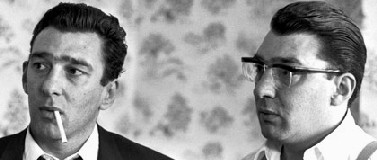
Ronald & Reginald Kray
Murderers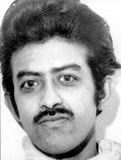 Arthur & Nizamodeen Hosein
Murderers · United Kingdom · 1969
Arthur Hosein and Nizamodeen Hosein were found guilty at the Old Bailey and wer…
1 victim
Arthur & Nizamodeen Hosein
Murderers · United Kingdom · 1969
Arthur Hosein and Nizamodeen Hosein were found guilty at the Old Bailey and wer…
1 victim
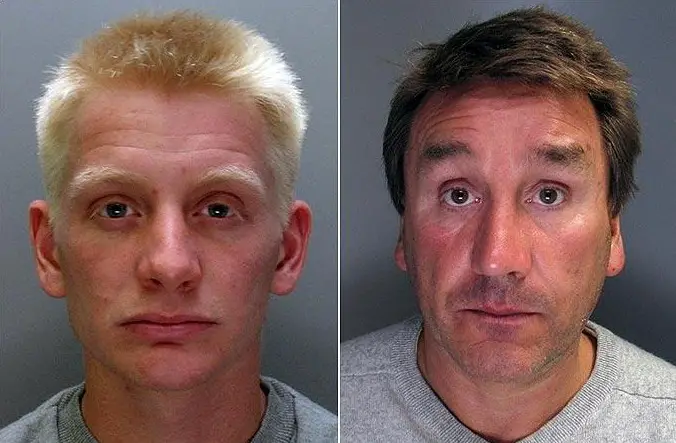 Norman & Joseph Jones
Murderers · United Kingdom · 2008
Norman Jones and Joseph Jones were convicted and jailed for life for the abduct…
1 victim
Norman & Joseph Jones
Murderers · United Kingdom · 2008
Norman Jones and Joseph Jones were convicted and jailed for life for the abduct…
1 victim
 Robert & Jonathan Maskell
Murderers · United Kingdom · 2005
January 2004 — Robert and Jonathan Maskell and Dwane Johnston left their birthd…
1 victim
Robert & Jonathan Maskell
Murderers · United Kingdom · 2005
January 2004 — Robert and Jonathan Maskell and Dwane Johnston left their birthd…
1 victim
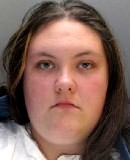 Ashleigh & Holly Robinson
Murderers · United Kingdom · 2010
Antoni Robinson was a 61-year-old retired antiques dealer and French polisher.…
1 victim
Ashleigh & Holly Robinson
Murderers · United Kingdom · 2010
Antoni Robinson was a 61-year-old retired antiques dealer and French polisher.…
1 victim
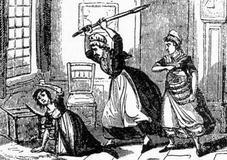 Elizabeth & Mary Branch
Murderers · United Kingdom · 1740
Elizabeth Branch (1673–1740) and her daughter Mary Branch (1716–1740) were Engl…
1 victim
Elizabeth & Mary Branch
Murderers · United Kingdom · 1740
Elizabeth Branch (1673–1740) and her daughter Mary Branch (1716–1740) were Engl…
1 victim
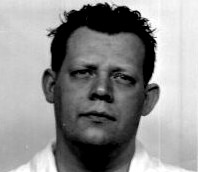 Ronald Clark O'Bryan
Murderer · USA · 1974
Ronald Clark O'Bryan (also recorded as Ronald C. O’Bryan) was executed by letha…
1 victim
Ronald Clark O'Bryan
Murderer · USA · 1974
Ronald Clark O'Bryan (also recorded as Ronald C. O’Bryan) was executed by letha…
1 victim
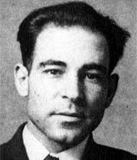 Nicola Sacco
Murderer? · USA · 1920
Nicola Sacco Nicola Sacco and Bartolomeo Vanzetti were convicted of murdering t…
2 victims
Nicola Sacco
Murderer? · USA · 1920
Nicola Sacco Nicola Sacco and Bartolomeo Vanzetti were convicted of murdering t…
2 victims
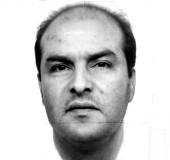 Martin Sauceda Vega
Murderer · USA · 1985
Martin Sauceda Vega was executed by lethal injection in Texas on January 26, 19…
1 victim
Martin Sauceda Vega
Murderer · USA · 1985
Martin Sauceda Vega was executed by lethal injection in Texas on January 26, 19…
1 victim
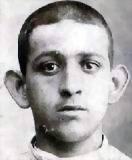 Cayetano Santos Godino
Homicide · Argentina · 1906
Cayetano Santos Godino (October 31, 1896 – November 15, 1944), also known as "P…
4 victims
Cayetano Santos Godino
Homicide · Argentina · 1906
Cayetano Santos Godino (October 31, 1896 – November 15, 1944), also known as "P…
4 victims
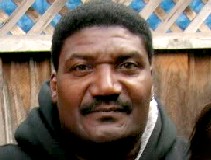 Shareef Allman
Murderer · USA · 2012
Shareef Allman was a 47-year-old truck driver who worked at Lehigh Hanson's Per…
3 victims
Shareef Allman
Murderer · USA · 2012
Shareef Allman was a 47-year-old truck driver who worked at Lehigh Hanson's Per…
3 victims
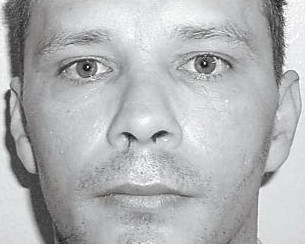 Dennis Mitchell Orbe
Murderer · USA · 1998
Dennis Mitchell Orbe was executed by lethal injection in Virginia on March 31,…
1 victim
Dennis Mitchell Orbe
Murderer · USA · 1998
Dennis Mitchell Orbe was executed by lethal injection in Virginia on March 31,…
1 victim
- Gender
- male
- Country
- United Kingdom
- Location
- London, England, United Kingdom
- Date of birth
- October 24, 1933 (both)
- Age at first offence
- 33
- Characteristics
- gang, armed robbery
- Victim profile
- George Cornell, 38 / Jack "The Hat" McVitie
- Method of murder
- Shooting / Stabbing with knife
- Date(s) of murder
- March 9, 1966 / October 28, 1967
- Years active
- 1966–1967
- Date of arrest
- May 9, 1968
- Status
-
Died in custody
Both were sentenced to life imprisonment, with a non-parole period of 30 years on March 8, 1969; Ronnie died on March 17, 1995; Reginald died on October 1, 2000
Case overview
Ronald “Ronnie” Kray and Reginald “Reggie” Kray were English gangsters who were the foremost perpetrators of organised crime in the East End of London during the 1950s and 1960s. They were arrested on 9 May 1968 and convicted in 1969 by the efforts of a squad of detectives led by Detective Superintendent Leonard “Nipper” Read. Both were sentenced to life imprisonment, with a non-parole period of 30 years for the murders of George Cornell and Jack “the Hat” McVitie. Ronnie remained in Broadmoor Hospital until his death on 17 March 1995, but Reggie was released from prison on compassionate grounds in August 2000 and died on October 1, 2000.
Timeline
- 24 October 1933 — Ronald “Ronnie” Kray and Reginald “Reggie” Kray were born as twin brothers.
- 1938 — The Kray family moved from Stean Street, Hoxton, to 178 Vallance Road, Bethnal Green.
- 1952 — Both were called up for national service with the Royal Fusiliers; they reported but deserted several times and were recaptured.
- 11 August 1982 — Ronnie and Reggie were allowed to attend the funeral of their mother Violet, who died of cancer the week before; they were not allowed to attend the graveside service at Chingford Mount Cemetery.
- 9 May 1968 — The Krays were arrested.
- March 8, 1969 — After the jury found them guilty, Mr Justice Melford Stevenson pronounced sentence; both were sentenced to life imprisonment with a non-parole period of 30 years.
- 17 March 1995 — Ronnie died of a heart attack, aged 61.
- 26 August 2000 — Reggie was released from Wayland Prison on compassionate grounds due to inoperable bladder cancer.
- October 1, 2000 — Reggie died in his sleep.
Background
Ronald “Ronnie” Kray and Reginald “Reggie” Kray were born on 24 October 1933 in Hoxton, East London. Ronnie died on 17 March 1995 and Reggie died on October 1, 2000.
The twins’ father was Charles David “Charlie” Kray, Sr. (10 March 1907 – 8 March 1983), a scrap gold dealer. Their mother was Violet Lee (5 August 1909 – 7 August 1982). Reggie was born about 10 minutes before his twin Ronnie. Their parents already had a six-year old son, Charles Jr, (9 July 1926 – 4 April 2000). A sister, Violet, born 1929, died in infancy. When the twins were three years old, they contracted diphtheria but recovered.
Ron Kray almost died in 1942 from a head injury suffered in a fight with his twin brother. In 1938, the Kray family moved from Stean Street, Hoxton, to 178 Vallance Road, Bethnal Green. At the beginning of the Second World War, their father, Charles Kray, was conscripted into the army but went into hiding rather than serve.
The twins attended Wood Close School in Brick Lane and then Daniel Street School. The influence of their maternal grandfather, Jimmy “Cannonball” Lee, caused both boys to take up amateur boxing.
The offence
The Krays were involved in armed robberies, arson, protection rackets, assaults, and the murders of Jack “the Hat” McVitie and George Cornell.
George Cornell
Ronnie shot and killed George Cornell in the Blind Beggar pub in Whitechapel on 9 March 1966. Ronnie was drinking in another pub when he heard that Cornell was in the Blind Beggar. Ronnie then killed Cornell after taking Reggie’s driver John “Scotch Jack” Dickson and Ian Barrie, his right-hand man. Just before Cornell died, he remarked “Well, look who's here.”
The narrative described a confrontation at Christmas 1965 between the Krays and the Richardsons at the Astor Club, when Cornell, an associate of the Richardsons, referred to Ronnie as a “fat poof.” Ronnie denied this and said the reason for the killing was that Cornell was threatening him and Reggie. The account described a gang war between the Krays and the Richardsons. Kray associate Richard Hart was murdered at Mr. Smith’s Club in Catford on 8 March 1966. Ronnie avenged Hart’s death by shooting Cornell.
Owing to intimidation, witnesses would not cooperate with the police. A member of the Richardsons gang claimed that he saw “Mad” Frankie Fraser kicking Hart; “Mad” Frankie Fraser was taken to court for Hart’s murder but was found not guilty.
Jack “the Hat” McVitie
The account described allegations that in October 1967, Reggie was encouraged by his brother to kill Jack “the Hat” McVitie, a minor member of the Kray gang. The narrative described that McVitie had failed to fulfil a £1,500 contract paid to him in advance by the Krays to kill Leslie Payne.
McVitie was lured to a basement flat in Evering Road, Stoke Newington, on the pretence of a party. As McVitie entered, Reggie Kray pointed a handgun at his head and pulled the trigger twice, but the gun failed to discharge. Ronnie Kray then held McVitie in a bearhug and Reggie Kray was handed a carving knife. McVitie was stabbed in the face and stomach, driving the knife deep into his neck, twisting the blade, continuing as McVitie lay dying.
The narrative stated that several other members of The Firm including the Lambrianou brothers (Tony and Chris) were convicted of this. McVitie’s body was stated to have never been recovered.
Investigation
When Inspector Leonard “Nipper” Read of Scotland Yard was promoted to the Murder Squad, his first assignment was to bring down the Kray twins. The account stated that Read had previously investigated their activities during the first half of 1964, but publicity and official denials surrounding allegations about Ron’s relationship with Boothby made the evidence he collected useless.
Read tackled convicting the twins with renewed activity in 1967 but frequently came up against the East End “wall of silence”. Nevertheless, by the end of 1967, Read had built up evidence against the Krays.
Early in 1968 the twins used a man named Alan Bruce Cooper, who hired and sent Paul Elvey to Glasgow to buy explosives for rigging a car bomb. The account stated that Elvey confessed to being involved in three botched murder attempts. It also stated that this evidence was weakened by Cooper, who claimed he was an agent for the United States Treasury Department investigating links between the American Mafia and the Kray gang. Read tried using Cooper as a trap for Ron and Reg, but they stayed away from him.
The account stated that eventually a Scotland Yard conference decided to arrest the Krays on evidence already collected, in the hope that other witnesses would be forthcoming once the Krays were in custody.
Arrest
On 8 May 1968, the Krays and 15 other members of their “firm” were arrested. Many witnesses came forward once the Krays’ reign of intimidation was over.
Trial
Defence
The twins’ defence, under their counsel John Platts-Mills, QC, consisted of flat denials of all charges and discrediting of witnesses by pointing out their criminal past.
Judge’s remarks
The judge, Mr Justice Melford Stevenson said:
“In my view, society has earned a rest from your activities.”
Verdicts and convictions
The account described that the Krays and 14 others were convicted, with one member of the firm being acquitted. Out of the 17 official firm members, 16 were arrested and convicted.
The narrative stated that the Krays were only tried and convicted for the murders of George Cornell and Jack McVitie.
Sentencing
On March 8, 1969, after the jury found them guilty, Mr Justice Melford Stevenson pronounced sentence. For the murders of Cornell and McVitie, Ronnie and Reggie would go to prison for life. The learned judge recommended that their sentences should be not less than 30 years. The account stated that their non-parole period was 30 years. The longest sentences ever passed at the Old Bailey (Central Criminal Court, London) for murder were described for the murders of Cornell and McVitie.
The narrative stated that Charlie Kray was jailed for 10 years for his part in the murders.
The account also described that the twins were held in prison after sentence and that prison life continued, with Ronnie eventually being in Broadmoor Hospital and Reggie later being transferred to Wayland Prison.
Appeals
No appeal outcome was stated.
Outcome
Ronnie died on March 17, 1995 in Broadmoor Hospital. He had been once more certified insane and lived the remainder of his life in Broadmoor Hospital, Crowthorne, dying on 17 March 1995 of a heart attack, aged 61.
Reggie was a Category A prisoner who was denied almost all liberties and not allowed to mix with other prisoners. In his later years, he was downgraded to Category C and transferred to Wayland Prison in Norfolk. In 1985, officials at Broadmoor Hospital discovered a business card of Ron’s, which prompted an investigation revealing that the Krays and their older brother Charlie, along with another accomplice not in prison, were operating a “lucrative bodyguard and ‘protection’ business for Hollywood stars”. The narrative stated that documents released under Freedom of Information laws revealed that officials were concerned about this operation called Krayleigh Enterprises but believed there was no legal basis to shut it down, and that Frank Sinatra hired 18 bodyguards from Krayleigh Enterprises in 1985.
After serving more than the recommended 30 years he was sentenced to in March 1969, Reggie was freed from Wayland on 26 August 2000. He was released on compassionate grounds due to inoperable bladder cancer. The final weeks of his life were spent with his wife Roberta in a suite at the Townhouse Hotel at Norwich. On 1 October 2000, Reggie died in his sleep. Ten days later, he was buried alongside his brother Ronnie in Chingford Mount Cemetery.
Other details
Early life and national service conduct
The account described that in 1952 both twins were called up for national service with the Royal Fusiliers. They reported but deserted several times, always being recaptured. While absent without leave, the brothers assaulted a police constable who tried to arrest them. They were held at the Tower of London and transferred to Shepton Mallet military prison in Somerset for a month to await court-martial. The account described that they were convicted and sent to the Home Counties Brigade Depot jail in Canterbury, Kent, and that their behaviour was so bad that they both received dishonourable discharges from the army.
For their few weeks in prison, the account described incidents including emptying a latrine bucket over a sergeant, dumping a dixie full of hot tea on another guard, handcuffing a guard to their prison bars with stolen cuffs, and burning their bedding. It also described that Major Peter B Engel, RAMC was tasked with administering sedation to subdue the pair, using the largest, longest hypodermic needle he could find and managing to make the two injections.
The account stated that before their conviction, when moved from a one-man cell to a communal one, they assaulted their guard with a china vase and escaped, but were quickly recaptured.
Criminal career and nightclub ownership
The account described that after their criminal records and dishonourable discharges ended their boxing careers, they turned to crime. They bought a run down local snooker club in Bethnal Green and started protection rackets. By the end of the 1950s, the Krays were involved in hijacking, armed robbery and arson.
It also stated that in 1960 Ronald Kray was imprisoned for 18 months for running a protection racket and related threats. It stated that while Ronnie was in prison, Peter Rachman gave Reggie a nightclub called Esmeralda’s Barn.
Celebrity status and public exposure
The account described that in the 1960s they were widely seen as prosperous and charming celebrity nightclub owners in the Swinging London scene. It described them as photographed by David Bailey and interviewed on television. It also listed entertainers they mixed with: Diana Dors, Frank Sinatra, Judy Garland, politicians, and others.
Boothby affair
The account described an exposé in the tabloid Sunday Mirror alleging Ron had had a sexual relationship with Lord Boothby. It described threats to journalists, Boothby threatened to sue, and the newspaper backed down, sacked its editor, printed an apology, and paid Boothby £40,000 in an out-of-court settlement. It also described that witnesses were afraid to come forward due to the Krays’ reputation for violence.
Frank Mitchell escape from Dartmoor and its aftermath
On 12 December 1966 the Krays helped Frank Mitchell, “The Mad Axeman,” to escape from Dartmoor Prison. It described that Ronnie had befriended Mitchell while serving time together in Wandsworth prison. It stated that the Krays held Mitchell at a friend’s flat in Barking Road, East Ham, and that Mitchell disappeared and his body has never been found. The account stated that the Krays were acquitted of his murder.
The account included a quote attributed to Reggie’s autobiography context and described that Freddie Foreman, in his autobiography Respect, claimed Mitchell was shot and the body disposed of at sea.
George Cornell killing and associated remarks
The account repeated the remark:
“Well, look who's here.” Just before Cornell died.
It also described Cornell had referred to Ronnie as a “fat poof,” and that Ronnie denied this and said the reason for the killing was because Cornell was threatening him and Reggie.
Relationship with Leslie Payne and explosives plot
The narrative described that Leslie Payne paid details appeared in relation to McVitie’s alleged contract to kill Leslie Payne, and also described early 1968 activities involving Alan Bruce Cooper and Paul Elvey purchasing explosives for rigging a car bomb.
Medical certification and prison transfers
The account stated that Ronnie was eventually certified insane and lived remainder of his life in Broadmoor Hospital. It stated that Reggie was a Category A prisoner and later downgraded to Category C and transferred to Wayland Prison in Norfolk.
Reggie’s release on compassionate grounds and final period
The narrative stated that Reggie was released on compassionate grounds due to inoperable bladder cancer and spent the final weeks of his life with his wife Roberta in a suite at the Townhouse Hotel at Norwich. It stated he died on 1 October 2000.
Burial details
It stated that Reggie was buried alongside Ronnie ten days after he died in Chingford Mount Cemetery.
Ronnie’s death and hospital location
It stated that Ronnie was once more certified insane and lived the remainder of his life in Broadmoor Hospital, Crowthorne, dying on 17 March 1995 of a heart attack, aged 61.
Categories and accomplices referenced in prison-time investigation
The account stated that documentation released under Freedom of Information laws mentioned officials concerned about the operation called Krayleigh Enterprises but believed there was no legal basis to shut it down. It also stated that Frank Sinatra hired 18 bodyguards from Krayleigh Enterprises in 1985.
Personal lives: bisexuality and marriage details
The account stated that Ronnie was openly bisexual, evidenced by his book My Story and a confession to writer Robin McGibbon on The Kray Tapes where he stated:
“I'm bisexual, not gay. Bisexual.” It stated that Ronnie planned on marrying a lady named Monica in the 1960s whom he had dated for nearly three years, and described the letters sent to her between May and December 1968, including references to Monica as “my little angel” and “my little doll.” It also stated that extracts were mentioned in Ron’s own book My Story and in Kate Kray’s books Sorted , Murder, Madness and Marriage and Free at Last, and that these letters were auctioned in 2010.
The account also described that Ronnie went on a run in which he said in an interview with author John Pearson that he identified with Gordon of Khartoum and stated:
“Gordon was like me, 'omosexual, and he met his death like a man. When it's time for me to go, I hope I do the same.” It provided no further clarification beyond that statement.
It stated that Reggie became a born again Christian during incarceration.
Ronnie’s hospital-related death circumstances
It stated that Ronnie died in Broadmoor Hospital and that his death was due to a heart attack, and it also stated he smoked 100 cigarettes a day through most of his adult life.
Spotted an error, or have more information about this case?