Alfred & Albert Ernest Stratton
Murderers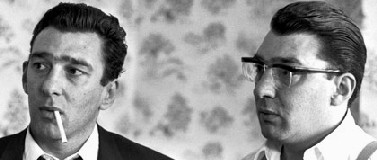 Ronald & Reginald Kray
Murderers · United Kingdom · 1966
Ronald “Ronnie” Kray and Reginald “Reggie” Kray were English gangsters who were…
2 victims
Ronald & Reginald Kray
Murderers · United Kingdom · 1966
Ronald “Ronnie” Kray and Reginald “Reggie” Kray were English gangsters who were…
2 victims
 Arthur & Nizamodeen Hosein
Murderers · United Kingdom · 1969
Arthur Hosein and Nizamodeen Hosein were found guilty at the Old Bailey and wer…
1 victim
Arthur & Nizamodeen Hosein
Murderers · United Kingdom · 1969
Arthur Hosein and Nizamodeen Hosein were found guilty at the Old Bailey and wer…
1 victim
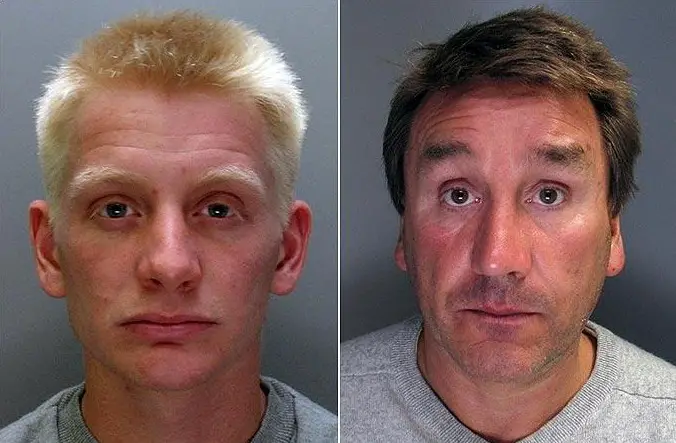 Norman & Joseph Jones
Murderers · United Kingdom · 2008
Norman Jones and Joseph Jones were convicted and jailed for life for the abduct…
1 victim
Norman & Joseph Jones
Murderers · United Kingdom · 2008
Norman Jones and Joseph Jones were convicted and jailed for life for the abduct…
1 victim
 Robert & Jonathan Maskell
Murderers · United Kingdom · 2005
January 2004 — Robert and Jonathan Maskell and Dwane Johnston left their birthd…
1 victim
Robert & Jonathan Maskell
Murderers · United Kingdom · 2005
January 2004 — Robert and Jonathan Maskell and Dwane Johnston left their birthd…
1 victim
 Ashleigh & Holly Robinson
Murderers · United Kingdom · 2010
Antoni Robinson was a 61-year-old retired antiques dealer and French polisher.…
1 victim
Ashleigh & Holly Robinson
Murderers · United Kingdom · 2010
Antoni Robinson was a 61-year-old retired antiques dealer and French polisher.…
1 victim
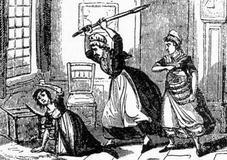 Elizabeth & Mary Branch
Murderers · United Kingdom · 1740
Elizabeth Branch (1673–1740) and her daughter Mary Branch (1716–1740) were Engl…
1 victim
Elizabeth & Mary Branch
Murderers · United Kingdom · 1740
Elizabeth Branch (1673–1740) and her daughter Mary Branch (1716–1740) were Engl…
1 victim
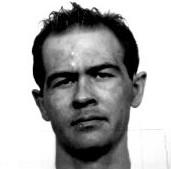 Noble Mays
Murderer · USA · 1979
Noble Mays had been convicted once for burglary and once for assault, which was…
1 victim
Noble Mays
Murderer · USA · 1979
Noble Mays had been convicted once for burglary and once for assault, which was…
1 victim
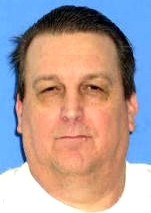 Roy Lee Pippin
Murderer · USA · 1994
Roy Lee Pippin Pippin was executed by lethal injection on March 29, 2007 in Tex…
2 victims
Roy Lee Pippin
Murderer · USA · 1994
Roy Lee Pippin Pippin was executed by lethal injection on March 29, 2007 in Tex…
2 victims
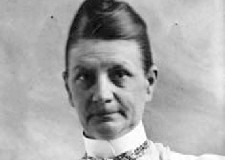 Martha Place
Murderer · USA · 1899
Martha Place was born in New Jersey. Her brother said she was struck in the hea…
1 victim
Martha Place
Murderer · USA · 1899
Martha Place was born in New Jersey. Her brother said she was struck in the hea…
1 victim
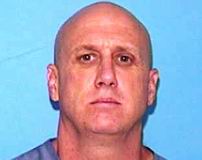 James Michael Randall
Murderer · USA · 1995
James Michael Randall (born August 28, 1954) was an American criminal whose con…
2 victims
James Michael Randall
Murderer · USA · 1995
James Michael Randall (born August 28, 1954) was an American criminal whose con…
2 victims
- Gender
- male
- Country
- United Kingdom
- Location
- Deptford, London, England, United Kingdom
- Date of birth
- Alfred - 1883 / Albert - 1885
- Age at first offence
- 22
- Characteristics
- robbery
- Victim profile
- Thomas Farrow, 71, and his wife, Ann, 65
- Method of murder
- Beating
- Date(s) of murder
- March 26, 1905
- Years active
- 1905
- Date of arrest
- April 2, 1905
- Status
-
Executed
Executed by hanging at Wandsworth Prison on May 23, 1905
Case overview
Alfred Stratton and his brother Albert Ernest Stratton were convicted of the murders of Thomas Farrow and his wife Ann Farrow and were executed by hanging at Wandsworth Prison on May 23, 1905.
People
- Alfred Stratton — one of the accused; described as known to police as a “vagabond”; identified by witnesses as one of two men leaving Chapman's Oil and Colour Shop in Deptford.
- Albert Ernest Stratton — one of the accused; identified by witnesses as the other man leaving the shop; his girlfriend testified he was not with her during the night of the murder.
- Thomas Farrow — victim; aged 71; the manager of the paint shop where he lived above the shop with his wife.
- Ann Farrow — victim; aged 65; Thomas Farrow’s wife; found barely alive but unconscious and died four days later.
- William Jones — later found the shop closed and shuttered; ran for help when he could not open the door.
- Louis Kidman — local resident; worked in a nearby store; forced their way into the shop with Jones.
- Ellen Stanton — witness; positively identified Alfred Stratton as the one leaving the shop in a dark brown suit.
- Henry John Littlefield — witness; a professional boxer; positively identified the one in the dark brown suit as Alfred Stratton.
- Annie Cromarty — Alfred Stratton’s girlfriend; told police about his actions after the murder.
- Kate Wade — Albert Stratton’s girlfriend; testified that Albert was not with her during the night of the murder.
- Henry Alfred Jennings — milkman; gave evidence but was not able to make a positive identification of the defendants despite being consistent in general appearance.
- Richard Muir — prosecutor for the Crown.
- William Billington — the person who carried out the sentence.
- Chief Inspector Frederick Fox — took over the case.
- Melville MacNaghten — Assistant Commissioner (Crime) of the Metropolitan Police and head of the Criminal Investigation Department; took over the case.
- Sergeant Albert Atkinson — pushed the cash box aside with his bare hands at the crime scene.
- Detective Inspector Charles Stockley Collins — led the Fingerprinting Bureau; examined the print and compared it to the fingerprint evidence in the case.
- Detective Sergeant Atkinson — name appears as Atkinson in the comparison of prints.
- Detective Inspector Collins — examined and demonstrated the matching fingerprint evidence at trial.
- Charles Stockley Collins — same person as Detective Inspector Collins; examined the fingerprint and compared it.
- Edward Henry — Commissioner of the Metropolitan Police; established the Fingerprint Bureau; was in attendance.
- Dr. John George Garson — defence expert; advocated anthropometry over fingerprinting and opposed fingerprinting in the Belper Committee.
- Henry Faulds — fingerprinting pioneer; was a vocal detractor and was retained as a defence witness.
- H.G. Rooth, Curtis Bennett, Harold Morris — defence counsel.
- Mr. Justice Channell — judge.
- William Gittings — worked in the jail where the Stratton brothers were confined awaiting trial.
- Inspector Collins — called to the stand; referred to as Collins in court.
- Detective Inspector Collins — shown to jury the cash box, the fingerprint obtained from the box, and demonstrated matching.
- William Gittings — related a conversation with Albert Stratton.
- Dr. Garson — wrote letters used in cross-examination and testified at trial.
- Dr. Garson — called during cross-examination and at trial.
- Dr. Faulds — not called by the defence after credibility concerns.
Timeline
- March 27, 1905 at 8:30 am — William Jones went to Chapman's Oil and Colour Shop on High Street in Deptford and found it closed and shuttered; he peeked through a window and saw chairs knocked over; he ran for help and Louis Kidman and forced their way into the shop.
- March 27, 1905 — Thomas Farrow was found dead on the ground; Ann Farrow was found barely alive but unconscious in the upstairs flat in the couple’s bed.
- March 31, 1905 — Ann Farrow died in hospital without regaining consciousness.
- May 1905 — The Stratton brothers were tried at the Old Bailey and were found guilty of murder.
- May 23, 1905 — The sentence was carried out; Alfred and Albert Ernest Stratton were hanged at Wandsworth Prison.
- May 23, 1905 — The Stratton brothers died.
Background
Thomas Farrow, aged 71, and his wife Ann, aged 65, ran a small paint shop in South East London and lived in the flat above the shop. The shop had been the focus of their lives for many years.
Alfred Stratton and his brother Albert were described as having up until then been petty criminals with crimes such as burglary and housebreaking on their records. They were described as making a step out of character for the murders.
The offence
On Monday, March 27, 1905 at 8:30 am, William Jones went to Chapman's Oil and Colour Shop on High Street in Deptford where he worked. When he arrived, the shop was closed and shuttered. Since Thomas Farrow was not in the habit of having the shop still closed at such a late hour, Jones tried knocking but received no response from Mr. and Mrs. Farrow. Jones peeked through a window and saw chairs knocked over.
Jones ran for help and found Louis Kidman, a local resident who worked in a nearby store. The two men forced their way into the shop and discovered:
- Thomas Farrow’s body on the ground dead; his skull was caved in.
- Ann Farrow in the upstairs flat, found barely alive but unconscious in the couple’s bed; she bore signs of being repeatedly beaten. She was taken to hospital.
A cashbox had been prised open and was empty. Police found no signs of forced entry.
The police determined that the attacks had involved both victims being attacked separately. The discovery of two black masks fashioned from stockings that were left at the scene indicated that there were two men involved.
Based on separate pools of blood at the scene, it was determined that Thomas Farrow had regained consciousness and was then killed, after which the men washed their hands in a nearby basin.
Investigation
Police found a thumbprint on the tray of the cash box, described as a clear print. Although fingerprint technology was still in its infancy, the thumbprint was treated as a key clue.
Robbery was determined as the motive. Jones told the police that Thomas Farrow would collect the week’s earnings and deposit them to a local bank every Monday. An empty cash box was found on the floor, estimated to contain about £10.
Sergeant Albert Atkinson pushed the cash box aside with his bare hands to ensure the doctor would not trip over it. MacNaghten was told of the empty cash box and examined it. He noticed a greasy smudge on the underside of the box’s inner tray that appeared to be a fingerprint. He used his handkerchief to pick up the cash box, had it wrapped in paper, and took it to the Fingerprinting Bureau at Scotland Yard.
The Fingerprinting Bureau had been established on July 1, 1901. It had proven its worth since the conviction of Harry Jackson for burglary due to fingerprint evidence a year later. It was headed by Detective Inspector Charles Stockley Collins, described as the foremost English fingerprint expert of his time.
Collins examined the print thoroughly and determined that the print was made through perspiration and appeared to have been left by the thumb, probably from the right hand. Collins compared it with prints of the Farrows and of Detective Sergeant Atkinson and found it did not belong to any of those people. Since there was no match on file despite the Bureau having 80,000–90,000 sets of prints, police needed to identify a suspect to compare against.
Mrs. Farrow died in hospital on March 31 without regaining consciousness.
The police interviewed witnesses to identify the robbers. Many saw two men—one dressed in a dark brown suit and cap and the other in a dark blue serge suit and bowler hat—leaving the paint shop at around 7:30 in the morning of March 27.
Two witnesses, Henry John Littlefield and Ellen Stanton, positively identified the man in the dark brown suit as Alfred Stratton. Alfred Stratton was known to police as being a “vagabond” and was described as having contacts in the criminal underworld. The other man’s description given by witnesses matched Albert.
Alfred’s identification was apparently confirmed when Annie Cromarty told police that Alfred had disposed of his dark brown coat and changed his shoes the day after the murder; she also recalled him asking for a pair of old stockings.
Based on this lead, warrants for the arrest of the pair were issued. The Stratton brothers were taken into custody on April 2 and fingerprinted. A tip by Annie Cromarty led police to recover £4 that was buried near a local waterworks.
Collins received the two sets of fingerprints taken from the Stratton brothers and compared them to the print on the cash box. Collins concluded that it exactly matched the right thumbprint of Alfred Stratton. The brothers were charged with murder.
Arrest
Warrants were issued for Alfred Stratton and his brother Albert. They were taken to custody on April 2 and fingerprinted.
A tip by Annie Cromarty also led to the recovery of £4 that was buried near a local waterworks.
Trial
The trial took place at the Old Bailey in May 1905, with the trial set on May 5, 1905. MacNaghten, Collins, and Richard Muir expected an uphill battle because the fingerprint evidence was described as the only tangible evidence.
Defence witnesses included Henry Faulds, described as a fingerprinting pioneer and a vocal detractor. Dr. John George Garson also testified for the defence and advocated anthropometry over fingerprinting for identification. Edward Henry, Commissioner of the Metropolitan Police, was in attendance.
The prosecution called over 40 witnesses. Muir wanted to place both defendants at the scene of the crime, relying on witness consistency to reinforce the fingerprint evidence despite Muir’s distrust of eyewitness testimony.
Some witnesses like Henry Alfred Jennings were not able to make a positive identification of the defendants despite consistent general appearance. Other witnesses, including Henry Littlefield and Ellen Stanton, positively identified Alfred Stratton.
The Home Office pathologist testified that the injuries on the Farrows were consistent with being inflicted by weapons similar to the tools the brothers had in their possession.
Kate Wade, Albert Stratton’s girlfriend, testified that Albert was not with her during the night of the murder and that Albert usually stayed with her.
Annie Cromarty, Alfred’s girlfriend, testified that Alfred had come home on the morning of March 27 with a good amount of money without explaining where he obtained it. Cromarty also testified that Alfred threw out the clothes that he wore that day when he saw the newspaper accounts of the murder. She further testified that Alfred asked her to tell the police, or anyone else who asked, that he was with her the night of the murder.
The defence counsel were H.G. Rooth, Curtis Bennett and Harold Morris. They presented alternative explanations intended to cast doubt on the prosecution witnesses. Alfred Stratton testified in court.
Alfred Stratton’s testimony
Alfred testified that at about 2:30 in the morning on the 27th, he was awakened by his brother Albert tapping on the window and wanting to borrow money from him for a night’s lodging. Alfred said he checked if he had some; when Alfred came back to tell Albert he had none, Albert was gone. Alfred said he went out and found his brother some distance away in Regent Street. He said witnesses saw them at around that time. Alfred stated he told his brother he had no money and offered to let him stay for the night. He stated Albert agreed and slept on the floor, and the brothers stayed until 9 in the morning. Alfred said he explained the £4 recovered by police as money he won over a boxing contest a couple of months before. He said he buried the money three weeks prior to the murders and intended to give it to Annie Cromarty.
Jail conversation evidence
Before calling Inspector Collins, Richard Muir summoned William Gittings, who worked in the jail where the Stratton brothers were confined awaiting trial. Gittings related a conversation with Albert Stratton, quoting:
"I reckon he (Alfred) will get strung up and I shall get about ten years…He has led me into this."
Muir intended the statement to be treated as a confession.
Fingerprint expert testimony and demonstration
Muir called Inspector Collins to the stand. Collins discussed fingerprinting as a means of identification. Collins showed the jury the cash box recovered from the scene, the fingerprint obtained from the box, and demonstrated how it matched with the right thumbprint of Alfred Stratton, for up to twelve points of agreement. At the request of a member of the jury, Collins also demonstrated the difference in a print caused by various levels of pressure.
Defence challenge using Dr. Garson letters
After Collins, the defence called Dr. John Garson. The defence intended to discredit Collins’ testimony by focusing on credentials and the jury’s impression that Garson was more of an expert than Collins in the study of fingerprinting.
In cross-examination, Muir called into evidence two letters, each written by Garson: one addressed to the Director of Public Prosecutions and the other to the solicitor to the defence. The letters stated that Garson would be willing to testify for either side depending on who would pay him more.
Muir asked:
“How can you reconcile the writing of these two letters in the same day?”
The witness (Dr. Garson) responded:
“I am an independent witness.”
Mr. Justice Channell remarked that after writing two such letters he would opine that Dr. Garson was an “absolutely untrustworthy” witness.
After Garson’s credibility was shattered, the defence decided not to call Dr. Faulds as a witness, fearing Muir would discredit him as well.
Outcome
After both sides gave their summations and the jury gave their final instructions, it took them a little more than two hours of deliberation to find Alfred Stratton and Albert Ernest Stratton guilty of murder. They were sentenced to death by hanging.
The sentence was carried out on May 23, 1905.
Other details
The case was known as the Mask Murders due to the black stocking-top masks left at the scene of the crime. It was also known as the Deptford Murders due to the location and the Farrow Murders due to the last name of the victims.
The case was described as being the first murder case in Great Britain where the accused were convicted on fingerprint evidence, and it was described as widely regarded as the case that launched forensic science.
Spotted an error, or have more information about this case?