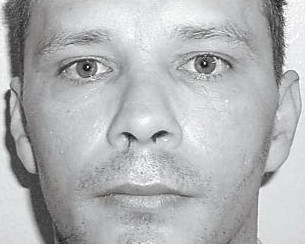
Dennis Mitchell Orbe
Murderer Russell Ellwood
Murderer · USA · 1991
Russell Ellwood was a former taxi driver. Authorities suspected him of killing…
20 victims
Russell Ellwood
Murderer · USA · 1991
Russell Ellwood was a former taxi driver. Authorities suspected him of killing…
20 victims
 Robert Martines Perez
Murderer · USA · 1994
Name: Robert Martines Perez · Other name used in proceedings: Robert Martinez P…
15 victims
Robert Martines Perez
Murderer · USA · 1994
Name: Robert Martines Perez · Other name used in proceedings: Robert Martinez P…
15 victims
 Billy Frank Vickers
Murderer · USA · 1993
Billy Frank Vickers Vickers was executed by lethal injection in Texas on Januar…
14 victims
Billy Frank Vickers
Murderer · USA · 1993
Billy Frank Vickers Vickers was executed by lethal injection in Texas on Januar…
14 victims
 Richard Ramirez
Serial killer · USA · 1984
Richard Ramirez—also known as Ricardo “Richard” Muñoz Ramírez and Richard Muñoz…
16 victims
Richard Ramirez
Serial killer · USA · 1984
Richard Ramirez—also known as Ricardo “Richard” Muñoz Ramírez and Richard Muñoz…
16 victims
 Anatoly Onoprienko
Serial killer · Ukraine · 1989
Anatoly Yuriyovych Onoprienko was born July 25, 1959, and was also known by the…
52 victims
Anatoly Onoprienko
Serial killer · Ukraine · 1989
Anatoly Yuriyovych Onoprienko was born July 25, 1959, and was also known by the…
52 victims
 Mark Allen Geralds
Murderer · USA · 1989
Mark Allen Geralds was a carpenter who helped remodel the Pettibone home prior…
1 victim
Mark Allen Geralds
Murderer · USA · 1989
Mark Allen Geralds was a carpenter who helped remodel the Pettibone home prior…
1 victim
 Miyuki Ishikawa
Murderer · Japan · 1944
Miyuki Ishikawa (石川 ミユキ, Ishikawa Miyuki; born 1897; date of death unknown) was…
169 victims
Miyuki Ishikawa
Murderer · Japan · 1944
Miyuki Ishikawa (石川 ミユキ, Ishikawa Miyuki; born 1897; date of death unknown) was…
169 victims
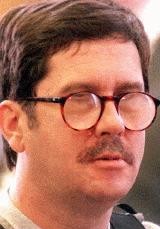 Lewis Lent
Murderer · USA · 1983
Lewis Lent was sentenced to life in prison without parole in Massachusetts in 1…
8 victims
Lewis Lent
Murderer · USA · 1983
Lewis Lent was sentenced to life in prison without parole in Massachusetts in 1…
8 victims
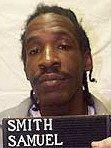 Samuel Smith
Murderer · USA · 1987
Samuel Smith was executed by lethal injection in Missouri on May 23, 2001. He h…
2 victims
Samuel Smith
Murderer · USA · 1987
Samuel Smith was executed by lethal injection in Missouri on May 23, 2001. He h…
2 victims
- Gender
- male
- Country
- USA
- Location
- York County, Virginia, USA
- Date of birth
- June 22, 1964
- Age at first offence
- 34
- Characteristics
- robbery, abuse, alcohol
- Victim profile
- Richard Sterling Burnett, 39 (convenience store clerk)
- Method of murder
- Shooting
- Date(s) of murder
- January 24, 1998
- Years active
- 1998
- Date of arrest
- 7 days after
- Status
-
Executed
Executed by lethal injection in Virginia on March 31, 2004
Case record: Dennis Mitchell Orbe
Status
Dennis Mitchell Orbe was executed by lethal injection in Virginia on March 31, 2004.
Background
Dennis Mitchell Orbe was convicted in connection with a murder during the commission of robbery. During the sentencing phase, the Commonwealth presented evidence of other criminal acts in three separate incidents. The defendant’s mother and step-father testified about his troubled childhood and problems with alcohol abuse. A clinical psychologist testified about suicidal intentions, depression, perceived failure as a father and husband, heavy drinking, and an impulse control dysfunction. The psychologist opined that Orbe might have wished to visit his father again after recently locating him and that he decided to obtain money illegally to accomplish that purpose. The psychologist did not perceive Orbe as being a future danger in a prison setting unless he was able to access alcohol inside the prison, was abused by those within the prison system, or was placed under conditions of duress while incarcerated, but stated that if the defendant escaped from a penitentiary it would be a “very dangerous, very risky” situation.
The offence
Near 3:38 a.m. on January 24, 1998, the defendant entered a gas station and convenience store located in York County. The convenience store was equipped with a video camera recording system that monitored three areas of the premises, including the check-out counter and cash register. The camera focused on the cash register and recorded a sequence of events.
The defendant walked up to the check-out counter where Richard Sterling Burnett was working as a clerk and pointed a revolver at Burnett’s chest. After Burnett opened the cash register drawer, the defendant shot Burnett in the chest. As Burnett was clutching his chest and struggling to remain in a standing position, the defendant walked around the counter, reached into the cash register drawer, and removed some money from it. He then fled from the store.
A territorial manager for the gas station and convenience store testified that the sum of $90.65 was missing from the cash register drawer. A short while later, a customer at the convenience store discovered Burnett’s body and called for emergency assistance.
The videotape was played for the jury. The tape reveals the sequence of events including the shooting and the taking of money. The defendant claimed that the shooting was accidental.
The Commonwealth presented evidence of future dangerousness based on three other incidents.
Incident 1 (January 21, 1998)
On January 21, 1998, Lois Jones testified that she and her boyfriend, Mark Scougal, returned home and Scougal discovered the defendant in a bedroom. The defendant pointed a gun at Scougal and ordered Scougal to drive him “somewhere else” because he was hiding from the police. Jones retrieved a gun from her gun cabinet, loaded it, and went out onto the front porch to stop the defendant.
Although there was conflicting testimony about whether Jones then fired her gun up into the air, the defendant shot at Jones twice. His second shot hit Jones in the calf of her leg and shattered the bone. The defendant demanded that Scougal give him the car keys, but when Scougal refused, the defendant fled from the scene.
Incident 2 (January 21, 1998)
Also on January 21, 1998, Charles Powell and William Bottoms, two elderly gentlemen, were sitting in the front yard of Bottoms’ Richmond home when the defendant approached the two men. The defendant ordered them to walk to the rear of the house. He displayed a weapon to the men and stated that he “[had] nothing to lose.”
After questioning both men about the location of their cars, keys, and wallets, the defendant took Powell’s car and left in it.
Incident 3 (January 30, 1998)
On January 30, 1998, Karen Glenn, Patricia Tuck, and another woman arrived at a private residence in New Kent County to perform cleaning services. The defendant was already inside the house. He approached the women, brandished a handgun, and yelled, “Bitches, get down.” As they were starting to “get down,” the defendant hit Tuck between her shoulder blades with the gun. He ordered the three women to crawl on their stomachs to a bedroom. Once they were in the bedroom, he made them go into a closet and then nailed a piece of plywood across the closet door.
The women were trapped inside the closet for approximately four and one-half hours until the homeowner returned and found them. During the ordeal, the defendant proclaimed, “I'm Dennis Orbe, I'm wanted for murder, and it doesn't matter what I do.” He also directed the women to empty their pockets and took money, checks, and other valuables, including the keys to Glenn’s car. He stole the car.
Investigation
F.T. Lyons, an investigator with the York County Sheriff’s Office, arrived on the scene about 4:25 a.m. He found Burnett’s body “on the floor ... behind the register.” Lyons collected several items from the store for evidentiary purposes, including the video tape recording.
Lyons used computer equipment to view the videotape “frame by frame,” captured images from the video tape, digitized and saved them, and then printed several of the images. He distributed those printed images to area law enforcement agencies and the media. The sheriff’s office subsequently received several telephone calls from persons who identified the defendant as the individual in the pictures that Lyons had distributed.
After receiving this identification, Lyons obtained warrants charging the defendant with capital murder, robbery, and use of a firearm in the commission of murder. In addition to these three charges, a grand jury subsequently indicted the defendant for use of a firearm during the commission of robbery.
Arrest
The defendant was not apprehended until January 31, 1998, after a high-speed chase through the streets of Richmond. During the police officers’ pursuit, the defendant drove his car across a concrete median strip and struck a telephone pole, then proceeded to drive on the wrong side of the road and accelerated through a roadblock. Eventually, the defendant jumped out of his vehicle and ran on foot until police officers captured him at the end of an alley.
After placing the defendant under arrest, a police officer searched the defendant’s person. During the search, the officer found a partially loaded .357 magnum revolver in the waistband of the defendant’s pants. Lyons took possession of the weapon recovered from the defendant and submitted it to the Commonwealth of Virginia Department of Criminal Justice Services, Division of Forensic Science, for testing.
Willis L. Branch, Jr., the defendant’s stepfather, testified that, sometime during the first or second week of January, he discovered that his .357 magnum revolver was missing from the home that Branch shared with the defendant and his mother. At trial, Branch identified the revolver recovered from the defendant as having the same serial number as the one that was missing from his home.
Forensic evidence and autopsy
Scott A. Glass, a forensic scientist who works in the field of firearm and tool mark identification at the Division of Forensic Science, tested the revolver along with a “lead semi-wadcutter” bullet that had been removed from Burnett’s chest during an autopsy. Glass concluded that the bullet had been fired from the .357 magnum revolver.
Dr. Elizabeth Kinnison, a pathologist and an Assistant Chief Medical Examiner for the Commonwealth of Virginia, performed the autopsy on Burnett’s body. During the autopsy, Dr. Kinnison recovered the bullet from the right side of Burnett’s back where it was lodged. She testified that Burnett had sustained “one gunshot wound to the front of the left chest[,],” which was the cause of death. Dr. Kinnison stated that Burnett died “[p]rimarily from hemorrhage or bleeding from these wounds” and that “[t]he structures that were injured that were vital were the heart and the liver and the lung, which all would have caused internal bleeding.”
She further testified that a person sustaining this type of injury “[m]ight have been in some pain associated with the skin[,]” would have suffered increasing problems with breathing as blood was lost, and would have become dizzy and eventually unconscious before dying.
Trial
A jury convicted the defendant, Dennis Mitchell Orbe, of four charges in connection with a murder during the commission of robbery:
- capital murder, in violation of Code § 18.2-31(4);
- use or display of a firearm while committing murder, in violation of Code § 18.2-53.1;
- robbery, in violation of Code § 18.2-58;
- use or display of a firearm while committing robbery, in violation of Code § 18.2-53.1.
At the conclusion of the sentencing phase of a bifurcated trial, the jury fixed the defendant’s punishment at death for the capital murder, 50 years for the robbery, and 5 years for each of the firearms offenses. The jury imposed the sentence of death based on its finding of future dangerousness under Code §§ 19.2-264.2 and -264.4.
After reviewing the post-sentence report required by Code § 19.2-264.5, the trial court sentenced the defendant in accordance with the jury verdicts.
Orbe never took the stand to testify at either the trial or the sentencing hearing, though he gave a twenty-five minute speech apologizing for the murder and asking to be sentenced to death, claiming the gun discharged “accidently” and that he had no intention of killing Burnett. In that speech, he apologized frequently—both for his crimes and for his lack of eloquence—and stated, “I'm ashamed to be standing here,” “I'm ashamed to be here,” “I'm ashamed I wasn't able to take my own life,” and “I'm ashamed that I took another man's life.”
Before the judge officially handed down the sentence, the judge asked Orbe if there was anything he wanted to say. Orbe addressed the judge and spoke for the next 25 minutes.
At sentencing in New Kent Circuit Court on September 22, 1998, Orbe replied quietly, “No, I don't.” He spoke only those words during a brief hearing.
Evidence about the convenience store crime
The trial Commonwealth introduced the video tape recording into evidence and played it for the jury. The tape revealed the sequence of events including the defendant pointing a revolver at Burnett’s chest, shooting Burnett in the chest after Burnett opened the cash register drawer, walking around the counter, taking money from the cash register, and fleeing from the store.
At trial, the sum of $90.65 was testified missing from the cash register drawer.
Sentencing
The jury recommended the death penalty and the trial court sentenced Orbe accordingly. A York County jury recommended the death penalty following deliberations of about 4 1/2 hours. The jury consisted of 10 women and 2 men. After the jury’s decision was read, Orbe turned and whispered briefly to defense lawyer Andrew Protogyrou. Orbe’s mother, Brigitt Branch, quietly lifted her hand to her mouth and looked straight ahead.
Judge Prentis Smiley set formal sentencing for Oct. 23. In addition to the death penalty, the jury recommended a 60-year sentence for robbery and 2 firearms counts stemming from the incident. At sentencing, Orbe apologized and asked to be sentenced to death.
In recent days before the execution, his lawyers filed unsuccessful appeals and requests to stay the execution to the U.S. and Virginia supreme courts, arguing that an earlier appeal was unfairly limited to 50 pages and that the way Virginia conducts lethal injections violates constitutional protections against cruel and unusual punishment.
Appeals
Orbe v. Commonwealth, 519 S.E.2d 808 (Va. 1999) (Direct Appeal) affirmed. In that decision, the Virginia Supreme Court held that:
- defendant was not entitled to jury instructions on lesser included offenses of first-degree murder, second-degree murder, or voluntary manslaughter;
- there was sufficient evidence of future dangerousness to support imposition of death penalty;
- photographs of victim, including autopsy photographs, were admissible;
- defendant was not entitled to mail questionnaire to each prospective juror;
- death sentence was neither excessive nor disproportionate. The court affirmed the judgments of the circuit court.
Orbe v. True, 201 F.Supp.2d 671 (E.D.Va. 2002) (Habeas): motions denied. The district court held that:
- preservation order was not mandated by Constitution or Virginia law;
- preservation order was not necessary to ensure proper administration of justice;
- petitioner was not entitled to conduct prepetition discovery;
- even if such discovery were allowed, petitioner failed to show good cause to warrant leave to depose jurors at guilt-phase of murder trial.
Orbe v. True, 233 F.Supp.2d 749 (E.D.Va. 2002) (Habeas): motion granted. The district court held that:
- petitioner was barred from raising procedurally defaulted claims absent showing of cause;
- petitioner was not deprived of effective assistance of counsel;
- state post-conviction court’s refusal to appoint second mental health expert did not violate indigent petitioner’s equal protection rights.
Orbe v. True, 82 Fed.Appx. 802 (4th Cir. 2003) (Habeas): affirmed. The court held:
- inmate failed to demonstrate that his counsel was ineffective as required to establish cause for his procedural default of habeas review;
- prosecutor’s decision to charge white defendant with capital murder was not racially discriminatory;
- trial court properly excused venireperson who would have had “problem” serving in death penalty case;
- defendant’s counsel adequately investigated and presented evidence regarding abuse defendant suffered as a child;
- even if expert’s diagnosis of defendant’s mental problems was flawed, counsel did not act unreasonably in relying on it;
- counsel was not ineffective for failing to present medical record of defendant’s claim that he had been suicidal.
Outcome
Orbe was executed by lethal injection in Virginia on March 31, 2004.
Orbe declined to make a final statement when asked. Other accounts of the execution state that Orbe kissed a cross holding a green plastic Jesus to his lips before she joined witnesses in a witness booth, and that he was pronounced dead at 9:13 p.m. at the Greensville Correctional Center in Jarratt. A spokesperson for the Virginia Department of Corrections stated that Orbe did not appear to be agitated and that Orbe had eyes closed as the IVs were put into him and he appeared to be praying.
Other details
Victim
Richard Sterling Burnett was 39 years old. He was working alone as a clerk and was shot in the chest during a robbery. He died from a gunshot wound to the front of the left chest primarily due to hemorrhage or bleeding from the wound, with vital structures injured including the heart, liver, and lung.
Amount taken
A territorial manager testified that $90.65 was missing from the cash register drawer.
Additional legal charges and related incidents described
Orbe was also facing charges in the Richmond area and in New Kent County for numerous crimes allegedly committed in a short period before and after the York killing. A judge certified charges of robbery and using a firearm to a Richmond grand jury. In Chesterfield County, he was accused of breaking into two homes and of shooting a 51-year-old woman in the leg after she and a boyfriend discovered an intruder in a bedroom.
Witnesses and participants named
F.T. Lyons was the lead investigator with the York County Sheriff’s Office. Commonwealth’s Attorney Eileen M. Addison prosecuted Orbe in York County. Defense lawyers Andrew Protogyrou and Damian Horne represented Orbe. Judge Prentis Smiley and his sentencing decisions were part of the sentencing process.
Quotations (verbatim) included in the record
The defendant yelled during the closet incident: “Bitches, get down.”
During the closet incident, the defendant proclaimed: “I'm Dennis Orbe, I'm wanted for murder, and it doesn't matter what I do.”
In the early morning confrontation narrative described at sentencing, Orbe stated: “Good question. Maybe I didn't have the (courage) to.”
During the execution reporting described, the final statement question produced the response: “No.”
During the closet incident and courtroom-related remarks, the defendant and others made these statements:
- “Bitches, get down.”
- “I'm Dennis Orbe, I'm wanted for murder, and it doesn't matter what I do.”
- “No.”
- “No, I don't.”
Spotted an error, or have more information about this case?