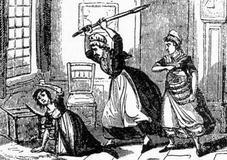
Elizabeth & Mary Branch
Murderers Ashleigh & Holly Robinson
Murderers · United Kingdom · 2010
Antoni Robinson was a 61-year-old retired antiques dealer and French polisher.…
1 victim
Ashleigh & Holly Robinson
Murderers · United Kingdom · 2010
Antoni Robinson was a 61-year-old retired antiques dealer and French polisher.…
1 victim
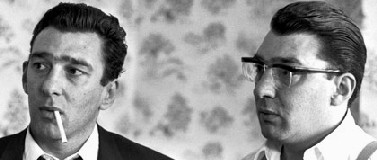 Ronald & Reginald Kray
Murderers · United Kingdom · 1966
Ronald “Ronnie” Kray and Reginald “Reggie” Kray were English gangsters who were…
2 victims
Ronald & Reginald Kray
Murderers · United Kingdom · 1966
Ronald “Ronnie” Kray and Reginald “Reggie” Kray were English gangsters who were…
2 victims
 Arthur & Nizamodeen Hosein
Murderers · United Kingdom · 1969
Arthur Hosein and Nizamodeen Hosein were found guilty at the Old Bailey and wer…
1 victim
Arthur & Nizamodeen Hosein
Murderers · United Kingdom · 1969
Arthur Hosein and Nizamodeen Hosein were found guilty at the Old Bailey and wer…
1 victim
 Norman & Joseph Jones
Murderers · United Kingdom · 2008
Norman Jones and Joseph Jones were convicted and jailed for life for the abduct…
1 victim
Norman & Joseph Jones
Murderers · United Kingdom · 2008
Norman Jones and Joseph Jones were convicted and jailed for life for the abduct…
1 victim
 Robert & Jonathan Maskell
Murderers · United Kingdom · 2005
January 2004 — Robert and Jonathan Maskell and Dwane Johnston left their birthd…
1 victim
Robert & Jonathan Maskell
Murderers · United Kingdom · 2005
January 2004 — Robert and Jonathan Maskell and Dwane Johnston left their birthd…
1 victim
 Danny Joe Bradley
Murderer · USA · 1983
Danny Joe Bradley was tried in Alabama and convicted of capital murder in conne…
1 victim
Danny Joe Bradley
Murderer · USA · 1983
Danny Joe Bradley was tried in Alabama and convicted of capital murder in conne…
1 victim
 Clyde Smith
Murderer · USA · 1992
Clyde Smith was a Black male who was scheduled to be executed on February 15, 2…
2 victims
Clyde Smith
Murderer · USA · 1992
Clyde Smith was a Black male who was scheduled to be executed on February 15, 2…
2 victims
 John Walter Bardgett
Homicide · USA · 2001
John Walter Bardgett was a 25-year-old nurse. Bardgett worked at Harborside-Nor…
2 victims
John Walter Bardgett
Homicide · USA · 2001
John Walter Bardgett was a 25-year-old nurse. Bardgett worked at Harborside-Nor…
2 victims
 Kent Jermaine Jackson
Murderer · USA · 2000
Kent Jermaine Jackson was a male Black defendant. He was a Newport News inmate…
1 victim
Kent Jermaine Jackson
Murderer · USA · 2000
Kent Jermaine Jackson was a male Black defendant. He was a Newport News inmate…
1 victim
 Brigitte Harris
Murderer · USA · 2007
Brigitte Harris was convicted for the suffocation and castration murder of her…
1 victim
Brigitte Harris
Murderer · USA · 2007
Brigitte Harris was convicted for the suffocation and castration murder of her…
1 victim
- Gender
- female
- Country
- United Kingdom
- Location
- Phillips Norton, Somersetshire, England, United Kingdom
- Date of birth
- Elizabeth, aged 67, and her daughter Mary, 24
- Characteristics
- torture
- Victim profile
- Their maid, Jane Buttersworth , 13
- Method of murder
- Beating
- Date(s) of murder
- February 13, 1740
- Years active
- 1740
- Date of arrest
- —
- Status
-
Executed
Executed by hanging on May 3, 1740
Case record: Elizabeth Branch and Mary Branch
Background
Elizabeth Branch (1673–1740) and her daughter Mary Branch (1716–1740) were English murderers convicted of the beating death of a servant-girl, Jane Buttersworth.
Elizabeth Branch was born in Phillips Norton, Somersetshire, England. She married a wealthy farmer and began mistreating the family’s servants.
Elizabeth Branch frequently denied servants common necessaries of life, and sometimes turned them out of doors at night in the midst of winter. Her wages in these cases were sent them by Mr Branch, who was described as being as remarkable for his humanity and justice as his wife was described as the opposite.
Mary Branch manifested the same behavior toward the servants and began following her mother’s footsteps in her maltreatment toward the help. After Mr Branch died and left an estate of about three hundred pounds a year, the servants left the family, determined not to live with Elizabeth Branch.
Because of the couple’s notoriety, they could obtain no servants except poor creatures who were put out by the parish, or casual vagrants who strolled the country. When Elizabeth Branch needed a servant, she went further afield and brought Jane Butterfield from Bristol. The young girl was hardly in the house before the two women subjected her to a brutal regime and eventually beat her so that she died.
The offence
Jane Buttersworth was singled out for a variety of cruelties because she was considered to be too slow in completing her chores. On the day of her death, the Branches beat her with broomsticks, stripped her naked, and poured salt into her wounds. Their assaults proved fatal.
During the incident described in the trial material, Ann Somers, the dairymaid, deposed that Jane had been sent for some yeast and stayed longer than was necessary. On her return, Jane excused herself to her old mistress by telling a lie. The daughter struck Jane violently on the head with her fist and pinched her ears. Then both women threw Jane on the ground. The daughter knelt on her neck while the mother whipped her with twigs until the blood ran on the ground. The daughter, taking off one of the girl’s shoes, beat Jane with it in a cruel manner. Jane cried for mercy and after some struggle ran into the parlour, where the women followed her and beat her with broomsticks until she fell down senseless. The daughter threw a pail of water on her and used her with other circumstances of cruelty.
Another description of the killing recorded that on the day of her death the Branches beat Jane with broomsticks, stripped her naked, and poured salt into her wounds, before their assaults proved fatal.
After the girl was left dead, at night the body was privately buried. The transactions of the burial and the suspicions in the neighbourhood led to further investigation.
Investigation
A milkmaid, Ann Somers, happened upon the scene of the crime and was ordered to sleep with the dead girl’s body. Ann Somers panicked and ran to the police at the earliest opportunity.
The Branches were arrested immediately.
A warrant was issued by the coroner to take up the body. An inquest was made into the cause of the girl’s death. Mr Salmon, a surgeon, declared that she had received several wounds, almost any one of which would have proved mortal.
Human bones were discovered in a well near Elizabeth Branch’s farm, which were believed to be those of one of her servant girls who disappeared and was never heard from again.
Mrs Branch’s husband died under circumstances that led others who lived nearby to believe she had poisoned him and they were convinced that she had hanged her mother after murdering her, to avoid an investigation into the cause of the death.
When the case was first called, it was discovered that Mrs Branch had bribed some of the jurors, and there was some delay before they could be replaced.
Arrest and imprisonment
Elizabeth Branch and Mary Branch were taken to Ovelchester where they were hanged.
They were arrested immediately after Ann Somers ran to the police.
During their imprisonment, Mrs Branch behaved sullenly and seemed more concerned by the conditions under which they were confined rather than the welfare of her soul. Mary Branch told the gaoler that she would like to be buried at Ilchester churchyard, and they were allowed to take a walk past Ilchester churchyard before the trial.
Trial
The trial took place at Taunton in March 1740. At the assizes held at Taunton, Somersetshire, in March 1740, Elizabeth Branch and Mary, her daughter, were indicted for the wilful murder of Jane Buttersworth.
The principal evidence against them included Ann Somers’ testimony that Jane had been sent for some yeast, stayed longer than necessary, and told a lie on her return; that the daughter struck Jane violently on the head with her fist, pinched her ears, and that both threw her on the ground; that the daughter knelt on her neck while the mother whipped her with twigs until blood ran; and that the daughter beat Jane with one of the girl’s shoes. The evidence also stated that Jane cried for mercy, ran into the parlour, was followed and beaten with broomsticks until she fell down senseless, and was then treated with additional cruelty.
After a short consultation, the jury brought in a verdict of guilty. The jury found both prisoners guilty and they were sentenced to die. The trial lasted over six hours.
It was noticed that Mrs Branch’s expression remained unchanged at their findings, but she repeatedly kicked Mary Vigor, one of the prosecution witnesses, as she stood by her at the bar while giving evidence.
When sentence was passed, the condemned elder woman complained bitterly to the court about the illegality of changing the jury, exclaiming that if she and her daughter had been tried by the first jury, they would not have been convicted.
The jury heard Ann Somers’ testimony.
Sentencing
Both women were sentenced to die.
Word got to local authorities that local residents intended to “tear them apart while alive,” so they were taken to Ilchester to be executed.
The women were sentenced to die on 3 May 1740. Mrs Branch expressed a wish to be hanged early in the morning before the expectedly large crowd of spectators could assemble.
She got up early, called her daughter and told her to get ready, “because if they didn’t make haste, the mob would be in on them and they should not be hanged in peace”.
Appeals
No appeal details were included.
Execution
On being escorted from the gaol, Mrs Branch called out to a passer-by: “I have forgotten my cloak and clogs; pray fetch them, lest I should catch cold.”
When they reached the execution site at about 6 a.m., it was found that one of the gallows’ uprights and the crosspiece had been cut down, probably by vandals. A carpenter was sent for, and a new gallows quickly constructed and erected.
Mrs Branch said she would be prepared to be hanged from a nearby tree instead. After the new gallows was erected, she gave her cloak and purse to a friend.
Elizabeth Branch helped the hangman to position the noose around her daughter’s neck. She afterwards asked him for a dram of strong drink, but he refused, saying that she had already had a couple of drinks earlier in the prison.
The bodies were allowed to hang for three-quarters of an hour before being cut down and taken away to be interred in Ilchester churchyard.
References Look For the Woman by Jay Robert Nash M. Evans and Company, Inc. 1981. ISBN 087131367
One account recorded that, on 31st March, they were taken to Gallows Field for their execution and that they were executed before six o’clock, after the gibbet had been cut down and was replaced with another gallows. Another account recorded their hanging as occurring on May 3, 1740.
The place of execution was associated with Gallows Field, and the bodies were taken away to be interred in Ilchester churchyard.
Before the execution, Mrs Branch confessed her crime while her 24-year-old daughter wept openly at her side.
After brief speeches, in which Mrs Branch swore that she had never intended to kill the deceased and begged for forgiveness, and in which her daughter Mary beseeched the crowd to pray for her, the halters around their necks tightened as the drop was operated.
Both women were left to hang for over an hour while a stream of clergymen lectured the audience on the evils of beating servants. The crowd was described as being only concerned with ensuring the pair were properly despatched.
Outcome
Elizabeth Branch and Mary Branch were executed by hanging.
Aftermath
Horace Walpole, eighteenth-century author, reported an appalling breach of the law committed by those whose job was to uphold it. In 1742 he wrote:
“There has lately been the most shocking scene of murder imaginable; a arcel of drunken constables took it into their heads to put the law into execution against disorderly persons and so took up every woman they met, till they had collected five- or six-and-twenty, all of whom they thrust into St Martin’s lock-up [a small, temporary gaol] where they kept them all night, with doors and windows closed. The poor creatures, who could not stir or breathe, screamed as long as they had any breath left, begging at least for water; one poor wretch said she had eighteen pence on her and would gladly give it for a draught of water, but in vain! So well did they keep them there, that in the morning four were found stifled to death, two died soon after, and a dozen more are in a shocking way. Several of them were beggars who, from having no lodging, were necessarily found in the street, and others were honest labouring women. One of the dead was a poor washerwoman, big with child, who was returning home late from washing. One of the constables has been arrested and others absconded, but I question if any of them will suffer death; there is no tyranny the police do not exercise, no villainy they do not partake. These same men broke into a bagnio [a house of ill-repute] in Covent Garden and arrested a number of men, among them Lord George Graham, and would have also thrust them into the lock-up with the poor women, if they had not had more than eighteen pence on them!”
Geoffrey Abbott was cited in connection with “Amazing True Stories of Female Executions.”
Other details
Mr Branch was described as having died, leaving Elizabeth and Mary a fortune and an estate of about three hundred pounds a year.
In one account, it was stated that Mrs Branch’s husband died under circumstances that led others who lived nearby to believe she had poisoned him, and they were convinced that she had hanged her mother after murdering her, to avoid an investigation into the cause of the death.
A note in the trial material described that Mrs Branch’s other maid was forced to lie next to her in bed and witnessed the murder, and that a strange light was seen over the girl’s grave by several persons, which confirmed neighbours’ suspicions.
It was recorded that the crowd might have intended to “tear them apart while alive” before the women were executed.


Spotted an error, or have more information about this case?